Fish
Fish Fire
Fire Hike
Hike Bird
Bird

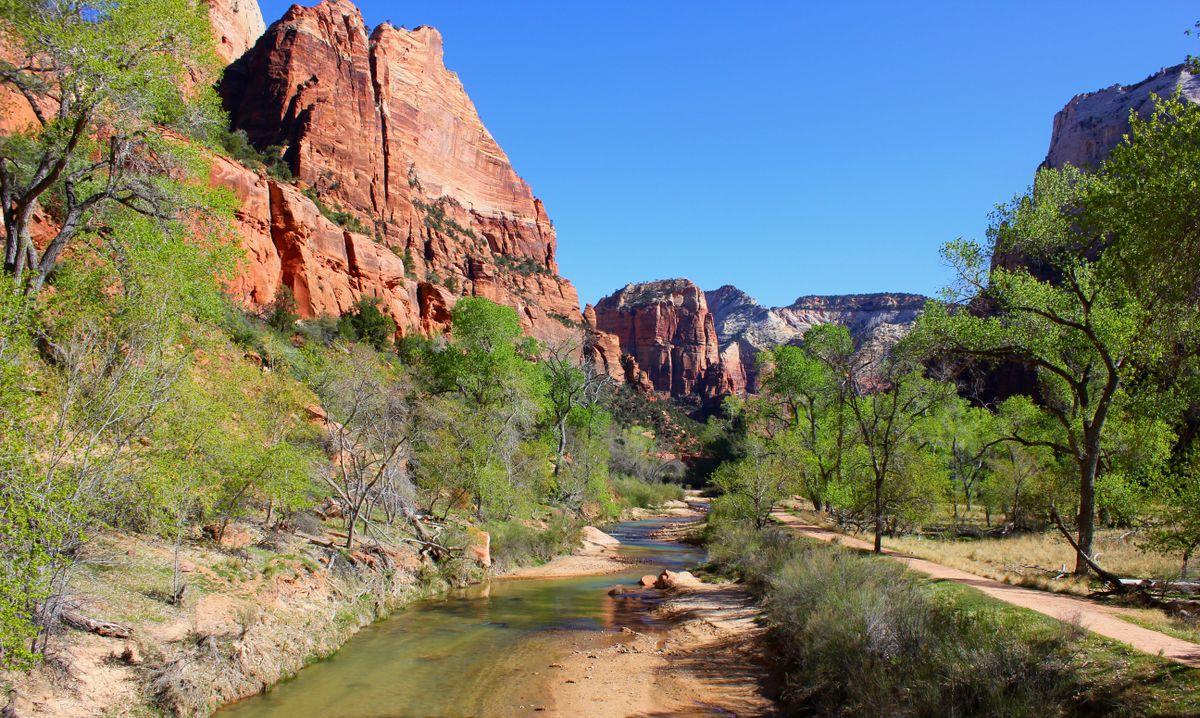
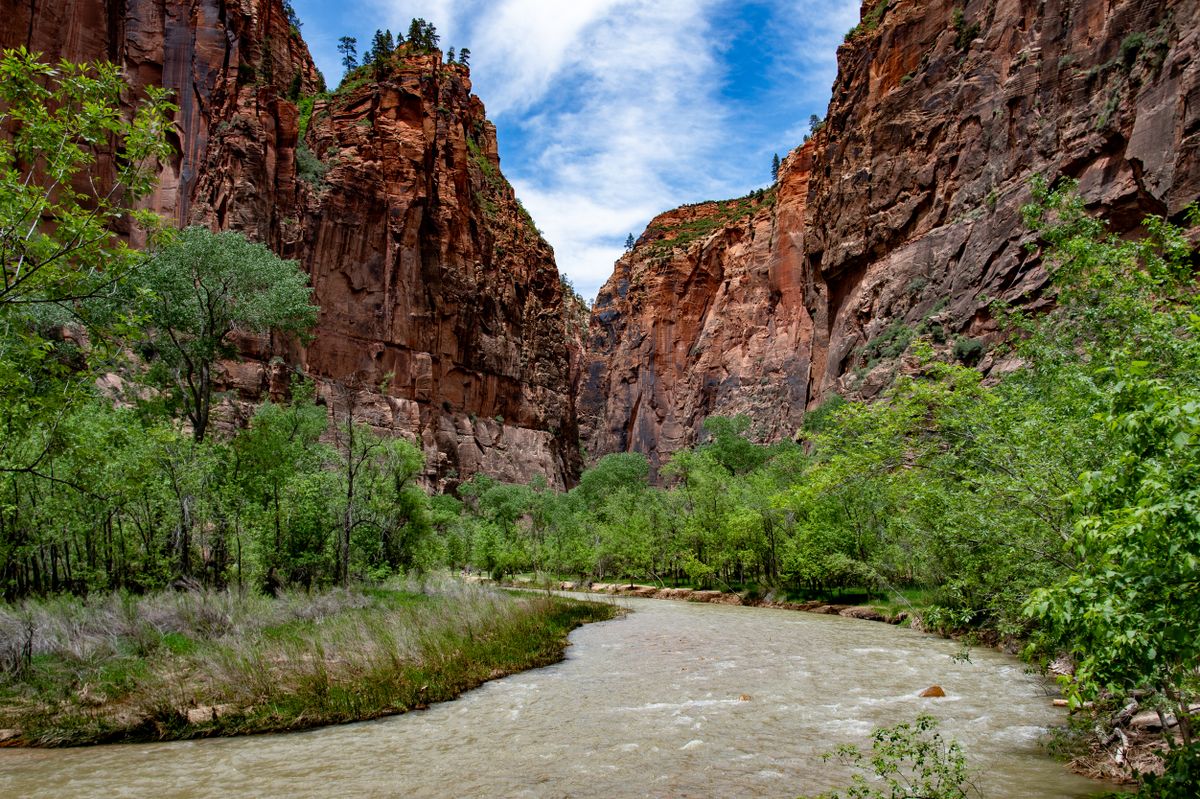
There is a creek in the Chihuahuan Desert that holds rainbow trout. It flows from springs at 5,000 feet through a limestone canyon in the most isolated corner of Texas, 110 miles east of El Paso and 55 miles southwest of Carlsbad, New Mexico, a place so remote that the nearest gas station requires a deliberate drive. The creek is three to six feet wide in most places, cold and clear over white gravel, shaded by bigtooth maple and chinkapin oak in a canyon whose walls rise thousands of feet above the water. The trout are small, six to ten inches, and they have been reproducing on their own since a rancher named Judge J.C. Hunter stocked them in the 1930s. Nearly a century later, they are still there, wild and self-sustaining, finning in pools that look like they belong in a Colorado headwater, surrounded by desert that looks like it belongs on Mars.
You cannot fish for them.
McKittrick Creek runs through Guadalupe Mountains National Park, and fishing is prohibited throughout the park. No exceptions. No special permits. No catch-and-release allowance. The trout exist in a national park that does not allow anyone to cast a line into any of its waters. This is one of the most improbable trout populations in America, living in one of the most beautiful spring creeks you will ever see, in a canyon you have to hike miles to reach, and the only thing you can do when you get there is watch them.
This guide is structured around that reality. It is an honest accounting of what Guadalupe Mountains National Park offers the fly angler: extraordinary scenery, a genuinely fascinating trout story, a world-class hike to see fish you cannot catch, and a survey of the nearest actual fishing waters for anglers who want to combine a park visit with time on the water.

The Park, 86,000 Acres of Ancient Reef
Guadalupe Mountains National Park covers 86,367 acres of the Guadalupe Mountain range in far west Texas, straddling the Culberson and Hudspeth county line just south of the New Mexico border. The mountains themselves are the exposed remains of the Capitan Reef, a massive Permian-age limestone formation built by algae, sponges, and other marine organisms in a shallow tropical sea 260 to 272 million years ago. What was once an underwater reef complex is now a desert mountain range rising more than 3,000 feet above the surrounding Chihuahuan Desert basin.
Guadalupe Peak, at 8,751 feet, is the highest point in Texas. El Capitan, the sheer limestone cliff that dominates the southern face of the range, is one of the most recognizable geological landmarks in the American West, visible for fifty miles across the desert flats, a 2,000-foot vertical wall of ancient reef rock that served as a landmark for Butterfield Overland Mail stagecoaches in the 1850s and for every traveler on Highway 62/180 today.
The park was established in 1972, largely through the efforts of two men whose land eventually became its core: Wallace Pratt, a petroleum geologist for Humble Oil Company who fell in love with McKittrick Canyon and donated nearly 5,000 acres to the National Park Service in 1959, and Judge J.C. Hunter, who consolidated the surrounding ranches into the Guadalupe Mountain Ranch and advocated for park protection as early as the 1920s. Hunter was a businessman with a conservationist streak, he protected the land he purchased in hopes that the state or federal government would eventually preserve it. He also stocked McKittrick Creek with rainbow trout.
The park receives roughly 200,000 visitors a year, a fraction of what the major Western parks draw. The nearest town with services, Dell City, has a population under 400. Van Horn, the nearest town with a motel and a gas station you can count on, is 65 miles south. This is genuinely remote country. You do not stumble onto Guadalupe Mountains National Park on the way to somewhere else. You drive here on purpose, through miles of creosote flats and salt basins, and when you arrive, you are alone in a way that most national parks no longer allow.
McKittrick Creek, The Trout That Should Not Be Here
McKittrick Creek is the only significant surface water in the entire park. It emerges from springs on the eastern flank of the Guadalupe Mountains just south of the New Mexico state line and flows through McKittrick Canyon, a narrow, steep-walled limestone gorge that cuts into the heart of the range. The creek runs year-round, a rarity in west Texas where most drainages are dry washes that carry water only during flash floods. It eventually goes underground again before reaching the Pecos River drainage to the east.
The canyon is a biological island. The cold, spring-fed water supports a riparian corridor of bigtooth maple, chinkapin oak, Texas madrone, gray oak, and alligator juniper, species that belong in the southern Rockies, not the Chihuahuan Desert. In October and November, the maples turn crimson and gold against the pale limestone walls, creating what is widely considered the best fall color display in Texas. Above the canyon rim, the desert reasserts itself, ocotillo, sotol, lechuguilla, and prickly pear in every direction. The transition from desert to woodland happens within a few hundred vertical feet and a quarter mile of horizontal distance. It is one of the sharpest ecological boundaries in North America.

The rainbow trout were stocked by Judge Hunter around 1930 as part of his efforts to turn the Guadalupe Mountain Ranch into a recreational preserve. He imported the fish, likely from a state hatchery, and released them into McKittrick Creek. The creek's constant cold temperature, clean gravel substrate, and year-round flow provided everything rainbow trout need to reproduce, and they did. When the park was established in 1972, the trout were already a self-sustaining population, and they remain so today, nearly a century of natural reproduction in a desert spring creek with no supplemental stocking.
There is an ongoing scientific question about whether Hunter's rainbows displaced a native population of Rio Grande cutthroat trout that may have inhabited McKittrick Creek historically. The Guadalupe River Chapter of Trout Unlimited, working with the National Park Service and the U.S. Geological Survey, has conducted studies examining the creek's suitability for reintroducing Rio Grande cutthroat, the "ghost trout" of the southern Rockies, now extinct in nearly all of its historic Texas range. Some researchers believe the cutthroat disappeared from McKittrick Creek long before Hunter's rainbows arrived, victims of warming climate and habitat changes. Others suspect the rainbows outcompeted them. The question remains open, and the research continues.
What is not in question is the sheer improbability of what exists in McKittrick Canyon right now: a population of wild, naturally reproducing rainbow trout in a spring-fed creek in the Chihuahuan Desert, at the base of the highest point in Texas, in one of the most remote national parks in the lower 48 states. The fish are small, six to ten inches is typical, with the bright coloring and wariness of truly wild trout that have never seen a hatchery truck. The creek bed is white gravel the size of golf balls. The water is cold and gin-clear. If you did not know you were standing in the desert, you would swear you were on a small freestone stream in the mountains of New Mexico.
Hiking to the Creek
McKittrick Canyon is a day-use area with limited hours, the gate opens at 8:00 a.m. and closes at a posted time (typically 4:30 or 6:00 p.m. depending on season), and you must exit before closing. There is no overnight camping in the canyon itself, though backcountry camping is available elsewhere in the park with a wilderness use permit.
The McKittrick Canyon Trail begins at the McKittrick Canyon Visitor Center, accessed via a 4.2-mile gated road off Highway 62/180. The trailhead sits at roughly 5,000 feet. The first mile follows a dry stream bed through Chihuahuan Desert scrub, no hint of the riparian oasis ahead. Around the 1.5-mile mark, the creek appears, and the canyon narrows, and the desert disappears behind canyon walls and deciduous canopy. By the time you reach the Wallace Pratt Lodge at 2.4 miles, you are walking through a completely different ecosystem, shaded, cool, lush with maple and oak, the creek flowing over white gravel beside the trail.
The most popular day hike continues past the Pratt Lodge to the Grotto, a natural rock overhang, and the Hunter Line Cabin at roughly 3.5 miles from the trailhead. This stretch parallels the creek closely, and this is where you are most likely to see trout, holding in the deeper pools, darting from shadow to shadow over the white gravel, occasionally rising to take an insect from the surface. The round trip to the Hunter Line Cabin and back is roughly 7 miles and takes two to four hours at a moderate pace.
If you are a fly angler hiking McKittrick Canyon, you will recognize the water immediately. It is textbook small-stream trout habitat: riffles flowing into pools, undercut banks along the bends, gravel runs between deeper holding water, overhanging vegetation providing shade and terrestrial insect drop. Your instinct will tell you to rig up. You cannot. But the recognition is part of the experience, you are looking at a spring creek that would fish beautifully on a 2-weight with Elk Hair Caddis in size 16, tiny Pheasant Tails in size 18, foam ants in size 20, and 7X tippet. The fish are there. The water is perfect. The flies would be small attractor dries, Parachute Adams in 16, Stimulators in 16, Royal Wulff in 14, and tiny nymphs: Hare's Ear in 16, Prince Nymph in 16, Copper John in 18. Terrestrials would be crucial in the desert heat, foam beetles in 16, ants in 18, small hoppers. The deeper pools would take a Woolly Bugger in 12 or 14. You would fish it with a 7-foot 2-weight or 3-weight, 6X to 7X tippet, crawling on hands and knees because the water is so clear and the fish so wary that any shadow on the pool sends them under the nearest rock.
You would fish it that way if you could fish it at all. The park's no-fishing regulation is absolute and has been in place since the park's establishment. The trout are managed as a wildlife resource, not a recreational fishery. From the perspective of the National Park Service, McKittrick Creek's rainbow trout are a naturalized population living in a fragile desert spring creek ecosystem, and the priority is ecological preservation, not angling access. Whether you agree with that management philosophy, and reasonable people disagree, the regulation is the regulation.

What a Fly Angler Should Actually Do Here
Guadalupe Mountains National Park is not a fishing destination. It is a hiking destination, a geology destination, a dark-sky destination, and a solitude destination. But it belongs on a fly angler's radar for three reasons.
First, McKittrick Canyon is worth the hike on its own terms. The fall color display in October and November is the best in Texas, and the canyon's ecological transition from desert to woodland is genuinely extraordinary. Seeing wild trout in a desert spring creek, even if you cannot catch them, is a fascinating experience for anyone who has spent time thinking about where trout live and why. The fish are visible in the clear water, holding in pools and feeding on insects, behaving exactly like wild trout in any mountain stream. The setting is what makes it surreal.
Second, Guadalupe Peak is the highest point in Texas, and the 8.4-mile round-trip summit hike is one of the classic peak-bagging trails in the Southwest. The trail climbs over 3,000 feet from the Pine Springs trailhead through pinyon-juniper woodland, then ponderosa pine and Douglas fir, to a summit with views across the Chihuahuan Desert that extend into New Mexico and Mexico. If you are combining outdoor pursuits on a west Texas trip, this hike and a day of fishing nearby make a compelling two-day itinerary.
Third, the park's remoteness means you are already in the neighborhood of some interesting water. Carlsbad, New Mexico is 55 miles northeast, with winter-stocked trout waters. The Guadalupe River, Texas's most famous trout fishery, is a six-hour drive southeast near New Braunfels, a different trip entirely but connected by name and by species. And Big Bend National Park, the other remote Texas national park with a fly-fishing story, is roughly 200 miles south on the Rio Grande, offering warmwater species in desert canyon scenery that rivals anything in the West.
The Fly Box You Would Bring (If You Could Fish)
Even though you cannot fish McKittrick Creek, the fly selection tells you something about the water and the fish, and it is directly relevant if you are fishing similar small desert spring creeks elsewhere in the Southwest, at Great Basin National Park in Nevada, Capitol Reef National Park in Utah, or Zion National Park in the Virgin River drainage.
McKittrick Creek is ultralight water. The creek is narrow, the fish are small and educated, and the water is crystal clear. Everything about this fishery, if it were one, demands stealth, precision, and small flies.
Small attractor dries:
- Elk Hair Caddis (#16-18), the universal small-stream dry fly. Caddis are present in McKittrick Creek, and a size 16 EHC would be the first fly out of the box on any comparable water.
- Parachute Adams (#16-18), the searching pattern for when fish are rising and you are not sure what they are eating. The white post is easy to see on small water.
- Stimulator (#16), a stonefly and general attractor pattern that works on small Western streams. Slightly bigger profile for prospecting the faster water.
- Royal Wulff (#14-16), a classic attractor that draws fish up through faster riffles. The white wing makes it visible in broken water.
Small nymphs:
- Pheasant Tail (#18-20), the bread-and-butter mayfly nymph for small streams. Dead-drifted through the pools and runs, this is the fly that catches educated trout everywhere.
- Hare's Ear (#16-18), buggier and more impressionistic than the Pheasant Tail. The dubbing fibers trap air bubbles and create a lifelike profile in slow, clear water.
- Prince Nymph (#16-18), an attractor nymph that works as a searching pattern when the trout are feeding subsurface but you cannot identify the specific insect.
- Copper John (#18), a compact, heavy nymph that sinks fast in small water. Useful for getting down to fish holding in the deeper pools.
- Zebra Midge (#20-22), midges are present year-round in spring-fed creeks, and a tiny Zebra Midge trailed behind a larger nymph is a steady producer on technical water.
- Griffith's Gnat (#18-20), a midge cluster pattern for the surface. When midges are hatching in the morning on a cold spring creek, this is the fly.
Terrestrials, crucial in the desert:
- Foam ants (#18-20), ants are everywhere in the Chihuahuan Desert, and they end up in the creek constantly. A small black foam ant, dead-drifted along the banks, is the most important terrestrial pattern on any desert spring creek.
- Small beetles (#16-18), black foam beetles in small sizes, fished tight to overhanging vegetation. The desert canyon's deciduous canopy provides steady terrestrial insect input.
- Chubby Chernobyl (#14-16), a foam hopper-attractor that also serves as an indicator for a small nymph dropper. Oversized for this water, but effective as a hopper-dropper rig on a 3-weight.
Streamers for deeper pools:
- Woolly Bugger (#12-14, olive or black), the only streamer you would need on a creek this small. Stripped through the deeper pools at the canyon bends, where the larger fish hold.
- Muddler Minnow (#12-14), a sculpin imitation that works swung or dead-drifted through deeper runs. Desert spring creeks often hold sculpin, and a small Muddler is the standard imitation.
The gear: A 6.5- to 7.5-foot, 2-weight or 3-weight rod, the lightest rig in your quiver. Leaders 7.5 to 9 feet, tapered to 6X or 7X. Fluorocarbon tippet is essential in water this clear, the trout can see monofilament. You would be roll-casting and bow-and-arrow casting in tight quarters, rarely throwing more than fifteen feet. The rod is a wand, not a cannon.
This fly box and gear setup applies directly to fishable desert spring creeks across the Southwest. If you are planning a trip that includes Guadalupe Mountains and you want to actually fish, the comparable waters are described below.

Nearby Water, Where You Can Actually Fish
Guadalupe Mountains National Park is remote, and there is no fishing within its boundaries. But if you are making the drive to this corner of the Southwest, there is fishable water within a reasonable radius. None of it is McKittrick Creek. Most of it requires a deliberate side trip. All of it is honest.
Carlsbad Area, New Mexico (55 miles northeast)
Carlsbad, New Mexico, home of the other famous cave in this part of the world, sits 55 miles northeast of the McKittrick Canyon trailhead. It is the nearest town with real services (grocery stores, motels, restaurants, gas stations), and it has fishable water.
Higby Hole is stocked with rainbow trout during the winter months by the New Mexico Department of Game and Fish. This is put-and-take fishing, hatchery rainbows in a small body of water, but if you are visiting Guadalupe Mountains and Carlsbad Caverns on the same trip and you want to catch a trout on a fly, Higby Hole is the nearest option. Standard nymph rigs work: Pheasant Tail, Hare's Ear, San Juan Worm, Zebra Midge under an indicator on a 5-weight.
Lake Carlsbad is a 125-acre impoundment on the Pecos River in the city of Carlsbad. It holds warmwater species, bass, catfish, bluegill, and is fishable year-round. A Woolly Bugger or Clouser Minnow stripped through the deeper sections will find bass. Poppers along the bank for bluegill in the evening.
Brantley Lake State Park, fifteen miles north of Carlsbad, is an impoundment on the Pecos River holding catfish, bluegill, crappie, walleye, and bass. Important: Brantley Lake is catch-and-release only due to DDT contamination, do not eat fish from this water. Bass on the fly with Clouser Minnows and poppers.
Black River Recreation Area, south of Carlsbad, offers 1,200 acres of clear water with bluegill, bass, and catfish. Fly-rod-friendly warmwater fishing in a pretty desert setting.
The San Juan River, New Mexico (300 miles north)
If you are willing to make the drive, and it is a drive, roughly five hours north through the heart of New Mexico, the San Juan River below Navajo Dam is one of the finest tailwater trout fisheries in the American West. Twenty-inch rainbows and browns in gin-clear water, with midge and Blue Winged Olive hatches that rival any spring creek in the country. The San Juan is a pilgrimage, and combining it with Guadalupe Mountains and Carlsbad Caverns makes a genuine southwestern road trip, desert mountains, desert caves, and world-class tailwater trout, all in the same week.
The Guadalupe River, Texas (350 miles southeast)
The Guadalupe River below Canyon Lake Dam near New Braunfels is the most famous trout fishery in Texas, stocked with rainbow trout from November through March by Texas Parks and Wildlife, with some holdover fish surviving through the summer in the coldest tailwater sections. The river is six hours southeast of the park, connecting the two Guadalupe names in a single road trip. The Guadalupe River fishes well on Elk Hair Caddis, Parachute Adams, Pheasant Tail nymphs, and Woolly Buggers in the standard sizes.
Big Bend National Park, Texas (200 miles south)
Big Bend is the other remote Texas national park, sitting on the Rio Grande 200 miles south of Guadalupe Mountains. Unlike Guadalupe Mountains, you can fish in Big Bend, the Rio Grande holds largemouth bass, channel catfish, bluegill, green sunfish, and the Rio Grande cichlid. The fishing is warmwater, the setting is desert canyon, and the two parks make a natural pair for a west Texas road trip. Big Bend is detailed in its own guide.
Texas Coast Redfish (400+ miles southeast)
For the fly angler who wants to pair desert hiking with saltwater fishing on the same Texas trip, the Texas coast offers world-class sight-fishing for redfish on the flats from Galveston to South Padre Island. This is a completely different trip, eight hours of driving from the Guadalupe Mountains to the coast, but the combination of desert mountains and saltwater flats in the same state, on the same week, is uniquely Texan.
The Seasonal Calendar
October-November (Fall Color): The best time to visit. McKittrick Canyon's bigtooth maples turn crimson and gold against the pale limestone walls, the best fall color in Texas and one of the best displays in the Southwest. The canyon is busiest during fall weekends; visit on a weekday if possible. Temperatures are ideal for hiking: highs in the 60s and 70s, cool nights in the 30s and 40s. The Carlsbad area trout stocking begins in winter, so late November visits can combine fall color with early trout fishing at Higby Hole.
December-February (Winter): The park is cold at elevation, temperatures below freezing at night, occasional snow on Guadalupe Peak, wind that can exceed 60 mph through the passes. McKittrick Canyon's day-use hours are shortest. But the park is empty, the skies are the darkest, and the desert has a stark, monochrome beauty that the other seasons lack. Higby Hole near Carlsbad is stocked with trout through the winter.
March-May (Spring): Wildflowers bloom in the desert lowlands, ocotillo flowers red, yucca sends up its tall white stalks, prickly pear cactus blooms yellow and pink. The hiking is excellent before summer heat arrives. The wind can be ferocious in March and April, sustained 30-40 mph winds are common in the Guadalupe Pass area, strong enough to make fly casting impossible even if you had water to cast to.
June-September (Summer): Hot. The desert basin reaches 100°F regularly. The higher elevations in the park, the Bowl, above 7,000 feet, remain cooler, and McKittrick Canyon is shaded and several degrees cooler than the desert floor. But the heat limits hiking to early morning, and afternoon thunderstorms can produce flash floods in the canyons. Check weather forecasts before entering any canyon. Summer is the least-visited season, which is part of its appeal, you will have the park to yourself.
Regulations
Fishing: Prohibited throughout Guadalupe Mountains National Park. This applies to all waters including McKittrick Creek and any other surface water within park boundaries. There are no exceptions, no special permits, and no designated fishing areas. The regulation is enforced by National Park Service rangers.
Texas Fishing License: Not needed inside the park (since you cannot fish), but required for any fishing in Texas waters outside the park. Available online from the Texas Parks and Wildlife Department. A freshwater license covers all non-trout species. If you plan to fish for stocked trout on the Guadalupe River or elsewhere in Texas, no additional trout stamp is required in Texas, the freshwater license covers trout.
New Mexico Fishing License: Required for fishing in New Mexico waters near Carlsbad. Available online from the New Mexico Department of Game and Fish. A nonresident annual license or short-term trip license covers warmwater and trout species. If fishing designated Special Trout Waters in New Mexico, regulations may require artificial flies and lures with single, barbless hooks and reduced bag limits, check current regulations.
Park Entry: No entrance fee. Guadalupe Mountains National Park does not charge an entry fee for day use or vehicle access. Wilderness use permits (free) are required for backcountry camping.
McKittrick Canyon Hours: The canyon is day-use only. The gate opens at 8:00 a.m. Mountain Time and closes at a posted time that varies by season (typically 4:30 p.m. in winter, 6:00 p.m. in summer). You must exit before the gate closes. There is no after-hours access.

Getting There and Staying There
Guadalupe Mountains National Park is remote in a way that the word "remote" does not fully convey. The nearest commercial airport is El Paso International, 110 miles west, roughly a two-hour drive on Highway 62/180 through the salt flats and the Hueco Mountains. There is no public transportation to the park. No shuttle service. No rideshare coverage. You need a car, and you need a full tank of gas before you leave the last reliable gas station.
From El Paso: Drive east on US-62/180 for 110 miles. The road is straight, flat, and empty. The Guadalupe Mountains appear as a dark wall on the eastern horizon about forty miles before you arrive. The drive takes roughly two hours with no stops.
From Carlsbad, NM: Drive southwest on US-62/180 for 55 miles. This approach brings you past the McKittrick Canyon turnoff before reaching the main Pine Springs Visitor Center.
From Van Horn, TX: Drive north on TX-54 for 65 miles. This approach from the south passes through the salt flat basin and arrives at the Pine Springs area from the south side.
Lodging: There is no lodging inside the park. The Pine Springs Campground (no hookups, $15/night) is the main developed camping area at the base of Guadalupe Peak, with 20 tent sites and 19 RV sites. The Dog Canyon Campground, on the park's remote north side accessible only from New Mexico, has nine tent sites and four RV sites. Backcountry camping is available at ten designated wilderness sites with a free permit.
For motel lodging, your options are limited: White's City, at the entrance to Carlsbad Caverns, has basic motel rooms 35 miles north. Carlsbad has full hotel and restaurant options 55 miles northeast. Van Horn has highway motels and truck stops 65 miles south. Dell City, the nearest Texas town, has a population under 400 and minimal services.
Food and supplies: Bring everything you need. There is no restaurant, grocery store, or convenience store in the park or within 35 miles of it. The Pine Springs Visitor Center has a water fill station and restrooms. That is it. Pack food, water (at least one gallon per person per day for hiking), sunscreen, and a full tank of gas.
The Honest Assessment
Guadalupe Mountains National Park is not a fishing park. It is, in a strict sense, an anti-fishing park, a place where trout exist but cannot be caught, where the finest small-stream habitat in west Texas flows through a canyon that the National Park Service has closed to angling since the park's establishment. If you are planning a trip around catching fish, this is not the park. Go to Yellowstone. Go to Grand Teton. Go to Glacier. Go to Rocky Mountain for high-country cutthroat. Go to Shenandoah for brook trout in Appalachian freestone. Go to Big Bend if you want to stay in Texas.
But if you are an angler who cares about trout beyond catching them, about where they live, how they survive, what makes a population persist for ninety years in water that by all logic should not hold trout, then McKittrick Creek is one of the most fascinating trout stories in America. A spring-fed desert creek, three feet wide, holding wild rainbows in a limestone canyon at 5,000 feet, 110 miles from the nearest city, in the most remote corner of the second-largest state, beneath the highest point in Texas. The fish are there because a rancher put them there in the 1930s and they refused to leave. The creek kept flowing, the springs kept feeding, the gravel kept holding eggs, and the canyon kept sheltering the water from the desert sun.
This is, in its way, the most improbable trout stream in America. And the most honest thing this guide can tell you is that you should go see it, even though you cannot fish it. Hike the 3.5 miles to the Hunter Line Cabin. Sit on the bank. Watch the trout hold in the clear pools. Think about what it means that they are here, in the desert, wild and self-sustaining, in water that looks like it was airlifted from Colorado and dropped into the Chihuahuan Desert. Then drive to Carlsbad and catch a stocked rainbow at Higby Hole, or make the five-hour drive to the San Juan River and fish one of the great tailwaters in the West, or head south to Big Bend and throw Woolly Buggers at Rio Grande bass in canyon water.
The trout in McKittrick Creek are not yours to catch. They belong to the canyon, to the springs, to the desert that somehow made room for them. That is the story. It is worth the drive.
For other national parks with similarly improbable fisheries in isolated settings, see Great Basin in Nevada, another remote desert park with trout in spring-fed mountain streams, Capitol Reef in Utah for Fremont River trout in red rock canyon country, and Zion for Virgin River fishing in the desert Southwest. Each of these parks shares the Guadalupe Mountains' DNA: desert landscape, improbable water, trout where you would not expect them, and solitude that the more famous parks lost decades ago.