Fish
Fish Fire
Fire Hike
Hike Bird
Bird



Austin is a freshwater fishing town wrapped around the Colorado River, and that river, dammed into the Highland Lakes chain and flowing right through downtown, gives the city an unusually good mix of waters within minutes of each other. You can paddle a kayak for largemouth bass past the downtown skyline, chase white bass up a creek arm in spring, fish a big highland reservoir for suspended bass, or wade a clear Hill Country creek for the Texas state fish. For a first-timer, the key is matching the water to what you want to catch. This guide breaks Austin down water by water.
For the bigger picture, the species, the lakes, and the season-by-season rundown, read our complete Austin fishing guide.
First: The Texas License
Anyone 17 or older needs a Texas fishing license with a freshwater endorsement to fish Austin's lakes and rivers (a charter or guide does NOT cover it, buy your own). Buy it online from Texas Parks & Wildlife (TPWD); short-term and one-day options exist for visitors. Kids under 17 fish free.
One environmental rule matters here: zebra mussels have invaded these waters, and Texas law requires you to clean, drain, and dry your boat, trailer, livewell, and gear before moving between water bodies, draining water is mandatory, and transporting the mussels is illegal. Also note that Lady Bird Lake bans gas outboard motors, electric trolling motors and paddle craft only.
Lady Bird Lake: Bass Downtown from a Kayak
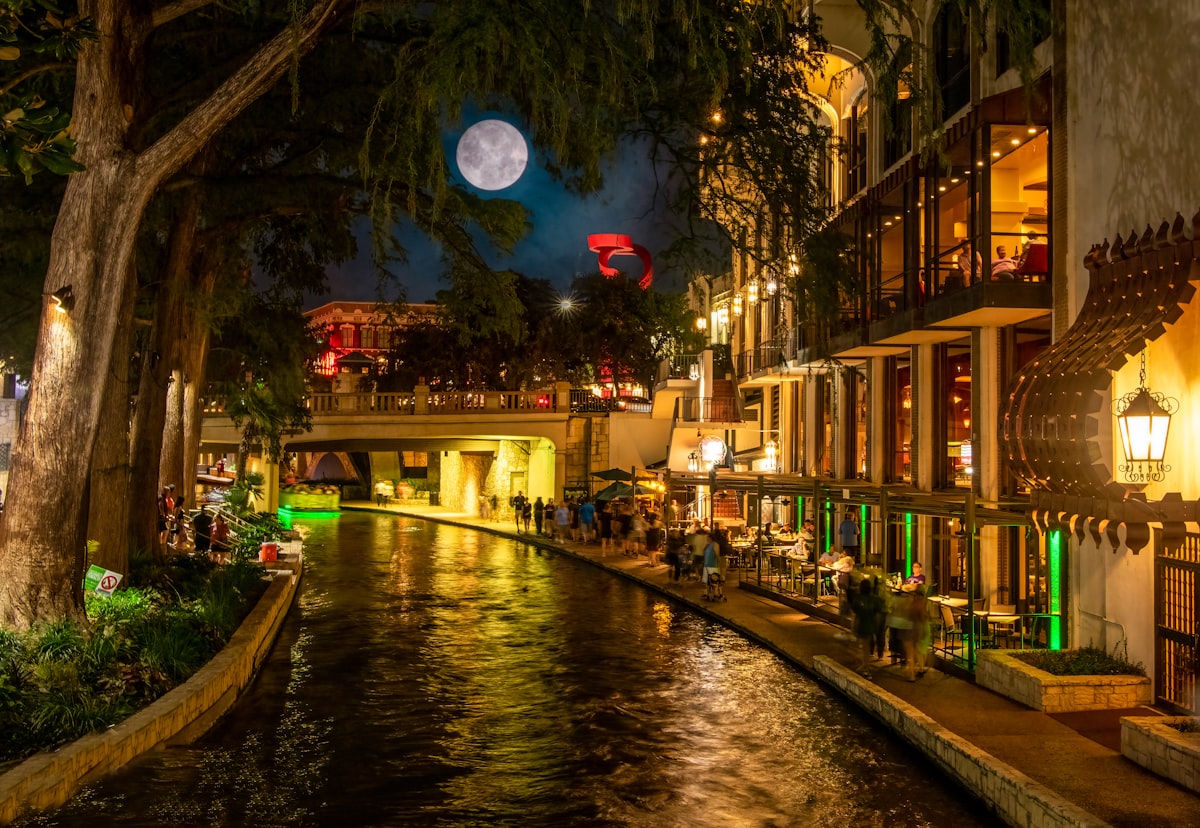
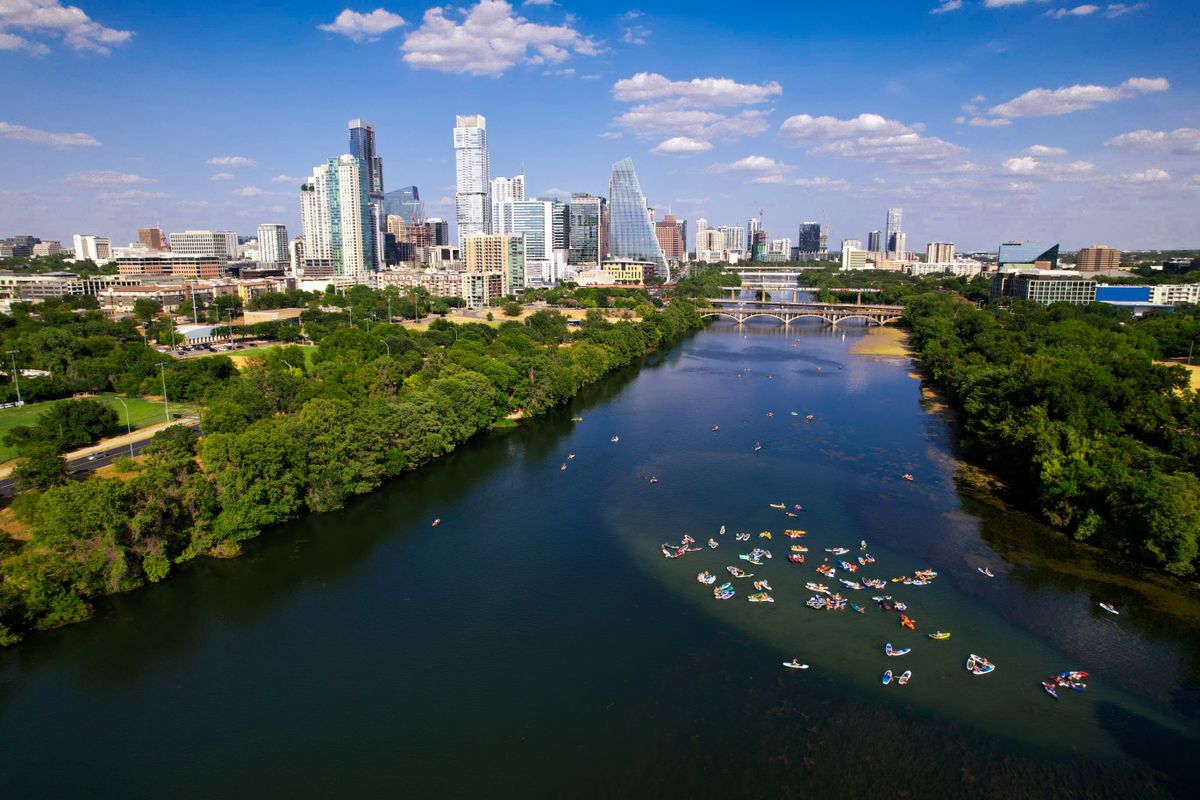
Lady Bird Lake (old-timers still call it Town Lake) is the dammed stretch of the Colorado River running right through downtown Austin, and because gas motors are banned, it's a quiet, kayak-and-paddleboard fishery with a surprisingly good largemouth bass population, all against the city skyline.
The bass relate to two things: structure out in the lake and overhanging cover along the banks. Out on the offshore rock piles and brush piles, fish a large Zoom Ol' Monster or Zoom Trick Worm on a Texas rig, or finesse them with a drop-shot and a Roboworm when the bite is tough. Along the shoreline, the cypress-lined channel-swing banks are gold, skip a wacky-rigged Yamamoto Senko or a hollow-body SPRO Bronzeye Frog up under the overhanging branches and hold on for the blow-up. A 7-foot medium-heavy St. Croix Bass X rod with a Shimano SLX baitcaster handles the worm and frog work; a spinning setup is better for the finesse drop-shot.
Rent or launch a kayak or paddleboard from the downtown access points, work the banks early before the paddling crowds, and you've got one of the most scenic urban bass fisheries in the country. Good areas to focus include the protected water around Red Bud Isle below Tom Miller Dam, the creek mouths where Barton Creek and other tributaries enter, and the many marina and bridge pilings that dot the lake, current breaks and shade that bass use to ambush bait. Early morning and the last light of evening are by far the best windows, both for the bite and for beating the kayak and paddleboard traffic that fills the lake by mid-day. Because the lake is long and narrow, the upstream end fishes more like a river (current, current seams) while the downstream end near the dam is more lake-like, a useful thing to know when you're deciding where to put in.
Largemouth Bass Fishing Techniques on a ReservoirLake Travis and Lake Austin: The Big Reservoirs
Just upstream, Lake Travis is the big, deep, clear Highland Lake, over 18,000 acres of canyon-walled reservoir. Its largemouth bass tend to run numerous but smaller, and they're famous for suspending over points and along drop-offs in the clear water. A topwater, a Strike King KVD jerkbait, or a Booyah spinnerbait worked near the surface calls them up, especially on windy main-lake points in fall. The clear water rewards natural colors and a longer cast.
Travis is also a white bass and striped bass lake. White bass run up the major creek arms, the Pedernales River, and the upper Colorado arm to spawn starting in late February into spring, fast, easy, schooling action on small jigs, spoons, and swimbaits (a Road Runner jighead is a classic). In the colder months, anglers fish the lighted boat docks in the lower lake at night for white and striped bass schooling under the lights. The major arms, the Pedernales River arm, Sandy Creek, and the upper Colorado arm, are the spots to intercept the spring white bass run; find the running fish and you can catch them on nearly every cast. Travis is a deep, structure-rich lake, so a fish-finder earns its keep here: look for bass relating to submerged points, humps, and the old creek channels, and count your lure down to the depth you're marking fish. Because the water is so clear and the lake gets heavy recreational boat traffic in summer, early morning, late evening, and night fishing consistently beat the crowded, bright midday hours.
Between Travis and Lady Bird sits Lake Austin, a narrow, grassy reservoir kept at a near-constant level, and it's the trophy-largemouth water of the three, with abundant hydrilla and a shoreline packed with boat docks that grow and hold quality fish. The constant level lets the grass flourish, and that grass plus the dock cover is the key: flip a jig or a Texas-rigged creature bait into the grass edges and under the docks, run a lipless crankbait (a Strike King Red Eye Shad) over the hydrilla in spring, or throw a swimbait along the deeper dock lines for a big bite. Lake Austin gets heavy recreational boat traffic in the warm months, so the early-morning and evening windows matter even more here. It's the spot to target if a personal-best Austin largemouth is the goal, patient work around the grass edges and dock lines turns up genuinely big fish year-round.
Catching Bass and White Bass Around Lighted DocksThe Colorado River and Hill Country Creeks: Guadalupe Bass
For something distinctly Central Texas, fish the flowing water for Guadalupe bass, the Texas state fish, a scrappy native black bass found only in the Hill Country streams. The Colorado River below the dams, Barton Creek, and the nearby San Marcos and Guadalupe rivers hold them in the current seams, riffles, and pools. Wade or kayak the clear water and throw small soft plastics, a Rebel Wee-Craw crankbait, or a fly, Guadalupe bass punch well above their size in moving water. They look like a smallmouth-spotted-bass hybrid and fight like it. Releasing these natives helps protect a Texas-only species, so most anglers fish them catch-and-release.
Catfish: The Bank Angler's Friend
Every Austin lake and the river hold catfish, blue, channel, and flathead, and they're the easiest fish to catch from shore. Channel cats take cut shad, chicken liver, or prepared stinkbait on a simple slip-sinker bottom rig fished off any bank, dock, or shoreline park. Blue and flathead cats grow big; flatheads prefer live bait (a live perch or shad) fished near structure. A 7-foot medium-heavy rod, a 4000-size spinning reel with 20-pound line, a Team Catfish Double Action circle hook, and a bag of cut bait is all you need. Evenings and nights in summer are prime, and it's perfect, low-cost fishing for families and first-timers.
How to Tie a Palomar KnotSunfish, Carp, and Panfish: The Easiest (and Most Fun) Start
If you're brand new or fishing with kids, don't overlook the sunfish, bluegill, redear (shellcracker), and longear, that fill every Austin water. A tiny hook under a bobber baited with a worm, or a 1/32-ounce Beetle Spin, will catch them all day off any dock, bank, or kayak, and they're the perfect way to learn. Lady Bird Lake and the neighborhood ponds are loaded with them.
Lady Bird Lake also has a cult common carp on the fly scene. The lake's clear flats hold big carp that cruise and tail in shallow water, and sight-casting a small carp fly or a piece of corn to them is a legitimate, challenging fly-fishing pursuit right downtown, Austin is one of the better urban carp fisheries in the country. If you fly fish, it's worth a morning. A 6- or 7-weight rod and a few carp flies (a Carp Carrot or a soft hackle) is the kit.
Reading Central Texas Water
Two things shape how you fish here: water clarity and heat. The Highland Lakes (Travis, Austin) run clear, especially Travis, so finesse presentations and natural colors out-fish loud ones much of the year, lighter line, longer casts, and subtle baits matter. Lady Bird and the rivers can be a bit more stained, which lets you fish bigger, bolder lures and get closer.
Heat is the other factor. Central Texas summers are brutal, and the bite follows the temperature: fish are shallow and active at dawn and after dark, then pull off to deeper structure, points, humps, creek channels, and the thermocline on Travis, through the midday heat. In summer, plan to fish the first two hours of light and the last two, or go at night; midday under a blazing sun is the toughest bite of the day. Wind is your friend on the big lakes, a chop on a main-lake point oxygenates the water and positions feeding bass, which is why fall topwater on a windy Travis point is so good.
Lake levels also swing. Travis is a water-supply reservoir and can rise or drop many feet with drought and rain, which moves the fish and changes which ramps and banks are usable, check current lake levels before you plan a bank or launch spot.
More on the Catfish Bite
Catfish deserve a second look because they're the most dependable catch in Austin and the friendliest to a beginner's budget. Channel cats are everywhere and willingly take prepared stinkbait, cut shad, or chicken liver on the bottom, fish a slip-sinker (Carolina) rig so the cat can pick up the bait without feeling the weight. Blue catfish in Travis and the river run big and prefer fresh cut shad; drift or anchor over flats and channel edges. Flatheads are the trophy of the three and eat live bait almost exclusively, a lively perch or shad fished near submerged timber and rock after dark is how you target a big one. Bank parks around the lakes, the area below the dams, and any lighted dock at night all produce. Bring a couple of rod holders, set multiple baits at different distances, and be patient, when a big blue or flathead loads the rod, you'll know.
Seasons and Timing
Central Texas fishes nearly year-round, but the bite shifts with the heat:
- Spring (March–May): Prime time. Largemouth move shallow to spawn, the white bass run up the creek arms, and everything is active. The best all-around season.
- Summer (June–September): Hot. Fish early morning and after dark, topwater at dawn, catfish at night, and deeper structure during the heat of the day. Night fishing the lighted docks is popular.
- Fall (October–November): A strong second peak, bass feed up on windy main-lake points; topwater can be excellent on Travis.
- Winter (December–February): Slower but quality, striped and white bass school under the lights, and big largemouth feed on warm afternoons. The white bass run starts in late February.
A First-Timer's Plan
No boat? Rent a kayak or paddleboard on Lady Bird Lake and work the cypress banks for bass downtown, the most uniquely Austin fishing experience, or bank-fish for catfish at any lakeside park in the evening. Want numbers and variety? A guided trip on Lake Travis or Lake Austin puts you on bass, white bass, and stripers with the boat and gear handled. Time a spring trip for the white bass run if you can, buy your Texas freshwater license online first, and remember to clean, drain, and dry between lakes.
For the full lake-by-lake breakdown, see our complete Austin fishing guide. Fishing more Southern bass and reservoir country? We also have first-timer guides for Lake Texoma and Lake of the Ozarks.