Fish
Fish Fire
Fire Hike
Hike Bird
Bird

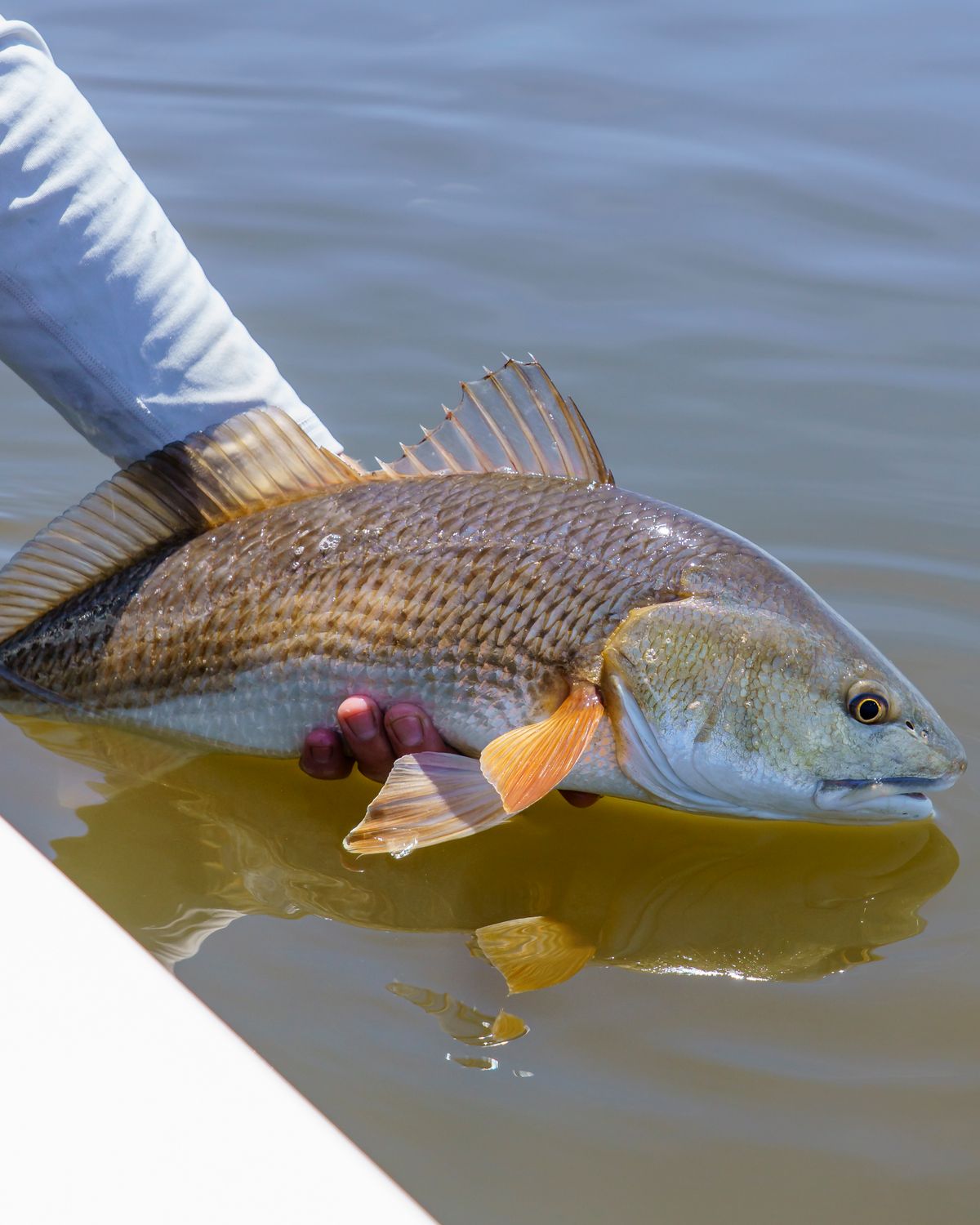

Most fly anglers think of saltwater fly fishing as a Florida Keys experience, permit, bonefish, tarpon, technical skiff fishing in tropical water with a $700-a-day guide. And the Keys are extraordinary. But there's another saltwater flats fishery that offers the same visual, sight-casting thrill, tailing fish in shallow water, precise presentations, the explosive eat, at a fraction of the cost, with more forgiving fish and more accessible water. It's the Texas coast, and the target is redfish.
The stretch from Rockport through Port Aransas to the Lower Laguna Madre near South Padre Island holds some of the most extensive and productive redfish flats in the country. The fish, copper-backed, black-spotted, averaging 20 to 30 inches, cruise and tail across grass flats in water so shallow their backs break the surface. You pole a skiff across the flat, spot the fish (a wake, a tail, a copper flash), cast a crab or shrimp fly three feet ahead of it, and watch a 7-pound redfish turn and inhale the fly with a confidence that makes the entire flat erupt in a muddy boil.
This is bonefishing's Gulf Coast cousin, similar technique, similar gear, similar visual intensity, but with a fish that's more forgiving of imperfect presentations, available year-round, and swimming in water you can drive to from Houston, Austin, San Antonio, or Dallas in half a day.
The Flats, Where Reds Live
Aransas Bay and Redfish Bay
The bays surrounding Rockport, Aransas Bay, Redfish Bay, Copano Bay, St. Charles Bay, are the epicenter of Texas coastal fly fishing. The grass flats here are vast, the water clarity is often exceptional (especially on the protected lee shorelines), and the redfish population is among the densest on the Gulf Coast.
Redfish Bay lives up to its name, acres of shallow turtle grass flats averaging 1 to 3 feet deep, with white sand potholes and oyster-shell edges that concentrate feeding fish. On a calm, clear morning, you can see redfish tailing 80 yards away, copper tails waving above the surface as the fish root for crabs in the grass. You pole the skiff into range, the guide calls the shot, "tailing red, 2 o'clock, 50 feet, stationary", and you deliver the fly.
The eat is the payoff. A tailing redfish that finds your crab pattern flares its gills, tips down, and inhales, you see the take before you feel it. Then the fish runs, and the drag sings across the flat.
The Laguna Madre
The Lower Laguna Madre stretching south from Baffin Bay to South Padre Island is the clearest water on the Texas coast, a hypersaline lagoon with visibility that rivals the Keys on good days. The sight-fishing here is the most technical on the Gulf Coast: you're casting to individual fish in gin-clear water over bright sand, and the fish can see you as well as you can see them.
The Laguna's redfish are more spooky than the Aransas Bay fish, the clarity demands longer casts, lighter presentations, and a stealth-first approach that mirrors Keys permit fishing. This is where Texas fly fishing reaches its highest level.
Port Aransas and Mustang Island
The flats around Port Aransas, particularly the Lydia Ann Channel grass flats and the back side of San Jose Island, hold redfish that push onto the shallow grass on incoming tides. The Port Aransas fishery is more accessible than the Laguna Madre and offers a mix of sight-fishing on the flats and blind-casting along the shorelines and oyster reefs.
The Fish, What Makes Redfish Different
If you've fly fished for trout your whole life, redfish will feel familiar and foreign simultaneously. Familiar because the sight-fishing discipline is the same, spot the fish, plan the approach, make one good cast. Foreign because the fish is bigger, stronger, and responds to the fly differently.
Redfish don't sip. They eat with their entire body. A tailing red that finds your fly drops its head, flares its gills, and vacuums the fly off the bottom with an aggression that moves water. The hookset is a strip-strike (like the Keys, pull the line, don't raise the rod), and the first run of a hooked redfish on an open flat, 50 yards of line clearing the deck in seconds, is the moment that converts trout anglers to saltwater.
Texas redfish average 20 to 28 inches on the flats (the slot limit is 20-28 inches). Bull reds, fish over 30 inches, push onto the flats during the fall spawning run (September-November) and provide the chance at a 10- to 15-pound fish on the fly.
Black drum share the flats with redfish and are an underappreciated fly-rod target. They tail and feed the same way, grow larger (30 to 50 pounds on the flats), and eat crab and shrimp patterns with the same commitment. A black drum on fly in shallow water is a legitimate achievement that most Keys anglers have never experienced.
The Technique, Poling and Presenting
Texas coastal fly fishing follows the same skiff-based model as the Keys: a guide poles a shallow-draft technical skiff across the flat while the angler stands on the bow scanning for fish. The guide spots most of the fish, they can see the subtle signs (a nervous wake, a mud puff, a tail flash) from the elevated poling platform better than the angler can from the bow.
The presentation: Cast the fly 3 to 5 feet ahead of a moving fish, or directly in front of a stationary tailing fish. Let the fly sink to the bottom. When the fish moves over the fly, give a short strip to create movement. The fish either eats or it doesn't, there's no drag-free drift, no hatch to match, no 12-foot leader. It's predator-and-prey at its most direct.
Wade Fishing, The Texas Tradition
Wade fishing is a Texas tradition that the Keys don't have, and it fundamentally changes the experience. On many flats around Rockport and Port Aransas, you can step out of the skiff and fish on foot, covering the flat by walking slowly through shin-deep water and casting to fish you spot from your lower vantage point.
Wade fishing is more physical and more intimate than skiff fishing. You're at the fish's level, in their world, feeling the bottom under your feet and the current against your legs. You move slower because every step sends vibration through the flat. You see fish later because you're lower, but when you do see a tailing red 30 feet away at eye level, the encounter is visceral in a way that bow-casting from a skiff can't match.
The wade-fishing technique: start at the upwind or up-current edge of a flat, walk slowly downwind, scanning ahead for tails, wakes, and nervous water. When you spot a fish, stop moving entirely. Let the mud settle around your feet. Plan the cast. Deliver the fly. The fish that eat in the shallows during a wade are often the most aggressive, they're feeding with purpose, and they commit to the fly with a head-shake that you feel through the rod grip before the fish turns and runs.
Wade anglers cover less water than skiff anglers, but the fish they catch feel more earned, and the connection to the flat itself, standing in the water where the redfish live, is the purest form of flats fishing.
Reading the Flat, What to Look For
The visual game on Texas flats is different from trout fishing. You're not reading current and structure, you're reading light, wind, and the fish's body language:
- Tails: A copper tail waving above the surface means a fish is feeding head-down on the bottom. Stationary tails are the easiest shot, cast directly in front of the fish.
- Wakes: A V-shaped wake pushing across the flat is a cruising fish. You have to lead it significantly, cast 5 to 8 feet ahead of the direction of travel.
- Nervous water: Subtle surface disturbance without a defined wake, a fish just below the surface, moving slowly. Harder to see, often multiple fish.
- Muds: A cloudy plume in the water means a fish (or school) has been feeding on the bottom recently. Cast to the clean-water edge ahead of the mud, the fish is moving away from the dirty water it created.
- Belly crawlers: A redfish pushing so shallow its back is out of the water, belly on the bottom. The most exciting sight on a Texas flat, these fish are actively feeding and usually eat anything that lands in front of them.
The Flies, Simple and Effective
Texas redfish flies are simpler than Keys permit and bonefish patterns. The fish are less selective, the water is often slightly stained (which forgives imprecise imitations), and the target species eat aggressively.
Crab patterns: Merkin-style crabs (#2-4, tan/olive) are the go-to for tailing reds on hard bottom. Weight them with bead-chain eyes for shallow water, lead eyes for deeper flats.
Shrimp patterns: EP Shrimp (#2-4, tan/root beer), Redfish Crack (#4), and Gotcha variants. Shrimp patterns work better than crabs when the fish are cruising rather than tailing.
Baitfish/Slider patterns: Redfish Slider, Texas Toad, Seaducer (#1/0-2, chartreuse/white). These push water and create a profile that attracts fish from a distance, good for off-color water or blind-casting along shorelines.
Weedless flies are important on the grass flats, a fly that picks up turtle grass on every cast is useless. Tie or buy patterns with the hook point riding up (inverted with bead-chain eyes on top) or with monofilament weed guards.
The Gear
Rod: 8-weight, 9-foot, fast action, the Texas redfish standard. The 8-weight handles the wind (the Texas coast is windy), throws redfish-sized flies accurately at 50-60 feet, and has enough backbone to turn a 28-inch red on the flat. A 9-weight works for bull reds in fall and for windy days.
Reel: Large arbor with a sealed drag and 150+ yards of backing. Redfish run hard, not as far as bonefish but with more power.
Line: Tropical-rated weight-forward floating line. Standard cold-water lines go limp in the Texas summer heat. A line designed for warm water (Cortland Tropic Plus, SA Amplitude Bonefish) maintains stiffness for clean casts.
Leaders: 9 feet, 16-20 pound fluorocarbon. Redfish aren't leader-shy like permit, 16-pound tippet is fine. Fluorocarbon for abrasion resistance against the oyster shell and for the faster sink rate that gets crab patterns to the bottom.
The wind: Like the Keys, the Texas coast is windy. Casting an 8-weight accurately at 50 feet in 15-20 mph wind is the baseline skill.
The Culture, Rockport and the Fly-Fishing Scene
Rockport is the epicenter of Texas saltwater fly fishing, the town has embraced sight-casting redfish as its identity, and the guide community here has developed the discipline into an art form. The local guide services specialize exclusively in poling technical skiffs and putting fly anglers on tailing reds.
The fly-fishing culture on the Texas coast is younger than the Keys tradition but growing fast. The access is better (you can wade many flats without a skiff), the fish are more forgiving than permit, and the proximity to Texas's major cities makes it a realistic weekend trip for millions of anglers who would never make it to Islamorada.
Port Aransas has emerged as a secondary fly-fishing hub, with guides offering both conventional and fly-rod sight-casting trips on the Mustang Island flats.
When to Go
- March–May: Spring, reds active on the flats, good water clarity, comfortable temperatures
- June–August: Summer, hot (95-100°F), but early mornings produce excellent sight-fishing before the heat builds
- September–November: Fall, bull reds on the beachfront, slot reds on the flats, the best all-around season
- December–February: Winter, cruising singles on warmer days, fewer fish on the flats but less pressure