Fish
Fish Fire
Fire Hike
Hike Bird
Bird

Galveston is not like fishing in Florida. It is not turquoise water over white sand. It is not reef-studded flats with bonefish and permit. Galveston is a barrier island sitting across the mouth of the largest estuary on the Texas coast, where the Trinity and San Jacinto Rivers pour freshwater nutrients into a sprawling bay system that feeds one of the most productive inshore fisheries in the country. The water is often stained, the bottom is mud and shell and grass, and the fish, redfish, speckled trout, flounder, sheepshead, black drum, are aggressive, plentiful, and catchable by anyone willing to wade in and learn.
What makes Galveston unique for a beginner is the sheer variety of ways you can fish without ever boarding a boat. You can wade knee-deep into West Bay and cast topwater lures at dawn. You can climb the granite boulders of the South Jetty and drop shrimp down for sheepshead. You can walk out on the 61st Street Pier and bottom-fish for black drum while your kids catch croaker beside you. You can surf fish the beachfront along the Seawall. All of this is accessible, affordable, and on one island.
For a full overview of Galveston's fishery, the species, the seasons, the charter fleet, and what makes each part of the bay system different, read our complete Galveston fishing guide.
Understanding the Galveston System
Before you rig a single rod, it helps to understand the geography. Galveston Island is a 30-mile barrier island separating Galveston Bay from the Gulf of Mexico. The bay side, north-facing, is where the inshore magic happens. West Bay sits behind the western half of the island. East Bay stretches toward the Bolivar Peninsula. The Houston Ship Channel cuts through the middle. And at the far western tip, San Luis Pass connects the bay to the Gulf through a narrow, current-swept cut.
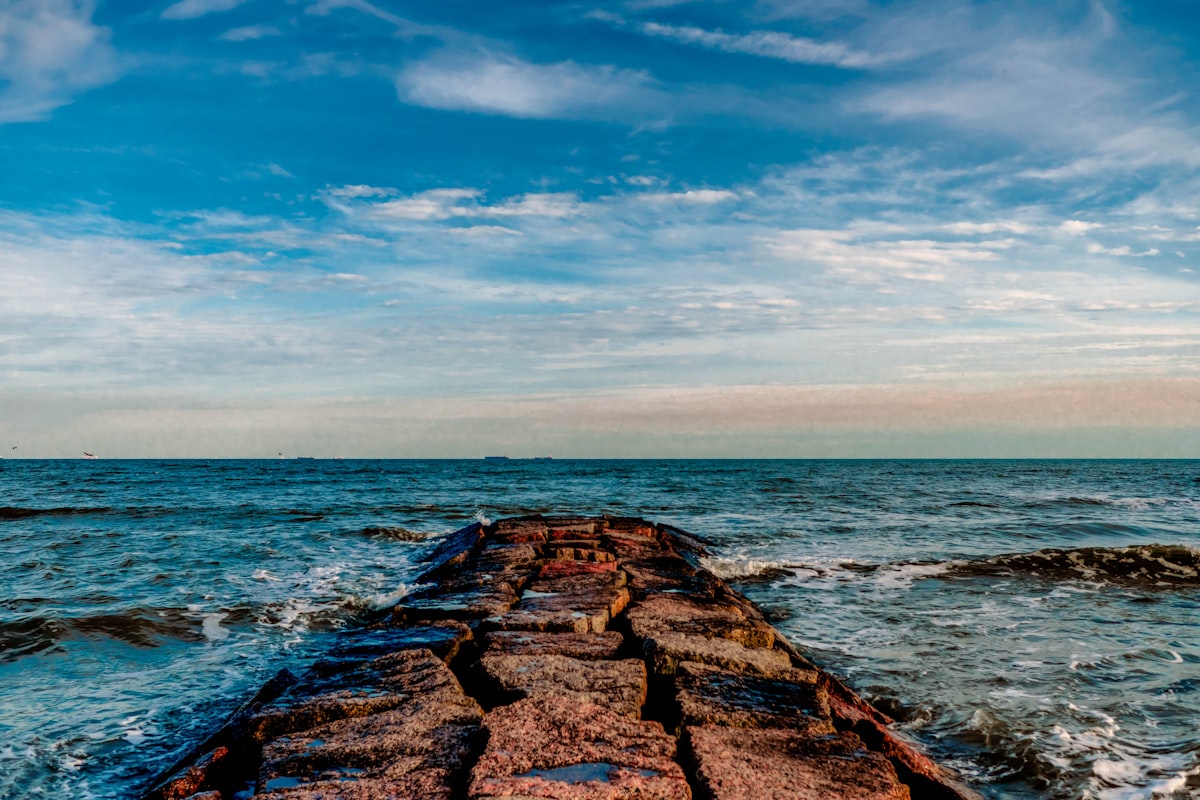
The Gulf side, south-facing, is beach, surf, and the massive granite jetties that guard the ship channel entrance. The South Jetty extends over five miles from the island's eastern tip. The North Jetty mirrors it from the Bolivar side.
Each of these environments fishes differently and demands slightly different gear and technique. That is what this guide covers.
Wade Fishing: The Heart of Galveston Fishing
Wade fishing is the signature style of the upper Texas coast. You park your truck, pull on old sneakers or neoprene wading boots, walk into the bay until the water hits your thighs, and start casting. No boat. No guide. No expensive equipment. Just you and the flat.
This is not a casual stroll. Wade fishing in Galveston is a deliberate, almost meditative pursuit. You move slowly, a few steps at a time, reading the water for signs of fish. You are looking for subtle clues: a slick on the surface (a sheen of oil released when trout or redfish feed on baitfish), mullet jumping nervously, a wake pushing across shallow water, or the distinctive bronze flash of a redfish tail poking above the surface as it roots in the mud.
Where to Wade
Galveston Island State Park (Bay Side): This is the best beginner wade spot on the island. The bay shore inside the park has a firm sand bottom with scattered patches of sea grass, easy to walk, easy to wade, and the water is often cleaner than other parts of the bay. Dana Cove and the flats behind the campground hold speckled trout and redfish year-round. No fishing license is required inside the state park, you only pay the park entry fee ($7 per adult). There is a two-rod limit inside the park.
8 Mile Road: Drive west on Seawall Boulevard and turn right on 8 Mile Road. Follow it to the end and walk out to the right. The flats along the north side of the island here are productive for trout and redfish on incoming tides. This is a favorite local spot, you will see trucks lining the road at dawn on summer mornings.
West Bay Shorelines: The entire north shore of Galveston Island faces West Bay, and much of it is wadeable. Look for areas where the grass meets sand, those transitions are where trout and redfish patrol. Jamaica Beach and Indian Beach areas offer decent access.
San Luis Pass (Wade with Extreme Caution): The pass itself is famous for big redfish and flounder, but the currents here are genuinely dangerous. Do not wade deeper than ankle-to-knee depth, and never wade during peak tidal flow. People have drowned here. Fish the edges, not the channel. If you are a beginner, skip San Luis Pass until you have more experience and fish one of the safer spots listed above.
Wade Fishing Gear
Your wade fishing rod is the same rod you will use for 80% of the fishing you do in Galveston. Here is the setup:
- Rod: 7-foot medium-action spinning rod, fast tip. A Penn Battle III 3000 combo or Daiwa BG 3000 combo gives you a quality reel already matched to the right rod. Either one handles everything from slot redfish to four-pound trout.
- Line: 15- to 20-pound braided line (PowerPro or Sufix 832). Braid gives you sensitivity to feel the tick of a soft bite on the bottom and casting distance with light lures.
- Leader: 2 to 3 feet of 20-pound fluorocarbon (Seaguar Red Label). Tie it to your braid with a double uni knot. The fluorocarbon is nearly invisible in the stained Galveston water and resists abrasion from oyster shell.
What to wear wading: Old sneakers, wading boots, or neoprene wading booties, never go barefoot. Galveston Bay has oyster shell that will cut your feet to ribbons and stingrays that bury in the sand. Shuffle your feet with every step (the "Galveston shuffle" or "stingray shuffle") to push rays out of your path before you step on them. Wear a wading belt with a stringer, pliers, and a bait pouch. Many Texas waders clip a small floating cooler (a "wade fishing caddy") to their belt to hold drinks and extra tackle.
Wade Fishing Galveston, Texas, Speckled Trout and RedfishWade Fishing Rigs and Techniques
The Popping Cork Rig (Best Beginner Setup)
This is the rig that catches more fish for Galveston beginners than anything else. Thread your mainline through a weighted popping cork, the Cajun Thunder or MirrOlure Pop-Pop are local favorites. Below the cork, tie 2.5 to 3 feet of 20-pound fluorocarbon leader to a 1/0 circle hook or a 1/8-ounce jighead.
Bait with a live shrimp hooked under the horn, or thread on a Bass Assassin Sea Shad in Chicken on a Chain or Opening Night color, or a Berkley Gulp Shrimp in New Penny or Molting color. Cast it near grass edges, over shell reefs, or along drop-offs. Pop the cork sharply with your rod tip, the sound mimics feeding fish and draws trout and redfish to investigate. Let it sit for five to eight seconds. Pop again. When the cork disappears under the surface, reel down and set the hook.
In shallow water (under two feet), shorten your leader to 18 inches so the bait stays in the strike zone. In deeper water (three to four feet), lengthen it to three feet or more.
Topwater Fishing (Early Morning and Evening)
When the conditions are right, overcast skies, calm water, low light at dawn or dusk, topwater lures produce explosive strikes from speckled trout and redfish that will ruin you for every other type of fishing.
The two iconic Texas topwater lures are the MirrOlure She Dog and the Heddon Super Spook (both in bone/silver or chrome/blue). These are "walk-the-dog" lures, you cast them out and twitch your rod tip in a steady rhythm to make the lure zigzag across the surface. The technique takes about twenty minutes of practice to learn, but once you have the cadence, it becomes second nature.
Cast over grass flats, along shoreline drops, or over submerged shell reefs. Work it steadily. When a trout or red blows up on it, wait a beat, count "one Mississippi", before setting the hook. If you swing too early, you will pull it away from the fish.
Wade Fishing Galveston Texas Using Magic Bait, Insane CatchesSoft Plastics on a Jighead (All-Day Workhorse)
When the topwater bite dies and the popping cork action slows, switch to a soft plastic on a jighead fished along the bottom. A Bass Assassin Sea Shad (4-inch, Chicken on a Chain or Space Guppy color) on a 1/8-ounce jighead is the standard Texas inshore lure. Cast it out, let it sink to the bottom, and retrieve with a slow twitch-twitch-pause rhythm. Most strikes come on the pause as the lure sinks.
For redfish specifically, a Berkley Gulp Shrimp in New Penny bounced slowly along shell bottom is deadly. Redfish feed nose-down, keep the bait on the bottom, not suspended.
Jetty Fishing: Galveston's Rock Piles
The North and South Jetties are massive granite structures stretching miles into the Gulf to protect the Houston Ship Channel. They are fish magnets, the rocks create habitat for barnacles, crabs, and small baitfish, which in turn attract sheepshead, redfish, black drum, bull reds, Spanish mackerel, and even tarpon in summer.
Jetty fishing is more physical than other styles. You are climbing over uneven, sometimes slippery granite boulders while carrying a rod and tackle. Wear shoes with good grip, old hiking boots or dedicated rock-fishing shoes with felt soles. Do not wear flip-flops. Move carefully. Waves can wash over the rocks unexpectedly, especially on the Gulf side.
Jetty Gear
Step up from the bay setup to something with more backbone:
- Rod: 7- to 7.5-foot medium-heavy spinning rod with a 4000-size reel. You need the extra power to pull fish away from the rocks before they cut your line on barnacles. A Penn Fierce IV 4000 combo handles the job.
- Line: 20- to 30-pound braid with a 25- to 30-pound fluorocarbon leader.
- Extra supplies: Bring more terminal tackle than you think you need. You will lose rigs to the rocks. Bring a dozen pre-tied leaders with hooks, extra weights, and a long-handled net if you are on the rocks near the water line.
Jetty Species and Rigs
Sheepshead (Year-Round, Best Winter Through Early Spring)
Sheepshead are the bread and butter of Galveston jetty fishing. These black-and-white-striped fish (locals call them "convict fish") hover around the rocks eating barnacles and crabs. They have hard, human-like teeth and a reputation as the craftiest bait stealers in saltwater.
Rig a Carolina rig with a 1/2-ounce egg sinker, a small bead, a barrel swivel, and 12 inches of 20-pound fluorocarbon leader to a #1 or #2 J-hook (not a circle hook, sheepshead have small, hard mouths and you need a sharp, direct hookset). Bait with fresh dead shrimp, peel the shell off for best results, or a small piece of blue crab. Drop your bait right against the rocks, as close to the structure as possible. You will feel a series of tiny taps, that is the sheepshead nibbling. Wait for a solid pull-down before setting the hook sharply. They require patience and a quick hand. A good session on the jetties can produce a cooler full of sheepshead fillets, which are some of the best-eating fish in the Gulf.
Bull Redfish (Year-Round, Best Fall)
Oversized redfish, fish over 28 inches, called "bull reds", cruise the jetties in schools, especially during the fall mullet run (September through November). These fish can run 30 to 45 inches and 15 to 30 pounds.
Use a heavier Carolina rig, 1-ounce egg sinker, 30-pound leader, 5/0 or 6/0 circle hook, baited with a chunk of fresh-cut mullet or a whole live mullet. Cast it along the rocks on the channel side and let it sit. When a bull red picks it up, the circle hook does the work, reel tight and keep steady pressure. Do not jerk the rod. These fish are catch-and-release only (over the 28-inch slot limit in Texas), so handle them carefully, take a quick photo, and let them go.
Spanish Mackerel (Spring and Summer)
When Spanish mackerel run the jetties from April through September, switch to a fast-retrieved silver spoon, a Johnson Silver Minnow 3/4 oz or Kastmaster 1 oz in silver. Cast it out past the rocks and retrieve as fast as you can crank. Mackerel hit on speed. Use a short length of wire leader or heavy 40-pound fluorocarbon to prevent bite-offs from their sharp teeth.
Fishing Galveston South JettyPier Fishing: The Easiest Entry Point
If you have never fished saltwater before, a Galveston pier is the place to start. Everything is provided, bait, tackle rental, a flat surface to stand on, and staff who will show you how to rig up. You cast, you wait, you catch fish. It is that simple.
61st Street Fishing Pier
The 61st Street Pier extends into the Gulf from the Seawall and is the most popular fishing pier on the island. The bait shop on-site sells fresh and frozen bait (shrimp, squid, cut mullet) and rents complete rod-and-reel setups. You are limited to two rods on this pier.
What you will catch: Sand trout (the most common catch, fast action, great for kids), gafftop catfish, croaker, black drum, sheepshead, and occasional redfish or bull reds. When king mackerel are running in summer, experienced pier anglers free-line live bait for kings, but that is an advanced game.
Best rig: A simple bottom rig, a 1-ounce pyramid sinker at the end of your line with a dropper loop tied 12 inches above it holding a #2 circle hook baited with a piece of fresh shrimp. Drop it to the bottom and wait. When your rod tip starts bouncing, reel tight and the circle hook sets itself. This rig catches sand trout, croaker, and whiting all day long.
For black drum, use the same rig with a bigger hook (3/0 circle) and a larger piece of shrimp or a chunk of blue crab. Black drum feed right around the pier pilings, especially on incoming tides.
Seawolf Park
Located on Pelican Island, Seawolf Park sits at the junction of the Galveston Ship Channel and Bolivar Roads. The fishing pier here overlooks deep water with strong current, which concentrates baitfish and attracts predators. Seawolf Park is famous for flounder, it produces some of the best flounder fishing on the upper Texas coast.
For flounder, use a Carolina rig with a live mud minnow or a Berkley Gulp Swimming Mullet in white or chartreuse on a 1/4-ounce jighead. Cast it along the bottom near the pier pilings and retrieve slowly, flounder are ambush predators that lie flat on the bottom and attack prey passing overhead. The bite feels like a mushy pull, not a sharp strike. Wait two seconds before setting the hook to let the flounder get the bait fully in its mouth.
Pier Fishing Seawolf Park in Galveston, Texas91st Street Pier (Galveston Fishing Pier)
The 91st Street Pier, also called the Galveston Fishing Pier, is longer than the 61st and extends further into the Gulf. It allows up to three rods (two of which can be surf rods). The pier has a bait shop and rental equipment. It tends to be slightly less crowded than the 61st and fishes well for the same species.
Surf Fishing: The Beachfront
The entire Gulf-facing beach along the Seawall and beyond is fishable, and surf fishing is a solid option when conditions cooperate, meaning relatively calm surf with some structure to cast toward (a sandbar, a gut, a rock groin).
Surf Gear
- Rod: 9- to 10-foot medium-heavy spinning rod with a 5000- or 6000-size reel. The length gives you the casting distance to reach the second sandbar where fish feed. A Penn Spinfisher VI 6500 on a 10-foot surf rod is the classic Texas surf setup.
- Line: 20- to 30-pound braid with a 30-pound fluorocarbon shock leader.
- Rod holder: A sand spike is essential. Pound it into the sand at a 45-degree angle and rest your rod in it. You cannot hold a surf rod for hours while waiting for a bite.
Surf Rigs and Bait
Use a fish-finder rig (also called a sliding sinker rig): thread your mainline through a 2- to 4-ounce pyramid sinker, add a bead, tie to a barrel swivel, and attach 18 to 24 inches of 30-pound fluorocarbon leader to a 3/0 circle hook. Bait with fresh dead shrimp (peeled for whiting and pompano, shell-on for redfish and drum), cut mullet, or a whole live crab for big black drum.
Cast past the first sandbar, you can often see it as a line of breaking waves about 30 to 50 yards out. The trough between the first and second sandbar is where the fish cruise. Set your rod in the spike and wait. Check your bait every 15 to 20 minutes.
Species from the surf: Whiting (Gulf kingfish), pompano, black drum, redfish, shark (blacktip and bull sharks are common in summer), and jack crevalle. The spring pompano run (March through May) brings schools of these excellent eating fish right through the Galveston surf.
The Texas Inshore Slam: Redfish, Trout, and Flounder
The ultimate Galveston achievement for any angler is the Texas Inshore Slam, catching a redfish, a speckled trout, and a flounder in a single day. All three species share the same bay system, but they occupy slightly different niches:
- Speckled trout feed over grass flats and shell reefs, suspended in the water column. Target them with the popping cork rig or topwater lures. Best in spring and fall. Slot limit: 15 to 25 inches, daily bag of five.
- Redfish feed on the bottom along grass edges, oyster reefs, and mud flats. They tail in shallow water and crush soft plastics, live shrimp, and gold spoons. Best year-round. Slot limit: 20 to 28 inches, daily bag of three.
- Flounder lie flat on sandy or muddy bottom near structure transitions, where mud meets shell, where a channel edge drops off, where pier pilings meet the bottom. Drag a Gulp Swimming Mullet or live mud minnow slowly along the bottom. Best in fall when they migrate to the Gulf to spawn (the "flounder run" in October and November). Minimum size: 15 inches, daily bag of five.
A wade fishing trip at Galveston Island State Park or along the West Bay shoreline in the fall gives you a legitimate shot at all three in one outing.
Bait: What to Use and Where to Get It
Live shrimp are the universal Galveston bait. They catch every species in the bay. Available at bait camps and tackle shops throughout the island. Hook them under the horn (the spike between the eyes) for a natural presentation under a popping cork or on a Carolina rig.
Live croaker are a controversial but effective trout bait in summer. A small croaker (3 to 4 inches) on a 1/0 circle hook free-lined over shell reefs catches trophy trout. Texas anglers have strong opinions about live croaker, you will hear arguments about them at every bait camp. Use them if you want big fish and do not mind the debate.
Fresh dead shrimp work for sheepshead, black drum, whiting, and sand trout. Buy them at pier bait shops if you do not want to deal with keeping live bait alive.
Cut mullet is cheap and available everywhere. Excellent for bull reds on the jetties and sharks in the surf. Cut into 1-inch chunks.
Artificial lures for Galveston: The Bass Assassin Sea Shad (4-inch) in Chicken on a Chain, Space Guppy, or Opening Night colors is the single most popular soft plastic on the upper Texas coast. The MirrOlure She Dog and Heddon Super Spook are the go-to topwaters. A 1/4-ounce gold Johnson Silver Minnow (spoon) is deadly on redfish over grass. For flounder, the Berkley Gulp Swimming Mullet in white or chartreuse is the standard.
Practical Details
Fishing license: Texas requires a saltwater fishing license for anyone 17 and older. A resident annual saltwater license costs $35. Non-residents pay $63 for an annual license. Temporary options are available, check the Texas Parks and Wildlife website for current multi-day pricing. You can purchase a license online at the TPWD website, at Academy Sports + Outdoors, at Walmart, or at most bait shops on the island. You do NOT need a license to fish inside Galveston Island State Park (park entry fee of $7 per adult still applies).
Pier fees: The 61st Street Pier and 91st Street Pier charge admission fees, expect to pay around $10 to $12 per person, with rod rental available for an additional fee. Seawolf Park charges a park entry fee of $5 per vehicle. These fees vary seasonally, so check current pricing before you go.
What to bring: Sunscreen (SPF 50+ minimum, the Galveston sun reflecting off the water is punishing), polarized sunglasses (mandatory for wade fishing, they let you see through the surface glare), a wide-brimmed hat, water (more than you think), pliers for hook removal, a small cooler with ice if you plan to keep fish, and a towel. If you are wade fishing, add a wading belt, a stringer, and old shoes you do not mind ruining.
Tides and timing: Fish the incoming (rising) tide whenever possible. Moving water pushes baitfish onto the flats and activates predator feeding. The first two hours of an incoming tide are prime time. Early morning (first light to 9 AM) and the last hour before sunset are the most productive windows, but Galveston Bay can fish well at any hour when the tide is moving. Check tide charts at the TPWD website or use the Tides Near Me app.
Weather and water clarity: Galveston water is not clear, it ranges from tea-colored to chalky green depending on recent rain, wind direction, and tidal flow. That is normal. The fish are adapted to it. After heavy rain or strong south winds, the water gets muddy and the bite slows. A few days of calm weather with light southeast wind is the sweet spot. Check the Galveston Bay fishing reports on the TPWD website before your trip.
Stingrays: They are everywhere in the shallows. Shuffle your feet when wading, slide them along the bottom rather than stepping. This bumps rays out of the way before you step on their spine. The stingray shuffle is not optional in Galveston Bay. It is the first thing every local guide teaches.
Wade Fishing The Surf with Quick How-To, Galveston TexasWhere to Buy Gear on the Island
If you arrive without gear or need to resupply, Galveston has solid options:
- Academy Sports + Outdoors, located on the mainland in League City (about 20 minutes from the island), this is the full-service stop for rods, reels, tackle, wading gear, and fishing licenses.
- Pier bait shops, The 61st and 91st Street Piers sell basic tackle, frozen and fresh bait, and rent rods. Good enough for a pier day.
- Local bait camps, Scattered along the bay side and near the Causeway. These sell live shrimp, live croaker, and local knowledge. Ask what is biting and where, bait camp operators know the bay better than anyone.
A Beginner's First Day: The Plan
If you have one day and zero experience, here is exactly what to do:
Morning (6 AM to 10 AM): Drive to Galveston Island State Park and pay the entry fee. Walk to the bay shoreline, wade in to knee depth, and fish a popping cork rig with live shrimp. Target the grass edges and any areas where you see bait flipping on the surface. This is your best shot at speckled trout and redfish in the most forgiving environment on the island.
Midday (11 AM to 2 PM): Drive to the 61st Street Pier. Buy bait at the shop, rent a rod if you need one, and bottom-fish with fresh shrimp on a simple bottom rig. Catch sand trout, croaker, and whatever else is biting. This is low-effort, high-reward fishing, good for regrouping after a hot morning of wading.
Afternoon (3 PM to sunset): If you have energy and the tide is right, drive to the South Jetty area and fish the rocks with fresh shrimp for sheepshead, or cast spoons for redfish along the channel side. If you are tired, stay on the pier, the late afternoon bite often picks up as the sun gets low.
That one-day plan puts you on three different fishing environments, three different species groups, and gives you a genuine taste of what makes Galveston one of the most versatile fishing destinations on the Gulf Coast.