Fish
Fish Fire
Fire Hike
Hike Bird
Bird

Rockport sits on the Texas Coastal Bend, a low, sun-baked town wrapped by five separate bay systems and some of the finest shallow-water fishing in the state. This is skinny-water country, grass flats you can wade for hours, oyster reefs that hold fish on every tide, and back lakes where a redfish's tail waves above the surface as it roots for crabs. Rockport is, more than almost anywhere in Texas, a wade-fishing town: you get out of the boat, slip quietly across the flats on foot, and hunt fish you can often see. This guide covers how to do exactly that, the species, the technique that defines the place, the five bays, and how a first-timer gets started.
For the bigger picture, the town, the guides, and how it fits a Texas coast trip, read our complete Rockport fishing guide. Nearby, see how to fish Port Aransas and Corpus Christi.
First: Your Texas License and Saltwater Endorsement
Anyone 17 or older needs a Texas fishing license to fish here, and for the bays you also need a saltwater endorsement added to it, the endorsement funds the coastal hatcheries and habitat work that keep this fishery strong. Texas Parks & Wildlife (TPWD) sells both online at tpwd.texas.gov, on the app, and at tackle shops, H-E-B, and Walmart around town; one-day all-water licenses are handy for a quick visit. Texas has specific bag and slot limits, redfish and trout in particular are managed with slot lengths and tags, and those rules change, so check the current TPWD saltwater regulations before you keep a fish.
The Fish of the Coastal Bend
Rockport's bays hold a classic Texas inshore lineup:
- Redfish (red drum), the flats bruiser and Rockport's signature fish. Copper-bronze, powerful, and often visible tailing in inches of water. Available year-round.
- Speckled trout (spotted seatrout), the other headliner, prized for both numbers and the trophy "gator" trout that cruise the grass. Best in spring and fall.
- Black drum, reliable, hard-pulling, and excellent eating in the smaller "puppy drum" sizes; a winter and spring standby around reefs and deep holes.
- Flounder, the ambush artist, thickest during the famous fall migration through the passes.
- Sheepshead, the striped, human-toothed reef fish that inhales fiddler crabs around any hard structure.
The Rockport Way: Wade Fishing the Flats
If there's one thing to learn here, it's wading. Rockport's bays are shallow, much of the best water is knee- to waist-deep, and getting out of the boat to fish on foot puts you stealthily among fish that a hull would spook. It's also how you sight-cast, the most thrilling way to catch a redfish.
How to do it: Ease into the water and move slowly, shuffle your feet to nudge stingrays out of the way (stingray guards on your shins are cheap insurance). Watch for signs: tailing redfish with their coppery tails breaking the surface, nervous water or a wake pushing across a calm flat, mullet scattering, or "slicks" (oily patches from feeding fish). Cast well ahead of a moving fish and lead it, so your lure crosses its path without landing on its head. Fish the grass edges, the potholes (sandy bare spots in the grass), and the drop-offs where a flat meets deeper water.
Wade Fishing a Texas Bay for Speckled TroutNot into wading? A kayak is the beginner's secret weapon in Rockport. It floats over water too skinny for a bay boat, it's silent, and it lets you slip into the maze of back lakes behind the barrier islands where redfish stack up and rarely see pressure. Paddle to a promising flat, then either fish from the seat or hop out and wade, the kayak carries your gear and marks your spot. You can also simply drift a flat from a shallow-draft boat with the trolling motor up, letting the wind ease you across the grass while you fan casts ahead of the drift. Both approaches cover more water than wading and are far more forgiving for a first-timer still learning to read the flats.
The Five Bay Systems: Where to Fish
Rockport's calling card is that five distinct bay systems fan out from town, so there's always protected water no matter the wind.
- Aransas Bay, the biggest and closest, 16 miles long. A little of everything: open-water trout drifting, grass flats and tidal lakes on the east shoreline for redfish and flounder, and oyster reefs in the south. The all-around starting point.
- Copano Bay, tucked behind the Rockport-Fulton peninsula, shallow and reef-strewn, a redfish and trout favorite. Tin Can Reef on the south side of the Copano Causeway is a well-known, accessible spot.
- St. Charles Bay, quiet, marshy, and protected, with backwater shorelines that hold redfish when the wind blows out the bigger bays.
- Mesquite and Carlos Bays, the more remote back bays toward the Aransas National Wildlife Refuge, lightly pressured, prime for sight-casting redfish.
- Goose Island / Lamar, the shoreline around Lamar Beach Road (near the famous 1,000-year-old "Big Tree" in Goose Island State Park) offers wadeable flats and some of the area's most convenient bank and pier access.
Rigs, Lures, and Bait
You can cover 90% of Rockport fishing with a handful of setups.
The popping cork rig is the great equalizer and the best starting point for a beginner. A concave "popping" cork on a wire leader above 18–24 inches of fluorocarbon and a live shrimp (or a soft-plastic shrimp), pop it with a sharp snap of the rod, let it sit, pop again. The chug imitates feeding fish and draws redfish and trout from across a flat. Deadly and nearly foolproof.
Catching Redfish and Trout with a Popping CorkSoft plastics are the wade fisher's workhorse, a paddle-tail or shrimp-tail on a 1/8- or 1/4-ounce jighead, in colors like plum, morning glory, and pumpkinseed-chartreuse. Bounce it slowly along the bottom over grass and through potholes.
Gold weedless spoons (a 1/4-ounce Johnson Silver Minnow in gold) are made for redfish, cast one over the grass and reel it steadily; the flash and thump are irresistible.
Topwater plugs (a MirrOlure She Dog or Heddon Super Spook Jr.) draw explosive strikes from big trout and redfish at first and last light, the most exciting way to fish the flats.
Natural bait shines when the bite is tough: live shrimp under a cork, finger mullet or cut mullet on a Carolina rig for redfish and black drum, and fiddler crabs on a small hook for sheepshead. In summer, croaker is a trophy-trout secret.
Fly Fishing the Flats
Rockport is one of the premier saltwater fly destinations in Texas, and sight-casting a fly to a tailing redfish on a clear, calm flat is a bucket-list experience. An 8-weight rod with a floating line, a 9-foot leader, and a weedless shrimp or crab pattern (a tan Kwan or a small Clouser) is the standard kit. Wade slowly, spot the fish, and lead it with a soft cast. It's technical, humbling, and gloriously rewarding, and a local guide who poles a skiff will shorten the learning curve enormously.
Fishing Without a Boat
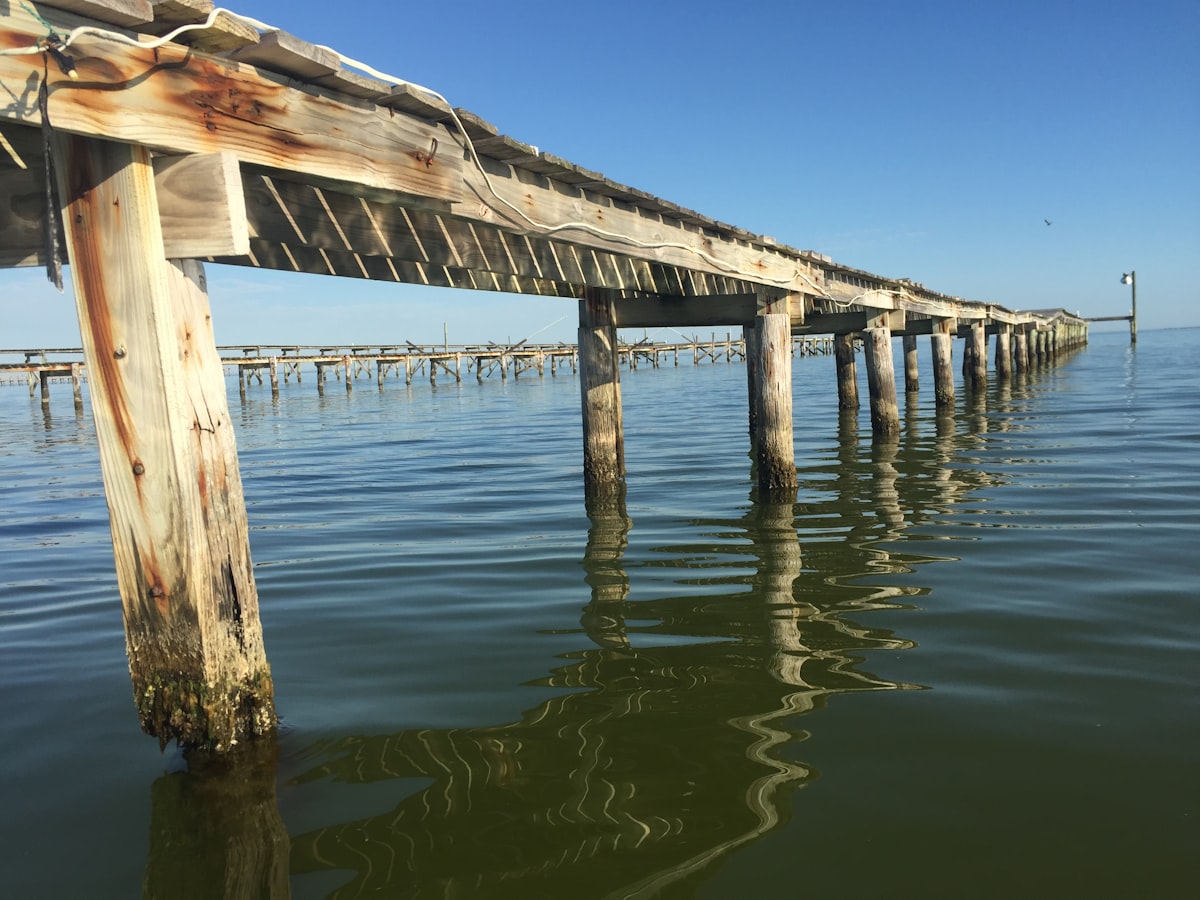
You don't need a boat to catch fish in Rockport, the town has some of the better public shore access on the Texas coast. The Copano Bay Fishing Pier, built on the old causeway, reaches far out over productive reef water and gives you deep water and current without a hull; it's lit for night fishing, when trout and reds hunt the light lines. Rockport Beach and the harbor jetties, the Goose Island State Park pier and shoreline, and the wadeable flats along Lamar Beach Road all put fish within reach of an angler on foot. From shore, keep it simple: live shrimp under a popping cork, cut mullet on a Carolina rig for redfish and black drum, or a fiddler crab around the pilings for sheepshead. Fish the moving water on either side of a tide change, and hit the piers early, late, or after dark when the fish move shallow.
Reading the Tides and the Wind
On the Coastal Bend, wind moves more water than the moon does. The astronomical tides are small, but a stiff south wind piles water onto the flats and a north wind (especially a winter front) can drain a bay in a day. Learn to use it: rising water pushes redfish up onto the flats and into the back lakes to feed; falling water pulls them off the flats and stacks bait in the guts and drains, where predators wait. Fish moving water, the first hours of a rising or falling tide, and pick a bay that's protected from whatever direction the wind is blowing. That last trick is exactly why having five bay systems matters.
When to Go
- Spring (March–May): Speckled trout turn on as the water warms, big trophy trout prowl the grass, and redfish get active on the flats. Prime, comfortable fishing.
- Summer (June–August): Hot and reliable, early-morning topwater, live-bait fishing through midday, and steady redfish on the flats. Beat the heat by fishing dawn.
- Fall (September–November): The peak. Redfish school up and get aggressive, trout fishing is excellent, and the flounder run through the passes (October–November) is legendary. The best all-around season.
- Winter (December–February): Fewer crowds and a shot at the biggest trout of the year in the deeper holes, plus strong black drum fishing. Watch the cold fronts, and the whooping cranes wintering at nearby Aransas Refuge.
Gear: What to Bring
- Rod and reel: A 7-foot medium or medium-light spinning rod with a 3000-size reel (a Shimano Stradic or a Penn Battle III) is the perfect Coastal Bend inshore stick. Spool 10- to 15-pound braid with a 20-pound fluorocarbon leader.
- Wading gear: A wade belt with a rod holder, a small tackle box, stringer, and pliers; stingray guards for your shins; and quick-dry wading pants or shorts and wading boots. A Frabill or floating wade net helps.
- Terminal tackle: Popping corks, an assortment of 1/8- and 1/4-ounce jigheads, gold weedless spoons, a couple of topwater plugs, and Carolina-rig weights and circle hooks for bait.
- Lures: Berkley Gulp! Shrimp in New Penny, paddle-tail soft plastics, and a MirrOlure or two.
- Sun protection: Polarized sunglasses (essential for sight-casting), a wide-brim hat, a long-sleeve sun shirt, and heavy sunscreen, the Texas coast sun is relentless.
Hire a Guide
For a first trip, a Rockport guide is worth every penny. Reading the wind, picking the right bay, spotting tailing reds, and knowing which flat is holding trout this week is exactly the local knowledge you're paying for, and a guide provides the boat, tackle, and bait. Ask specifically for a wade-fishing or fly trip if that's what you want; Rockport captains specialize in both, and there's no faster way to learn to hunt fish on foot.
A Simple Game Plan for Your First Day
If it's your first time on the Coastal Bend and you're going it alone, keep it simple and stack the odds. Check the wind forecast the night before and pick the most protected of the five bays, a lee shoreline where the water stays clear and calm. Get on the water at first light, when the topwater bite is best and the flats are quiet. Start with the beginner-proof combo: a live shrimp under a popping cork worked along a grass edge or a reef, which will tell you quickly whether fish are around. When you find them, slow down and work the area thoroughly before moving. Watch the water constantly for tails, wakes, and nervous bait, in Rockport, the fish you see are the fish you catch. If the wind blows one bay out, drive to another; that flexibility is the whole advantage of fishing here. And if you have any doubt, book a half-day with a guide first, one morning of watching a local read the flats teaches more than a dozen trips of guessing.
A Word on Conservation
The seagrass flats that make Rockport special are fragile and slow to heal. Don't "prop-scar" them, lift your motor and pole, drift, or wade in shallow grass rather than plowing through it. Honor the redfish and trout slot limits (they exist because Texas rebuilt this fishery from hard times), handle fish you'll release with wet hands, and consider letting the big breeder trout and bull reds go, a 30-inch trout is a genetic treasure worth far more swimming than on ice. Pack out your line and trash, respect the wildlife refuge boundaries, and leave the flats the way you'd want to find them.