Fish
Fish Fire
Fire Hike
Hike Bird
Bird

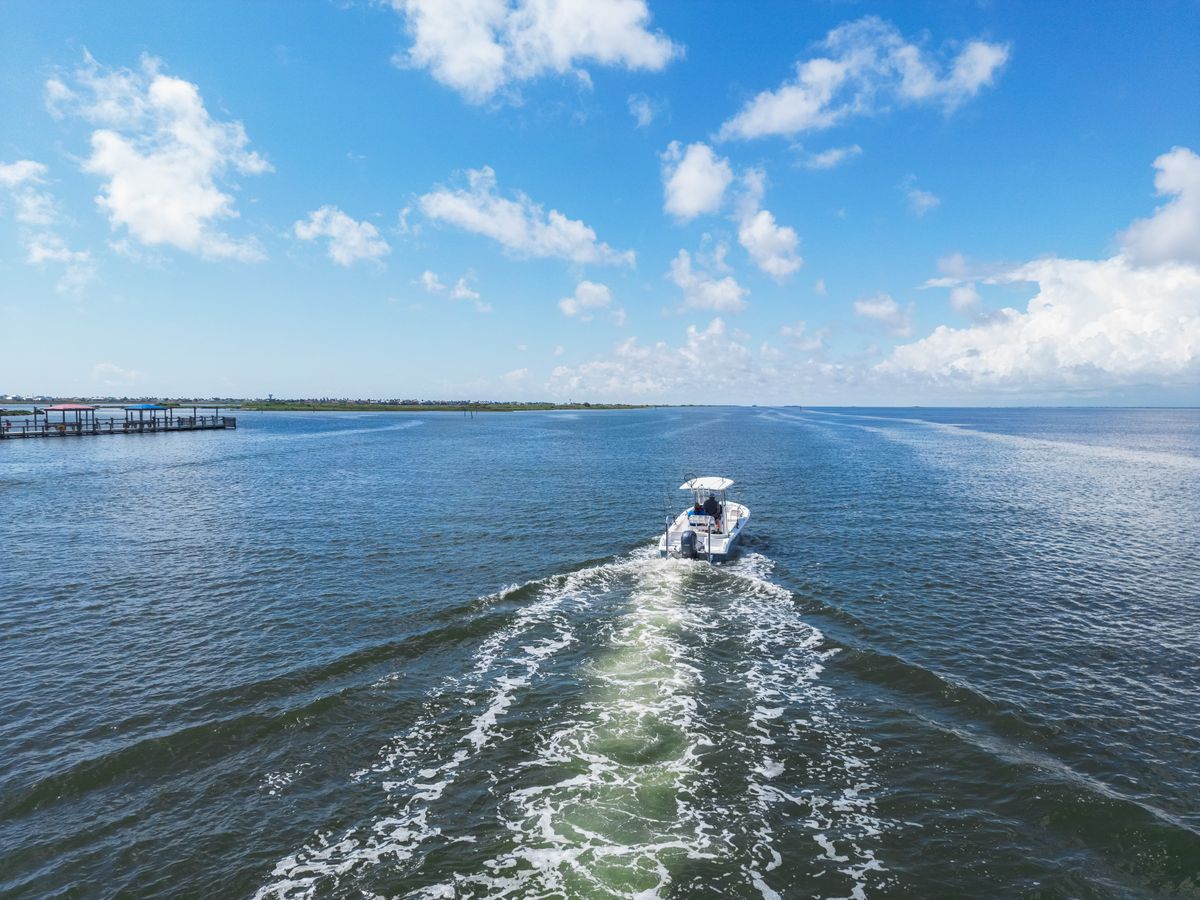

Corpus Christi is where Texas saltwater fishing gets serious. If Galveston is the big, brown, river-fed bay system at the top of the coast and Port Aransas is all about the jetties and the pass, Corpus Christi is something different entirely, the gateway to the Upper Laguna Madre, one of only a handful of hypersaline lagoons on the planet, and the heart of Texas trophy-trout country.
The water here is shallow, clear, and saltier than the open Gulf. No major river dumps freshwater and sediment into the system, so instead of fishing stained water from a boat, anglers here climb out and walk. Wade fishing the grass flats is the signature Corpus Christi experience, and it is the single most important thing to understand about this fishery. The biggest speckled trout in Texas, fish pushing 30 inches and ten pounds, are caught within an hour of downtown by anglers standing waist-deep in clear water throwing topwaters at sunrise.
This guide breaks Corpus Christi down by its distinct fisheries: the Upper Laguna Madre, the legendary rocks of Baffin Bay, the accessible bays and jetties around the city, and the wild surf of Padre Island National Seashore. Each fishes differently and rewards different gear and technique.
Understanding Corpus Christi's Waters
Corpus Christi sits on the western shore of Corpus Christi Bay, a roughly circular, fairly deep bay connected to the Gulf through Aransas Pass to the north and the Packery Channel to the east. Nueces Bay branches off to the northwest, fed by the Nueces River, the one real freshwater influence in the system.
The crown jewel lies to the south. The Upper Laguna Madre is a long, narrow, ultra-shallow lagoon running south from the city behind Padre Island. Average depth is only two to three feet. Because evaporation outpaces freshwater inflow, the Laguna is hypersaline, saltier than the ocean, which keeps the seagrass beds thick and the water gin-clear. Those grass flats are a nursery and a feeding ground, and they hold redfish and trout year-round.
About 35 miles south, the Laguna pinches into the Land Cut, a channel through miles of exposed flats, and just before it, Baffin Bay opens to the west, a shallow, rock-studded bay that is, simply, the most famous trophy speckled-trout water in the United States.
Closer to town, the JFK Causeway crosses the Laguna to Padre Island and gives shore and kayak anglers easy access to grass flats and the Packery Channel, while the Gulf beaches of Padre Island National Seashore stretch 65 miles south into wild, undeveloped surf. Here is how to fish each.
A word on wind: Corpus Christi is one of the windiest stretches of the entire Gulf Coast, a 15-to-25-mph southeast wind is a normal day, not a bad one. Wind dictates everything here. It muddies the windward shorelines and clears the lee ones, so the smartest move is often simply to fish the protected side of a flat, or duck into a tucked-away pocket like the back of Baffin, when the open Laguna is blown out. Calm mornings before the wind builds are gold, get on the water at first light.
Wade Fishing the Upper Laguna Madre
If you do one thing in Corpus Christi, wade the Laguna Madre. The water is shallow and clear enough to sight-cast, the bottom is mostly firm sand and grass, and getting out of the boat lets you move quietly through water too skinny and too spooky to fish well from a hull.
Where to start: The flats around Pita Island, Nighthawk Bay, the King Ranch shoreline, and Bird Island Basin (off the JFK Causeway) are classic wade water. Look for potholes, sandy depressions in the grass where redfish and trout sit waiting to ambush bait, and grass lines where thick seagrass meets open sand.
How to read it: In clear, shallow water you fish with your eyes as much as your rod. Watch for nervous water, mud boils where a redfish kicked off the bottom, slicks (oily spots where trout are feeding below), and tailing redfish, fish nosed down with their copper tails waving above the surface. Approach slowly; sound and shadow travel a long way in skinny water. And shuffle your feet, the sandy bottom hides stingrays, so wear shin guards and never lift-and-step.
Gear: A 7' to 7'6" medium or medium-light fast-action spinning rod with a 2500–3000 reel is the standard. A St. Croix Avid Inshore 7' M or Shimano Stradic FL 3000 is a do-everything Laguna setup; a Penn Battle III 3000 Combo is the budget-friendly workhorse. Spool 10- to 15-pound braid (PowerPro or Sufix 832) and tie on a 20- to 30-pound fluorocarbon leader (Seaguar). Braid's thin diameter and zero stretch let you cast a light lure a country mile and feel a subtle take.
Lures: Soft plastics on a light jighead are the bread and butter, a Bass Assassin Sea Shad or Z-Man PaddlerZ in plum, pumpkinseed-chartreuse, or morning glory on a 1/16- to 1/8-ounce jighead. Work it slow along the grass lines and hop it through potholes. At first and last light, throw a topwater, a Heddon Super Spook Jr. or MirrOlure Top Dog, and hang on for the blow-up. Under a Mansfield Mauler or Cajun Thunder popping cork, a soft plastic or live shrimp covers water and calls fish in when the bite is scattered.
Redfish Wade Fishing the Upper Laguna Madre, Corpus ChristiBaffin Bay: The Trophy Trout Capital
Baffin Bay is a different animal. This shallow, remote bay off the southwestern Laguna is studded with serpulid rock formations, reefs built over 3,000 years ago by colonies of marine worms and found in only a few places on earth. Those rocks hold bait, break the current, and give giant speckled trout something to set up on. Baffin produces more genuine trophy trout, fish over 28 inches and pushing the magic ten-pound mark, than anywhere in the country.
The catch: those same rocks will destroy a lower unit, slice a wading boot, and break your line if a big fish wraps you. Baffin is big, exposed, easy to get lost on, and unforgiving, it is the number-one fishery in Texas to fish with a local guide your first time. Spots like the Badlands, Cathead, Penascal Point, and Compuerta Pass are legendary, and a captain who knows them puts you on rocks you would never find alone.
How to fish it: On calm mornings, throw a topwater, a MirrOlure She Dog or Super Spook, over and around the rocks for explosive strikes. As the sun climbs, switch to a slow-sinking twitch bait. The Paul Brown's Original (Corky) is the iconic Baffin big-trout lure: a soft, slow-sinking plug worked with subtle twitches to tempt the biggest, laziest trout into eating. Many guides drift across the rock fields, letting the wind push the boat over structure while casting soft plastics ahead, then anchor and pick a productive stretch apart. In summer, when it is legal and available, free-lining a live croaker on a 2/0 to 3/0 circle hook is a deadly (and hotly debated) big-trout tactic.
Reading the bite: Lure color matters more in Baffin's clear water than almost anywhere. Start with natural patterns, bone and pearl on topwaters, plum or morning glory on soft plastics, and go darker (black, red-shad) under cloud cover or in water stained after a blow. When a big trout follows but will not commit, the dead-stick trick can trigger her: let the Corky or soft plastic sink and sit dead still on the bottom for a three- or four-count, then barely twitch it. Cold, pressured trophy trout will often eat a motionless bait when they ignore everything that moves.
Prime time is March through June, when the biggest trout move shallow to spawn, but Baffin gives up giants on cold winter days too, when trophy hunters wade muddy, rock-lined shorelines throwing Corkys in the cold.
Wade Fishing Baffin Bay for Trophy Speckled TroutA note on conservation: South Texas trout populations swing with hard freezes and fishing pressure, and the rules here change more than almost anywhere on the coast. Seasons and slot limits change, always confirm the current Texas Parks & Wildlife (TPWD) trout limits for the South Zone before you keep a fish.
Corpus Christi Bay, the Jetties, and Fishing Without a Boat
Corpus Christi is unusually good for shore and kayak anglers. The Packery Channel jetties, two concrete jetties with handrails on the east end of the JFK Causeway, are the most accessible structure fishing in town. The handrails and flat concrete make them far friendlier than the granite boulders up at Port A, and they hold redfish, speckled trout, sheepshead, mangrove snapper, Spanish mackerel, and, in summer, the occasional tarpon and kingfish rolling through the cut. Fish a Carolina rig with live or fresh shrimp tight to the rocks, or a gold Johnson spoon for reds.
Along the JFK Causeway and the Laguna shorelines, kayak anglers launch into flats that boat traffic never touches. Bob Hall Pier (recently rebuilt) at Padre Balli Park puts you over the surf zone without a boat, and the Oso Bay and Nueces Bay flats offer easy wade and kayak access to redfish, black drum, and sheepshead.
For an even more structure-heavy, jetty-focused version of this fishing, the Port Aransas guide just up the coast is worth a read; for the Lower Laguna Madre's version of the same flats game, see our South Padre Island guide. And to understand why anglers travel from across the country to wade this lagoon, this is a good overview:
Why You Fish the Laguna Madre, Corpus ChristiPadre Island National Seashore: Surf and Sharks
South of town, the developed beaches give way to Padre Island National Seashore (PINS), 65 miles of undeveloped Gulf beach and the longest stretch of wild surf-fishing in the country. The first few miles are passable in any vehicle; beyond that you need four-wheel drive, recovery gear, and a full tank, and you can fish for miles without seeing another soul.
The surf gives up pompano, whiting, black drum, redfish (bull reds in fall), and Spanish mackerel on cut bait and Fish-Bites in the closer guts. But PINS is most famous for sharks, bull, blacktip, dusky, and the occasional tiger and hammerhead patrol the surf, and a small, dedicated crew targets them with heavy gear and kayaked-out baits. If big-game surf fishing is your goal, go with someone experienced; this is serious, sometimes dangerous fishing.
Surf gear: a 10- to 12-foot surf rod and a 6000–8000 reel to punch baits past the breakers, 20- to 30-pound line, and a fish-finder rig with a pyramid sinker. Bring a sand spike, a long-handled net, and more water than you think you need.
When to Fish Corpus Christi
Corpus is a year-round fishery, but the target shifts with the season:
- Spring (March–May): Prime trophy-trout season. The biggest Baffin and Laguna trout move shallow to spawn, and topwater fishing peaks.
- Summer (June–August): Hot, but excellent early and late. Trout, redfish, black drum, and the live-croaker bite; tarpon and sharks show in the Gulf and along the beaches.
- Fall (September–November): The redfish run. Slot reds school heavily and bull reds push the passes and the surf; flounder run as the water cools.
- Winter (December–February): The trophy-trout specialist's season. Cold fronts push big trout onto muddy, rock-lined shorelines for patient waders throwing Corkys; black drum and sheepshead stack up around structure.
Conditions shift year to year, and a hard South Texas freeze can reset the trout fishery, so check a current local report and the latest regulations before you plan a trip.
Texas Licenses and Regulations
Anyone 17 or older needs a Texas saltwater fishing license with a saltwater stamp (sold by TPWD online, at sporting-goods stores, and at many bait shops). Slot and bag limits apply to redfish, speckled trout, black drum, and flounder, and Texas trout and flounder rules have changed repeatedly in recent years, with special provisions for the zone that includes Corpus Christi and Baffin Bay. Do not rely on what was true last season: confirm the current TPWD limits before you keep anything.
Corpus Christi is a big, complicated fishery, 600 square miles of lagoon running from gin-clear grass flats to boat-eating serpulid rock, with the wind rewriting the plan almost daily. Before you head out, pin down the current TPWD limits for the zone that covers Corpus Christi and Baffin Bay, read the day's wind and tide, and figure out which shorelines will fish clean in the forecast, that homework is the difference between a great day and a long, fishless education on the water.