Fish
Fish Fire
Fire Hike
Hike Bird
Bird

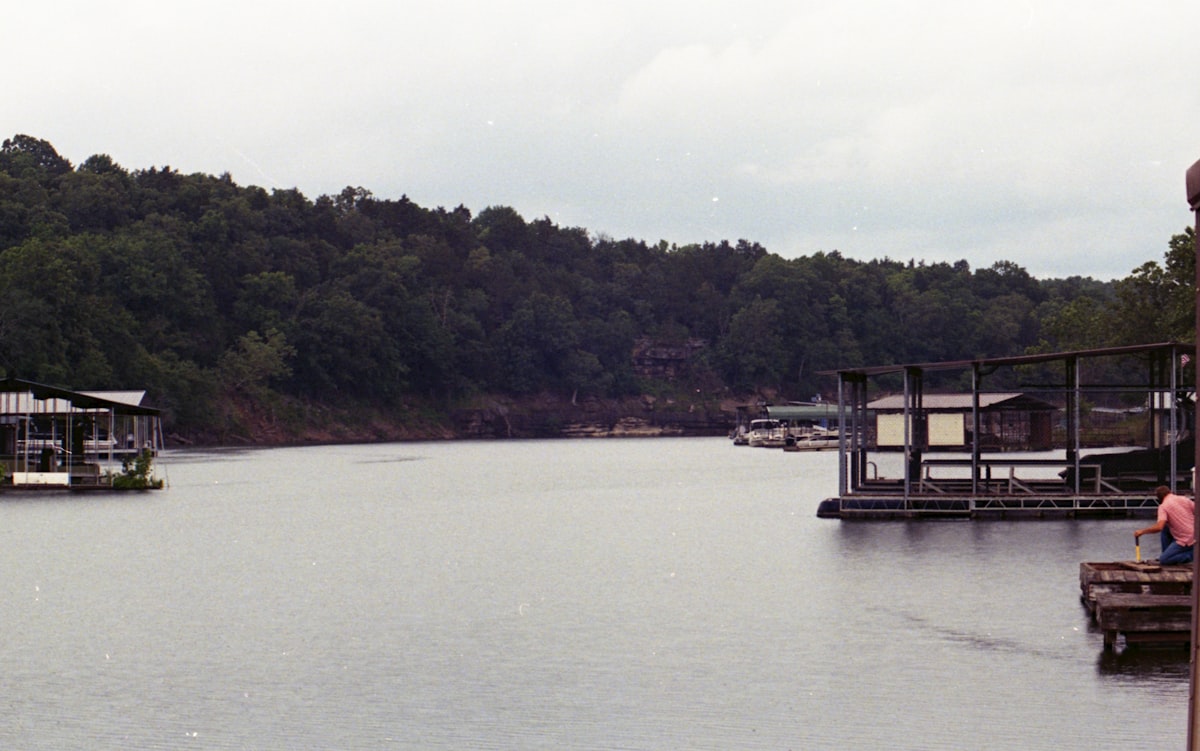

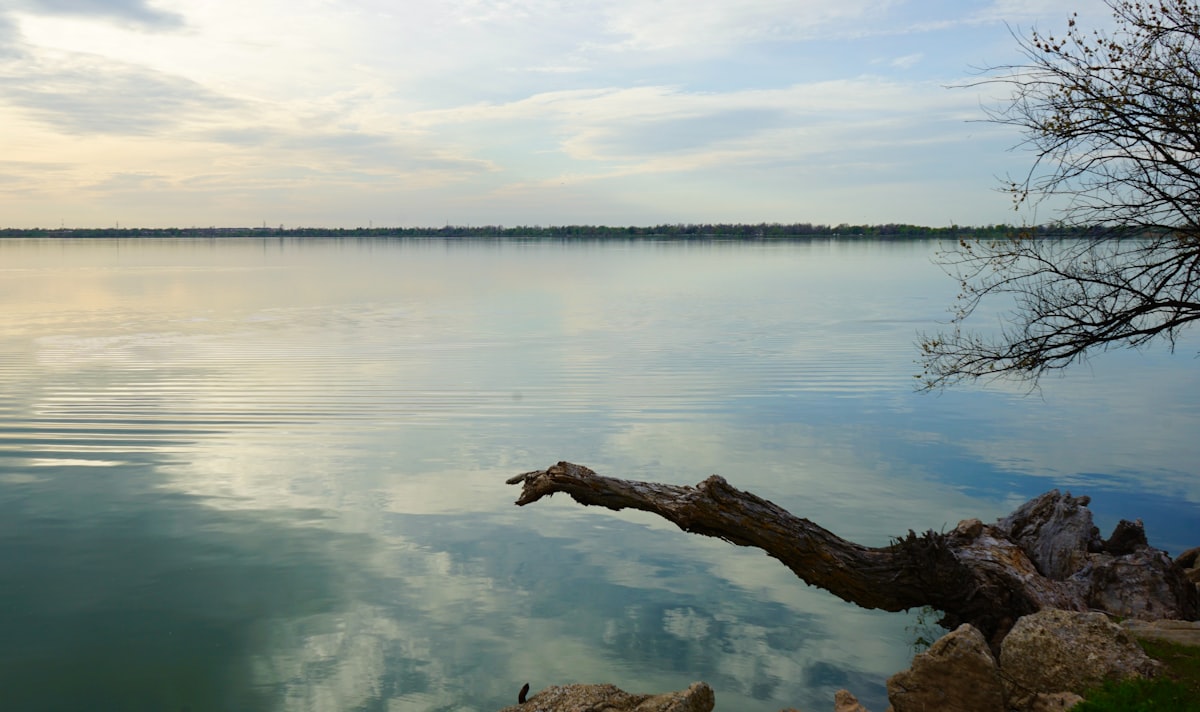
Lake Texoma sits on the Oklahoma-Texas border where the Red River and Washita River converge into a 89,000-acre reservoir that has earned the title "Striper Capital of the World", and it is not marketing hyperbole. Lake Texoma is one of the only reservoirs in the United States where striped bass reproduce naturally. The flows from the Red and Washita rivers create the conditions that stripers need to spawn in freshwater, sustaining a population that does not require stocking. The result is a fishery with enough stripers to support a daily limit of 10 per angler, the most generous striper limit you will find anywhere.
But stripers are not the only game. Lake Texoma holds massive blue catfish (the lake record is over 100 pounds), channel catfish, flathead catfish, largemouth bass, smallmouth bass, spotted bass, white bass, and crappie. The lake's sheer size and the diversity of structure, flooded timber, creek channels, main lake points, river channels, rocky bluffs, means there is something to catch on any given day regardless of season or skill level.
The border location creates a unique licensing situation. The lake straddles Oklahoma and Texas, and you will cross the invisible state line repeatedly while fishing. A special Lake Texoma fishing license covers both sides, one of the best deals in fishing.
Striped Bass: Why They Call It the Capital
Stripers in Texoma average 5 to 15 pounds, with 20-pounders common and the occasional 30-pound fish that makes the dock at the marina go quiet. The population is enormous, schools of hundreds of fish stack up on underwater structure, chase baitfish (threadfin shad and gizzard shad) through the open water, and feed aggressively enough to support over a hundred full-time striper guides.
The Spawn Run (March-May)
In March and April, mature stripers swim up the Red River and Washita River to spawn. They stage at the upper ends of the lake near the river channels, holding in 15 to 25 feet of water. This is the pre-spawn, the fish are feeding heavily and concentrated, making them easier to locate. By mid-April, the spawn is underway, and by mid-May the fish have returned to the main lake.
Pre-spawn technique: Drift live threadfin shad on a simple egg sinker rig (1-ounce egg sinker, barrel swivel, 18-inch 20-pound fluorocarbon leader, 3/0 circle hook) through the staging areas. Hook the shad through the nostrils or just behind the dorsal fin. Let the boat drift with the wind over the school. When you feel the rod load, reel tight, the circle hook does the work.
Topwater (late April through May): As the water warms past 60 degrees, stripers push baitfish to the surface in feeding frenzies. The topwater bite is the most exciting fishing on Texoma, schools of stripers crashing through shad on the surface, birds diving, and every cast into the melee gets hit. Cast Heddon Super Spook, Rapala Skitter Walk, or Bomber Saltwater Grade Long-A into the blitzes. Fast retrieve, erratic walk-the-dog action.
Topwater Striper Fishing Lake TexomaSummer Deep Fishing (June-August)
As summer heat pushes surface temperatures above 80 degrees, stripers retreat to cooler water at 25 to 45 feet. They stack up on main lake points, humps, and channel ledges where the thermocline concentrates baitfish. This is slab spoon season, the signature Lake Texoma technique.
Slab spoon fishing: Locate fish on your graph (depth finder), position the boat directly over the school, drop a 1.5- to 3-ounce slab spoon (chartreuse, white, or chrome) straight down to the bottom, then reel up as fast as you can. The aggressive jigging action mimics a fleeing shad and triggers reaction strikes. When a striper hits a slab at 30 feet, it feels like you snagged a submarine. The Striper Stix, Jigging World Slab, and locally made Texoma slabs are the standards.
Live bait still works in summer. Drift live threadfin shad at the depth where fish are showing on the graph, using a 1 to 2-ounce egg sinker to get down. A tandem rig (two hooks, two shad, on the same line at different depths) doubles your chances.
Early Summer Lake Texoma Striper Fishing TechniquesFall and Winter (September-February)
Fall brings the second topwater season. As the water cools below 75 degrees, stripers push baitfish shallow again, and the surface blitzes return. October and November are prime, the fish are feeding aggressively to pack on weight before winter.
Winter fishing (December-February): Slower but rewarding. Stripers hold deep (30 to 50 feet) on main lake structure. Slow-trolling live shad or vertically jigging slab spoons in the river channels produces. Fewer anglers, bigger average fish. The winter bite window is shorter, the best fishing is often midday when the water is warmest.
Wintertime Striper Fishing on Lake TexomaStriper Gear
Spinning setup: 7-foot medium-heavy rod, 4000-size reel, 20-pound braided line with a 20-pound fluorocarbon leader. Handles live bait, slab spoons, and topwater. A Penn Battle III or Shimano Sienna combo works.
Baitcasting setup (for slabs and topwater): 7-foot medium-heavy baitcasting rod, 200-size reel (6.3:1 ratio), 20-pound braid. The baitcaster lets you control the slab drop and gives you the power for hooksets at depth.
Live bait rig: 14- to 20-pound monofilament main line, 1-ounce egg sinker, barrel swivel, 18-inch 20-pound fluorocarbon leader, 3/0 circle hook. Simple, effective, deadly.
Catfish: The Other Texoma Giant
Lake Texoma produces world-class catfish that many anglers overlook in favor of stripers. Blue catfish over 50 pounds are caught every year, with the occasional 80- to 100-pound fish that takes an hour to land. Channel catfish run 2 to 10 pounds and are the most consistent. Flathead catfish haunt the flooded timber and rocky structure, averaging 10 to 30 pounds with 50-pounders possible.
Blue catfish: Fish the main lake points, channel edges, and dam area with cut gizzard shad or fresh skipjack herring on the bottom. A 7-foot heavy rod, 4000-size reel, 30-pound braided line, 3-ounce egg sinker, and 8/0 circle hook. Set it on the bottom and wait. Blues are most active in the cooler months, October through March is prime trophy catfish season.
Channel catfish: Found near creek mouths, especially after rain. Punch bait, chicken liver, nightcrawlers, or cut shad on a simple bottom rig. Lighter tackle, a medium rod with 12-pound line handles channels fine.
Flathead catfish: Target them at night around flooded timber, rocky structure, and deep ledges. Live bait (sunfish, perch, or large shad) fished on the bottom near structure. Flatheads are ambush predators, they want live, struggling bait.
Summer Heat and Lake Texoma Striper TacticsBass: Largemouth, Smallmouth, and Spotted
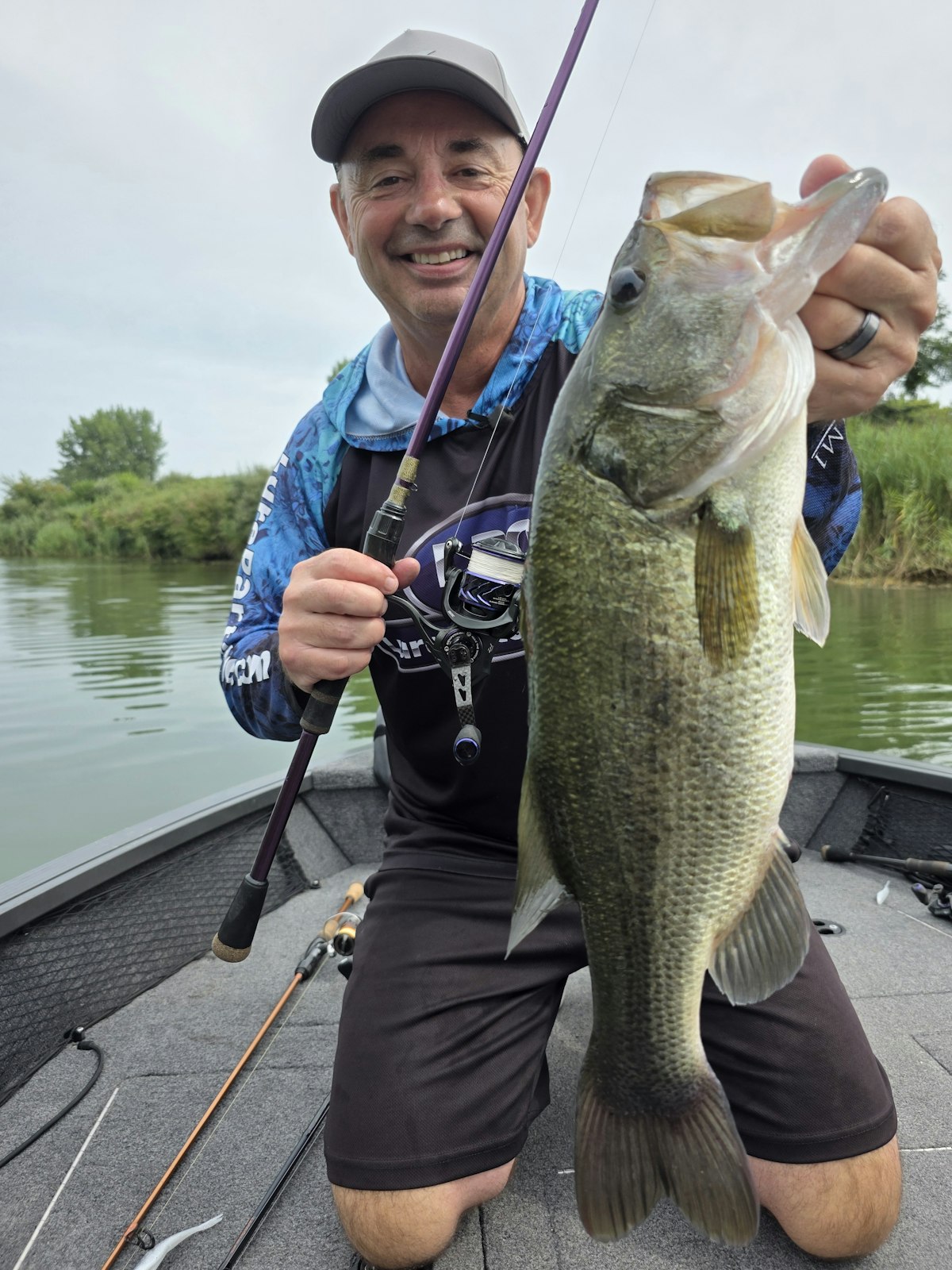
Texoma has a solid black bass fishery that gets overshadowed by stripers. Largemouth bass hold in the creek arms, flooded timber, and around docks, averaging 2 to 4 pounds with 5- to 7-pounders caught regularly. Smallmouth bass live on the rocky main lake points and bluffs, less numerous but hard-fighting. Spotted bass school in open water and on deep structure, similar to the Table Rock Lake spotted bass fishery.
Largemouth technique: Texas-rigged soft plastics (Zoom Trick Worm, Strike King Rage Bug) around flooded timber and docks. Spinnerbaits and crankbaits along creek channel edges. Standard bass gear, medium-heavy baitcasting setup, 15-pound fluorocarbon.
Smallmouth: Drop-shot and Ned rig on rocky points and bluffs, same techniques that work on Lake Erie or any clear-water smallmouth fishery. 7-foot medium spinning rod, 8-pound fluorocarbon.
White Bass: The Spring Run
White bass make an annual spawning run up the Red River and Washita River in March and April, one of the most action-packed fishing events on the lake. Schools of hundreds of whites push upriver, and anglers line the banks and bridges casting small jigs and spinners into the current. A white bass in current fights like a fish twice its size.
Technique: A 1/4-ounce white or chartreuse marabou jig cast upstream and retrieved with the current. Or a small Rooster Tail or Road Runner. Light spinning gear (ultralight to medium-light). Cast to the boils where whites are feeding on the surface. The action is fast, 50-fish days are routine during the peak run.
Crappie: Spring and Fall
Black and white crappie hold in standing timber, brush piles, and around bridge pilings. Spring (March-April) and fall (October-November) are best as crappie move shallow around structure.
Technique: Minnows or small jigs (1/16 to 1/32-ounce) fished vertically around brush piles in 8 to 15 feet. Spider rigging from a boat (multiple rods fanned out over the bow, each set at a different depth around a brush pile) is the local technique for filling a cooler.
Access Points and Boat Ramps
Lake Texoma has over 30 public boat ramps on both the Oklahoma and Texas sides. The major ones:
Highport Marina (Texas side): Full-service marina with boat ramp, rentals, gas, bait shop. Central location near the dam. Most striper guides launch here.
Eisenhower State Park (Texas side): Corps of Engineers park with multiple ramps, camping, and shore fishing access. Good crappie fishing around the park's submerged brush.
Lake Texoma State Park (Oklahoma side): Lodge, cabins, ramp, and marina. Good access to the main lake and the Washita arm.
Catfish Bay Marina (Oklahoma side): Near the dam. Good catfish and striper access.
Platter Flats (Oklahoma side): Upper lake access near the river channels. Popular during the spring striper and white bass runs.
Shore fishing: Several parks and Corps of Engineers lands provide bank fishing access. The dam tailrace area below Denison Dam (on the Red River) is a popular shore-fishing spot for stripers, catfish, and white bass.
Fishing License: The Border Situation
Lake Texoma straddles Oklahoma and Texas. The invisible state line runs through the middle of the lake, and you will cross it constantly while fishing.
Lake Texoma License: The simplest option. Covers both Oklahoma and Texas waters on Lake Texoma. Available from either state. Costs $12 for residents of either state, more for nonresidents. Valid through December 31.
| License Type | Cost |
|---|---|
| Lake Texoma License (OK or TX resident) | $12 |
| Lake Texoma License (nonresident) | $25-35 |
| Oklahoma annual fishing | $25 resident / $55 nonresident |
| Texas annual fishing | $30 resident / $58 nonresident |
If you only have an Oklahoma license, you can only legally fish the Oklahoma side. Same for Texas. Game wardens patrol the lake and check licenses regularly. The Texoma license is the smart move, it is cheap and covers everything.
Striper regulations: 10 striped bass and/or hybrid striped bass combined per day, of which only 2 may be 20 inches or longer. This applies lake-wide regardless of which state's water you are in.
Catfish: No daily limit on blue and channel catfish. Flathead catfish: no limit. This is unusual, most states have catfish limits. Texoma does not.
Bass: Black bass daily limit 5, minimum 14 inches.
When to Come
March-April (Spring): The main event. Striper and white bass spawn runs. Topwater begins in late April. Crappie spawn. The most action-packed fishing of the year.
May-June (Early Summer): Post-spawn stripers transition to slab spoon fishing. Topwater continues early morning. Catfish become active in the warming water. Bass fishing is solid in the creek arms.
July-August (Peak Summer): Deep slab fishing for stripers. Best catfish months for big blues. Hot, fish early morning or late evening for the best bite windows. Bring plenty of water.
September-November (Fall): Second topwater striper season. Bass and crappie move shallow. Trophy blue catfish season begins. October is the best all-around month.
December-February (Winter): Deep striper fishing for die-hards. Trophy blue catfish. White bass pre-run staging. Fewer anglers, bigger average fish. Cold but rewarding.
Practical Details
Getting there: Lake Texoma is on the Oklahoma-Texas border, about 75 miles north of Dallas, 2 hours south of Oklahoma City, and 3 hours east of Wichita Falls. The town of Denison, Texas is on the south shore; Kingston, Oklahoma is on the north shore.
Guides: Over 100 striper guides operate on Texoma, it is one of the most guide-dense lakes in the country. Half-day trips run $350 to $500 for 1-2 anglers. Full-day trips $500 to $700. All tackle, bait, and fish cleaning included. For first-timers, a guide is strongly recommended, they know where the schools are stacking today.
Bait: Live threadfin shad is the top bait, but catching it requires a cast net and a baitwell. Most guides provide live bait. If you are DIY, bring a cast net (3/8-inch mesh, 6- to 8-foot radius) and a quality aerated baitwell. Shad die fast without aeration.
What to bring: Sunscreen, polarized sunglasses, rain gear (Oklahoma weather changes fast), a cooler with ice if you plan to keep fish. For summer fishing, bring a shade canopy or umbrella, the open lake has no shade and the Oklahoma sun is brutal.
Where to stay: Denison (TX side) and Kingston (OK side) have motels, cabins, and lake house rentals. Eisenhower State Park and Lake Texoma State Park offer camping with direct lake access.