Fish
Fish Fire
Fire Hike
Hike Bird
Bird

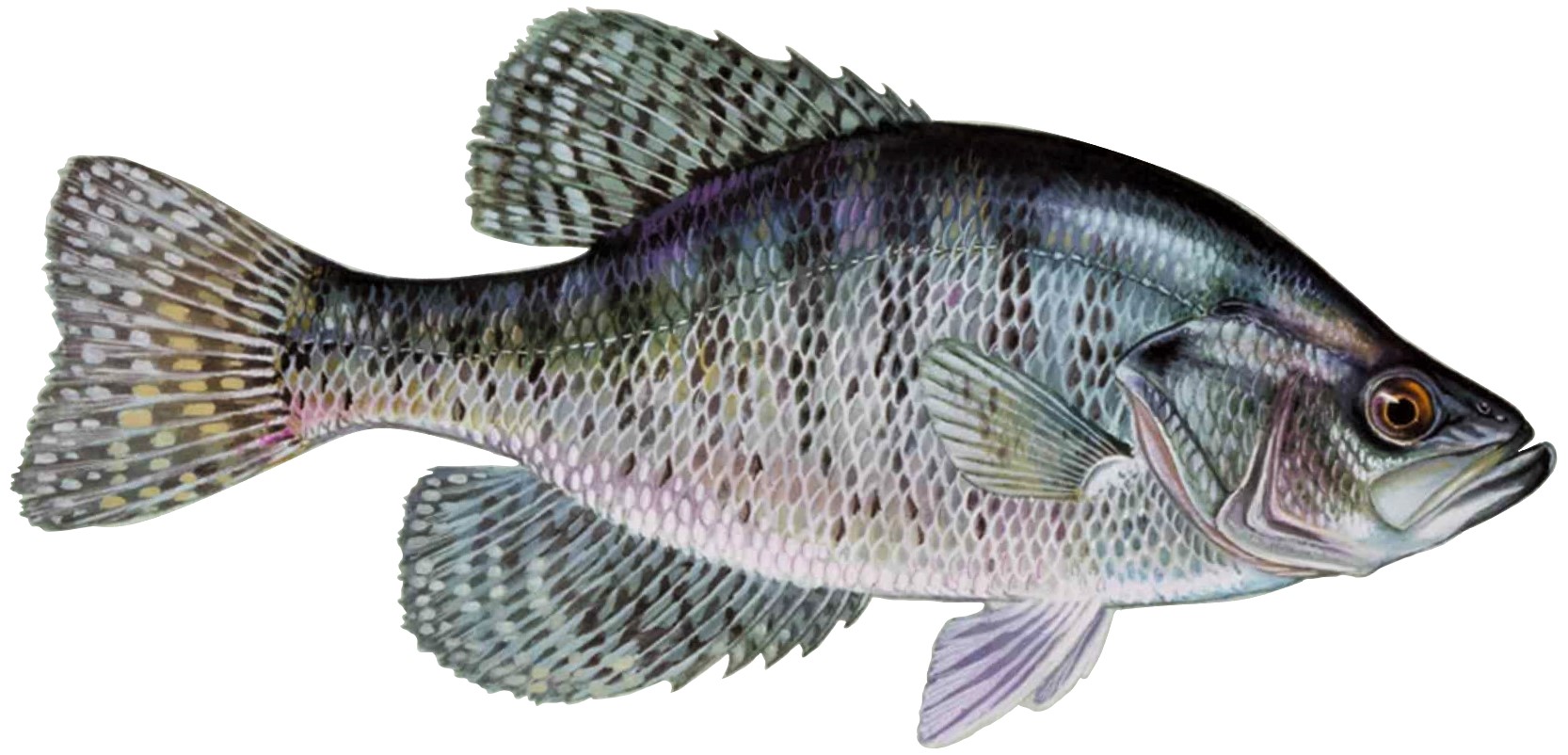

The white crappie is the black crappie's slightly paler, more adaptable twin, a hardy, abundant, and wonderfully catchable panfish that thrives in the very stained, turbid, current-swept reservoirs and rivers where its cousin struggles. Along with the black crappie, the white crappie (Pomoxis annularis) forms the beloved crappie duo that inspires a devoted nationwide following of anglers who prize these fish for their fast schooling action, their willingness to bite on simple, cheap tackle, and, above all, their status as some of the finest-eating fish in fresh water. Reaching a typical 8 to 12 inches, with slabs topping 12 inches and rare giants pushing 2 pounds and beyond, the white crappie fills livewells and frying pans across the country, and its tolerance for muddy, fertile water makes it the dominant crappie in many of the nation's biggest and most productive reservoirs.
White crappie are found across much of the central and eastern United States, and they're beloved precisely because they're so accessible and productive: they school in enormous numbers, they relate to easy-to-find cover and structure, they bite year-round including through the ice, and their tactics are simple and inexpensive. Whether you're dunking a minnow under a bobber, long-line trolling a spread of jigs across an open flat, or picking apart river cover, the white crappie rewards the angler who finds the school. This guide covers what a white crappie is, where to find them, and the proven techniques that put a limit of slabs in the boat.
What Is a White Crappie?
The white crappie is a member of the sunfish family (Centrarchidae) and one of North America's two crappie species (the other being the black crappie). It has the crappie's signature deep, laterally compressed body and large mouth, but it's a bit more elongated and silvery than the black crappie, with a lighter, more silver-and-green coloration. Its defining mark is its pattern: the white crappie's dark markings are arranged in distinct vertical bars down its sides, versus the black crappie's random, scattered speckles. It also has five or six dorsal spines (the black crappie has seven or eight), the surest way to tell them apart. Spawning males darken dramatically and can look almost black, which sometimes causes confusion, but the vertical bars and spine count remain the giveaways.
Crappie Fishing Tips and TechniquesThe white crappie's great advantage is its tolerance for turbid, fertile, and current-swept water. Where black crappie prefer clearer, weedier lakes, white crappie thrive in muddy reservoirs, stained rivers, and the sediment-rich impoundments of the central U.S., often dominating those waters. They're schooling baitfish predators, feeding heavily on shad and minnows along with insects, and, like all crappie, they suspend at a specific depth and feed most actively in low light. They spawn in spring when the water reaches the low-to-mid 60s (°F), moving shallow to nest in colonies around cover, which produces the fantastic spring fishing crappie are famous for.
Where to Find White Crappie
White crappie live in reservoirs, lakes, ponds, and rivers across much of the central and eastern United States, and they're the crappie of choice in larger, more turbid, more fertile waters, the big flood-control and hydropower reservoirs, stained rivers, and muddy impoundments where they often reach spectacular abundance. Wherever they live, they relate to cover and structure. Focus on:
- Brush piles, standing timber, and sunken trees, the classic crappie magnet, and white crappie stack up in and around submerged wood.
- Creek channels, ledges, drop-offs, and points, deeper structure where schools hold and travel, especially in summer and winter.
- River cover and current breaks, in rivers, target eddies, cover, and slack water behind structure where white crappie shelter out of the current.
- Bridge and dock pilings, riprap, and man-made structure, reservoirs are full of it, and crappie love it.
- Shallow bays, flats, and cover in spring, when spawning fish move up into a few feet of water.
Like all crappie, white crappie suspend, holding at a specific depth in open water or over structure, and they move seasonally: shallow to spawn in spring, out to deeper structure and suspended over channels and flats in summer, back shallow in fall, and into deep holes in winter. In big reservoirs especially, huge schools roam open water following shad, which is exactly why trolling tactics are so effective for them. Finding the right depth is often as important as finding the right spot.
Jigs
The small crappie jig, a soft-plastic, marabou, or hair body on a light jighead (1/32 to 1/16 oz), is the most popular and versatile crappie lure, and it's just as deadly on white crappie as on blacks. Its baitfish profile is exactly what a white crappie is looking for, and it can be fished a dozen ways to match any situation.
Everything You Need to Know About Crappie JigsFish a jig by casting and retrieving it slowly at the crappie's depth, vertically jigging it over cover and suspended fish, or hanging it under a float. In the stained water white crappie love, bright and high-visibility colors, chartreuse, white, orange, and combinations, often outproduce natural tones, since the fish key on visibility. Fish it slow and subtle: crappie have soft mouths and often just inhale the jig, so watch your line for the slightest tick and set the hook gently. Tip it with a minnow or a scented plastic for extra appeal in murky water. The jig's endless versatility makes it the backbone of white crappie fishing.
Minnows and Slip Bobbers
If the jig is the crappie lure, the live minnow is the crappie bait, and for white crappie, a lively minnow is often unbeatable, especially in the stained water where scent and natural action matter most. Paired with a slip bobber for precise depth control, it's the classic, foolproof crappie setup.
Simple Bobber and Minnow Rig for CrappieHook a small minnow through the back or lips on a light wire hook and fish it under a slip bobber set to the crappie's exact depth, so the bait hangs right at the school's level around brush, pilings, docks, or spawning cover. When the bobber twitches or dips, set the hook. The slip bobber's precision (exact depth) and sensitivity (it shows the lightest bite) make it perfect for suspended white crappie, and a minnow's natural swimming action draws strikes when fish are finicky. Many anglers combine the two, a jig tipped with a minnow, for the best of both. It's a deadly, relaxing, beginner-friendly method that consistently produces slabs.
Long-Line Trolling
Because white crappie so often roam open water in big reservoirs, following shad and suspending over flats and channels, long-line trolling (also called "pulling" or "spider trolling") is one of the deadliest ways to find and catch them. It lets you cover huge amounts of water, present a spread of jigs at various depths, and dial in exactly where and how deep the fish are.
Long-Line Trolling for Spring CrappieTo long-line troll, let out multiple jigs on long lines behind (or spread around) a slowly moving boat, varying the jig weights and line lengths so the baits run at different depths, then troll at a slow crawl (typically 0.5 to 1.5 mph) over flats, channels, and suspended schools. Watch which rods produce and adjust your depth and speed accordingly. Trolling covers water and locates scattered fish that would take forever to find by casting, and it's especially productive for open-water summer and fall crappie and for prespawn fish staging on flats. It's a mainstay of serious reservoir crappie anglers and a superb way to put big numbers in the boat.
River Fishing
White crappie thrive in rivers, often in greater abundance than black crappie, and river crappie fishing is a productive, overlooked pursuit. In current, white crappie shelter behind and around cover, and the key is to find the slack water where they hold out of the flow.
River Fishing for Slab White CrappieTarget eddies, current breaks, and slack water behind wing dams, laydowns, log jams, bridge pilings, and other structure, plus backwaters, oxbows, and deeper holes off the main channel. Fish a jig or a minnow under a float right into the cover and slack pockets where crappie shelter, working the bait at their depth. River crappie are often aggressive feeders, using the current to ambush baitfish, and tailrace areas below dams can be especially productive. Because rivers get less crappie pressure than famous reservoirs, they can offer excellent, uncrowded fishing for those willing to read the current and pick apart the cover.
Spawn Fishing
Spring is the crappie angler's favorite season, and the spawn is when white crappie become most accessible of all. As the water warms into the low-to-mid 60s (°F), white crappie move shallow to nest in colonies, stacking up in a few feet of water around cover, and they bite aggressively, defending nests and feeding heavily.
Understanding the Crappie SpawnDuring the spawn, target shallow cover, brush, laydowns, weed edges, bushes, riprap, and the backs of coves and creek arms in protected, warming water, and fish a jig or a minnow under a float right into the cover. The fish are shallow, concentrated, and aggressive, which makes for fantastic, accessible bank and small-boat fishing. Watch for a progression: fish move shallow as coves warm (the northern and back ends of coves often warm first), males arrive before females, and the timing varies with latitude and weather. Prespawn staging fish on the drops just outside spawning flats, and the spawn itself, offer some of the fastest crappie fishing of the year, the time when even casual anglers can fill a limit.
Color Selection and Electronics
Two things separate consistent white crappie anglers from the rest: dialing in the color and mastering the electronics. Because white crappie live in stained, turbid water, color matters more than it does for many species, the fish have to see your bait. Start with bright, high-visibility jig colors (chartreuse, white, orange, pink, and combinations) in murky water, and carry a range so you can experiment; crappie can be surprisingly particular from day to day, and switching colors until you find the "hot" one often turns a slow bite into a fast one. In clearer water or under heavy pressure, more natural minnow tones can win. Let the fish decide.
The other game-changer is sonar. Because white crappie suspend at a precise depth and roam in schools, finding and staying on them is most of the battle, and modern electronics have transformed the fishery. A standard fish finder shows you the depth of the school and the cover so you can set your bait right at their level, while forward-facing (live) sonar lets you actually watch fish, track a roaming school, and drop a jig right on a crappie's nose. You don't need the latest technology to catch white crappie, but even a basic depth finder dramatically shortens the search, and on big open reservoirs, being able to locate suspended schools is the difference between a slow day and a limit.
Where the White Crappie Fits
The white crappie is one of two crappie species and a panfish favorite, and knowing its relatives makes you a more complete angler. Its near-twin the black crappie shares nearly all of the same tactics but prefers clearer, weedier water and is told apart by its scattered speckles (versus the white's vertical bars), and the broader world of crappie fishing covers the tactics that catch both. The ever-popular bluegill rounds out the panfish trio, sharing many waters and the same light-tackle, family-friendly, superb-eating appeal. Master the white crappie, and you've mastered the dominant panfish of America's great reservoirs.
Eating White Crappie
Like the black crappie, the white crappie is outstanding eating, right at the top of the list of the best-tasting freshwater fish. Its flesh is white, flaky, sweet, and mild, and it fries into some of the finest fillets you'll ever eat; a crappie fish fry is a cherished tradition across much of the country. Because white crappie are prolific and often overabundant (in many reservoirs, harvesting them actually improves the size of the remaining fish), they're a fish you can keep for the table with a clear conscience, within local limits. Fillet them, bread the fillets in seasoned cornmeal or a fish-fry mix, and fry them golden. Fast schooling action and superb flavor make the white crappie one of freshwater fishing's greatest all-around values.
Put It All Together
Catching white crappie comes down to finding the school and presenting a small bait at the right depth: pick apart brush piles, timber, and pilings with a jig or minnow, hang a minnow or jig under a slip bobber at the crappie's exact depth, long-line troll a spread of jigs to find scattered open-water fish, work the slack water and cover in rivers, and fish the shallow cover in spring when they spawn. Use bright colors in the stained water they love, fish slow and subtle, watch for the lightest bite, and dial in the depth. Do that, and you'll enjoy fast action and a livewell full of the best-eating panfish in fresh water.
Ready to fill a limit of slabs? Learn your home reservoir the way the best crappie anglers do, map the brush piles and standing timber, work out the trolling lanes that find scattered open-water schools, and find the shallow cover where the fish stack up to spawn each spring. Put in that time on the water, and you will be rewarded with fast schooling action and a great fish fry.