Fish
Fish Fire
Fire Hike
Hike Bird
Bird

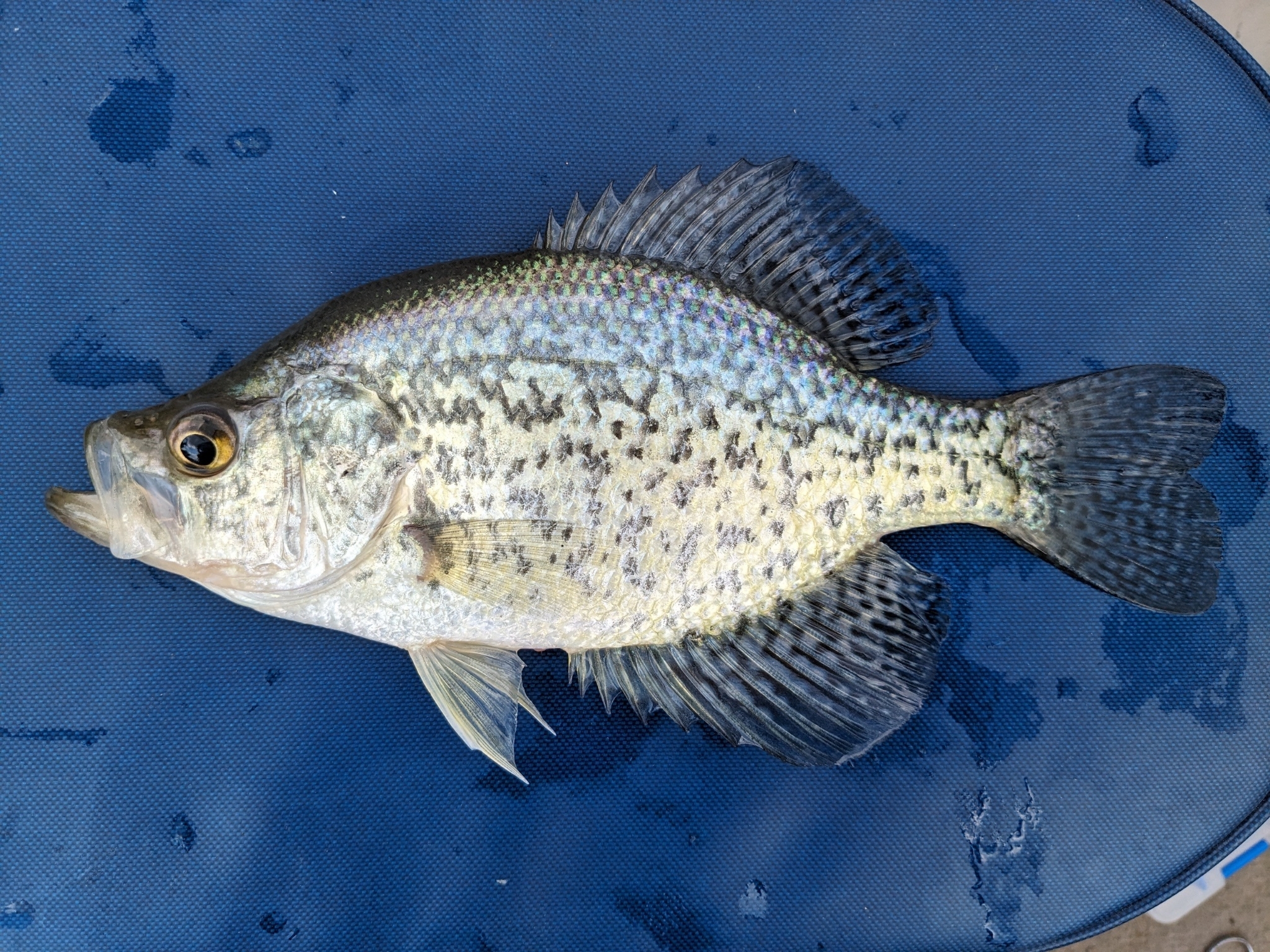

Crappie might be the most beloved fish in America. They're abundant, they school by the hundreds, they'll bite for a kid with a cane pole or an expert with forward-facing sonar, and they are, by wide agreement, the finest-eating fish that swims in fresh water. "Slabs", the big ones, draw a devoted following, and a good day can fill a cooler with the makings of a legendary fish fry. Crappie are catchable year-round once you understand their seasonal movements and learn to put a small jig or minnow in front of a school. This guide covers the two kinds of crappie, the seasonal calendar that drives everything, where they hold, and every core technique, with step-by-step instruction, to catch them.
Ready to get on a school of slabs? Nail down where you are in the seasonal calendar, then work the right cover at the right depth, that is the whole game, and the rest of this guide walks you through it. For more panfish fun, see our related guides on how to catch bluegill and how to catch largemouth bass.
Black and White: Meet the Crappie
Crappie come in two species that often share the same water. Black crappie (Pomoxis nigromaculatus) are darker, with irregular black speckles scattered across a silvery body and seven or eight dorsal spines; they prefer clearer water and more vegetation. White crappie (Pomoxis annularis) are lighter, with faint vertical bars and five or six dorsal spines; they tolerate more turbid, current-influenced water. You fish for them the same way, so don't worry too much about which is which.
Both are members of the sunfish family, nicknamed "papermouths" for their thin, easily-torn mouth membrane, a reason to set the hook gently and keep steady pressure. Crappie are schooling fish that relate to cover and suspend in open water, feeding primarily on small baitfish (shad and minnows) and zooplankton and insects. Most crappie run 8 to 12 inches and a quarter- to three-quarter-pound; a "slab" over a pound (12+ inches) is a prize, and the giants top 3 pounds. They're found in lakes, reservoirs, ponds, and slow rivers across nearly the entire country.
The Crappie Calendar
Crappie fishing is driven by the seasonal calendar more than almost any other species, because crappie make predictable moves through the year:
- Winter: Crappie school tightly in deep water, creek and river channels, deep brush, and basins, often suspended. Fish slow and vertical.
- Pre-spawn (early spring): As water warms into the 50s, crappie stage on channel edges, points, and cover near the spawning flats, feeding heavily. A prime time for big fish.
- Spawn (spring, water ~58–68°F): Crappie move shallow to spawn around cover, brush, stumps, docks, laydowns, and flooded bushes in a few feet of water. The easiest, most fun fishing of the year.
- Post-spawn (late spring): Crappie pull back toward deeper cover and staging areas, sometimes scattered and finicky for a couple of weeks.
- Summer: Crappie settle onto deep brush piles, standing timber, ledges, and bridge structure, often suspended near the thermocline, and hold there through the heat.
- Fall: Cooling water and shad movement pull crappie back toward the shallows and creek arms to feed, another excellent season.
Know where you are in the calendar and you know where to start looking.
Where Crappie Live
Whatever the season, crappie relate to vertical cover and structure. Focus on:
- Brush piles and submerged trees, the number-one crappie cover; anglers sink their own brush piles for a reason.
- Standing timber in reservoirs, crappie stack in the branches at a specific depth.
- Docks and marinas, especially shaded, brush-augmented docks; crappie live under them much of the year.
- Bridge and roadbed pilings, which concentrate suspended crappie.
- Creek and river channels and their edges, the highways crappie follow between deep and shallow water.
- Spawning flats with cover, shallow brush, stumps, and bushes in spring.
The Techniques That Catch Crappie
Crappie eat small jigs and live minnows, presented near cover at the right depth. Here are the core methods, how to fish each, and when to use it.
Jig and Minnow, the crappie foundation
Two baits catch the vast majority of crappie: a small jig and a live minnow, often together. It's the simplest and most productive place to start.
How to fish it: Fish a 1/16- or 1/32-ounce jig (a Bobby Garland Baby Shad or a marabou/tube jig) or a live minnow on a light hook, either under a bobber set to the fish's depth or "tightlined" straight down beside cover. Suspend it right at or just above the crappie, they feed upward, so being slightly above the school is key. Tip a jig with a minnow for the best of both. When the bobber dips or you feel a soft "tick," set gently (papermouth!) and keep steady pressure.
How to Rig Minnows for CrappieCasting and Swimming Jigs, cover water and find them
When crappie are scattered or roaming, casting and slowly swimming a jig covers water and finds active schools, especially in spring and fall.
How to fish it: Tie on a 1/16-ounce jig with a soft-plastic body (a Bobby Garland or Charlie Brewer Slider), cast it out around cover and flats, count it down to the depth you want, and retrieve it slowly and steadily, a gentle swim just fast enough to keep it up, with occasional pauses and twitches. Crappie inhale it on the fall or the swim. Casting lets you fan an area, locate a school, and then work it thoroughly. Vary colors until you find what they want.
Crappie Jigs 101Spider Rigging, present a spread of baits
Spider rigging, fishing a fan of long rods off the front of a slowly moving boat, presents multiple baits at multiple depths at once, a deadly way to find and follow schools.
How to fish it: Deploy several long (10–16 foot) spider-rig rods in rod holders across the bow, each with a jig or minnow rig (often a double-hook, or a jig above a minnow), and slowly "push" them (0.2–0.6 mph) with the trolling motor over flats, channel edges, and brush. The spread covers a swath of water and different depths, so you quickly learn where the fish are holding, then concentrate there. It's a favorite of serious crappie anglers for putting numbers in the boat.
Crappie Spider Rigging for BeginnersShooting Docks, reach the fish others can't
Crappie love the shade and cover under docks, and "shooting" a jig, slingshotting it low and far back under the dock, reaches fish no ordinary cast can.
How to fish it: With a light spinning rod, hold the jig by the hook bend, load the rod tip like a bow, aim low, and release the jig so it skips far back under the dock into the shade. Let it sink and swim it slowly back out. It takes a little practice, but dock shooting puts your jig in front of pressured, shade-holding crappie that never see most baits, and it's astonishingly effective around marinas and boat docks.
How to Shoot Docks for CrappieVertical Jigging Brush Piles, pinpoint the slabs
For crappie stacked on deep brush piles and timber, especially in summer and winter, vertical jigging directly over them puts the bait in their face, and modern forward-facing sonar has made it deadlier than ever.
How to fish it: Position over a brush pile or standing timber (marked on your electronics), and drop a jig or minnow straight down to the fish's exact depth, crappie hold at a specific level in the cover, so precision matters. Hold it still or shake it gently just above the fish. With forward-facing sonar (LiveScope-style), you can watch individual crappie and your jig on screen, casting to and coaxing specific fish, a revolution in crappie fishing. Without it, use your graph to find the fish's depth and hover the bait right there.
How to Catch Crappie on Brush PilesLong-Line Trolling, cover water to find scattered fish
Long-line trolling (also called pulling jigs) tows jigs far behind a slowly moving boat to cover water and catch suspended, scattered crappie, especially in open water.
How to fish it: Let out multiple 1/16- to 1/8-ounce jigs a long way behind the boat (using different jig weights and amounts of line to spread the depths), and troll slowly (0.8–1.5 mph) across flats, points, and open basins. The amount of line and jig weight set the depth, so once you catch a fish, replicate that combination on the other lines. It's an efficient way to locate roaming crappie over large areas, then pinpoint the school.
Long-Line Trolling for CrappieCatching the Spawn, the shallow-water bonanza
When crappie move shallow to spawn in spring, they become remarkably easy and fun to catch, the perfect time for a beginner or a family outing.
How to fish it: Once the water reaches the upper 50s to upper 60s, work the shallow cover on spawning flats, brush, stumps, laydowns, docks, and flooded bushes in 1 to 5 feet of water, with a jig or minnow under a bobber or a jig cast to the cover and swum slowly. Fish are aggressive and concentrated; when you catch one, there are usually many more right there. Move along the bank hitting each piece of cover, and enjoy the best crappie fishing of the year.
How to Catch Spawning CrappieDialing In Color and Depth
Two variables matter more than almost anything else in crappie fishing: the exact depth the fish are holding, and the jig color they want that day. Crappie are notoriously particular about both, and the anglers who catch numbers are the ones who dial them in quickly.
Depth is king. Because crappie feed upward, a bait a foot too high still gets bit while a bait a foot too low gets ignored, so once you catch a fish, note the depth and put every bait right at or just above that level. A slip bobber, a marked jig line, or your electronics all help you repeat the productive depth exactly.
Color can change by the hour. Crappie often show a strong daily preference, chartreuse, black-chartreuse, monkey milk, and pink/white are classic starting points, with darker colors often better in stained water and clear/natural shades in clear water. Carry a range and be willing to change: if a school is present (you can see them on sonar or you're getting looks) but not committing, swapping jig color frequently turns lookers into biters. Let the fish tell you what they want, then give it to them.
Sink Your Own Brush Piles
Here's a secret that serious crappie anglers live by: they build their own cover. Because crappie relate so tightly to brush and timber, sinking your own brush piles, bundles of hardwood branches, stake beds, or manufactured fish attractors weighted down in strategic spots, creates reliable crappie magnets you can fish for years. Place them on channel edges, points, and near docks at a range of depths so you have productive spots for every season, and mark them on your GPS. Always check your local regulations first (many lakes allow it, some require permits or restrict materials). A handful of well-placed brush piles can turn a featureless flat into your own private crappie honey holes.
Gear for Crappie
Crappie fishing is a light-line, finesse game with some specialized long rods:
- Ultralight spinning combo: A 6- to 7-foot light or ultralight spinning rod with a 1000–2000-size reel is perfect for casting jigs, shooting docks, and bobber fishing.
- Long crappie/spider-rig poles: 10- to 16-foot poles in rod holders for spider rigging and long-lining, or a long "B'n'M"-style pole for dabbling jigs into cover.
- Line: 4- to 6-lb monofilament (many use hi-vis line to watch for line-jump bites); light braid with a fluoro leader for jigging.
- Terminal tackle and baits: A selection of 1/32- to 1/8-ounce jigheads and soft-plastic bodies (Bobby Garland, Charlie Brewer), live minnows, small hooks, split shot, and slip bobbers cover every technique above.
The Best Fish Fry There Is
Let's be honest about a big part of crappie's appeal: they are widely considered the best-eating freshwater fish there is, sweet, flaky, white fillets that are the star of countless fish fries across the country. Crappie are abundant and, in most waters, meant to be harvested (many fisheries actually benefit from anglers keeping crappie). Know your lake's size and creel limits, keep a mess of good-sized fish for the pan, and release the smaller ones and the very biggest slab females to keep the fishery strong. Few days on the water end better than a crappie fry with friends and family.
Read the Calendar and Find the Schools
Because crappie relate so tightly to cover and move on a seasonal schedule, catching them consistently comes down to a simple loop: figure out where you are in the calendar, go to the cover that holds fish in that season, brush piles, timber, channel edges, and docks, and then dial in the exact depth and jig color the fish want that day. Modern electronics make locating the schools faster than ever, but the fundamentals have not changed. Learn to read the calendar, put a jig at the right depth just above the fish, and be willing to keep moving until you find them, and you will fill a cooler with slabs on your home water.