Fish
Fish Fire
Fire Hike
Hike Bird
Bird

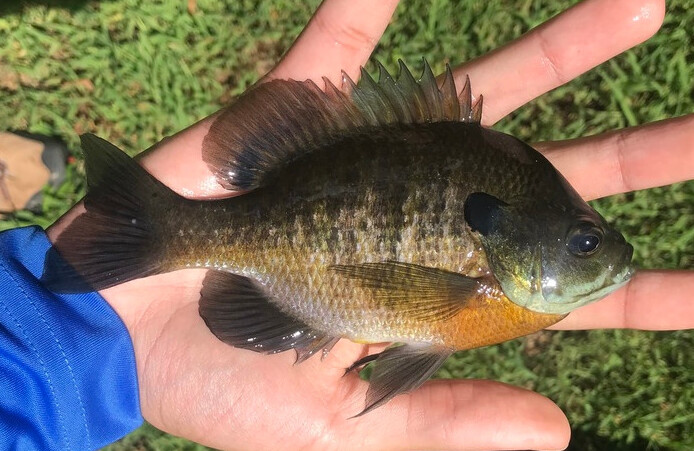

The bluegill is the fish that made most of us anglers. A worm, a bobber, a cane pole, and a farm pond, that's how millions of people caught their first fish, felt that first tug, and got hooked on fishing for life. Bluegill (and their "bream" and "sunfish" cousins) are everywhere, they're eager, they fight surprisingly hard for their size, and they are outstanding on the dinner plate. But there's more to bluegill than the beginner's bobber: catching a true "bull" bluegill, a thick, hand-sized-plus, deep-bodied slab, is a genuine challenge that dedicated panfish anglers pursue with real skill. This guide covers where bluegill live, the dead-simple basics anyone can master, and the techniques that put the biggest bulls in the bucket.
Ready for a fun day of fishing the whole family will love? Just grab a can of worms and go, bluegill are the ultimate do-it-yourself fish, and this guide walks you through every technique for catching them, from the beginner's bobber to the finesse tricks that fool the biggest bulls. For more panfish, see our guide on how to catch crappie.
The Fish That Made Us All Anglers
The bluegill (Lepomis macrochirus) is the best known of the sunfishes, a group of small, feisty panfish that also includes redear ("shellcracker"), pumpkinseed, green sunfish, and longear, all caught the same ways, and all often lumped together as "bream" (pronounced "brim") in the South. Identify a bluegill by its deep, flat, round ("dinner plate") body, its small mouth, the dark blue-black "ear" flap at the back of the gill cover, and the blue sheen on its lower face and gill, spawning males blaze with orange breasts and vivid blue.
Bluegill are members of the same family as bass and crappie, and pound for pound they fight as hard as anything that swims, that deep body turns sideways and pulls in strong circles. Most run 4 to 8 inches, a "bull" bluegill over 9 inches (three-quarters of a pound or more) is a real trophy, and the giants top 2 pounds. They live in nearly every pond, lake, reservoir, and slow river across the country, feeding on insects, larvae, tiny crustaceans, snails, and small baitfish. Their abundance, willingness, and small mouths make them the perfect fish to learn on, and a delicious, rewarding target for experts too.
Where Bluegill Live
Bluegill relate to cover and warmth, and they're rarely hard to find:
- Shallow weedy and woody cover, weed edges, lily pads, brush, laydowns, and stumps, especially in spring and early summer.
- Docks, piers, and swim platforms, shade and structure bluegill hold under all day.
- Spawning beds, in late spring and summer, bluegill fan out clusters of round nests ("beds") on shallow, firm bottom in colonies, often visible as light circular patches.
- Deeper weed edges, brush, and drop-offs, where the bigger "bull" bluegill retreat in the heat of summer and in the cold months.
In a pond, start along the shoreline cover; in a lake, check docks, weed edges, and, for big fish, the deeper structure adjacent to the shallow spawning areas.
The Techniques That Catch Bluegill
Bluegill will eat bait, tiny lures, and flies. Here are the core methods, how to fish each, and when to use it.
Worm and Bobber, the timeless classic
There's a reason this is how everyone starts: a worm under a bobber is deadly simple and catches bluegill anywhere they swim.
How to fish it: Below a small bobber, add a split shot and a small hook (size 6–10) baited with a piece of nightcrawler, a red worm, a cricket, or a mealworm. Set the bobber so the bait hangs 1 to 3 feet deep, near cover. Cast it out and watch the bobber, when it twitches, bobs, and slides under, lift the rod to set. Use just a small piece of worm (bluegill have small mouths and are expert bait-stealers), and downsize your bobber so light bites show. It's foolproof, and it's pure fun.
How to Catch Fish with a Live WormSmall Jigs, a step up in effectiveness
A tiny jig, with or without bait, is one of the most effective bluegill presentations and a favorite of serious panfish anglers.
How to fish it: Fish a 1/32- to 1/64-ounce jig (a small marabou, soft-plastic, or tungsten ice-style jig, tipped with a bit of worm, a waxworm, or a soft-plastic grub) under a small float or on a tightline. Suspend it at the fish's depth and give it subtle twitches, or slowly swim a small jig near cover. The compact profile and precise depth control catch more and bigger bluegill than a clunky bait rig, especially for the wary bulls.
Tiny Jig and Bobber Setup for BluegillFly Fishing Poppers, the most fun you can have
Catching bluegill on a popping bug with a fly rod is one of the great joys in fishing, visual, explosive, and nonstop action on a summer evening.
How to fish it: With a light fly rod, cast a small foam or cork popper, a sponge spider, or a rubber-legged bug to shoreline cover, docks, and spawning beds, let it sit until the rings fade, then give it a small twitch, the "pop" and the wiggling legs are irresistible, and bluegill smack it off the top. Small wet flies and nymphs fished just under the surface are deadly too. Bluegill on the fly is fast, easy, and the perfect way to learn fly fishing.
Fly Fishing for Big Bluegill with PoppersFishing the Spawning Beds, the shallow-water bonanza
When bluegill spawn in late spring and summer, they gather in bedding colonies in the shallows and become aggressive and easy to catch, often the best bluegill fishing of the year.
How to fish it: Look for the round, light-colored nests clustered on firm shallow bottom (you can often see or even smell a big bed), and present a worm, small jig, or popper to the edge of the colony. Spawning males guard the nests fiercely and will attack anything that comes near, so bites are fast and frequent. Bluegill spawn in waves through the warm months (often around the full moon), so beds can produce all summer. Take a few for the pan and leave enough big males to protect the nests.
How to Catch Spawning BluegillBeetle Spins and Small Spinners, cover water for actives
A Beetle Spin or tiny inline spinner adds flash and lets you cover water to find scattered, active bluegill, a great searching lure and fun for kids.
How to fish it: Tie on a Beetle Spin (a small safety-pin spinnerbait with a grub body) or a tiny inline spinner, cast it out around cover and flats, and retrieve it slowly and steadily so the blade flashes and the grub wiggles. Keep it just fast enough to keep the blade turning. It covers more water than a static bait, helps you locate schools of active fish, and catches bass and other panfish too, a versatile, beginner-friendly lure.
How to Fish a Beetle Spin for BluegillTargeting Big Bull Bluegill, the trophy game
Catching numbers of small bluegill is easy; consistently catching big bull bluegill takes a more deliberate approach, because the biggest fish behave differently.
How to fish it: Big bluegill often avoid the shallow crowds and hold deeper, on deeper weed edges, brush, and drop-offs, especially in summer, and they feed more selectively. Fish small jigs, tiny soft plastics, or a worm precisely at the depth you mark them (a small electronics unit helps), fish slower and more subtly, and seek out waters known for producing big 'gills (bull bluegill genetics and low competition matter). Target the deeper structure adjacent to the beds after the spawn, and downsize and slow down. The reward is a thick, powerful slab that fights like a fish twice its size.
How to Catch Deepwater Bull BluegillIce Fishing, winter panfish action
Bluegill are a top ice-fishing target, and winter is a great time to catch a mess of them (and often some of the biggest bulls).
How to fish it: Over weed flats, basins, and deeper structure, drop a tiny tungsten ice jig tipped with a waxworm, spike (maggot), or a small soft plastic, and jig it subtly, small lifts, quivers, and long pauses, at the depth you mark fish on a flasher. Bluegill bites through the ice are famously light, so watch your spring bobber or electronics closely and set on the slightest change. A finesse, downsized approach catches winter 'gills all day.
Top Ice Fishing Lures for PanfishDownsize Everything: The #1 Bluegill Secret
If there's one adjustment that instantly improves your bluegill catch, it's this: go smaller. Bluegill have tiny mouths, and the single most common mistake is fishing hooks, baits, and bobbers that are too big.
Use a small hook (size 8 or 10, even 12 for finicky fish), a big hook simply won't fit in a bluegill's mouth, so you'll feel bites and never hook up. Use a small piece of bait, not a whole worm; a half-inch chunk out-fishes a big gob because the fish can actually get it in its mouth. Use the smallest bobber that will float your rig, so a light-biting bluegill can pull it under without feeling resistance, a big, buoyant bobber telegraphs almost nothing and spooks bites. And use light line (2–4 lb), which lets your small bait move naturally and shows subtle takes. Anglers who can't figure out why the bluegill are "just nibbling" are almost always fishing too big; downsize across the board and those nibbles turn into fish in the bucket. The same logic applies to your hookset, a gentle lift, not a hard jerk, keeps that small hook buried in a small mouth and lands far more of the fish that bite.
Redear, Pumpkinseed, and the Other Sunfish
Bluegill are the most famous of the sunfishes, but they share their waters with a whole family of close cousins, collectively called "bream" or "panfish", and everything in this guide catches them too. The redear sunfish ("shellcracker") is a bigger, harder-fighting cousin that feeds on snails and small mussels near the bottom, so a worm fished on or near bottom is the ticket, and redear grow well over a pound. The pumpkinseed is a jewel-colored northern sunfish that hits worms and small jigs in the same shallow cover as bluegill. The green sunfish, longear, warmouth, and redbreast round out the group, each with its own look but all caught with worms, crickets, small jigs, and tiny poppers.
The upshot: when you go "bluegill" fishing, you're really fishing for a mixed bag of scrappy, beautiful, delicious sunfish, and a single spot can hand you several species. It's part of what makes panfishing such endless, accessible fun, you never quite know which little slab is going to bend your rod next.
Gear for Bluegill
Bluegill fishing is the definition of light, simple, and inexpensive:
- Ultralight spinning combo: A 5- to 6-foot light or ultralight spinning rod with a small 500–1000-size reel is perfect (a spincast combo or a cane/telescopic pole works great for kids and beginners).
- Fly setup (optional): A 3- or 4-weight fly rod is a blast for poppers and bugs.
- Line: 2- to 4-lb monofilament, light line means more bites and more fun on these scrappy fish.
- Terminal tackle and lures: Small hooks (size 6–10), split shot, bobbers, a few 1/32-oz jigs and soft plastics, a Beetle Spin, and some poppers, plus a container of worms, crickets, or mealworms, cover every technique above.
Keep a Mess, Manage the Pond
Bluegill are meant to be eaten, their sweet, firm fillets are a fish-fry favorite, and in most waters, especially ponds, keeping bluegill is good management. In fact, many ponds become overpopulated with small, stunted bluegill precisely because anglers don't harvest enough of them. So keep a mess of the abundant 6- to 8-inch fish for the pan with a clear conscience. There's one nuance for trophy fishing: if you want a pond or lake to produce big bulls, consider releasing the largest male bluegill, which carry the genetics and behaviors that grow big fish, while harvesting the smaller and mid-sized ones. Either way, bluegill are one of the few species where filling a cooler is often exactly the right thing to do.
Just Grab a Cane Pole and Go
Bluegill are the ultimate do-it-yourself fish, a pond, a worm, and a bobber is all it takes, which makes them perfect for introducing kids and beginners to fishing. For trophy bull bluegill or a productive family outing on unfamiliar water, a local guide can put you on the beds and the deep structure and teach the finesse tricks that fool the big ones. But most days, all it takes is a nearby pond and the right spot: find water with good access, downsize your rig, work the shoreline cover and the spawning beds, and you'll be into fish in minutes. That's the beauty of the bluegill, it's the one species where a cane pole and a can of worms is still, honestly, all you need.