Fish
Fish Fire
Fire Hike
Hike Bird
Bird

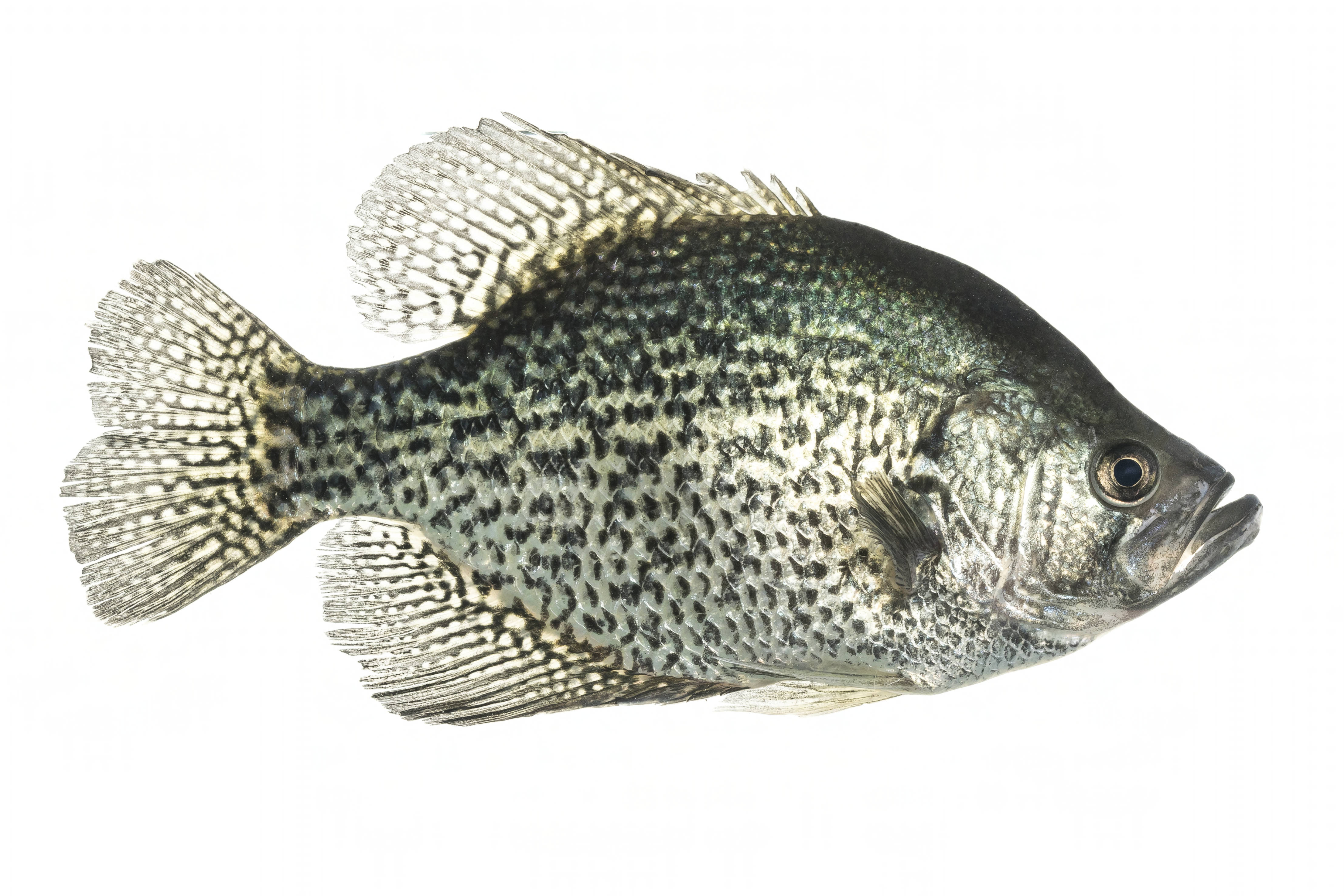

The black crappie is one of America's most beloved panfish, a beautiful, deep-bodied, speckled member of the sunfish family that schools in huge numbers, bites willingly on tiny jigs and minnows, and fills a fillet knife's dreams with some of the finest-eating flesh in fresh water. Along with its close cousin the white crappie, the black crappie (Pomoxis nigromaculatus) is the target of a devoted following of "crappie chasers" who prize it for the perfect combination of accessibility, fast schooling action, and unbeatable flavor. Reaching a typical 8 to 12 inches, with prized "slabs" topping 12 inches and true trophies pushing past 2 pounds and 15 inches, the black crappie punches well above its size on light tackle, and when you find a school, the action can be nonstop.
Black crappie are found in lakes, reservoirs, ponds, and slow rivers across most of North America, and they're beloved precisely because they're so catchable: they hold in predictable places around cover, they respond to simple, inexpensive tactics, and they bite year-round, including through the ice. Whether you're shooting a jig under a dock, spider-rigging a reservoir flat, or dunking a minnow under a bobber, the black crappie rewards the angler who finds the school. This guide covers what a black crappie is, where to find them, and the proven techniques that put a limit of slabs in the livewell.
What Is a Black Crappie?
The black crappie is a member of the sunfish family (Centrarchidae) and one of two crappie species in North America (the other being the white crappie). It has a deep, laterally compressed, almost disc-shaped body, a large mouth for a panfish, and beautiful coloration, a silvery-green to iridescent body decorated with irregular, scattered black speckles and blotches all over its sides. That random speckling is the key to telling it apart from the white crappie, whose dark markings are arranged in distinct vertical bars. The black crappie also has seven or eight dorsal spines (the white crappie has five or six), and it tends to prefer clearer, weedier water than its cousin.
Crappie Fishing Tips and TechniquesBlack crappie are schooling fish that roam in loose groups, often relating to cover and structure. They feed heavily on small baitfish (especially shad and minnows) along with insects and small invertebrates, hunting most actively in low light, dawn, dusk, and overcast days. They spawn in spring when the water reaches the low 60s (°F), moving shallow to build nests in colonies, which produces the fantastic, accessible spring bank fishing crappie are famous for. Understanding this schooling, cover-oriented, light-sensitive behavior is the key to consistently catching them.
Where to Find Black Crappie
Black crappie live in lakes, reservoirs, ponds, and the slower sections of rivers across most of the United States and southern Canada, and they favor clearer water with abundant cover and vegetation more than white crappie do. Wherever they live, they relate strongly to structure, find the cover and you'll find the crappie. Focus on:
- Brush piles, sunken trees, and standing timber, the number-one crappie magnet. Black crappie stack up in and around submerged wood.
- Docks and piers, especially those over deeper water, which provide shade and cover; a classic crappie hotspot.
- Weed beds and edges, black crappie love vegetation, holding along the edges and in pockets.
- Drop-offs, points, creek channels, and ledges, deeper structure where schools hold, especially in summer and winter.
- Shallow bays, flats, and shorelines in spring, when spawning fish move up into cover in a few feet of water.
Crappie move seasonally: shallow to spawn in spring, out to deeper structure and brush in summer, following baitfish and often suspending in the water column, back shallow in fall, and into deep holes and around cover in winter. A key concept is that crappie suspend, they hold at a specific depth in open water or over structure, so finding the right depth is often as important as finding the right spot. Modern electronics have revolutionized crappie fishing precisely because locating and staying on suspended schools is the whole game.
Jigs: The Number-One Crappie Lure
The small crappie jig, a marabou, hair, or soft-plastic body on a light jighead (1/32 to 1/16 oz is standard), is the single most popular and effective crappie lure, period. Its lifelike profile perfectly imitates the small baitfish crappie eat, and it can be fished a dozen different ways to match any situation.
How to Retrieve a Crappie JigFish a jig by casting it out and retrieving it slowly and steadily at the depth the crappie are holding, or by vertically jigging it straight down over cover and suspended fish. The key is a slow, subtle presentation, crappie have soft mouths and often just inhale a jig, so watch your line for the slightest tick or twitch and set the hook gently. Tip it with a small minnow or a scented soft plastic for extra appeal. Experiment with colors (chartreuse, white, black, and combinations are staples) until the fish tell you what they want, and match your jig weight to the depth. The jig's versatility, cast, vertical, under a float, tight to cover, makes it the foundation of crappie fishing.
Minnows
If the jig is the crappie lure, the live minnow is the crappie bait, and nothing is more reliably deadly. Crappie are baitfish predators, and a lively small minnow is exactly what they're looking for. Minnows are the go-to for beginners and experts alike, and they excel when fish are finicky.
How to Rig Minnows for CrappieHook a small minnow through the back or lips on a light wire hook (size 2 to 6) and fish it under a slip bobber set to the crappie's depth, or on a jighead, or on a simple bottom or drop-shot rig near cover. The minnow's natural swimming action draws strikes when nothing else will. A minnow under a bobber, fished around brush, docks, and weed edges, is the classic, foolproof crappie setup and a perfect method for kids and newcomers. Many anglers combine the two, a jig tipped with a minnow, for the best of both worlds. Keep your minnows lively in an aerated bucket, and fish them at the exact depth the school is holding.
Slip Bobbers
Because crappie suspend at a specific depth, the slip bobber is one of the most precise and effective tools in the crappie arsenal. It lets you present a jig or minnow at an exact depth, hold it right in front of a school, and detect the lightest bite, all while fishing shallow or deep with the same rig.
How to Rig a Slip Bobber for CrappieRig a slip bobber with a bobber stop set to the depth the crappie are holding, so the float slides up the line to that depth and stops. Below it, fish a small jig or a minnow. Cast to brush, docks, weed edges, or spawning shallows, and let the bait hang right at the crappie's level. When the bobber twitches, dips, or lays over, set the hook. The slip bobber's great virtues are precision (exact depth control) and sensitivity (a good float shows the subtlest bite), and it lets you fish deep suspended crappie with ease. It's a deadly, relaxing, and beginner-friendly method, and one that consistently produces slabs.
Spider Rigging
When crappie are scattered or suspended over open water and structure, spider rigging is the tournament angler's tactic for covering water and putting baits in front of the most fish. It involves fishing multiple long rods (spread out from the front of the boat like spider legs) while slowly trolling, presenting a spread of jigs and minnows at various depths.
Crappie Spider Rigging TipsSet out a bank of long crappie rods (10 to 16 feet) in rod holders across the bow, each rigged with a jig or minnow (often a double-hook or "Kentucky" rig) at different depths, and slowly troll or "push" the baits along at a crawl (typically 0.3 to 0.8 mph) over flats, channels, brush, and suspended schools. The spread lets you cover water and dial in the exact depth and lure the fish want, and it's deadly for locating and catching scattered summer and winter crappie. Spider rigging demands more gear and boat control, but it's one of the most productive ways to put big numbers of crappie in the boat, a favorite of serious crappie anglers everywhere.
Shooting Docks
For a fun, precise, and highly effective technique, learn to shoot docks. Crappie love the shade and cover of boat docks, often holding far back underneath where a normal cast can't reach, and "shooting" a jig slingshot-style skips it deep into those shadowy hideouts.
How to Shoot Docks for CrappieTo shoot a dock, hold the jig by the bend of the hook, open the bail, bend the rod tip like a bow, aim low, and release, the jig rockets out low and skips far back under the dock. Let it sink to the crappie's depth and retrieve it slowly or let it fall. It takes a little practice, but it lets you reach fish that see almost no other lures, and pressured dock crappie can be surprisingly aggressive when you finally get a bait to them. Shooting docks is a productive, addictive skill that separates good dock anglers from great ones, especially in summer when crappie pile under shaded docks over deep water.
Brush Piles and Cover
Above all, black crappie fishing is about cover, and the most reliable cover of all is a brush pile. Whether natural (sunken trees, laydowns, standing timber) or man-made (many crappie anglers sink their own brush piles to create honey holes), submerged wood concentrates crappie like nothing else.
How to Fish Brush Piles for CrappieFish brush piles by positioning over or beside them and vertically jigging a jig or minnow down into and alongside the wood, or by casting to them and working your bait through. The crappie hold tight to the brush, often at a specific depth, so probe different levels until you find them. Modern forward-facing sonar has transformed brush-pile fishing by letting anglers see the fish and the cover and drop a bait right on their nose, but the fundamental principle is timeless: find the wood, find the crappie. Marking and returning to productive brush piles (many anglers keep GPS waypoints of dozens of them) is the foundation of a consistent crappie milk run.
Ice Fishing for Black Crappie
In the northern part of their range, the black crappie is one of the premier ice-fishing targets, and hardwater season keeps the crappie action going all winter. Under the ice, crappie group up in the deeper holes and basins and over remaining green weeds and brush, and, being suspended, roaming feeders, they're a perfect match for a flasher or forward-facing sonar that lets you watch fish rise to your bait. Drop a small tungsten jig tipped with a waxworm, spike, or a tiny minnow, or a small jigging spoon, and work it with a subtle lift-and-hold just above the fish; crappie often ease up from below and inhale the bait on the pause. Because they suspend, staying on the right depth is everything, find the level the school is cruising, hold your bait just above it, and watch the electronics. A bucket, an auger, a jig, and a bag of waxworms make for one of winter's finest and most delicious fisheries.
Where the Black Crappie Fits
The black crappie is one of two crappie species and a standout among panfish, and knowing its relatives makes you a better all-around angler. Its near-twin the white crappie shares nearly all of the same tactics but tolerates more turbid, open water and is told apart by its vertical bars, and the broader world of crappie fishing covers the tactics that catch both. The ever-popular bluegill rounds out the panfish trio, sharing many waters and the same light-tackle, family-friendly appeal. Master the black crappie, and you've mastered one of freshwater fishing's most rewarding pursuits.
Eating Black Crappie
Let's be honest about a big part of the black crappie's appeal: they are absolutely delicious, widely considered among the very best-eating freshwater fish there is. Their flesh is white, flaky, sweet, and mild, and it fries up into some of the finest fillets you'll ever eat; a crappie fish fry is a treasured tradition across much of the country. Because crappie are prolific and often overpopulate (especially in smaller waters, where thinning the numbers actually improves the size of the rest), they're a fish you can keep for the table with a clear conscience, within the regulations. Fillet them, bread the fillets in seasoned cornmeal or a fish-fry mix, and fry them golden. Superb eating and fast action, it's no wonder crappie inspire such devotion.
Put It All Together
Catching black crappie comes down to finding the school and presenting a small bait at the right depth around cover: probe brush piles and sunken wood with a jig or minnow, shoot jigs deep under shaded docks, hang a jig or minnow under a slip bobber at the crappie's exact depth, spider-rig a spread over flats and suspended fish, and fish the shallow cover in spring when they spawn. Fish slow and subtle, watch for the lightest bite, dial in the depth, and use your electronics to stay on the suspended schools. Do that, and you'll enjoy fast action and a livewell full of the best-eating panfish in fresh water.
Ready to fill a limit of slabs? Scout your home water for the brush piles, dock lines, and creek channels crappie stack on, find the nearest public boat launch and shoreline access, and check the current crappie limits before you keep a mess, then go put yourself on fast schooling action and a great fish fry.