Fish
Fish Fire
Fire Hike
Hike Bird
Bird

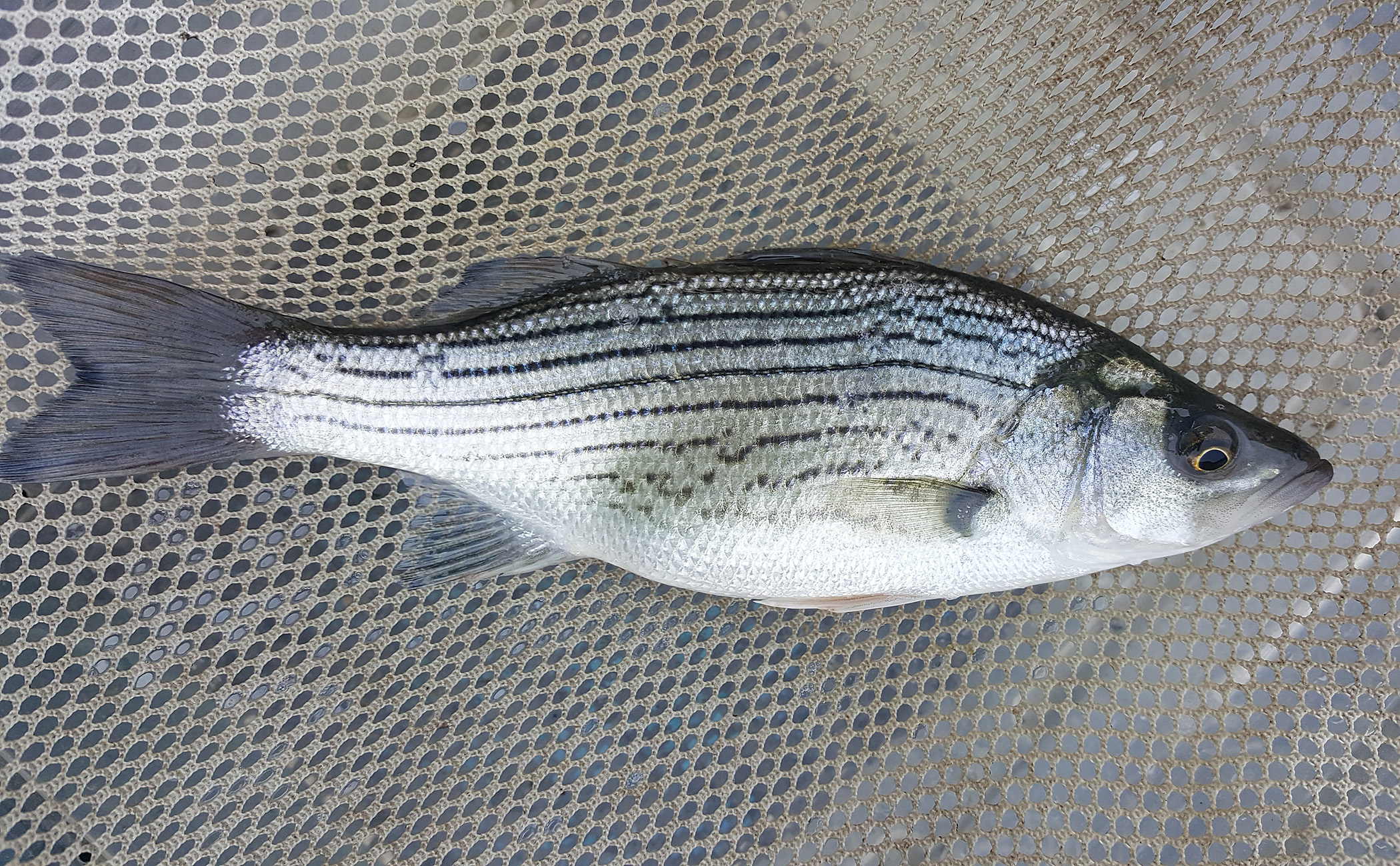

The hybrid striped bass is a fish built in a hatchery and forged for the fight. A cross between a white bass and a striped bass, the hybrid, universally called the wiper across much of its range, combines the white bass's relentless schooling, shad-chasing aggression with the striped bass's size and raw power. The result is a broad-shouldered bulldog that many anglers consider pound-for-pound the hardest-pulling fish in fresh water. Stocked in reservoirs and rivers across the country to provide a hard-fighting sport fish and to help control shad populations, the wiper reaches double-digit weights, hunts in wolf packs, and can turn a slow day into chaos the instant a school moves through.
Catching wipers is a game of finding roaming schools of powerful fish and then hanging on. They're not subtle, when a wiper eats, it's a jarring strike followed by a bruising, drag-burning run. This guide covers where to find them, the baits and lures that consistently produce, and the stout tackle you'll need to land one of fresh water's true heavyweights.
Understanding the Hybrid Striped Bass
The wiper looks like what it is: a stockier, heavier-bodied version of a white bass, or a shorter, deeper-bodied striped bass. It's silvery with dark horizontal stripes that are typically broken and offset, a key ID feature distinguishing it from the unbroken stripes of a true striped bass and the fainter stripes of a white bass. Wipers commonly run 2 to 6 pounds, with fish in the high single digits and low teens available in good fisheries, bigger than a white bass, and reaching the size where their power becomes genuinely intimidating on light tackle.
Like both parents, wipers are open-water schooling predators that live to eat shad. They roam reservoirs and rivers in packs, using their speed and numbers to corral baitfish against structure, the surface, and the dam, then blitz them. Because they're sterile hybrids, they put all their energy into feeding and growing, which is exactly why they get so thick and pull so hard. Find the shad and the schools of hungry wipers won't be far away.
The Easy Way to Catch Hybrid Striped Bass (Wipers)Live Bait: Live Shad Is King
The single most productive way to catch wipers is with live shad, their natural forage. A frisky live gizzard or threadfin shad, fished on a simple slip-sinker rig, a Carolina rig, or under a float near a located school, is nearly irresistible to a hungry wiper. Many guides build their entire wiper program around catching fresh shad with a cast net each morning and then fishing them live over structure and schools the fish are using. Where live shad is available, it out-produces almost everything else, especially for numbers and for the biggest fish. Live bluegill or other baitfish can work too where legal, but shad is the wiper's bread and butter. Hook the shad through the nose or just behind the dorsal so it swims naturally, use the lightest sinker that will hold your presentation in the strike zone, and keep your bait lively, a struggling, healthy shad calls fish in, while a dead or sluggish one gets ignored. When a wiper takes a live shad, give it a moment to turn and eat before you come tight, then set into the fish and hold on.
Live Shad Rig for Hybrid Striped BassJigging Spoons and Deep Schools
Wipers spend much of the year schooled up in open water, and modern electronics, especially forward-facing sonar, have revolutionized how anglers target them. Find a ball of fish and bait on your graph, and you can drop right on them. A heavy jigging spoon worked vertically over a deep school imitates a dying shad and draws savage strikes, and it's one of the most efficient ways to pick apart a stack of fish holding on structure, humps, and channel edges. When wipers are deep and won't come up, getting a spoon (or a heavy jig) down into the school is the answer.
Finding and Catching Deep Wipers with SonarSwimbaits and Jigs
When wipers are chasing shad and you want to cover water or cast to schools, swimbaits shine. A paddle-tail swimbait on a heavy leadhead, sized to match the shad, swum through or alongside a school triggers hard reaction strikes from these aggressive fish. Bucktail jigs, hair jigs, and blade baits work on the same principle, a shad imitation retrieved through the strike zone. Swimbaits let you fan-cast to surface activity, work depth ranges, and connect with roaming fish, and their bigger profile appeals to the larger wipers in a school. Blade baits in particular excel in cold water and current, where their tight vibration mimics a shivering, dying shad that wipers can't resist.
Big Wipers on SwimbaitsTrolling: Finding Roaming Fish
Because wipers roam constantly, trolling is an excellent way to locate them across big open water. Pull shad-imitating crankbaits (and swimbaits or spoons) at varying depths, often with the help of planer boards to spread lines and cover a wider swath, until you contact a school, then either keep trolling through them or stop and cast. Trolling dials in both the location and the depth the fish are holding, and it puts multiple offerings in front of a moving target. For anglers learning a new lake or chasing scattered summer and fall fish, it's a proven search tactic.
Trolling for Wipers (Hybrid Striped Bass)Topwater: The Surface Blitz
The most heart-stopping wiper fishing happens when a school pushes shad to the surface and erupts in a topwater blitz. The water boils, shad spray into the air, and birds dive on the scraps, and if you can get a topwater plug, a spoon, or a swimbait into the chaos, you'll get crushed. Approach quietly (running the school over shuts it down), cast to the edge of the activity, and hold on for an explosive strike and a screaming run. These surface feeds are most common in the low-light hours of summer and fall and are the single most exciting way to catch a wiper. Keep a rod rigged with a topwater ready at all times, because a blitz can erupt anywhere, anytime.
Giant Wipers on TopwaterThe Fight: Why Wipers Pull So Hard
Ask anyone who's hooked a good wiper and they'll tell you the same thing: pound for pound, few freshwater fish fight like this. The reason is in the breeding. As a sterile hybrid, a wiper channels all the energy that a spawning fish would spend on reproduction straight into muscle and growth, producing a thick, deep-shouldered body built like a linebacker. Combine that with the striped bass's power and the white bass's aggression, and you get a fish that eats with a jarring, rod-slamming strike and then bolts on a hard, sustained run that will smoke a loose drag.
Wipers don't jump much, but they bulldog, digging deep, running for structure and the dam, and surging again and again as you gain line. On light tackle a double-digit wiper can feel unstoppable, and that's exactly the appeal. The keys to landing them are a properly set drag (firm but with enough give to protect your line on that first run), steady rod pressure, and turning the fish before it reaches the rocks or timber it's trying to break you off in. Expect the fight to test both your gear and your knots.
Fishing the Dam and Tailrace
Dams and their tailraces are wiper magnets, especially in spring and during periods of generation flow. When water is moving through a dam, it disorients and concentrates shad, and wipers stack below to gorge on the easy meal. Fish the current seams, the eddies and slack water beside the main flow, and the boils where the discharge churns, casting swimbaits, jigs, spoons, or drifting live shad through the strike zone. Safety is paramount here: tailrace currents and fluctuating water levels are genuinely dangerous, so watch generation schedules, wear a life jacket, and give the immediate dam structure a wide berth. But when the water is right, a tailrace can produce the fastest wiper fishing of the year, with fish after fish slamming baits swept through the current.
When Wipers Feed: Reading the Conditions
Beyond season, day-to-day conditions strongly influence the wiper bite. Low light is prime, dawn, dusk, and overcast days consistently produce the best surface activity and the most aggressive feeding, while bright midday sun tends to push fish deeper and slow the topwater game. Moving water matters too, whether it's current in a river or tailrace or wind pushing bait and current across main-lake points and flats; wind-blown structure often concentrates both shad and feeding wipers. Barometric changes, water temperature, and shad behavior all play a role, but the simple rule holds: fish the low-light windows, follow the wind and current to where the bait stacks up, and be ready to move fast when a school shows itself, because a wiper school can appear, blitz, and vanish in minutes.
Tackle for Wipers: Go Stout
Do not under-gun a wiper. These fish hit hard and run harder, and they'll expose weak tackle instantly:
- Rod and reel: A medium-heavy to heavy spinning or baitcasting outfit with a strong, smooth drag and plenty of backbone. The rod must have the power to handle bruising runs and turn a big fish.
- Line: Braided or heavy mono/fluoro in the 12- to 20-pound class (heavier for trophy waters). Wipers pull hard and often live near structure and dams, so err strong.
- Terminal tackle: Strong hooks, quality swivels, and stout leaders. A big wiper straightens light wire hooks and pops light line.
- Bait gear: A cast net for catching fresh shad is a wiper angler's most valuable tool, along with a good aerated baitwell to keep bait lively.
Balance the gear so it's still fun, but never so light that you can't stop a double-digit fish headed for the rocks.
Where and When to Find Wipers
Wipers are stocked in reservoirs and rivers and share water with white bass and stripers. Look for them:
- Around shad. The number-one rule. Find the bait, with electronics and by watching for surface activity and birds, and the wipers are near.
- On main-lake structure: humps, points, channel edges, and drop-offs where schools stage and ambush bait.
- Below dams and in tailraces, especially in current where bait concentrates, and up tributary rivers seasonally.
- Near the surface at dawn and dusk in the warm months, when blitzes erupt.
Seasonally: spring sees fish running up rivers and into tailraces (wipers can't successfully spawn, but they still make the spawning migration); summer brings deep daytime schools and low-light surface feeds; fall is a gorging period with aggressive open-water feeding; and winter concentrates fish deep, prime for spoons. Match the tactic to the season and always start by finding the shad.
Common Wiper Mistakes
- Under-gunning your tackle. The biggest mistake, a wiper will break light gear and bury you in structure. Go stout.
- Not fishing live shad. Where it's available, fresh live shad dramatically outproduces artificials for numbers and size. Bring a cast net.
- Leaving a school to find more fish. Wipers pack tightly. When you get bit, work the spot hard.
- Running over surface blitzes. Motoring into a topwater feed scatters it. Ease in and cast from the edge.
- Ignoring electronics. For a roaming, schooling fish, finding them is everything. Use your sonar and watch for birds.
Are Hybrid Striped Bass Good to Eat?
Wipers are good table fare, with firm white fillets, though like white bass and stripers they carry a reddish lateral line of darker, stronger-flavored meat that most anglers trim for a milder result. They're a popular fish to keep within limits, and because they're a hatchery-stocked sport fish, harvest regulations (size and bag limits) are set to sustain the fishery, always check your local rules. Bleed and ice your catch and trim the red meat for the best flavor.
Put It All Together
Catching hybrid striped bass comes down to finding the shad and the schools, presenting live shad or a shad-imitating spoon, swimbait, jig, or crankbait right where the fish are, and bringing tackle stout enough to survive a bruising, drag-burning fight. Use your electronics and the birds to locate roaming schools, work the dams and tailraces in spring, drop spoons on deep winter fish, troll to find scattered summer and fall packs, and always keep a topwater ready for the blitz. Do that, and you'll tangle with what many anglers call the hardest-pulling fish in fresh water.
The wiper is the powerhouse of the temperate bass clan, and it shares its shad-chasing world with both parents. The abundant white bass delivers the same schooling action on a smaller, lighter-tackle scale, and the mighty striped bass is the true giant of the family. Learn the wiper and you've mastered the toughest, most bruising fighter of the three, the linebacker of the temperate bass family.
Ready to go a round with a wiper? Net some fresh shad, get your electronics dialed in, scout the main-lake structure and tailraces where the schools stack, and be ready to move the instant the birds start diving, that's how you get tight to a double-digit bulldog.