Fish
Fish Fire
Fire Hike
Hike Bird
Bird

Nobody flies to Denali to fish. That's the first thing you need to understand about this place, and it's the thing that makes the fishing so good.
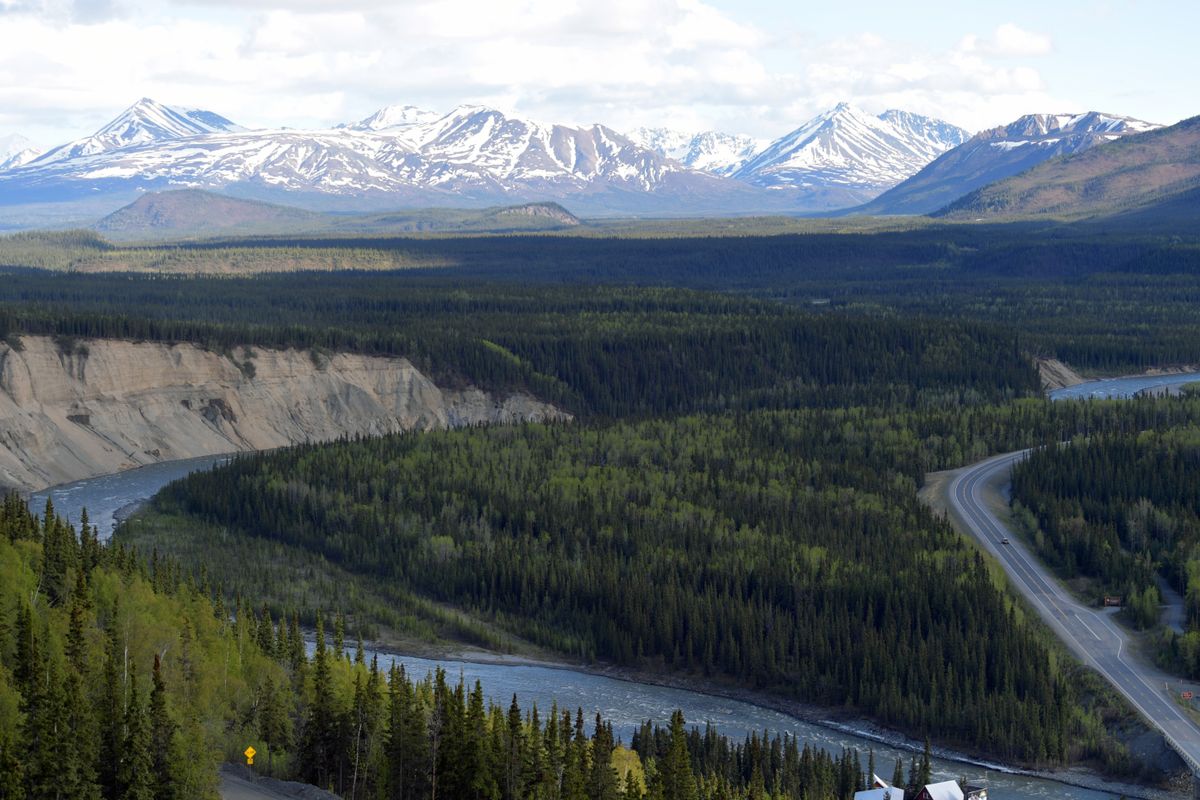
People come to Denali National Park for the mountain, 20,310 feet of granite, ice, and weather rising from a 2,000-foot tundra plain in a vertical gain that exceeds Everest's from base camp. They come for the grizzlies and wolves and caribou moving across a treeless landscape so vast it breaks your sense of scale. They come for the single 92-mile road that threads through the park like a supply line into wilderness, accessible only by bus, with no guardrails and no cell service and no way to rush the experience. They come for Alaska.
And then, on the second or third day, standing at a trailhead at mile 15 where the Savage River cuts through a canyon of alpine tundra, they notice something. The water is clear. Not glacial, clear. And in the tail of a small pool behind a boulder, a shape moves. Something with an absurdly large dorsal fin, iridescent purple and red, catches the light as it rises to eat something off the surface. An arctic grayling. And suddenly the fishing rod that's been sitting in the bottom of the duffel bag since Anchorage becomes the most important thing in the pack.
This is how Denali fishing works. You don't plan a trip around it. You discover it. And for a certain kind of angler, the kind who has chased trout across the Rockies and steelhead across the Pacific Northwest and maybe even made the pilgrimage to Katmai for those 30-inch rainbows, the discovery of grayling in Denali's creeks is a small, perfect revelation. The fish are not large. The water is not famous. The fishing will never make a magazine cover. But casting a dry fly to wild arctic grayling in a creek at the foot of the tallest mountain in North America, with no one else within miles and a grizzly track fresh in the mud at your feet, that is a fly fishing experience that exists nowhere else on earth.
A Park Built for Everything Except Fishing

Denali National Park and Preserve covers six million acres of the central Alaska Range, an area larger than New Hampshire. The park was established in 1917 as Mount McKinley National Park (the mountain was officially renamed Denali in 2015, though Alaskans had always called it that) and expanded significantly in 1980 under the Alaska National Interest Lands Conservation Act. It is managed primarily for wilderness preservation and wildlife, not recreation in the traditional sense. There are no maintained fishing trails. No stocked ponds. No fish-cleaning stations. The National Park Service website mentions fishing almost as an afterthought, sandwiched between sections on bear safety and backcountry permits.
This benign neglect is, paradoxically, what makes Denali's fishing special. The creeks that hold fish receive almost zero angling pressure. The grayling in the Savage River at mile 15 have probably seen fewer flies in a decade than a Yellowstone cutthroat sees in a weekend. The fish in the backcountry streams, the ones you have to hike to, bushwhacking through willow thickets with bear spray on your chest, may never have seen a fly at all.
The challenge is finding fishable water. Most of Denali's rivers are glacially fed, the Toklat, the East Fork, the main stem of the Teklanika, carrying loads of suspended sediment that turn them into gray, opaque torrents where no fish can see and few can survive. The Nenana River, which parallels the Parks Highway along the park's eastern boundary, is a thundering glacial river popular with commercial rafting outfits but useless for fly fishing. You can stand on a bridge over the Nenana and watch the silt-heavy current roll past and wonder how anything lives in Alaska at all.
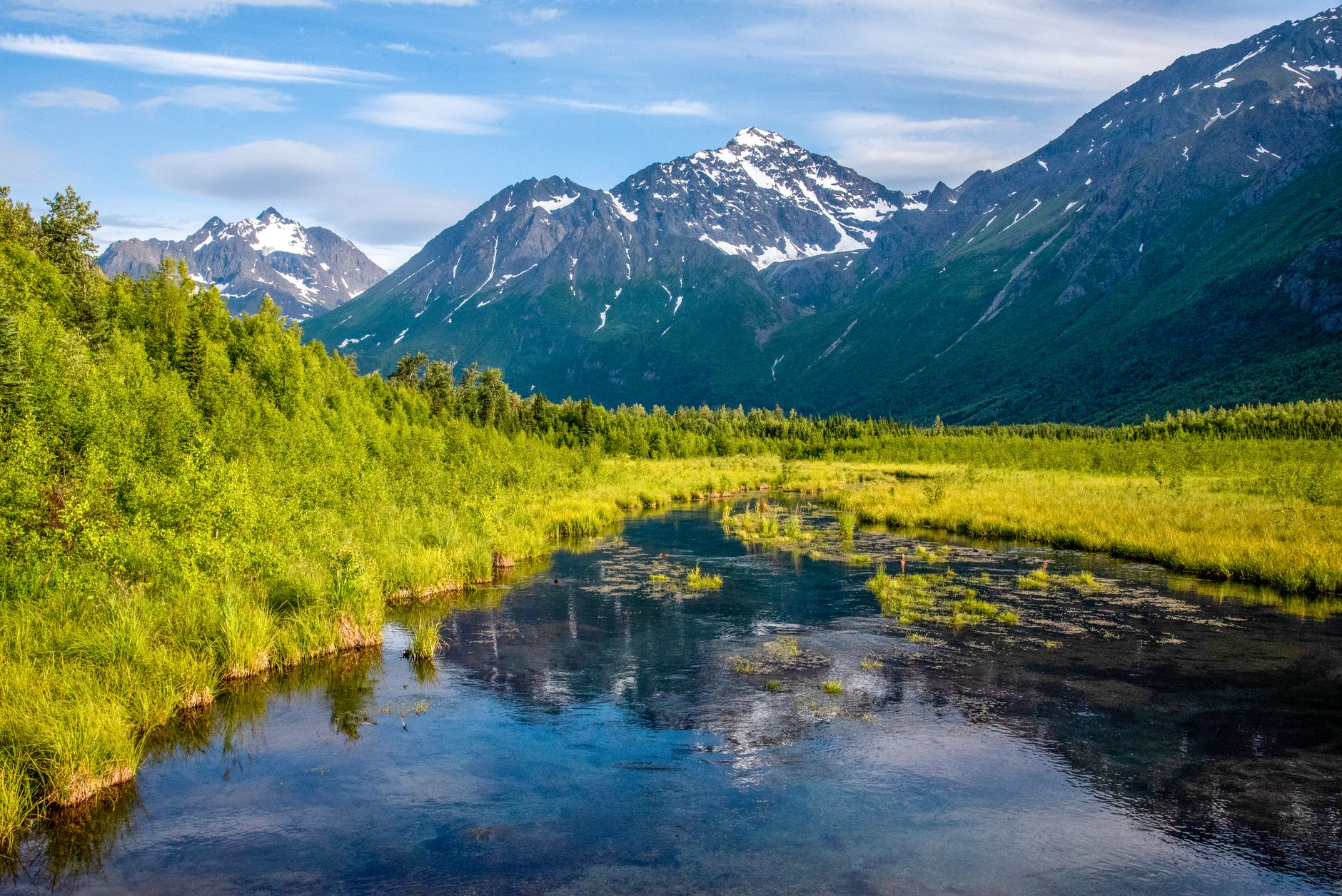
But between these glacial rivers, fed by springs and snowmelt rather than glacial ice, are the clearwater creeks. Savage River. Sanctuary River. Moose Creek. Eldorado Creek. A dozen unnamed tributaries that tumble off the flanks of the Alaska Range through alpine tundra and boreal spruce forest, running cold and clear over gravel and cobble, holding populations of arctic grayling that have been there since the last ice age. These are the streams you're looking for. Finding them is half the adventure.
The Bus, the Road, and the Art of Fishing by Mile Marker
Here is the logistical reality that shapes every Denali fishing trip: you cannot drive into the park.
The Denali Park Road runs 92 miles from the park entrance to the old mining district at Kantishna, threading through some of the most spectacular mountain scenery on the continent. Private vehicles are allowed only to mile 15, the Savage River checkpoint. Beyond that, the only motorized access is the park bus system: transit buses that run on a fixed schedule, stopping at designated points along the road, carrying hikers and wildlife-watchers deep into the park. You can get off at any point, hike wherever you want (there are almost no maintained trails beyond the first few miles), and flag down a later bus to return.
For fishing, this means your access points are defined by the bus stops and your willingness to walk. The key mile markers for anglers:
Mile 15, Savage River. The most accessible fishing in the park. You can drive here in your own vehicle. The Savage River is a small, clear stream that cuts through an alpine canyon, braided channels over gravel, pools behind boulders, riffles dropping into slow runs. It holds arctic grayling, and because it's the only fishable water reachable by car, it gets more pressure than anything else in the park. "More pressure" in Denali terms still means you might see two other anglers in a day. Walk upstream from the bridge and the river opens into a broad gravel valley with the Alaska Range filling the horizon. The grayling here average 10 to 14 inches, with occasional fish pushing 16.
Mile 22, Sanctuary River. A spring-fed clearwater stream accessible by bus. The Sanctuary is smaller than the Savage but potentially more productive, the water stays clearer and more consistent through the summer because it's not sourcing from glacial melt. Grayling hold in the deeper pools and at the heads of riffles. You'll need to hike from the bus stop, and the terrain is open tundra with no trail. Navigate by the creek itself. Bring bear spray, grizzlies use these creek corridors as travel routes.
Mile 29, Teklanika River. The Teklanika campground sits along this glacial river, but the mainstem is unfishable, too silty, too fast. However, small clear tributaries enter the Teklanika along this stretch, and some of them hold grayling. Finding them requires scouting, look for side channels where clear water enters the milky mainstem. These tiny streams can surprise you.
Mile 85, Wonder Lake. The crown jewel of the park road, with the most famous view of Denali reflecting in the lake on a calm day. Wonder Lake holds lake trout (mackinaw), not the grayling you'll find in the creeks, but a legitimate fishery in an incomparable setting. The lake trout here are wild and native to the drainage. Fish deep with Woolly Buggers, Muddler Minnows, or Clouser Minnows stripped along the bottom. A 5- or 6-weight rod works, though an 8-weight gives you more authority for turning bigger fish. There is a significant caveat for 2026: the park road has been closed past mile 43 since 2021 due to the Pretty Rocks landslide. A bridge bypass is under construction and targeted to open mid-summer 2026, but full bus service to Wonder Lake may not resume until 2027. Check current conditions with the park before planning a Wonder Lake trip.
Mile 89, Moose Creek (Kantishna). At the far end of the park road, Moose Creek is widely considered the best grayling stream inside the park boundaries. It holds a healthy population of fish in clear, well-structured water with pools, riffles, and undercut banks. Historically, the Kantishna lodges offered fishing excursions on Moose Creek. The same road closure caveat applies, access to Kantishna depends on the park road reopening past mile 43.
Arctic Grayling: The Fish With the Sail
If you've never caught an arctic grayling, you need to recalibrate everything you know about freshwater fish behavior. Grayling are not trout. They don't sip. They don't inspect. They don't drift back under a fly and refuse it at the last moment because your tippet is too heavy or your drift has six inches of drag. Grayling attack.
An arctic grayling rising to a dry fly looks like a fish that has been waiting its entire life for this particular insect and will not allow it to escape. The fish rockets from its holding lie, that enormous dorsal fin flaring like a battle flag, iridescent purple and red spots catching the light, and hammers the fly with a commitment that would embarrass every brown trout that has ever refused a Parachute Adams. The take is aggressive, confident, sometimes almost violent. There is no second-guessing. There is no "was that a fish or a rock?" There is a splash, a bent rod, and a fight that punches well above its weight class.
Grayling are not big fish by Lower 48 standards. In Denali's creeks, most run 10 to 14 inches, with a 16-inch fish being a good one and anything over 18 inches being genuinely noteworthy. The Alaska state record is just over five pounds, taken from a remote interior drainage, but most grayling you'll encounter in Denali weigh under a pound. They fight with quick, darting runs and a tendency to use that huge dorsal fin as a sail in the current, turning sideways and letting the water pressure amplify their resistance. On a 3- or 4-weight rod, which is all you need, a 14-inch grayling is a remarkably entertaining fish.
But the real draw isn't the size. It's the eagerness. Grayling are surface feeders that spend most of their brief, intense Alaskan summer gorging on drifting insects, mayflies, caddis, stoneflies, black flies, mosquitoes (Alaska has plenty of those), and terrestrials that blow onto the water from the tundra. They feed with an urgency driven by the compressed growing season: the ice doesn't leave some of these creeks until late May, and it returns by early October. That's four months to eat enough to survive an eight-month winter under ice in water that barely stays above freezing. Every calorie matters. Every bug that floats overhead is a decision: eat it or lose it.
This urgency makes grayling the greatest dry-fly fish on the planet for pure, unfiltered fun. Not the most challenging, a spring creek brown trout in Montana's DePuy Spring Creek is a harder catch by orders of magnitude. Not the most dramatic, a Katmai rainbow eating a mouse pattern at midnight makes a grayling rise look quaint. But for the simple, grinning joy of casting a dry fly and watching a wild fish eat it with absolute conviction, in water so clear you can count the spots on its dorsal fin, in a landscape that looks like another planet, grayling in Denali are unmatched.
The Fly Box: Simpler Than You Think
Denali grayling are not selective. Forget the hatch-matching obsession of Yellowstone or the technical leader-and-tippet game of the Henry's Fork. In Denali's creeks, the flies that work are the flies that float, look like something alive, and are presented without too much drag. That's the whole formula.
Dry flies, the main event:
The Elk Hair Caddis in sizes 12 to 16 is arguably the single best grayling fly in Alaska. Tan, olive, or gray, it doesn't matter much. The caddis profile rides high, stays visible in riffled water, and triggers that aggressive surface take. If you could bring only one fly to Denali, bring a box of EHCs.
The Parachute Adams in sizes 14 to 18 is the all-purpose mayfly pattern that works everywhere, and grayling eat it with gusto. The white post makes it easy to track in the glare off Denali's creeks, which matters when you're sight-fishing to individual grayling in clear water.
The Griffith's Gnat in sizes 16 to 20 covers the midge and black fly hatches that can be thick on Denali's streams in midsummer. When the mosquitoes and midges are swarming (and in Denali, they will be swarming), a Griffith's Gnat dead-drifted through a pod of rising grayling is deadly.
The Stimulator in sizes 10 to 14 works as a stonefly imitation and a general attractor. Grayling will eat a Stimulator with the same abandon they eat everything else, and the larger sizes are easier to see and track. A yellow or orange Stimulator is a confidence fly in fast pocket water.
The Chubby Chernobyl in sizes 10 to 14 doubles as a terrestrial imitation and a strike indicator for a dropper nymph. Grayling hit Chubbies hard, the foam body makes them essentially unsinkable, which matters when you're fishing choppy riffles.
The Comparadun in sizes 14 to 18 is worth carrying for the quieter water, slicks and pools where grayling are sipping rather than slashing. The low profile and natural silhouette can make a difference when the fish have calmed down from their usual frenzy.
Mosquito patterns and black gnats in sizes 14 to 18 deserve a slot in the box. Alaska's mosquito hatches are legendary, and grayling key on them when nothing else is coming off. A simple black gnat or Adams variant in the right size can outfish everything else when the mosquitoes are thick.
Nymphs, for when the surface goes quiet:
It happens. Some days, cold, overcast, post-front days when the barometric pressure drops, grayling sulk near the bottom and won't come up. A Pheasant Tail Nymph in sizes 14 to 18, a Hare's Ear in similar sizes, a Prince Nymph in 12 to 16, or a Copper John in 14 to 18 will get down to them. Drift these under a dry fly as a dropper, the two-fly rig lets you prospect the surface and the bottom simultaneously, doubling your odds and sometimes producing doubles.
The Zebra Midge in sizes 18 to 22 handles the midging situations, which occur more often than you'd expect on these high-latitude streams. Dead-drift it deep in the film or just beneath the surface.
Small streamers, for Dolly Varden and lake trout:
Denali's clearwater streams also hold Dolly Varden (arctic char), not in huge numbers, but enough that you might pick one up while targeting grayling. Dollies tend to hold in the deeper pools and eat small streamers and nymphs rather than dry flies. A Woolly Bugger in black or olive, sizes 8 to 12, stripped through the deeper runs, will find them. Muddler Minnows and small Clouser Minnows work too, swung through the tails of pools or stripped along undercut banks.
For Wonder Lake's lake trout, you'll want larger streamers, Woolly Buggers in sizes 4 to 8, Muddler Minnows, and Clousers in white or chartreuse, fished on a sink-tip line along the drop-offs and structure.
Gear for Denali
The gear list is mercifully short. This is not a steelhead expedition on the Skagit where you need a 13-foot spey rod, five different sink tips, and the will to suffer. Denali fishing is simple.
Rod: A 3- or 4-weight, 8 to 9 feet, is ideal for grayling. These are small fish in small water, and a light rod makes the fight fun. If you're also planning to fish Wonder Lake for lake trout or want one rod that covers everything, a 5-weight is the compromise. A 6-weight is overkill for grayling but not wrong if it's the only rod you own.
Reel: A click-and-pawl or basic disc-drag reel. Grayling will not run you into the backing. The reel is a line holder.
Line: Floating line, full stop. You don't need sink tips, shooting heads, or specialty lines. A weight-forward floating line matched to your rod covers every situation in Denali's creeks. For Wonder Lake, bring a sink-tip or intermediate if you have one.
Leader and tippet: 9-foot leaders tapered to 4X or 5X. Grayling are not tippet-shy, they'll eat a dry fly on 3X if the drift is clean. Carry spools of 4X and 5X for repairs and dropper rigs. Fluorocarbon is unnecessary; monofilament is fine.
Extras: Fly floatant (grayling take so aggressively they often drown your dry). Nippers. Hemostats for easy hook removal (barbless hooks are required in some Denali waters, check regulations). Polarized sunglasses, the water is clear enough that you'll sight-fish to individual grayling, and spotting them before you cast dramatically improves your success rate.
Regulations: Read Them Carefully
Fishing regulations in Denali are a patchwork that reflects the park's complex administrative history. The original Mount McKinley National Park boundaries (the "old park") have different rules from the 1980 additions and the preserve lands.
In the original park boundaries (which includes the park road corridor and most of the fishable water): No Alaska fishing license is required. The catch limit is 10 fish, not to exceed 10 pounds and one fish. Lake trout have a separate limit of 2 fish per day, including hooked and released. Live and dead bait is prohibited, artificial lures and flies only. Chumming is prohibited. You must attend your rod at all times.
In park additions and preserve lands: A valid Alaska state fishing license is required. State of Alaska regulations apply.
Everywhere in the park: Lead tackle is discouraged (bring non-lead alternatives). Fish remains should be disposed in water, not on shore, to minimize bear attractants near campsites. Handle fish quickly and return them immediately if not keeping.
The regulations are not overly complicated, but you need to know which zone you're in. The NPS fishing page (nps.gov/dena) has the current details. If in doubt, fish catch-and-release with barbless hooks and a valid Alaska license, that covers you everywhere.
The Denali Experience: Why This Isn't Just About Fish
Here's what separates Denali from every other fishing destination in this series, including Katmai: the fishing is not the point. It cannot be the point. If you come to Denali expecting the fishing to carry the trip, the way the fishing carries a trip to the Green River or the Bighorn or Katmai, you will be disappointed. The grayling are fun but small. The access is constrained. The fishable water is limited and scattered and sometimes requires hours of hiking to reach. On a pure fish-per-dollar, fish-per-hour basis, Denali is a terrible value.
But Denali is not a fishing trip. It's a wilderness trip that happens to include fishing. And in that context, the fishing is a gift.
You will ride a bus for four hours through a landscape that looks like the set of a nature documentary, tundra rolling to the horizon, Dall sheep picking their way across impossibly steep slopes, grizzlies digging for ground squirrels in the alpine meadows, caribou herds crossing the road in front of the bus. You will step off at a random mile marker, walk across the tundra with no trail and no other humans in sight, and find a creek. You will string up your rod, tie on an Elk Hair Caddis, and cast to a pool where an arctic grayling is rising. The fish will eat your fly with the confidence of an animal that has never been deceived. You will fight it on a light rod, admire that impossible dorsal fin, the sail of the subarctic, purple and red and spotted like a piece of stained glass, and release it back into water that is 42 degrees and achingly clear. And behind you, if the clouds have broken, Denali will be standing there, 18,000 feet above you, lit up in the afternoon sun, and you will understand that this is the most beautiful place you have ever held a fishing rod.
That's the trade. You give up the easy limits and the bragging-size fish and the guided drift-boat days with a net man. You get wilderness. Real, unmanaged, bear-in-the-willows, no-cell-service, you-are-on-your-own wilderness. And a fish that eats dry flies like it's angry at them.
When to Go
The Denali fishing season is compressed by latitude and altitude. The park road typically opens in late May and closes in mid-September, and the fishing window roughly mirrors the road season.
Late May through mid-June: The park road opens in stages as snow melts. Early season means high water in many creeks, and some may still have ice. Grayling are moving from their overwintering holes in lakes and deep pools to summer feeding positions in the riffles and runs. Fishing can be spotty early but improves rapidly as water temperatures rise and insect activity picks up. Days are extremely long, nearly 24 hours of light by the summer solstice, and the midnight sun makes for surreal evening fishing sessions.
Late June through July: Prime time. The creeks have cleared, grayling are in their feeding lies, and insect hatches, caddis, mayflies, stoneflies, mosquitoes, are at their peak. This is when the dry-fly fishing is best. The tundra is green, wildflowers are blooming, and the wildlife is active. It's also peak tourist season, so buses fill early, book transit bus tickets in advance.
August: Still excellent fishing. Grayling are fattening for winter and feeding aggressively. Some creek levels drop in late summer, concentrating fish in the deeper pools and making them easier to find. Blueberries ripen on the tundra, which also concentrates bears along the creek corridors, stay alert. The first dusting of snow can hit the high peaks. Days are noticeably shorter but still long by Lower 48 standards.
September: The season's tail. Fall colors transform the tundra into a palette of red, orange, and gold. Grayling are moving toward their overwintering areas. Fishing can still be productive, especially on warmer days, but the window narrows quickly. The park road closes in mid-September, and temperatures can drop below freezing any night. If you time it right, September offers the most dramatic scenery of the year, the fall tundra against fresh snow on the Alaska Range, and fewer crowds than summer.
Planning Your Denali Fishing Trip
Getting there: Fly into Anchorage or Fairbanks. Denali is roughly 240 miles north of Anchorage (4.5 hours) or 125 miles south of Fairbanks (2.5 hours) via the Parks Highway. There's no commercial air service to the park itself.
Where to stay: The park has six campgrounds along the road (Riley Creek, Savage River, Sanctuary River, Teklanika, Igloo Creek, and Wonder Lake, though the latter three are subject to road closure). Lodges, hotels, and RV parks cluster around the park entrance at the town of Denali Park (also called Glitter Gulch for its strip of tourist businesses). Camping inside the park puts you closest to the fishing.
The bus system: Book transit bus tickets through reservedenali.com as early as possible. Buses fill up in peak season. Choose a bus that goes at least to mile 43 (the current road terminus) and plan which mile marker you want to exit at. You can get off at any point and flag down a later bus to return, but later buses may be full. Have a backup plan. Bring food, water, rain gear, and bear spray.
What to pack beyond fishing gear: Bear spray (carried on your person, not in the pack). Rain gear, Denali weather is notoriously unpredictable, and you can see sun, rain, wind, and near-freezing temperatures in a single afternoon. Insect repellent and a head net, the mosquitoes in Denali from late June through July are legendary. Layered clothing. Waders are not necessary for most creek fishing, you can wade wet in hiking boots or neoprene socks, or stay on the bank. The creeks are small enough that you rarely need to get more than knee-deep.
Guided fishing: Local guide services have been guiding fly fishing in the Denali area for decades. They focus on the clearwater spring creeks south of the park entrance near Cantwell, technically outside the park boundary but holding excellent grayling populations in similar scenery. Most provide all gear and are a solid option if you're new to fly fishing or want someone to put you on the best water without the scouting time. Guided trips in the Denali area run $250 to $500 for half-day to full-day outings.
Denali vs. Katmai: Alaska's Two National Park Fisheries
If you're planning an Alaska trip and trying to choose between Denali and Katmai, the answer is: they're not the same category.
Katmai is a fishing destination. People fly to King Salmon and then take a float plane to Brooks Lodge specifically to catch 30-inch rainbow trout and sight-fish to salmon. The fishing is the reason for the trip. Katmai is expensive, logistically complex, and remote, but the fishing is world-class, arguably the best freshwater fly fishing on the planet. If fishing is the priority, Katmai is the Alaska trip.
Denali is a wilderness and mountain destination where you can also fish. The fishing is a complement, not the main attraction. Denali is more accessible (you can drive there from Anchorage), more affordable (camping in the park costs a fraction of a Katmai lodge), and offers a broader experience, the mountain, the wildlife, the tundra, the sheer scale of the place. If you want the full Alaska experience and you happen to fly fish, Denali is the trip that gives you everything.
The best Alaska trip, if you have the time and budget, includes both: Denali for the mountain and the wilderness and the grayling, and Katmai for the fishing of a lifetime. They're complementary, not competing.
The Fish Nobody Expected
I want to end with this: the best fishing moments I've heard described in Denali are never about the fish. They're about the moment.
A woman hiking the Savage River loop trail who stopped to watch a grayling rise and realized she had a tenkara rod in her daypack. A family camping at Teklanika who found a clear tributary nobody had mentioned and spent an afternoon catching and releasing grayling while their kids threw rocks in the river. A solo backpacker who hiked for two days into a nameless drainage in the backcountry and found a creek so full of grayling that every pool held fish, and spent an evening casting a Parachute Adams in the midnight sun with Denali glowing pink above the ridgeline.
These are not Katmai stories. Nobody is going to measure these fish or weigh them or photograph them for a lodge brochure. But they are the kinds of fishing stories that stay with you, the unexpected ones, the ones that happened because you were somewhere wild and you had a rod and the fish were willing. Denali is full of these moments. You just have to find them.
And you might have to take a bus to get there.