Fish
Fish Fire
Fire Hike
Hike Bird
Bird

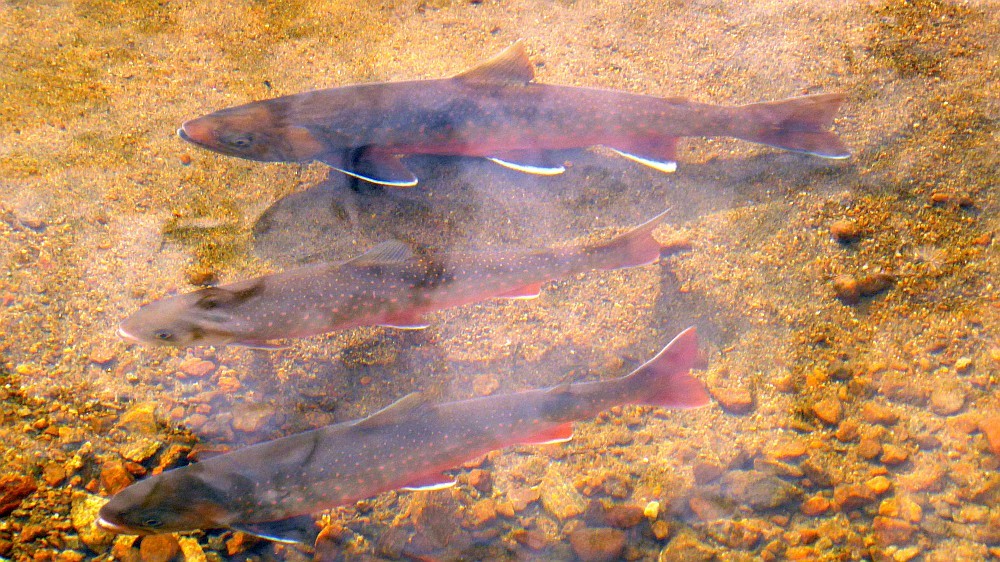

The arctic char (Salvelinus alpinus) is the northernmost freshwater fish on the planet and one of the most spectacular fish an angler can catch. A member of the char family, the same genus as brook trout, lake trout, and bull trout, the arctic char wears colors that rival any freshwater fish on Earth: silvery-blue in the sea, then a blaze of orange, red, and crimson at spawning time, with cream-white leading edges on the lower fins. They fight hard, grow big in the right waters, and live in some of the most remote and beautiful country left on the map. This guide covers how to find and catch arctic char across all the ways they live, in tundra rivers, deep cold lakes, under the ice, and on their sea-run migrations.
What Is an Arctic Char?
Arctic char are true char, not trout, distinguished by light spots on a dark body (the reverse of trout, which have dark spots on a light body), small scales, and white-edged pectoral, pelvic, and anal fins. They are circumpolar, ringing the top of the globe through arctic and subarctic Canada, Alaska, Greenland, Iceland, Scandinavia, and Russia, with relict populations reaching as far south as alpine lakes in the Alps and deep coldwater lakes in Maine (where a landlocked form is called "blueback trout").
Char come in two broad life-history types. Sea-run (anadromous) char live in coastal rivers and lakes and migrate to the ocean each summer to feed, returning to freshwater to spawn and overwinter, these are the ones that reach 10, 15, even 20-plus pounds. Landlocked (resident) char live their whole lives in cold lakes; they are often smaller, but in food-rich lakes they too can grow large. Either way, a char is built for cold: they thrive in water that would slow almost any other gamefish to a stop.
Where and When to Catch Arctic Char
The heart of arctic char country is the far North, Nunavut, the Northwest Territories, Nunavik in northern Quebec, Labrador, Alaska, Greenland, Iceland, and northern Scandinavia. Most trophy char fishing happens at fly-in lodges on famous rivers like the Tree, the Coppermine, and the Ekaluk, but char are also caught by DIY anglers on accessible arctic and alpine waters, and by ice anglers across the North.
Timing is everything, because char are migratory. For sea-run char, the golden window is the summer run: as char return from the ocean to the rivers (roughly July into September, depending on latitude), they stack up in river mouths, pools, and lake outlets, fresh from the sea, aggressive, and often at their heaviest. This is the classic arctic char fishery. Earlier in summer, char can be intercepted in the estuaries and along the coast as they feed in salt or brackish water.
For landlocked char, target the short open-water season around the deep, cold lakes they inhabit, focusing on inlets, outlets, and drop-offs, and then the ice season, when char are a prized target through the ice across the North. Char feed actively in very cold water, which is exactly why they remain catchable when almost everything else has shut down.
Fly Fishing for Arctic Char
Fly fishing is the signature way to catch arctic char, and few things in the sport match a fresh, sea-bright char taking a fly in a gin-clear tundra river. An 8- or 9-weight rod is the standard, with enough backbone to handle big fish and arctic wind.
A Week in Alaska: Giant Arctic Char on the FlyThe most effective flies imitate what char are eating: bright streamers and baitfish patterns (they gorge on small fish and shrimp in the sea), egg patterns and beads (they key on salmon eggs where they overlap with spawning salmon), and colorful attractor patterns in pink, orange, chartreuse, and purple. Swing or strip streamers through pools and current seams, dead-drift egg patterns near the bottom, and cover water, char hold in pods, so once you hook one, work that lie thoroughly. Fresh-run fish are aggressive and will chase, so an active, stripped retrieve often out-fishes a dead drift.
Casting Spoons and Spinners
For spin anglers, arctic char are a dream target because they crush hardware. Casting and retrieving spoons and inline spinners is deadly, especially in the current of a river mouth or lake outlet where char are staging.
Fishing for Arctic CharClassic spoons (in silver, gold, red-and-white, and bright pink/orange patterns) cast a mile in the arctic wind, get down to the fish, and trigger the char's aggressive, baitfish-hunting instinct. Fan-cast across and downstream, letting the spoon flutter and swing through the holding water, and vary your retrieve speed until you dial in the mood. Inline spinners and small crankbaits also produce, particularly for smaller resident char in lakes. Because char pull hard and often fight in current, use a quality reel with a smooth drag and line strong enough to turn a heavy fish before it reaches heavy water.
Choosing Lures and Colors
Char are famously color-responsive, and dialing in the right hue on a given day can make a huge difference. It pays to carry a spread of colors and let the fish tell you what they want.
Best Lures for Arctic CharAs a rule, bright and hot colors shine, pink, orange, red, chartreuse, and gold are perennial char favorites, echoing the eggs and small fish they feed on, but natural silver and blue baitfish finishes excel on fresh sea-run fish keyed on baitfish. Start bright, and if the char follow but won't commit, downsize or switch to a more natural finish. Whether you throw spoons, spinners, jigs, or flies, keep a range of sizes and colors on hand, because a char's preference can flip from one pool to the next.
Ice Fishing for Arctic Char
Across the North, arctic char are a premier ice-fishing target, and ice season stretches long in char country. Because char keep feeding aggressively in the coldest water, the through-the-ice bite can be excellent.
Arctic Char Ice FishingJig flashy spoons and jigs tipped with bait (a piece of fish, shrimp, or a soft plastic) near drop-offs, points, and the deeper water off inlets and outlets. Work the lure with an aggressive lift-drop-flutter cadence to call fish in with flash, and be ready for a hard, sudden strike. As in open water, char often travel in pods, so a hot hole can produce fish after fish. Mobility helps: if a spot goes quiet, drill new holes along the structure until you intercept a traveling group.
Targeting Sea-Run Char
Sea-run char are the giants of the species, and intercepting them on their coastal migration is a fishery all its own. As char move between the ocean and their home rivers, they concentrate in river mouths, estuaries, and the first pools upstream, and fish caught here are chrome-bright, fat from ocean feeding, and at peak strength.
Catching Sea-Run Arctic CharFocus on the tide and the run timing: fish the moving water and the staging pools as fresh fish push in. Bright streamers, spoons, and spinners all take sea-run char, and because these fish are in prime condition, they fight ferociously, long runs, hard head-shakes, and dogged battles in current. This is the fishing that draws anglers to fly-in lodges from around the world, but it can also be found by adventurous DIY anglers willing to reach the right coast at the right week.
Understanding Char Behavior and Reading the Water
Everything an arctic char does is shaped by cold, current, and the short arctic calendar. In a river, look for char exactly where you'd expect any migratory salmonid: the tail-outs and heads of pools, current seams, eddy edges, and the slack water beside fast current where a fish can rest and still watch food go by. Lake outlets and inlets are magnets, because they funnel both current and food. In lakes, char relate to drop-offs, points, and the mouths of tributaries, holding deeper as the water warms and moving shallow to feed in low light and cold.
Char are pod fish, not loners. They travel and hold in groups, which is why the fishing is often feast or famine, you cover water and find nothing, then hit a pod and hook several in a row. When you catch one, slow down and work that spot hard before moving on. Read the light, too: char frequently feed best in low-light and overcast conditions, and a fresh push of fish on a rising tide or after a bump in river flow can turn a slow day fast.
One more piece of the puzzle is the arctic environment itself. These are remote, weather-exposed fisheries, and the wind is relentless, which is a big reason spoons and heavier flies dominate, since they punch through the breeze when lighter offerings can't. Bring more terminal tackle than you think you need, because char have small teeth and their hard strikes and dogged fights chew up hooks and split rings fast. Quality drags and abrasion-resistant leaders matter, since a big char will bulldog into fast current and rocky structure. And be self-sufficient: in true char country there is no tackle shop around the corner, so pack backups of everything and dress for cold, wet, buggy conditions even at the height of the arctic summer.
Conservation: A Fragile Northern Treasure
Arctic char live in cold, slow-growing, low-productivity waters, which makes their populations far more vulnerable than their aggressive bite suggests. A trophy sea-run char may be 15, 20, or more years old, and a heavily fished remote river can be depleted quickly. Char are also on the front line of a warming climate, as the far North warms, their cold-water habitat shrinks, and southern-edge populations are already declining or disappearing.
That fragility calls for real restraint. Practice careful catch and release on all but the fish you intend to eat: keep char in the water, wet your hands, minimize air time, pinch your barbs, and revive fish fully in the current before letting them go. Know and follow the local limits and seasons, which are often strict and specific in char country, and respect that many populations support subsistence fisheries for northern communities. Treated with care, arctic char offer world-class fishing in some of the last truly wild water on Earth, a resource worth protecting for the anglers who come after us.
Landlocked vs. Sea-Run Char
It's worth understanding which kind of char you're chasing, because it changes almost everything about the trip. Sea-run char are the headline fish, the chrome-bright, ocean-fattened giants that draw anglers to fly-in lodges. They spend the short arctic summer feeding in the sea and pour back into rivers and lakes to spawn and overwinter, and they're at their heaviest and most aggressive on that return run. If a trophy is the goal, you're planning a trip around the summer run of a coastal river system.
Landlocked char never see salt; they complete their entire lives in a cold lake, often deep and food-limited. They tend to run smaller and grow more slowly, but in the right lake, one with abundant forage, resident char can still reach impressive size, and they offer far more accessible fishing, including some southern alpine and deep coldwater lakes well outside the true arctic. The Maine "blueback trout" is one such landlocked char. Resident fish relate more to lake structure, drop-offs, points, and tributary mouths, and less to a dramatic migratory pulse, which makes them a steadier, if often smaller, target. Knowing which form your water holds tells you when to go, where to look, and what size to expect.
Cleaning and Eating Arctic Char
Arctic char are outstanding on the table, many anglers rate them above salmon. The flesh ranges from pale pink to deep red-orange, is rich but clean-tasting, and takes beautifully to grilling, pan-searing, baking, and cold-smoking.
How to Clean Arctic CharFillet a char as you would a salmon or trout, then remove the row of pin bones along the fillet with pliers for boneless portions. As with all coldwater fish, quality starts at the catch: bleed and ice your keepers promptly to protect the firm texture and delicate flavor. A fresh char fillet needs almost nothing, a little salt, pepper, and heat, and its rich, colorful flesh makes it one of the great eating fish of the North. If you're keeping fish for the pan, take only what you'll use and release the rest carefully.
Bringing It All Together
Arctic char reward the angler willing to go where the fish are, to the tundra rivers, the deep cold lakes, and the arctic coasts at the short window when the fish run. Match your method to how the char are living: swing bright flies and cast hot-colored spoons for sea-run and river fish, jig flashy spoons through the ice for winter char, and read the current seams, outlets, and drop-offs where these pod-traveling fish hold. Handle them gently, keep only what you'll eat, and you'll have both the fish of a lifetime and a fishery that lasts.
For more coldwater char and their northern cousins, see our guides to the brook trout, the lake trout, and the arctic grayling.
Whether you are dreaming of a fly-in char trip or a DIY arctic adventure, the fish of a lifetime is out there for the angler willing to reach the right water at the right week. Plan your trip around the run, scout your access and the cold-lake structure ahead of time, pack for hard weather, and go put yourself on it.