Fish
Fish Fire
Fire Hike
Hike Bird
Bird

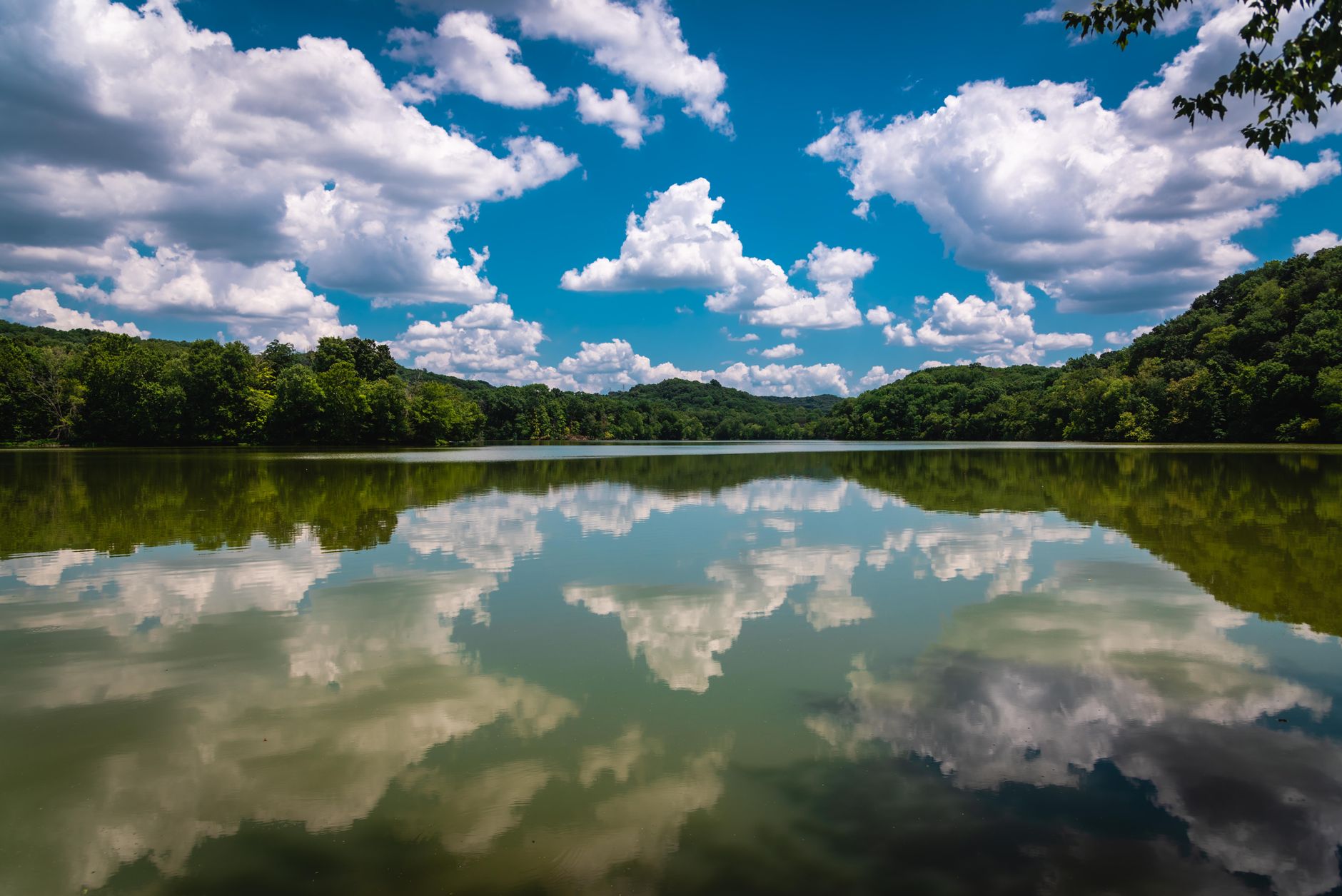

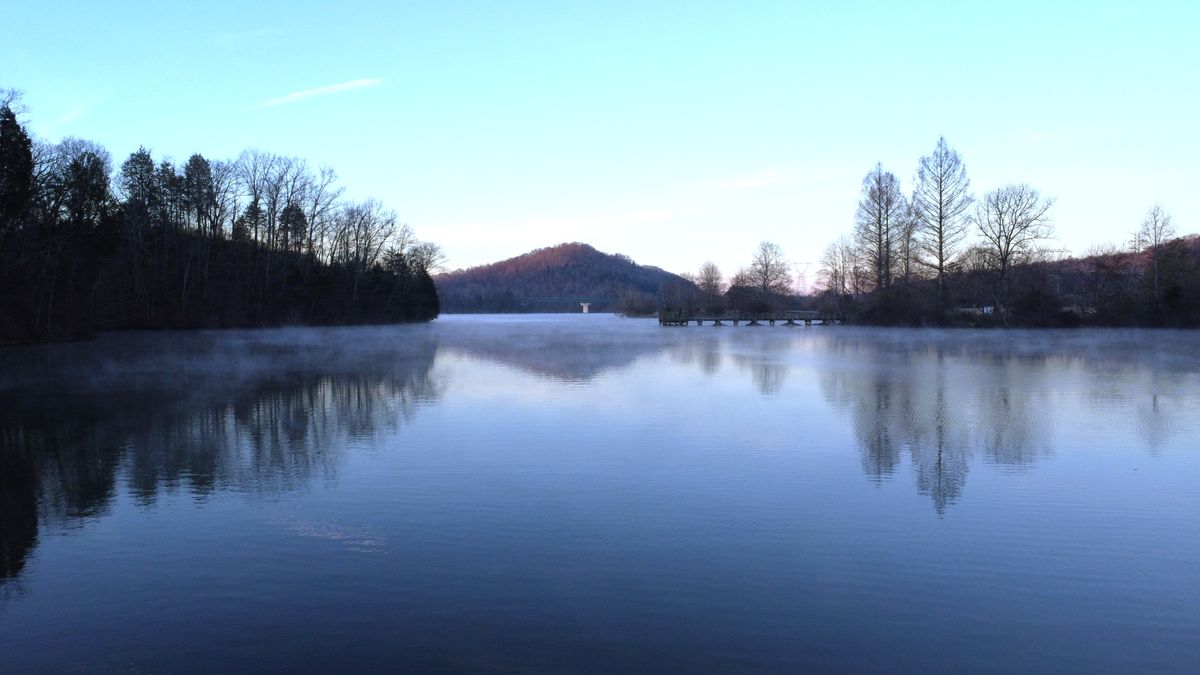
Most city parks manage conflicting uses by zoning them. Radnor Lake State Natural Area manages them by declining most of them, and the result is the quietest 1,400 acres in Nashville.
Radnor Lake, and why the rules matter
Radnor was Tennessee's first State Natural Area, and the designation is not decorative. It carries a management standard focused on protecting the natural community rather than on providing recreation.
In practice that means pets, jogging and bicycles are permitted only on the Otter Creek Road Trail and not on the rest of the 7.75-mile trail system, which is designated for hiking, photography and wildlife observation. It is day-use only, open 6:00am until twenty minutes after sunset, 365 days a year, and dogs must be leashed on Otter Creek Road where they are allowed and are prohibited on the trails and the lake. For accessibility, the Lake Trail accommodates all-terrain wheelchairs, and the Dam Walkway, Otter Creek Road and Spillway Trail are ADA accessible.
The effect is a park where the ambient noise is birds rather than people, and where waterfowl on the lake do not flush when somebody comes round the corner. In winter it holds around 24 waterfowl species, and in spring it is the best warbler migration site inside the city. It is worth understanding as a general principle: the restrictions are the product, and a natural area permitting everything a city park permits would be a pleasant place with fewer birds.
Two facilities are worth time. The Walter Criley Visitor Center provides exhibits and interpretive programs, and the Barbara J. Mapp Aviary Education Center houses non-releasable birds of prey, injured birds that cannot survive in the wild, and uses them for public education. That second one repays twenty minutes for two reasons. The obvious one is that seeing a Barred Owl or a Red-tailed Hawk at three feet teaches you proportions, feather detail and size that you carry into the field afterward. The less obvious one is that these birds are almost all here because of people, through vehicle strikes, window collisions, lead poisoning from scavenged ammunition, illegal shooting and entanglement, and the interpretive material makes that point in a way that lands harder standing in front of the animal.
Radnor also has a real wild raptor presence, with Barred Owl, Red-shouldered Hawk and Cooper's Hawk resident and Bald Eagle increasingly regular on the lake, now nesting there.
Birding at Radnor Lake State ParkWarner Parks, and the banding station
Edwin and Percy Warner Parks, on the southwest side, together run to roughly three thousand acres of mature hardwood forest, and they give you the forest interior community that Radnor's smaller footprint cannot. This is the site for breeding Kentucky Warbler, Worm-eating Warbler, Louisiana Waterthrush on the creeks, Hooded Warbler, Acadian Flycatcher, Wood Thrush and the full complement of eastern deciduous forest birds. The park roads make it drivable, which helps, and there is a substantial trail network for anyone who would rather walk.
The Warner Park Nature Center is the part most visitors drive past and should not. It runs public programs, maintains feeders and gardens that are productive in their own right, and operates a long-running bird banding program. Watching banding is one of the better hours a birder can spend, because birds in the hand teach you things no amount of binocular work does: how to age a bird from feather wear and molt limits, how much smaller a Blackpoll Warbler is than you thought, how to separate species that are near-impossible at distance.
The wider point is that banding is data. Recaptures over years produce information on survival, site fidelity, migration timing and body condition that observation alone cannot generate, and the long-running stations are the ones that matter most. If you are visiting in migration and the center is running a session, go, but check the schedule rather than turning up, because sessions are weather-dependent and start very early.
The river and the bottomland
Shelby Bottoms Greenway and Nature Park, on the Cumberland River east of downtown, is floodplain: bottomland hardwood, old fields, wetland and river edge, connected by a paved greenway. It holds entirely different birds from the upland forest parks, with Prothonotary Warbler in the wet woods, Orchard Oriole and Blue Grosbeak in the old fields, herons and waterfowl on the river and the ponds, and a good sparrow showing in autumn and winter. It is also the most convenient site for anyone staying downtown.
Bells Bend Park further west gives open grassland and farmland on a river bend, which is the best grassland birding near the city, with Grasshopper Sparrow and Dickcissel in summer and harriers and sparrows in winter. And Beaman Park, to the northwest, holds a different forest type again, with oak-hardwood forest and cool, moist hollows and a more northerly feel to the bird community.
The winter lakes
Middle Tennessee's reservoirs are the winter story and they are underused by visitors. Old Hickory Lake and Percy Priest Lake, both within easy reach, hold wintering waterfowl, loons, grebes and gulls, and gull-watching on the Tennessee reservoirs is a real specialty, with the possibility of scarce large gulls among the Ring-billed and Herring flocks. Dam tailwaters stay open in cold weather and concentrate everything, which makes them the place to be during a freeze. Bald Eagles are widespread on these lakes in winter and increasingly nest on them.
Radnor Lake State Park: Bird Watching in TennesseeThe migration geography
This explains why late April here is so good. Middle Tennessee sits between the Mississippi Flyway proper to the west and the Appalachian ridges to the east, and spring migrants moving north out of the Gulf coast pass through on a broad front that narrows around the river systems. The Cumberland River corridor and its tributary valleys act as a leading line, and the wooded ridges around Nashville are the first substantial forest many birds reach after crossing open agricultural country to the south.
Front timing therefore matters more than the date, because a warm southerly flow overnight in late April puts birds down while a cold front with north winds shuts it off, so the best mornings follow a night of southerly wind. Ridge tops and creek heads concentrate birds in the Warner Parks, particularly the wooded slopes that catch morning sun first. The peak is narrow, with the last week of April and the first week of May carrying the bulk of it and a week either side noticeably quieter. And autumn is longer and thinner, with southbound movement running from August to October with no comparable single peak, in duller plumage and largely silent, which makes it much harder work.
Chimney Swifts, and a small thing you can do
Nashville has good numbers of Chimney Swifts through the summer, and they are worth watching for a reason beyond the pleasure of it. The species has declined substantially across its range, and a large part of the reason is architectural: swifts originally nested and roosted in large hollow trees, switched almost entirely to masonry chimneys as the old growth was cut, and are now losing those as chimneys are capped, lined or demolished. A bird whose habitat is essentially a building type is in an unusual position.
What you can do is simple. If you own an uncapped masonry chimney, leave it uncapped and unlined and do not run the fireplace between roughly April and October. If you are watching a roost, report the count, because roost monitoring is the main source of population data for the species. Watch at dusk in August and September, when premigratory roosts form and several hundred birds may funnel into a single chimney, and look at downtown Nashville and the older school and church buildings.
The gear
Nashville birding in spring is a warbler problem, which means it is an ears problem, and the gear list is unusual for that reason.
Ears, and song recordings you have studied before you arrive. This is the item that matters most and the one nobody sells. A Tennessee oak canopy in late April holds a dozen warbler species forty feet up in new leaves, and the people finding them are hearing them first and looking second. An hour a night with recordings for the two weeks before migration is worth more than any optic upgrade.
A spotting scope for the reservoirs, since the winter half of Nashville birding is gulls and waterfowl on large open water.
Close-focusing binoculars for the bottomland, where birds are frequently close and in cover.
Insect repellent and tick protection, taken seriously. Middle Tennessee has lone star ticks in numbers, they are active from spring through autumn, and the bottomland habitat where you want to be is where they are.
A neck-strap alternative for long walks, meaning a harness. Radnor's east trail and the Warner Parks loops are real distance and a strap becomes a problem over three hours.
Waterproof boots for the bottomland along the Cumberland, which is wet whenever it has recently rained.
And patience for a quiet park, because the productive strategy at Radnor is to stand in one place at a good edge and wait rather than to walk the whole loop.
Where to go when Radnor is busy
Radnor's restrictions keep it quiet in behavior but not always in numbers, because it is a popular park in a growing city and weekend mid-mornings are busy.
Beaman Park, northwest of the city, is markedly less visited and holds a different forest community, with oak-hardwood forest and cool, moist hollows and species that feel more northern than the rest of Davidson County. Bells Bend, west along the Cumberland, is open country and almost always quiet. Couchville Lake at Long Hunter State Park, east of the city, has a flat paved loop around a lake and good winter waterfowl with few birders on it. Bowie Nature Park in Fairview, further out, gives pine and hardwood with a large trail network. And the Stones River greenway system offers riparian birding on the east side.
The general rule for Nashville is the same as anywhere: the second-best site on a quiet morning beats the best site at eleven on a Saturday.
Timing, and a spring morning
Late April into early May is the peak and it is excellent, because Nashville sits where the eastern deciduous forest migration funnels and a good morning in the Warner Parks or at Radnor can produce twenty warbler species. May and June are breeding season with the forest parks at their loudest at dawn. Late August through October brings southbound passage, more spread out and harder work than spring, with better shorebird potential on any exposed mud. November through February is the waterfowl, gull and sparrow season, with the reservoirs coming into their own. And year-round the city holds Barred Owl, Red-shouldered Hawk, Pileated Woodpecker and, in summer, Chimney Swifts over downtown at dusk.
For a single spring morning: be at Radnor Lake at 6am in late April, walk the Lake Trail and the South Cove slowly, and listen more than you look. Move to the Warner Parks mid-morning for the forest interior species and give the Nature Center twenty minutes. If you have the afternoon, take Shelby Bottoms for the bottomland birds and the river.
One planning note. Middle Tennessee is a patchwork of state natural area, metro parks, state parks, Army Corps of Engineers land around the reservoirs, TWRA wildlife management areas and a great deal of private farmland, and Corps land in particular confuses people, since the ground around a federal reservoir is often public and walkable, often not, and frequently leased to the state or a private operator with different rules on each parcel. Guidepole Bird carries the ownership and access layer, so which agency manages the shoreline you are walking, and what that permits, is part of the map.
And note what Radnor feels like compared with the others. That difference is a management decision, made deliberately, decades ago, and it is worth carrying to every other park you bird. A site that permits everything permits the things that move birds off it, and the quietest ground is almost always the ground where somebody drew a line and held it.
If you have a second morning, spend it on the reservoirs instead of the forest. The gull and waterfowl work is a completely different discipline from warbler listening, it happens at a civilized hour, and in a hard January the tailwaters below the dams are the most concentrated birding in middle Tennessee.
For the wider region, the Hiwassee sandhill cranes are two hours east and worth a winter trip on their own.
The crane spectacle two hours east, which is the other great Tennessee bird event, is in the Hiwassee sandhill cranes. Finding your way around an unfamiliar city's hotspots is in reading eBird hotspots, and the temptation that a hard-to-see canopy warbler creates is dealt with in playback ethics. Autumn birding on public land here overlaps with the seasons described in birding during hunting season, and the access questions are in can you legally bird here.