Fish
Fish Fire
Fire Hike
Hike Bird
Bird

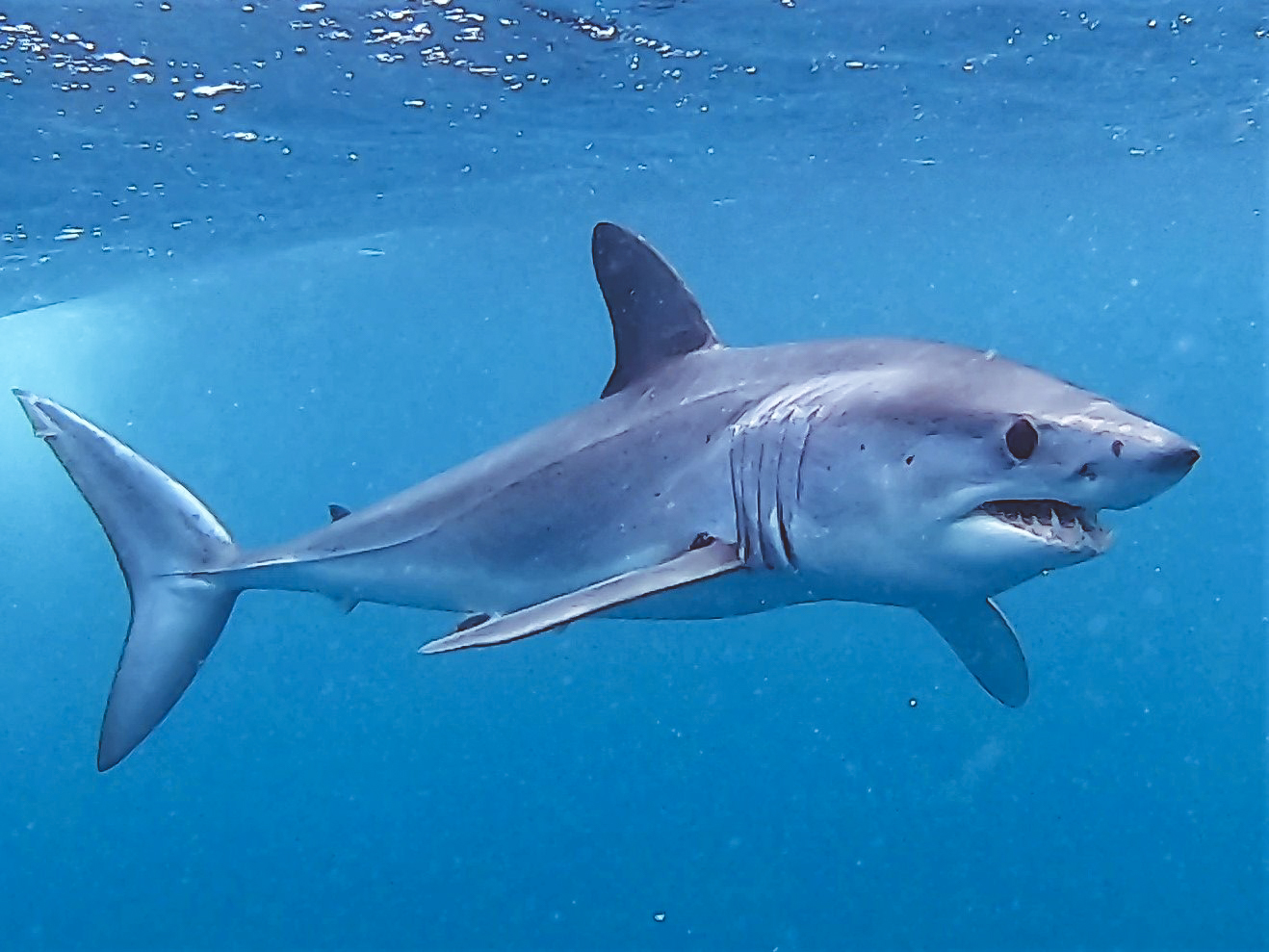

The shortfin mako (Isurus oxyrinchus) is the Ferrari of the shark world, the fastest shark in the sea, a metallic-blue, torpedo-shaped predator capable of explosive bursts of speed and astonishing leaps clear of the water. Hooking a mako is one of the most thrilling experiences in offshore fishing: blistering runs, spectacular jumps, and a raw power that has made it one of the most prized big-game sharks. It is also outstanding on the table, with firm, meaty flesh often compared to swordfish. For offshore anglers, the mako combines everything you could want in a gamefish, speed, strength, acrobatics, and quality.
Makos are open-ocean, warm-and-temperate-water predators, found offshore over deep water around the world. They are members of the mackerel shark family (the same group as the great white and porbeagle) and share that family's warm-blooded, high-performance physiology, a partially warm-bodied metabolism that fuels their speed and endurance. Anglers target them by running offshore, setting a chum slick, and drifting oily baits, then holding on when a mako comes in hot.
Importantly, shortfin mako populations have declined and the species is now heavily protected in many places, with strict regulations and, in the Atlantic, retention prohibitions for many anglers. Responsible, well-informed catch-and-release is increasingly the norm. This guide covers where makos live, how to identify them, the offshore tackle and chumming techniques that draw them, how to fight and handle these powerful sharks, and how to release them properly.
Understanding Mako Shark Behavior
Shortfin makos are pelagic predators of the open ocean, roaming warm and temperate waters offshore, usually over deep water beyond the continental shelf and along temperature breaks, current edges, and areas where bait concentrates. They are highly migratory, covering enormous distances, and they follow warm water and food. Anglers most often find them offshore in the same waters that hold tuna, swordfish, and other pelagics, frequently along the edges of canyons, banks, and temperature breaks.
Mako Shark Offshore FishingMakos are built for speed. Their warm-blooded physiology (regional endothermy) lets them maintain muscle temperature above the surrounding water, powering explosive acceleration and sustained fast swimming. They feed heavily on fast, schooling fish, mackerel, tuna, bonito, bluefish, and squid, running them down with sheer speed. This is why makos respond so well to a chum slick and oily baits: you are appealing to a high-speed predator that hunts exactly those oily, fast fish.
That speed translates directly to the fight. A hooked mako is famous for long, screaming runs and, above all, for its spectacular jumps, a big mako can launch many feet into the air, sometimes repeatedly, in a display unmatched by any other shark. This acrobatic, high-octane fight is the heart of the mako's appeal, and it also demands respect: a green mako jumping near the boat is powerful and unpredictable.
Because they are open-ocean wanderers, mako fishing is about going to where the conditions are right, the right water temperature, bait, and structure offshore, and then bringing the sharks to you with scent. Unlike inshore sharks tied to specific ambush points, makos cover water, so a well-established chum slick that broadcasts scent down-current is your way of intercepting a roaming predator.
Water temperature is one of the most important variables in finding makos. They favor a particular temperature range, often in the roughly 60-to-70-degree band, though this varies by region, and concentrate along the breaks where water masses of different temperatures meet. These temperature breaks also stack up bait and other pelagics, creating exactly the productive zones makos patrol. Modern anglers use satellite sea-surface-temperature charts and their own onboard temperature gauges to locate these breaks before running offshore, which turns a huge, featureless ocean into a set of targeted, high-percentage areas. Combine a good temperature break with the presence of bait and you have found the water where a chum slick is most likely to draw a mako.
Makos are also seasonal in many regions, moving in as coastal and offshore waters warm into their preferred range and moving out as they cool. Knowing the local mako season, often late spring through summer in temperate areas, and timing your offshore trips to it dramatically improves your odds. Outside the season, the sharks simply are not there in numbers, no matter how good your slick.
How to Identify Mako Shark
Shortfin makos are sleek and distinctive:
- Metallic blue back. A brilliant, iridescent deep-blue to blue-gray back, fading to silver sides and a white belly, a striking, unmistakable coloration in a fresh fish.
- Conical, pointed snout. A sharply pointed, conical snout, unlike the blunter noses of many sharks.
- Torpedo body and crescent tail. A sleek, spindle-shaped body built for speed, with a nearly symmetrical, crescent-shaped (lunate) tail and a keel on the tail base.
- Long, slender teeth. Distinctive long, narrow, slightly curved teeth visible even when the mouth is closed, giving a snaggle-toothed grin.
The shortfin mako can be confused with the porbeagle (a related mackerel shark) and, superficially, with blue sharks, but the mako's brilliant blue back, conical snout, and long slender teeth set it apart. Correct identification is critical, both because of the strict regulations protecting makos and because the porbeagle and other sharks have different rules.
Best Tackle for Mako Shark
Makos are fast, powerful, and can grow very large, so offshore shark tackle is the order of the day.
Rod and reel: A heavy stand-up or trolling rod paired with a large-capacity conventional reel (50 to 130 class depending on the sharks) with a strong, smooth drag. Makos make long, fast runs, so line capacity and drag quality matter enormously.
Line: Heavy mono or braid, typically 50 to 130 pound, with plenty of capacity for blistering runs.
Leader: A wire leader is essential, single-strand or cable wire, or heavy cable, that a mako's teeth cannot cut. A long section of heavy leader also protects against the shark's abrasive skin and thrashing.
Hooks: Strong, sharp non-offset circle hooks, which hook the shark in the corner of the jaw for a cleaner, more survivable release and reduce deep-hooking.
How to Build a Big Shark RigBecause makos jump and run so hard, your drags, knots, crimps, and connections must be flawless, a mako will find any weak point. And with catch-and-release the norm, circle hooks and a plan for a quick, safe release are essential parts of the setup, not afterthoughts.
Chumming and Technique
The classic mako method is drifting a chum slick offshore. Run out to productive water, temperature breaks, canyon edges, banks, and areas holding bait and other pelagics, and set up a drift, deploying a steady chum slick (ground fish, often menhaden/bunker) that lays a scent trail down-current. The slick draws roaming makos up the scent line to your baits.
Mako Shark Hooked OffshoreFish oily baits, whole or large chunks of mackerel, bonito, bluefish, or other oily fish, suspended at staggered depths along the slick, using floats or balloons to set the baits at different levels. Bridle or rig baits on wire leaders and circle hooks, and stagger them near, mid, and deep in the slick to cover the water column. Live baits, where practical, are also deadly for makos.
Offshore Shark Terminal Tackle and RiggingPatience and a good slick are key. Keep the chum flowing steadily so the scent trail never breaks, watch your baits and the slick for a cruising mako (they often appear behind the boat, lit up and fast), and be ready to feed a bait to an interested shark. When a mako commits, it usually does so with authority. Some anglers also encounter makos while trolling for tuna and other pelagics, but the chum-slick drift is the dedicated, most productive approach.
Bait presentation along the slick rewards attention to detail. Set your baits at staggered depths, one near the surface, one at mid-depth, and one deeper, using balloons or floats as depth markers and strike indicators, so you cover the water column and can tell instantly which bait a shark has taken. Keep the baits fresh and bleeding, re-deploy promptly after any bite or bait check, and keep the chum grinding steadily; a slick that goes intermittent lets the scent trail break up and a roaming mako drift away. Many crews also keep a spinning rod rigged with a lighter bait ready to pitch to a mako that appears at the surface behind the boat but ignores the set baits, a fresh bait dropped right in front of a curious, lit-up mako is often too much to resist.
When a mako does show behind the boat, stay calm and let it commit. These sharks often circle and inspect before eating, and rushing to feed a bait or reacting too fast can spook a wary fish. Watch its body language, a mako that lights up, speeds up, and turns on a bait is about to eat, and be ready for the explosive take and the run that follows.
Fighting a Mako
Hold on, a hooked mako delivers one of the most exciting fights in fishing. Expect an immediate, blistering run and, very often, spectacular jumps as the shark tries to throw the hook. Let the circle hook set with steady pressure, then settle into the battle, keeping firm pressure while letting the fish run against the drag when it needs to. A big mako will test your tackle, your drag, and your stamina, and its jumps mean you must be ready to bow to the fish and manage sudden changes in direction and tension.
Never underestimate a mako at the boat. Even a tired mako is fast, powerful, and armed with those long teeth, and they are notorious for sudden bursts of energy and even leaping toward or into boats. Keep the crew clear, have a plan, and use proper tools. A green mako should never be brought close until it is genuinely subdued, and even then, extreme caution is warranted.
Use a harness or rod belt for a big mako, and let the boat help you when possible, a captain who can maneuver to keep the angler at a good angle and chase down a running fish makes a huge difference against a shark this fast. Manage your drag carefully: enough pressure to tire the fish and turn it, but not so much that a sudden jump or run parts the line. Anticipate the jumps by keeping a slight bow in the rod so a leaping mako cannot come tight against a locked-up drag. Every fight is different, and a big mako can go from screaming run to airborne to sounding deep in seconds, so stay engaged and ready to react throughout the battle.
Handling and Release
With shortfin mako populations depleted and the species heavily protected, responsible handling and release is paramount, and in many fisheries (notably the Atlantic) retention is prohibited for most anglers, meaning every mako must be released. Even where limited harvest is allowed, careful release of fish you do not keep is essential.
How to Safely Remove Hooks From Sharks- Keep the shark in the water. Release makos boatside without bringing them aboard whenever possible.
- Use circle hooks and dehookers. A corner-hooked mako on a circle hook can often be released quickly with a long dehooker.
- Cut the leader if needed. If the shark is deeply hooked or too dangerous to handle, cut the leader as close to the hook as safely possible.
- Minimize fight and handling time. Land the fish efficiently and get it released quickly to improve survival.
Always know and follow the current regulations for shortfin mako, which are strict and change over time, in many places retention is banned outright, and correct identification and use of non-offset circle hooks are required. Given their vulnerability, treating every mako as a catch-photo-release trophy is the responsible approach.
Eating Mako Shark
Where harvest is legal, mako is one of the best-eating sharks, firm, meaty, mild flesh often compared to swordfish, excellent grilled or as steaks. As with all sharks, bleed the fish immediately and get it on ice fast to prevent the flesh from developing an ammonia taste from urea, and be aware that large makos, as apex predators, can carry elevated mercury, so follow consumption advisories. Given the strict protections and depleted populations, however, many anglers release all makos and pursue them purely for the sport.
Putting It All Together
The shortfin mako is the ultimate high-speed shark, fast, powerful, acrobatic, and prized. Run offshore to the right water, set a strong chum slick, and drift oily baits on wire leaders and circle hooks; then hold on for screaming runs and jaw-dropping jumps when a mako lights up behind the boat. Handle these powerful, vulnerable sharks with extreme care, follow the strict regulations, and release them healthy. Do it right, and you will have battled the fastest shark in the ocean.
Ready to put it into practice? If you are new to offshore shark fishing, running your first trips with an experienced crew that knows the local shark grounds and how to handle makos safely will shorten the learning curve dramatically.
For more on chasing sharks and offshore gamefish, see our guides on how to catch bull shark, how to catch hammerhead shark, and how to catch thresher shark.