Fish
Fish Fire
Fire Hike
Hike Bird
Bird

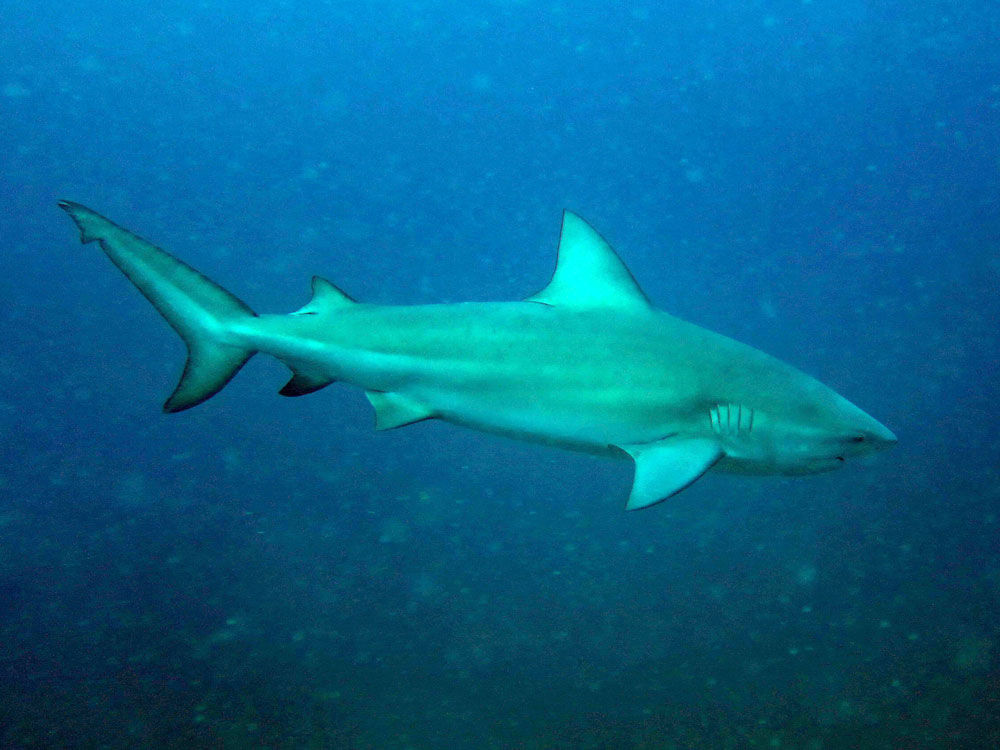

The bull shark (Carcharhinus leucas) is the heavyweight brawler of the inshore shark world, a thick, powerful, aggressive predator that patrols beaches, bays, inlets, and, famously, pushes far up into rivers and estuaries thanks to its unusual tolerance for fresh water. Stout and heavy-bodied, with a blunt rounded snout and immense strength, the bull shark is one of the hardest-pulling fish an inshore angler can hook. It is also one of the most widely distributed and accessible large sharks, reachable from the surf, from piers and bridges, from inlets, and even from the banks of coastal rivers.
Bull sharks are large and formidable, commonly 6 to 8 feet and capable of exceeding 10 feet and several hundred pounds, and they fight with brute, dogged power rather than the acrobatics of a blacktip. Hooking one means a serious tug-of-war against a shark built like a linebacker. Because of their size, strength, and the places they live, bull sharks demand heavy tackle, careful handling, and a strong respect for both the fish and the regulations that protect sharks.
This guide covers where bull sharks live, how to identify them, the heavy tackle and rigs required, the best baits and techniques from surf, inshore, and river, and how to fight, land, and safely release these powerful predators.
Understanding Bull Shark Behavior
Bull sharks are coastal generalists with a unique superpower: they can tolerate fresh water, allowing them to move far up rivers and into estuaries, lakes connected to the sea, and brackish backwaters where few other sharks venture. This makes them one of the most widely encountered large sharks and opens up fishing opportunities in places you would never expect a shark, up tidal rivers, in bays and sounds, and around inlets and passes, in addition to the beaches and nearshore waters they share with other coastal sharks.
Bull Shark FishingThey are apex predators with an extremely varied diet, fish of all kinds, other sharks and rays, crustaceans, and more. Bull sharks are opportunistic and aggressive feeders, drawn strongly to scent, blood, and struggling prey, which is exactly what makes a big, bloody bait so effective. They often hunt in murky, low-visibility water, relying on smell and their sensory systems rather than sight, so a bait that pumps out scent is key.
Bull sharks relate to areas where food concentrates: inlets and passes where tide funnels bait, river mouths, drop-offs, deep holes in bays and rivers, and beaches where bait schools run. They frequently hold in and around these ambush points and move with the tide. Warm water suits them, so in temperate areas they are seasonal visitors, most active in the warmer months, while in tropical and subtropical waters they are present year-round.
Because they push into fresh and brackish water, bull sharks turn up in surprising places, hooked by anglers fishing coastal rivers for other species, lurking in bays and around bridges, and cruising the surf. Understanding that they follow scent and bait into these varied habitats, often in dirty water, is the key to targeting them.
Their freshwater tolerance is worth understanding in a little more depth, because it shapes where and when you find them. Bull sharks have specialized physiology that lets them regulate the salt balance in their bodies across a huge range of salinity, from the open ocean to nearly fresh river water. Young bull sharks in particular use low-salinity estuaries and river systems as nursery areas, safe from larger ocean predators, while adults range widely and move between salt, brackish, and fresh water following food and conditions. For the angler, this means bull sharks can show up almost anywhere along the coastal-to-river gradient, and a river or bay that seems an unlikely place for a big shark may hold them, especially in the warmer months.
Bull sharks are also strongly tied to warmth and to the tide. In temperate regions they arrive as the water warms and leave as it cools, so there is a distinct season when they are catchable. Day to day, the moving tide dictates the action: bull sharks move up into rivers and bays and stage at inlets and passes to ambush the bait that the current carries past. Timing your fishing to the stronger stages of the tide, and to the low-light periods of dawn, dusk, and night, stacks the odds in your favor.
How to Identify Bull Shark
Bull sharks are named for their build, and a few features confirm the ID:
- Stout, heavy body. A thick, robust, heavily built body, noticeably stockier than most other requiem sharks, is the hallmark.
- Blunt, rounded snout. A short, broad, rounded snout (unlike the pointed snouts of many sharks) gives the "bull" its name and look.
- Gray above, white below. Plain gray to brownish-gray on top fading to a white belly, without prominent fin markings in adults (juveniles may have dusky fin tips).
- Small eyes. Relatively small eyes, consistent with a shark that often hunts by scent in murky water.
The combination of the stout body and blunt, rounded snout is distinctive, but bull sharks can still be confused with other requiem sharks, so careful identification matters, especially because some similar sharks are protected and the rules differ among species. When you land a heavy-bodied gray shark with a short blunt nose in coastal or brackish water, a bull shark is a strong candidate.
Best Tackle for Bull Shark
Bull sharks are big and immensely strong, so this is heavy tackle fishing, do not under-gun a fish that can top several hundred pounds.
Rod and reel: A heavy stand-up or surf rod paired with a large conventional reel holding plenty of heavy line. For land-based shark fishing from the beach, big surf/stand-up setups are standard; from a boat or bridge, a stout conventional outfit with serious drag.
Line: Heavy braid or mono, often 60 to 130 pound (or heavier for the biggest sharks), with the capacity for a powerful fish that will take line.
Leader: A heavy leader system is essential, typically a long section of heavy monofilament or fluorocarbon (200 to 400 pound) as a rubbing/abrasion leader, connected to a bite section of single-strand or cable wire that a bull shark's teeth cannot cut. The abrasion leader protects against the shark's rough skin during the fight.
Hooks: Large, strong non-offset circle hooks (in the range of 12/0 to 16/0) that hook the shark in the corner of the jaw for a cleaner, safer release.
How to Make a Big Shark RigEverything must be built for size and power. A bull shark will find any weak link, and the combination of its strength, its teeth, and its rough hide means heavy line, a wire bite leader, an abrasion leader, and a strong circle hook are all essential. This is not the place for light tackle.
Bait, Rigs, and Techniques
Bull sharks are drawn to big, bloody, oily baits. Fresh cut bait, a large chunk, half, or whole oily fish like mullet, menhaden (bunker), ladyfish, bonito, jack, or stingray, is the classic choice, pouring scent and blood into the water. Bigger baits both pour out more scent and help select for larger sharks. A live baitfish, where legal, is also effective.
Land-Based Bull Shark FishingFish your bait on a fish-finder rig (a sliding sinker above the leader) so the shark can pick up the bait and move off before feeling resistance and coming tight on the circle hook. From the beach, anglers cast or kayak large baits out past the breakers and hold the rod in a heavy sand spike. From a boat, bridge, or riverbank, present baits near the ambush points, inlets, passes, river holes, drop-offs, and channel edges, where bull sharks hunt with the tide.
Location and timing are everything. Fish the moving tide, especially where current funnels bait through an inlet or river mouth, and target dawn, dusk, and night when big sharks feed most aggressively. In rivers and estuaries, deep holes and bends concentrate bull sharks. A steady chum stream, where practical, pulls sharks up-current to your baits and dramatically improves your odds by laying down the scent trail a bull shark is built to follow.
Getting a big bait into position is often the practical challenge, especially from the beach. Land-based shark anglers commonly kayak or paddle large baits out well beyond the breakers, then return to the rod set in a heavy sand spike with the drag set to let a shark run before coming tight on the circle hook. From a boat, bridge, or riverbank, you can position baits more directly, dropping or casting to the deep holes, channel edges, and current seams where bull sharks stage. Either way, use a weight heavy enough to hold your bait in the strike zone against the current, and keep fresh, bloody bait out so the scent trail never goes cold.
Patience is part of the game. Big bull sharks may take time to find your baits, and the best action often comes after dark when these powerful predators move in to feed. Set multiple baits at different distances and depths where legal, keep the chum and scent flowing, and be ready, when a bull shark commits, the run is unmistakable and the fight is immediate.
Fighting and Landing
When a bull shark eats, be ready for a serious fight. These are powerful, dogged fighters that pull hard and use their weight and strength, testing your tackle, your drag, and your back. Let the circle hook set with steady pressure as the fish comes tight (not a hard swing), then settle in for a battle of attrition, keeping maximum pressure to tire the fish while letting it take line when it runs.
Bull Shark FightBring the shark in under control, and never rush a green (still-fresh) fish to hand, a big, lively bull shark at close range is dangerous. Land it only as far as necessary and always with a plan and the right tools ready.
The fight itself is a test of stamina and gear as much as technique. A big bull shark will make powerful, bulldogging runs, often heading for structure, deeper water, or back toward the current, and it will use every ounce of its considerable weight against you. Keep the rod loaded and the drag firm but not locked, gain line whenever the shark gives you an opening, and be prepared for a long battle with a truly large fish. Fighting from the beach adds the challenge of the surf; from a boat, the captain can help by managing position. Wear a harness or use a rod belt for a big fish, trying to muscle a several-hundred-pound shark unsupported is a quick way to wear out or get hurt.
Landing and Releasing Safely
Bull sharks are large, powerful, and have a mouthful of serious teeth, so safety and proper handling are paramount, for both you and the shark. Most anglers release bull sharks, and doing it right is essential:
How to Safely Catch and Release Sharks- Keep the shark in the water. Do not drag a big shark up a dry beach or hoist it out for extended photos; keep it in the wash or alongside the boat where water flows over its gills.
- Use the right tools. Long-handled dehookers, bolt cutters (to cut the hook or leader), and heavy gloves are essential. Keep well clear of the mouth at all times.
- Cut the leader if needed. If the shark is deeply hooked, cut the leader close rather than trying to remove the hook, a circle hook left in the jaw will typically rust out or be shed.
- Revive and release. Keep water moving over the gills, let the shark regain its strength, and release it promptly. A big bull shark takes time to revive after a hard fight.
Always follow local shark regulations, which are often strict and species-specific. Many sharks are protected and must be released, size and bag limits apply, and required gear (non-offset circle hooks, dehooking devices) is common. Correct identification is critical, both for legality and safety. Given their size and vulnerability, treating bull sharks as a catch-photo-release trophy is the responsible norm.
Putting It All Together
The bull shark is the ultimate inshore heavyweight, a powerful, aggressive, wide-ranging predator you can find from the surf to the rivers. Fish big, bloody baits on heavy tackle with cable bite leaders and strong circle hooks; target the inlets, passes, river holes, and beaches where bull sharks hunt on the moving tide; use chum to bring them to you; and settle in for a brute-force fight when one eats. Handle and release these impressive sharks with the care and respect they demand, follow the regulations closely, and you will have battled one of the strongest fish in coastal waters.
Ready to put it into practice? Bull sharks reward preparation, so rig heavy, rehearse your handling and release plan before the first bite, and time your trip to the moving tide and the low-light windows at dawn, dusk, and night. If you are new to targeting big sharks, spending a day on the water alongside an experienced local shark angler who knows the ground and how to handle these fish safely will shorten the learning curve dramatically.
For more on chasing sharks and big inshore fish, see our guides on how to catch blacktip shark, how to catch lemon shark, and how to catch redfish.