Fish
Fish Fire
Fire Hike
Hike Bird
Bird

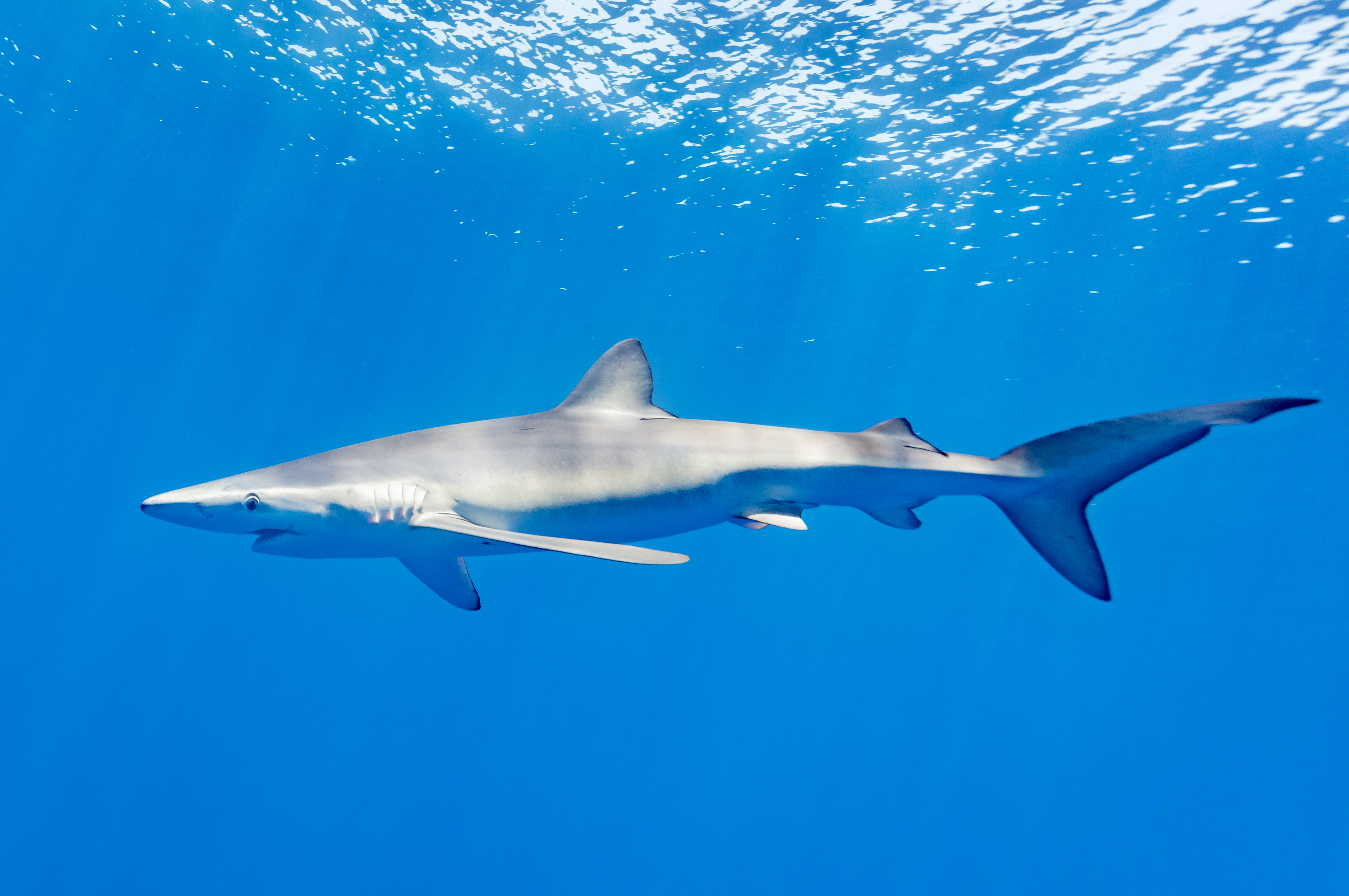

The blue shark (Prionace glauca) is one of the most beautiful and widespread sharks in the world, and one of the most enjoyable to catch. Slim, graceful, and colored a brilliant indigo blue on top, it is an open-ocean traveler found in temperate and tropical seas across the globe. For anglers, the blue shark is the classic offshore shark-fishing target: you drift on the open ocean, set a chum slick, and wait for that unmistakable blue shape to materialize in the trail. When one eats, it gives a spirited, active fight, long runs and dogged head-shaking, that makes it a favorite light-tackle gamefish, especially in places like the UK, New England, and California where blue sharks are abundant.
Blue sharks are typically caught in the six-to-eight-foot range, though larger ones are common, and they are prized as a sporting fish rather than table fare, the meat is generally considered poor eating, so this is overwhelmingly a catch-and-release fishery. Their populations have also been hit hard by commercial longlining and finning worldwide, which makes careful, low-stress release all the more important. This guide covers where and when to find blue sharks, the drifting-and-chumming approach that defines the fishery, the tackle and rigs you need, the best baits, how to handle the fight, and how to release these elegant sharks unharmed.
Understanding Blue Shark Behavior
Blue sharks are pelagic, creatures of the open ocean rather than the beach or reef. They roam the upper water column of temperate and tropical seas, often far offshore over deep water, and they undertake some of the longest migrations of any shark, riding ocean currents across entire basins. They tend to move inshore to cooler, productive waters seasonally; in many temperate fisheries, blue sharks arrive as the water warms through summer and into fall, holding over the shelf edge, canyons, banks, and other areas where currents concentrate food.
They are curious, active, and driven almost entirely by scent when it comes to finding food. A blue shark will follow a scent trail a very long way and cruise right up a chum slick to its source, which is exactly why the drift-and-chum method is so deadly. They feed on schooling fish and squid primarily, and they are famously bold, often circling a boat and inspecting baits at the surface where you can watch the whole encounter. This surface, scent-driven behavior, plus their sheer abundance in the right waters, makes blue sharks one of the most accessible and visually exciting offshore sharks to target. Look for them over deep, current-swept water during the warm-season run.
Finding productive water is mostly about depth, structure, and current. Blue sharks concentrate where the ocean concentrates food: along the edge of the continental shelf, over canyons and banks, near temperature breaks and current rips, and around the bait and squid that gather in these zones. Water temperature is a strong driver, in temperate fisheries there is usually a window of ideal surface temperature that brings the sharks within range of day-boats, and local knowledge of when that window opens is worth a great deal. On the water, signs of life point the way: bait schools, working birds, and other pelagic predators all suggest the kind of productive water where a chum slick will draw sharks. Once you find a stretch of ocean that produces, note the depth and conditions, because blue sharks will use the same kinds of water on the same seasonal schedule year after year.
Blue shark fishing overviewIdentifying a Blue Shark
The blue shark is one of the most distinctive of all sharks. As the name promises, its back and upper sides are a vivid, deep indigo blue, a color no other common shark shares, fading to bright white on the belly. The body is slim and elongate, built for efficient cruising, with a long, pointed, conical snout and very large eyes. The pectoral fins are notably long and slender, like an albatross's wings, and the whole shark has a graceful, streamlined look. Its teeth are curved and serrated.
There is little that a blue shark can be confused with once you see the color and the long, slim pectoral fins in life; the electric blue back is unmistakable in the water. (Note that the color fades quickly after death, which is one more reason these are best appreciated, and photographed, alive, boatside.) The combination of the brilliant blue coloration, the long pointed snout, the big eyes, and the long slim pectorals identifies the blue shark instantly.
Tackle for Blue Sharks
One of the great things about blue shark fishing is that it does not require the heaviest big-game gear. Blue sharks are strong but not enormous, and they are a superb light-to-medium tackle target. A 20- to 50-pound-class conventional outfit, or even a heavy spinning setup, is plenty for most fish, enough to handle long runs and a dogged fight while keeping the sport in it. Load up with 30- to 50-pound mono or braid with a mono top shot; the stretch of mono is a nice cushion against the head-shakes and surges.
You want a smooth, reliable drag and enough line capacity for a shark that likes to run, but you do not need a 130-pound-class rod and reel here. Because this is a release fishery, prioritize the tools that make release fast and safe, a long-handled dehooker, wire cutters or bolt cutters, and gloves, as much as the rod and reel. From a boat, a simple rod holder setup for your drift baits and a comfortable stand-up outfit for the fight is all you need. Matching lighter tackle to the fish is exactly what makes the blue shark such a rewarding gamefish.
Drifting and chumming for blue sharksThe Right Rig and Leader
As with every shark, the leader is the make-or-break component. A blue shark's teeth will slice mono instantly, so you need a wire or cable bite leader, a length of single-strand wire or light multi-strand cable, roughly 100- to 200-pound, crimped or haywire-twisted to the hook and a strong swivel. Above the wire, a length of heavy mono leader serves as a rubbing leader and a place to grab and control the fish boatside. Because blue sharks often eat at or near the surface in the slick, you frequently fish baits suspended under balloons or floats at staggered depths and distances back in the trail rather than on the bottom.
Use non-stainless circle hooks, commonly 8/0 to 12/0, matched to your bait. Circle hooks are strongly preferred and often legally required, they slide to the corner of the jaw and set there as the shark turns away, giving a lip hookup that is safe to remove and dramatically better for the shark's survival than a swallowed J-hook. A non-stainless hook will rust free if it cannot be recovered. Do not strike when a blue shark takes the bait; let the fish move off, let the line come tight, and let the circle find the jaw hinge. Set your baits at different depths in the slick to cover the water column while the chum does its work.
Shark terminal tackle and riggingBait and Chum
The blue shark fishery is built on chum. Because these sharks find food by scent over vast distances, an unbroken chum slick is the single most important element of the day. Anglers drift over deep, productive water while dispensing a steady stream of ground fish, blood, and oil, often from a mesh bag or a chum bucket hung off the boat, creating a scent corridor that streams away on the current and draws blue sharks up the trail to the boat. The longer and more consistent the slick, the better; a broken or intermittent slick lets sharks lose the trail.
For hook baits, fresh oily fish are ideal, matching the blue shark's natural diet. Mackerel is a classic and outstanding blue shark bait, along with other oily fish like herring, bonito, or a fresh bloody fillet; whole small fish or big bloody chunks both work well. Rig baits to sit naturally in the slick at various depths, and be ready, blue sharks will often appear at the surface and inspect a bait in plain sight before eating. Patience while the slick works, followed by the sudden appearance of a cruising blue shark, is the rhythm of this fishery. Keep the chum going and keep watching the trail.
The freshness of both your chum and your hook baits makes a real difference. Oily fish like mackerel and herring lose their scent-carrying oils as they wash out, so refresh the chum bag before it runs dry and re-bait with fresh offerings rather than leaving a washed-out bait soaking for hours. Stagger your spread thoughtfully: set one bait near the surface, one in the mid-column, and one deeper and farther back in the trail, so that a shark following the scent up the slick encounters a bait at whatever depth it is cruising. When a blue shark shows at the boat but will not commit, a fresh, lively bait dropped in front of it will often trigger the eat where a stale one is ignored.
Baits and technique for offshore sharksFighting a Blue Shark
On appropriate tackle, the blue shark is a genuinely fun fight, active, fast, and dogged without being brutal. When a blue shark eats a circle-hook bait, let it move off and come tight, then keep steady pressure as the fish makes its run. Blue sharks tend to run hard and then fight with persistent, twisting head-shakes, often staying near the surface where you can see the whole battle unfold. They will circle the boat, dive, and surge, and a bigger one can test lighter tackle with a long, determined tug-of-war.
Keep the line tight and let the drag and the mono's stretch cushion the runs and shakes, never give slack, because a rolling shark can chafe the leader or throw a lightly set hook. Gain line with smooth pumps between runs. From the boat, use the boat to keep a good angle and shorten the fight, bringing the fish to the leader as efficiently as your tackle allows. Because you are on lighter tackle, patience matters: rather than trying to muscle a blue shark that is running, let it take line against a smooth drag and go to work on it when it stops, gaining a few turns at a time. Rushing a green, still-strong shark to the boat on light line is how leaders part and hooks pull, so let the fish tire on the runs and bring it in under control. Because blue sharks often twist and roll, expect the leader to take some abrasion, and be ready for the fish to have one more surge left when it reaches the boat. A well-fought blue shark comes to the leader in good shape and ready for a quick release.
Fighting a big blue shark offshoreLanding and Safe Release
Blue sharks are almost always released, and because their meat is poor and their populations pressured, a clean release is the whole ethic of this fishery. Do not bring a blue shark aboard, keep it in the water alongside the boat, where it stays wet and can breathe. Control the fish by the heavy mono rubbing leader, stay clear of the mouth and the tail, and work quickly. Their thin skin and slender build make gentle handling especially important.
Use a long dehooker to pop the circle hook out of the jaw corner in a couple of seconds. If the hook is set deep or you cannot reach it safely, cut the leader as close to the hook as possible, a non-stainless circle hook will corrode and fall out, and that is far better than a prolonged, stressful struggle. Take any photo quickly with the shark in the water, then release it and watch it swim off strong into the blue. Know your local regulations, use circle hooks, minimize handling and air time, and treat every one of these gorgeous, ecologically important sharks as a fish to send back healthy.
How to safely handle and release a sharkPutting It All Together
Catching a blue shark is offshore fishing at its most classic: drift over deep, current-swept water during the warm-season run, set a long, unbroken chum slick, and fish fresh oily baits like mackerel at staggered depths in the trail on a wire-leader circle-hook rig. When that electric-blue shape slides up the slick, let it eat, enjoy the spirited light-tackle fight, and then release it quickly and carefully. Few fish combine beauty, accessibility, and sport the way the blue shark does, and few offshore days are as memorable as watching one materialize in your chum trail.
If you want to target other offshore sharks, the mako shark is the blistering-fast, jumping cousin that shares the same waters, the thresher shark is the long-tailed acrobat of the offshore grounds, and the tiger shark is the heavy-tackle giant of warmer seas.