Fish
Fish Fire
Fire Hike
Hike Bird
Bird

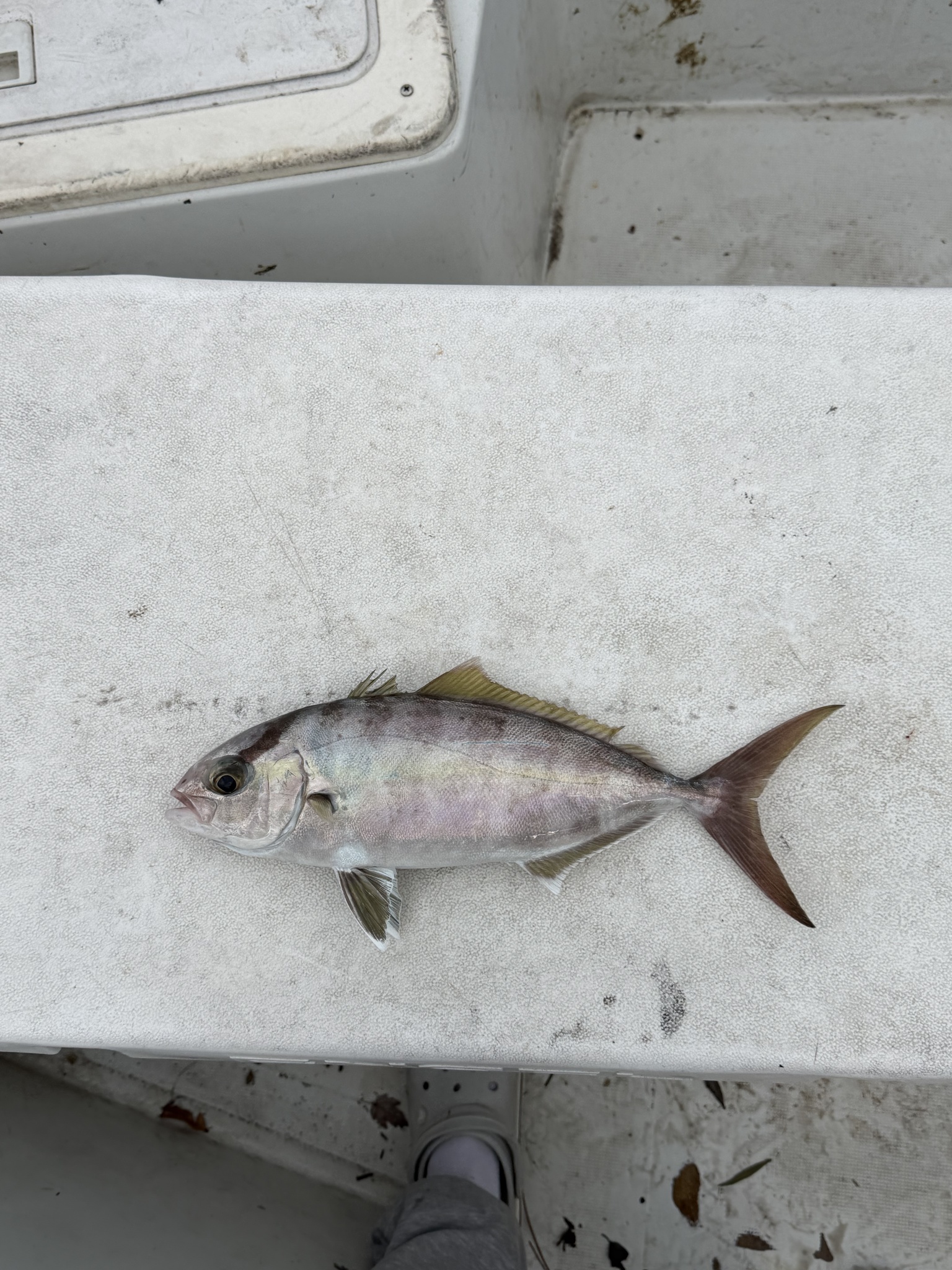

The lesser amberjack (Seriola fasciata) is the smallest and least familiar of the Atlantic amberjacks, a compact, hard-pulling jack that lives deeper than its famous cousin the greater amberjack and turns up most often for anglers jigging and bottom fishing over deep offshore reefs, ledges, and wrecks. Where a greater amberjack can top a hundred pounds, a lesser amberjack is usually a fish of a few pounds, but pound for pound it pulls with the same dogged, bulldogging fight that makes the whole Seriola clan a favorite of light-tackle and jigging anglers.
Because it lives deep and stays small, the lesser amberjack is often caught incidentally by anglers targeting snappers, groupers, and other deep-reef species, and it is frequently misidentified, mistaken for a juvenile greater amberjack or one of the other jacks. Knowing how to recognize it, where it holds, and how to catch it on purpose adds another species to your deep-water repertoire and helps you sort out exactly what you have on the line.
This guide covers the lesser amberjack's behavior and habitat, how to tell it apart from the other amberjacks, the jigging and bottom tackle that catches them, the techniques that work over deep structure, and how to handle and eat this small but scrappy jack.
Understanding Lesser Amberjack Behavior
Lesser amberjack are the deep-water members of the amberjack family. While greater amberjack range from shallow wrecks out to deep water, lesser amberjack skew deep, commonly found from about 180 to 400 feet and reaching considerably deeper, holding over reefs, rocky ledges, hard bottom, and wrecks along the outer shelf. Adults tend to stay in that deeper water, which is why they show up for deep droppers and jiggers rather than anglers working shallow structure.
Battling Amberjacks OffshoreLike all amberjacks, they are fast, aggressive, schooling predators that hunt in the water column around structure, chasing baitfish, squid, and crustaceans. They relate to structure but are willing to rise up off it to chase a bait or a jig, which makes them excellent targets for vertical jigging. When you find one, you have often found a small school, so a spot that produces one lesser amberjack may produce several.
Current and structure drive the fishing. Amberjacks stack up on and around prominent deep structure and feed hardest when current is moving, pushing bait past their ambush points. Mark deep reefs, wrecks, and rocky high spots on your sounder, watch for bait and fish holding above the structure, and time your drops to the moving water for the best action.
One of the most useful things to understand about lesser amberjack is how they use the water column. Unlike a grouper that hugs the bottom and dives for its hole, amberjacks often hold and feed well up off the structure, you will frequently see them on the sounder as a cloud or arch of marks suspended twenty, fifty, or more feet above the reef or wreck. That behavior is exactly why jigging is so effective: the fish are already looking up and willing to chase, so a jig worked up through them draws reaction strikes. When you mark suspended fish over deep structure, you have very likely found amberjacks, and dropping a jig into and above that mark is the fastest way to find out.
Their schooling nature also shapes the fishing. Lesser amberjack are rarely loners; they travel and feed in groups, so the fishing tends to be feast or famine, you either find the school and get steady action, or you drop on empty structure and wait. That makes covering water and reading your electronics more valuable than soaking a single spot. When you do connect, work that area thoroughly before moving on, because there are usually more fish where the first one came from.
How to Identify Lesser Amberjack
Correct identification is the biggest challenge with this species, because it closely resembles other amberjacks and is often confused with the greater amberjack and almaco jack. Key features:
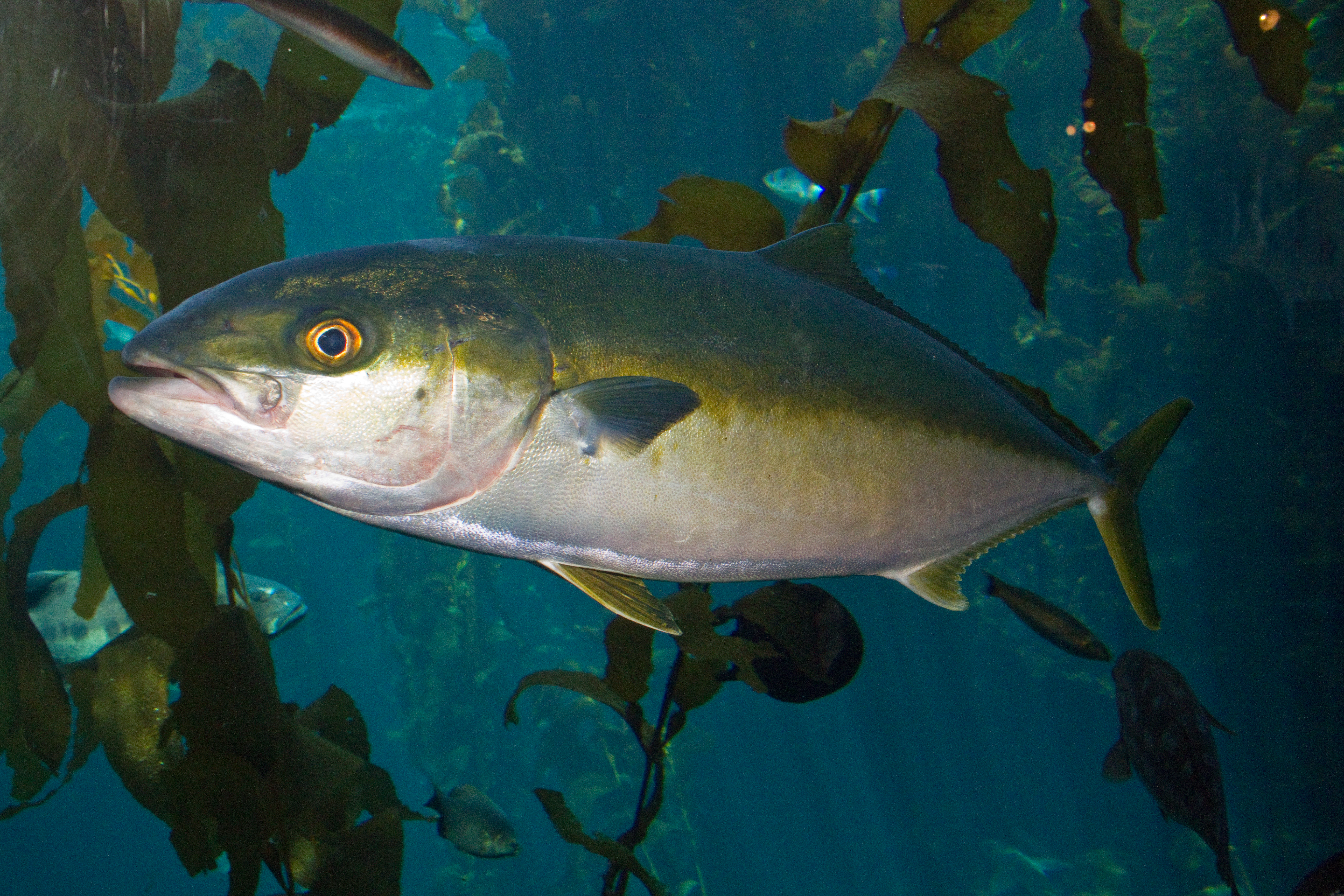
- Dark diagonal bar through the eye. Like other amberjacks, it has a dark bar (nuchal bar) running from the mouth/snout through the eye to the top of the head, a hallmark of the group.
- Amber to olive stripe. A yellowish-amber to olive lateral stripe runs along the body, over a silvery to brownish background.
- Proportionally large eye. The lesser amberjack has a notably large eye relative to its body, and a somewhat deeper, more compact body than a young greater amberjack, useful clues at small sizes.
- Small maximum size. This is the smallest amberjack; most fish are only a few pounds, so a small "amberjack" from deep water is often this species.
The greater amberjack grows far larger and is more elongated; the banded rudderfish (another Seriola) shows bold vertical bars as a juvenile and a striped tail; and the almaco jack is deeper-bodied with a more pronounced, steeply sloping forehead and darker, longer front dorsal and anal fin lobes. Holding the fish beside a good ID reference the first few times will train your eye quickly. When you land a small amberjack in deep water, the combination of large eye, compact body, and modest size points to the lesser amberjack. Sorting these out matters both for your records and for the regulations, which differ among the species.
Best Tackle for Lesser Amberjack
Because lesser amberjack are small but strong and live in deep water, you can scale down from the heavy gear used for giant greater amberjack while keeping enough backbone to work deep and fight a bulldogging jack.
Rod and reel: A medium to medium-heavy conventional or spinning outfit with a fast action. For dedicated jigging, a vertical jigging rod paired with a high-speed reel is ideal.
Line: Braid, 30 to 50 pound, for thin diameter and low stretch, essential for feeling bites and working jigs in deep water.
Leader: Fluorocarbon, 40 to 60 pound. Amberjacks are not especially leader-shy, but the structure they live near calls for abrasion resistance.
Jigs: Vertical jigs (100 to 250 grams depending on depth and current) in flashy silver, blue, pink, and glow patterns. Fit them with strong assist hooks.
Hooks: For bait fishing, circle hooks (4/0 to 7/0) matched to your bait improve hookups and release.
Vertical Jigging Deep Reef StructureScale your gear to the depth and current more than to the fish. A lesser amberjack will not test heavy tackle the way a big greater amberjack does, but you still need enough to get a jig down and stay in contact hundreds of feet below the boat.
Vertical Jigging for Lesser Amberjack
Vertical jigging is the most exciting and effective way to target lesser amberjack. Drop a jig to the bottom over deep structure, then work it up through the water column with sharp, rhythmic lifts of the rod, reeling as you go. Amberjacks love a fast-moving jig and will chase it up, often hitting it several cranks off the bottom or on a fluttering fall.
Fighting Amberjack on the Deep ReefVary your retrieve speed and cadence until you find what the fish want on a given day. Because amberjacks school, once you hook one, keep others in the group fired up, sometimes several anglers can hook fish at once when a school is under the boat. Speed jigging and slow-pitch jigging both work; the key is keeping the jig moving in a way that triggers the amberjack's chase instinct.
Match your jig weight to the depth and current so it gets down efficiently and stays close to vertical, a jig sweeping far behind the boat at a steep angle is hard to work and easy to lose contact with. In deep water and strong current, step up to a heavier jig; on calmer days you can drop down for a more natural flutter. Assist hooks tied at the head of the jig hook up more amberjacks than a trailing treble and are cleaner for releasing fish. Keep your rod tip and line under tension on the fall, too, because amberjacks frequently grab a jig as it flutters down, and a slack line means you will miss those bites entirely.
When a lesser amberjack eats, it fights with the classic amberjack bulldogging, short, powerful runs straight back toward the structure. Even a small one pulls surprisingly hard for its size. Keep steady pressure and turn the fish's head up and away from the reef or wreck; give it slack and it will wrap you on the structure just like its larger cousins. The fight is a big part of the fun, and it is why jigging anglers hold amberjacks in such high regard even when the fish are modest in size.
Bottom Fishing and Live Bait
Lesser amberjack are also caught on bait fished over deep structure, often incidentally while targeting other species. A live baitfish or a fresh cut bait fished near the reef or wreck will draw amberjacks holding in the area.
Amberjack Over Wrecks on Live BaitFish baits on a knocker or fish-finder rig with just enough weight to hold near the structure in the current, and stay ready, amberjacks hit hard and immediately try to bulldog back toward the structure. Live baits like small pinfish, cigar minnows, or threadfin fished near wrecks and reefs are excellent, and a lively bait will often draw a whole school up to investigate. When you hook up, apply steady pressure to keep the fish out of the structure, the same as with any reef species.
A useful tactic when you mark a school is to send a live bait down while others jig, the combination often keeps the fish competitive and feeding. If the bite slows, a fresh, frisky bait can reignite it, and a hooked amberjack fighting on one line will sometimes bring the rest of the school up behind it, right into range of the other anglers. Because lesser amberjack so often come mixed in with snappers, groupers, and other reef fish, a spread that covers both the bottom and the water column above it maximizes your chances of sorting out the amberjacks from the rest of the deep-water catch.
If you are specifically trying to catch lesser amberjack rather than take them incidentally, focus your effort on the deeper structure at the outer end of their range, where the bigger greater amberjack thin out and the smaller, deeper-loving lesser amberjack become more likely. Pay attention to what you are catching and adjust, if every fish is a small, large-eyed amberjack, you have found a pocket of the species and can fish it deliberately.
Cleaning and Cooking Lesser Amberjack
Amberjack is genuinely good eating when handled well, firm, white, and versatile, and the lesser amberjack is no exception. Bleed and ice the fish immediately, and fillet it as you would any jack, removing the skin and trimming away the darker red bloodline down the center of the fillet for the mildest, cleanest flavor.
How to Fillet an AmberjackOne thing to know about amberjacks generally: they can carry parasites (small worms) in the flesh, which is common in the family and not a food-safety problem once the fish is cooked thoroughly, though it is worth trimming any you find. Amberjack takes well to grilling, blackening, frying, and smoking; the firm flesh holds together nicely on the grill. Smoked amberjack, in particular, is a Gulf and South Atlantic favorite, and the firm texture makes it ideal for fish dip. As with other reef and deep-water fish in tropical regions, be mindful of local ciguatera guidance, since the toxin can accumulate in predatory reef fish; the risk is generally low for small amberjacks but worth knowing where you fish. Fresh-caught and quickly iced, a lesser amberjack is a perfectly good addition to the cooler alongside your snappers and grouper.
Regulations and Conservation
Amberjacks are managed with size and bag limits that differ among the species and by region, and because lesser amberjack are easily confused with greater amberjack, correct identification is important for staying legal. Some regions include lesser amberjack and banded rudderfish under a combined limit distinct from greater amberjack. Always check the current regulations for your area, and when releasing fish caught from deep water, use a descending device or venting tool to counter barotrauma so released amberjacks survive.
Putting It All Together
The lesser amberjack is a fun bonus for anglers who fish deep offshore structure. Find the deep reefs, ledges, and wrecks; fish them on moving current; drop vertical jigs and work them fast to trigger the amberjack's chase, or soak live and cut baits near the structure; and identify your catch carefully to tell this small, large-eyed jack from its bigger cousins. Scale your tackle to the depth, keep steady pressure on a bulldogging fish, and you will add another scrappy deep-water species to your list.
Ready to put it into practice? Spend your time learning to read the deep offshore structure on your electronics, pick apart how a productive ledge, high spot, or wreck looks on the sounder, note where the fish are suspending off the bottom, and make your drops count. The deep-water learning curve is steep, but every trip that you mark fish, match your jig to the current, and sort out what comes over the rail sharpens your feel for where these scrappy jacks stack up.
For more on chasing reef and bottom species, see our guides on how to catch scamp grouper, how to catch snowy grouper, and how to catch vermilion snapper.