Fish
Fish Fire
Fire Hike
Hike Bird
Bird

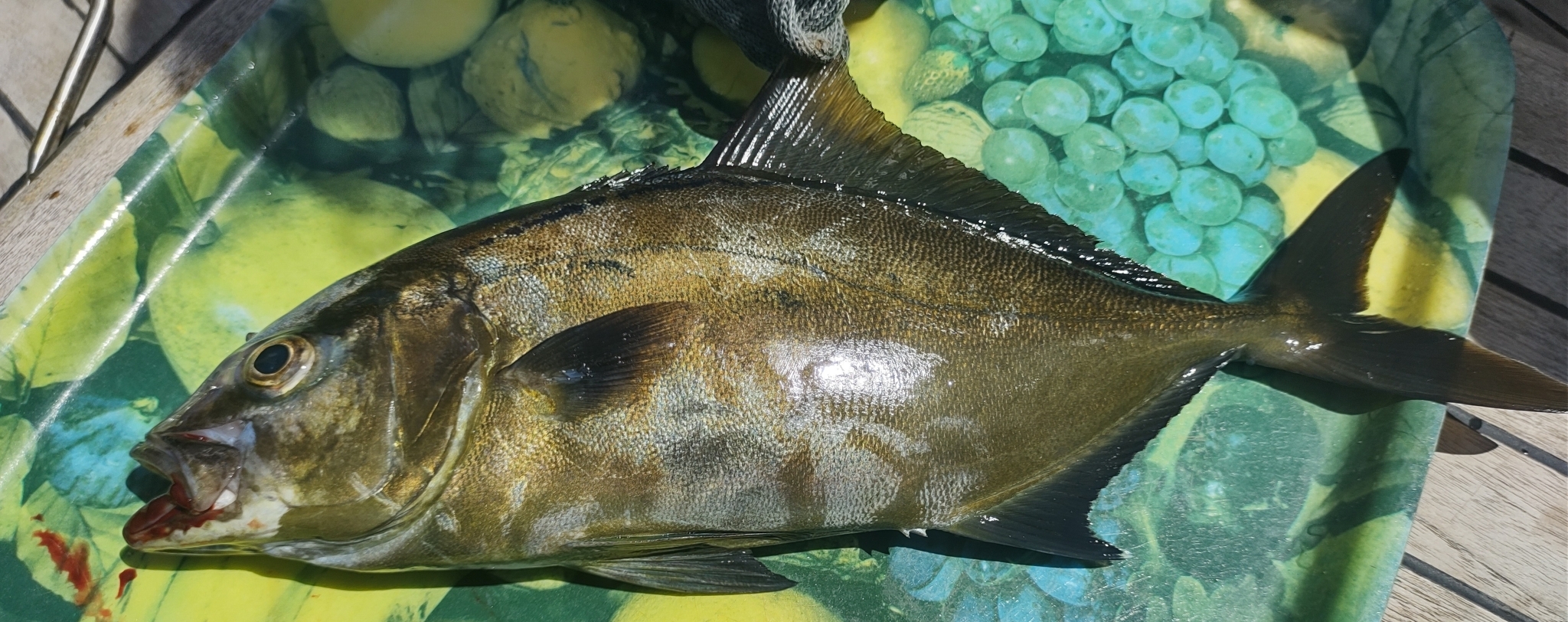

The almaco jack (Seriola rivoliana) is the deep-bodied, dark-finned member of the amberjack clan, a powerful, hard-charging, bulldogging predator that roams reefs, wrecks, and offshore structure around the world's warm oceans. Closely related to the greater and lesser amberjacks, the almaco jack fights every bit as hard pound for pound, is a favorite target of jigging anglers, and is widely regarded as the best-eating of the amberjacks, prized for sashimi under the name kanpachi. For anglers who fish offshore structure, it is a fish that delivers both a great fight and a truly great meal.
Almaco jack are true bruisers of the mid-water column. They hold around deep reefs, ledges, wrecks, oil rigs, offshore humps, and even flotsam and current lines, ranging from moderate depths out to deep water. Fast, aggressive, and schooling, they are ideal targets for vertical and slow-pitch jigging, and they readily take live and cut baits fished around structure. Where you find one, you usually find a school, and the action can be fast and furious.
This guide covers the almaco jack's behavior and habitat, how to identify it among the amberjacks, the jigging and bait tackle that catches them, the techniques that work over offshore structure, and how to handle and cook a fish that eats as well as it pulls.
Understanding Almaco Jack Behavior
Almaco jack are fast, roving, schooling predators that relate to structure but hunt actively through the water column. They gather around deep reefs, ledges, wrecks, rigs, and offshore humps and pinnacles, and they will also hold under floating debris and along current edges in open water. They range from moderate depths to several hundred feet, with bigger fish often holding deeper on prominent offshore structure.
Almaco Jack OffshoreLike all amberjacks, they are aggressive, opportunistic hunters, feeding on baitfish, squid, and crustaceans, and they are more than willing to rush up off the structure to chase down a fast-moving jig or a lively bait. That aggression and their tendency to hold in the water column above structure make them perfect jigging targets, they are already looking up and eager to chase.
Their schooling behavior shapes the fishing. Almaco jack travel in groups, so when you hook one you have usually located a school, and multiple hookups are common. Current and structure are the keys: mark deep reefs, wrecks, humps, and rigs on your sounder, look for fish and bait suspended above the structure, and fish hardest when current is moving and pushing bait past the ambush points. A spot that produces one almaco jack is worth working thoroughly before you move.
One of the most valuable things to learn about almaco jack is how they show up on the sounder. Like other amberjacks, they frequently hold as a distinct cloud or a stack of arches suspended well above the bottom structure, sometimes thirty, fifty, or more feet up in the column. That is the classic amberjack signature, and it tells you two things: the fish are there, and they are already looking up and ready to chase. When you idle over a wreck or hump and mark that suspended cloud, you have very likely found almaco jack or their amberjack cousins, and the fastest way to confirm it is to drop a jig into and through that mark.
Almaco jack are also more willing than many reef fish to roam. While they relate to structure, they will move to intercept bait pushed by current, patrol the up-current edge of a wreck or hump, and even follow a hooked fish or a hooked bait toward the boat. That roving aggression is why a well-worked jig or a lively bait can pull a whole school up and get them competing, and why the bite, once it turns on, can be electric.
How to Identify Almaco Jack
Almaco jack are easy to confuse with the other amberjacks, so knowing the distinguishing features matters for both identification and regulations:
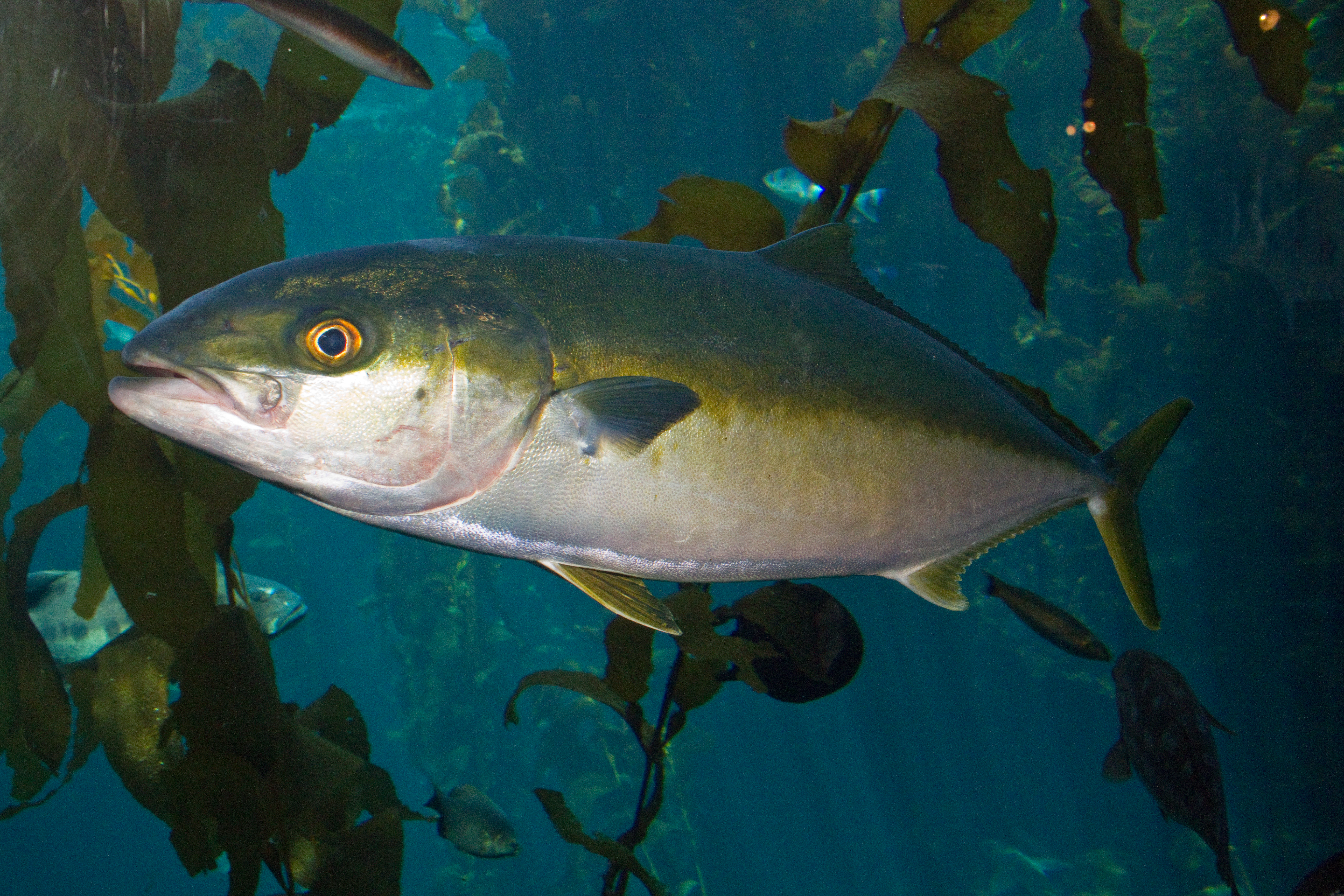
- Deep, compressed body. The almaco jack is noticeably deeper-bodied and more laterally compressed than the more torpedo-shaped greater amberjack, its most useful field mark.
- Steep, sloping forehead. It has a blunt, steeply sloping forehead that gives it a distinctive profile.
- Long, dark front fin lobes. The front lobes of the second dorsal and anal fins are elongated and dark, more pronounced than in other amberjacks, a strong ID clue.
- Dark bar through the eye. Like all amberjacks, it shows a dark diagonal bar (nuchal bar) running from the mouth through the eye, and the body is often dark with a faint amber or lavender stripe.
The greater amberjack is more elongated with a lower profile; the lesser amberjack is small with a large eye; and the banded rudderfish shows bold bars when young. The almaco jack's deep body, sloping head, and long dark fin lobes set it apart. Correct identification matters because amberjack regulations often differ among the species.
Best Tackle for Almaco Jack
Almaco jack pull hard and live near structure, so you want tackle with backbone, but you can tune it to the size of the fish and the depth you are fishing.
Rod and reel: A medium-heavy to heavy jigging or conventional outfit with a fast action and plenty of lifting power. For jigging, a dedicated vertical or slow-pitch jigging rod matched to a high-speed reel.
Line: Braid, 40 to 65 pound, for thin diameter and low stretch, essential for working jigs and feeling bites in deep water.
Leader: Fluorocarbon, 50 to 80 pound. Amberjacks are not especially leader-shy, but the structure they live around demands abrasion resistance.
Jigs: Vertical and slow-pitch jigs (150 to 300 grams depending on depth and current) in flashy silver, blue, pink, and glow patterns, fitted with strong assist hooks.
Hooks: For bait fishing, strong circle hooks (5/0 to 8/0) matched to your bait.
Vertical Jigging Amberjacks and Almaco JacksDo not undergun your gear, an almaco jack bulldogs straight for the structure the instant it is hooked, and light tackle simply lets it break you off in the wreck or reef. Enough backbone to turn a fish's head fast is what lands them.
Vertical and Slow-Pitch Jigging
Jigging is the premier way to target almaco jack, and it is a blast. Drop a jig to the bottom or to the depth of marked fish over structure, then work it up through the water column. With speed jigging, use fast, sharp lifts of the rod while reeling, ripping the jig up to trigger the almaco's chase-and-crush reaction. With slow-pitch jigging, use a specialized rod to impart a fluttering, wounded-baitfish action to a flat jig, letting it flutter enticingly on the fall.
Big Almaco Jack on Slow-Pitch JiggingBoth styles work, and the fish often tell you which they prefer on a given day. Almaco jack frequently hit a jig on the fall, so keep your line under light tension and be ready the instant the jig starts down. When you mark fish suspended above the structure, count your jig down to their depth and work it through the school. Once one angler hooks up, others in the school often fire up and follow, so a coordinated crew can put several fish in the boat at once.
Match your jig weight to the depth and current so it gets down efficiently and stays close to vertical, a jig sweeping far behind the boat at a steep angle is hard to work and loses its action. In deep water or strong current, step up in jig weight; on calmer days, drop down for a more natural flutter. Assist hooks tied at the head of the jig hook up more jacks than a trailing treble and are cleaner for releasing fish. Experiment with cadence, too: sometimes a fast, non-stop rip triggers the most strikes, and other times a slower, more erratic action with pauses draws the fish that are following but not committing. Watch your sounder as you work the jig, you can often see the fish rise to meet it, which tells you to keep it coming.
The fight is the payoff. An almaco jack hammers the jig and immediately bulldogs for the structure with short, powerful surges. Keep the rod loaded and the pressure relentless, and turn the fish's head up and away from the wreck or reef; give it slack near the structure and it will cut you off. Even a mid-sized almaco jack will make you work, and a big one on jigging tackle is one of the most satisfying battles in offshore bottom fishing.
Live Bait and Bottom Fishing
Almaco jack also fall readily to live and cut baits fished around structure, and this is often how anglers targeting other species hook them. A live baitfish, pilchard, cigar minnow, blue runner, or pinfish, fished near a wreck, reef, or rig is hard for an almaco jack to resist.
Almaco Jack on the Bottom Rod While Wreck FishingFish live baits on a knocker rig, a fish-finder rig, or free-lined near the structure depending on current, and drop cut baits to the bottom or work them just above it. As with jigging, be ready for a hard, immediate strike followed by a determined dive for the structure. Keep the drag firm and the pressure steady from the moment you hook up, the whole battle with an amberjack is turning its head and keeping it out of the wreck. A big almaco jack on a bottom rod can be a genuine handful.
A productive tactic when you have marked a school is to combine methods: put a live bait down while others jig. The commotion of hooked fish and a struggling bait keeps the school fired up and competitive, and a live bait drifting near the structure often accounts for the biggest fish while the jigs keep the numbers coming. If the bite stalls, a fresh, lively bait can reignite it. Because almaco jack so often mix in with amberjacks, groupers, and snappers around the same structure, a spread that covers both the bottom and the water column above it maximizes your shots at the almacos while still producing the rest of the reef's residents.
Do not overlook the up-current edge of a wreck or hump, either. Bait and the predators that hunt it stack up where the current first hits the structure, and positioning the boat to drift baits or jigs across that leading edge often puts you right on top of the most active fish. A little attention to how the current interacts with your specific piece of structure pays off in more and better bites.
Cleaning and Cooking Almaco Jack
Here the almaco jack shines: it is widely considered the best-eating of the amberjacks, with firm, clean, white flesh that is superb raw as sashimi (kanpachi) and equally good grilled, seared, blackened, or fried. Bleed and ice the fish immediately for the best quality, then fillet it, remove the skin, and trim the dark bloodline for the mildest flavor.
How to Clean an Almaco JackLike other amberjacks, almaco jack can carry small parasites in the flesh, common in the family and not a food-safety problem once the fish is cooked, though if you plan to eat it raw, inspect and trim carefully and consider proper freezing first, as is standard for sashimi. In tropical regions, be aware of local ciguatera guidance for larger reef-associated fish. Handled well, almaco jack is genuinely excellent table fare and one of the best reasons to target the species. In fact, the almaco jack is farmed commercially in several parts of the world specifically for its high-quality flesh and sold under names like kanpachi and Hawaiian kampachi, a testament to just how good the meat is, the fish you catch yourself, bled and iced promptly, is every bit as fine.
Regulations and Conservation
Amberjacks are managed with size and bag limits that vary among the species and by region, and because almaco jack are easily confused with greater amberjack, correct identification is important for staying legal, in some regions almaco jack fall under a "lesser amberjack and almaco jack" aggregate distinct from greater amberjack. Always check the current rules for your area before you keep a fish. When releasing fish caught from deeper water, use a descending device or venting tool to counter barotrauma so released fish survive.
Putting It All Together
The almaco jack is a fantastic all-around target: a hard-fighting amberjack that eats better than any of its cousins. Find the deep reefs, wrecks, rigs, and offshore humps; fish them on moving current; drop vertical or slow-pitch jigs and work them to trigger the almaco's chase, or soak live and cut baits near the structure; and turn a hooked fish's head fast to keep it out of the wreck. Identify your catch carefully among the amberjacks, and enjoy one of the finest fish in the ocean at the table.
Ready to put it into practice? If you are still learning to read offshore structure, time on the water with an experienced hand, a seasoned buddy or a charter that fishes the deep reefs and rigs, will shorten the learning curve dramatically, and once you can find that structure and read a suspended school on your sounder yourself, the almaco jack will reward every drop.
For more on chasing reef and offshore species, see our guides on how to catch lesser amberjack, how to catch scamp grouper, and how to catch vermilion snapper.