Fish
Fish Fire
Fire Hike
Hike Bird
Bird

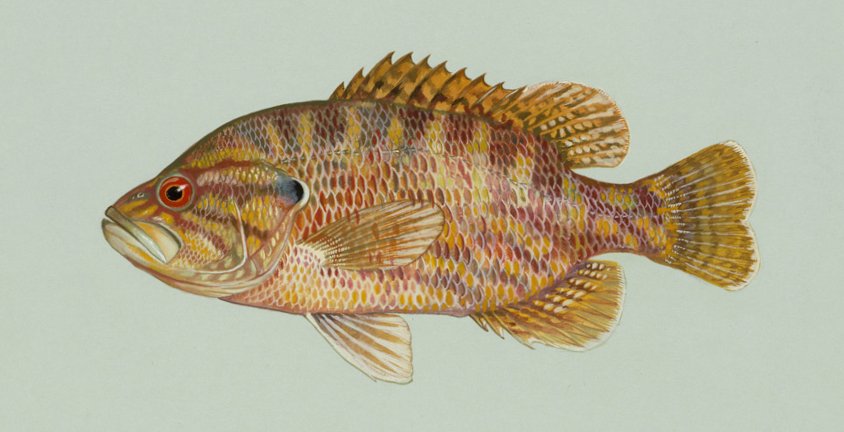

The warmouth is one of the sunfish family's most distinctive and pugnacious members, a chunky, big-mouthed, red-eyed ambush predator that hides in thick cover, attacks almost anything that comes near, and fights with a bulldog stubbornness far out of proportion to its size. Often confused with the rock bass (both share the "goggle-eye" nickname), the warmouth (Lepomis gulosus) is a warmwater fish of the swamps, sloughs, weedy lakes, and sluggish streams of the southern and eastern United States, where it lurks among stumps, roots, and vegetation waiting to ambush prey. Its scientific name gulosus means "large-mouthed" or "gluttonous," and both fit: the warmouth has a notably big mouth for a sunfish and an appetite to match, gobbling insects, crayfish, and small fish with reckless enthusiasm. A typical warmouth runs 6 to 10 inches, with a good one reaching 10 inches or better and a trophy pushing a pound or more.
For anglers who fish the warm, weedy, cover-choked waters of the South, the warmouth is a familiar and welcome catch, aggressive, easy to fool, hard-fighting, and good on the table. It's often caught incidentally while fishing for bass, bluegill, or crappie, but it's well worth targeting in its own right, especially for anyone who enjoys picking apart thick cover with light tackle. This guide covers what a warmouth is, where to find them, and the simple, effective techniques that put these scrappy, big-mouthed sunfish in the boat.
What Is a Warmouth?
The warmouth is a member of the sunfish family (Centrarchidae), in the genus Lepomis alongside the bluegill and pumpkinseed, but it's one of the larger-mouthed, more predatory sunfishes, more akin in habits to the rock bass and even the black basses. It has a robust, chunky, mottled brown-to-olive body, often with dark blotchy bars or marbling, and several distinctive features: a large mouth (extending back to or past the eye), a red or reddish-brown eye, and, the surest identifying mark, three or four dark reddish-brown lines radiating backward from the eye across the cheek and gill cover. Males in spawning color show a bright orange spot at the base of the dorsal fin and can be strikingly colored. Warmouth are sometimes confused with rock bass (both are called "goggle-eye"), green sunfish, and even small bass, but the radiating cheek lines and mottled body distinguish them.
Warmouth Fishing TipsWarmouth are ambush predators built for thick cover and warm, still water. They eat a varied diet, insects, crayfish (a favorite), small fish, snails, and larval invertebrates, and they're notably aggressive and unfussy, which makes them easy to catch. They tolerate warm, murky, low-oxygen water that many fish avoid, thriving in swamps, sloughs, and vegetation-choked backwaters. Understanding their love of thick cover is the key to catching them consistently.
Where to Find Warmouth
Warmouth range across the southeastern and eastern United States, up the Mississippi Valley, and along the Gulf and Atlantic coastal plains, thriving in warm, quiet, heavily vegetated waters. Wherever they live, they hold tight to thick cover in slow or still water, find the snaggy, weedy, stumpy cover, and you'll find the warmouth. Focus on:
- Vegetation, weed beds, and lily pads, warmouth bury themselves in and along the salad, ambushing prey.
- Stumps, sunken logs, roots, and brush, the classic warmouth ambush cover; they tuck in tight to wood.
- Swamps, sloughs, oxbows, and backwaters, warm, still, cover-choked water is prime warmouth habitat.
- Undercut banks, cypress knees, and shoreline cover, anywhere that offers shade and a hiding spot.
- Slow, mucky-bottomed streams, ponds, and lake shallows, warmouth favor soft bottoms and sluggish water.
Warmouth are strongly cover-oriented and tend to be loners or hold in small groups rather than big schools, so fish thoroughly, working your bait tight to every piece of cover. They prefer the warmest, weediest, most sheltered water, and they'll thrive in murky, tannic, and low-oxygen conditions where you might not expect much to live. If you can flip a bait into the nastiest, stumpiest, weediest cover in a warm southern slough, you're in warmouth country.
Worms and Live Bait
The easiest and most dependable way to catch warmouth is with live bait, few fish are more willing. A worm or a small crayfish presented near thick cover is almost irresistible to a warmouth, and live bait is the classic, foolproof, and beginner-friendly method for loading up on these big-mouthed sunfish.
Catching Warmouth with WormsFish a worm, nightcrawler, or small crayfish on a hook (size 4 to 8) under a bobber, or on a split-shot or light bottom rig, and drop it right next to stumps, logs, weed edges, and cover. The warmouth's big mouth means it can engulf a substantial bait, so don't be shy with a good-sized gob of worm. Crayfish, a favorite natural food, are especially deadly, but garden worms and nightcrawlers are easier to get and work great. Crickets, grasshoppers, and small minnows also produce. Because warmouth hold tight to cover, present the bait close and be ready for a quick, aggressive take. Live bait near the cover is the surest way to catch warmouth, and a great choice for kids and casual anglers.
Jigs and Soft Plastics
Warmouth are aggressive predators that readily hit lures, and small jigs and soft plastics are an excellent, bait-free way to target them. A jig gets down into the cover where they hold and imitates the crayfish and small prey they love, drawing their hard ambush strike.
Fishing Soft Plastics for WarmouthFish a small jig (1/16 to 1/8 oz) tipped with a soft-plastic grub, tube, craw, or curly tail, working it slowly along the bottom and tight to stumps, logs, and weed edges. Small soft-plastic craws and creature baits, finesse worms, and even downsized bass plastics on light jigheads all draw strikes, since a warmouth eats like a miniature bass. Bright colors and crayfish patterns are productive. Because warmouth bury in thick cover, a somewhat weedless presentation (a tube or a Texas-rigged plastic) helps you fish the nasty stuff where they live. Work the bait slowly, let it fall beside cover, and expect a sharp thump. On light tackle, a chunky warmouth on a jig is a genuinely fun, hard-pulling catch.
Small Lures: Spinners, Crankbaits, and Flies
Beyond jigs, warmouth will chase down a variety of small moving lures, which makes for fun, active fishing. Their aggression and big mouths mean they'll hit lures surprisingly large for a sunfish, and reaction baits are a great way to cover water and trigger strikes.
How to Fish for WarmouthSmall inline spinners (the warmouth in our hero photo was caught on one), small crankbaits, and spinnerbaits cast around cover and retrieved with pauses draw aggressive strikes. On the fly rod, warmouth eagerly take streamers, wooly buggers, crayfish patterns, poppers, and nymphs fished near cover. Because warmouth hold tight to wood and weeds and hit reaction baits so willingly, work your lure right past their ambush points, slowing down or pausing as it passes a stump or weed edge. The strike is often a sudden, hard grab. Small lures add variety and fun to warmouth fishing and are a great way to catch them when you don't have bait, and to appreciate just how aggressive these little predators are. A useful trick is to keep your retrieve slow and erratic near cover: because warmouth ambush rather than chase far, a lure that pauses, twitches, and hangs beside a stump or weed clump gives them time to commit, while a lure ripped quickly through open water often goes ignored. Match your lure size to the fish and the cover, downsizing in clear or pressured water and upsizing where big warmouth and bass share the same snags.
Fishing Thick Cover
More than almost any other panfish, warmouth fishing is about cover, the thicker, snaggier, and weedier, the better. Mastering how to fish nasty cover is the single biggest key to catching warmouth consistently, because that's where they live and ambush.
How to Catch Monster WarmouthTarget the heaviest cover you can find, stump fields, laydowns, root wads, matted vegetation, lily pads, cypress knees, and brushy shorelines, and get your bait right into it. Flipping or pitching a bait or jig into pockets and holes in the cover, dropping a worm beside a stump, or working a weedless plastic through the weeds all put your offering where the warmouth is. Be prepared to lose some tackle; fishing where warmouth live means fishing where you'll get snagged, and that's just part of the game. When you get a bite in heavy cover, set the hook firmly and get the fish's head up quickly to steer it out of the snags. The angler willing to pick apart the gnarliest cover will catch the most, and the biggest, warmouth.
Tackle for Warmouth
Warmouth need no fancy gear, but because they live in and around heavy cover, you'll want tackle with a little backbone. A light to medium spinning or spincast combo with 6 to 10 pound line is ideal, light enough to make their scrappy fight fun and to handle small baits, but strong enough to pull a fish out of stumps and weeds. In the thickest cover, or where bigger warmouth and bass mix, a slightly heavier setup or braided line helps you horse fish out of the snags. Use hooks in the size 4 to 8 range to match their large mouths, and a small selection of jigheads, soft plastics, spinners, and bobbers covers most situations. A supply of worms, split shot, and a few small hard baits rounds out an inexpensive, effective warmouth kit. As with all sunfish, watch the sharp dorsal spines when handling them, and bring pliers or a hook remover, since the warmouth's big mouth can inhale a bait deep.
Seasonal Patterns
Warmouth are warmwater fish through and through, and their fishing follows the temperature. In spring, as the shallows warm into the mid-60s and 70s (°F), warmouth move up to spawn, the males fanning out nests in sheltered, cover-rich shallows, often solitary or in loose groups rather than the dense colonies of bluegill, and these pre-spawn and spawning fish are shallow, aggressive, and tucked tight to cover, offering excellent fishing. Through the hot summer, warmouth are in their element: while other species may sulk in the heat, warmouth thrive in warm, weedy, low-oxygen backwaters, holding in the thickest cover and feeding actively, especially in the cooler light of early morning, evening, and overcast days. As fall arrives and the water cools, warmouth continue to feed around cover, though they gradually move toward deeper, more sheltered water. In winter, particularly in the northern part of their range, they slow down and hold in deeper, cover-rich holes, becoming harder to catch, though in the warm South, they can be caught year-round. The through-line every season is the same: warm water and thick cover. Follow those two things, and you'll stay on warmouth.
Where the Warmouth Fits
The warmouth is a distinctive, predatory member of the sunfish family, and it shares its waters and its "goggle-eye" nickname with some close relatives. The rock bass is its northern counterpart, another large, red-eyed, cover-loving sunfish caught the same ways, so much so that the two are often confused. The green sunfish is another aggressive, big-mouthed Lepomis of similar habits that thrives in the same warm, weedy waters. And the ever-popular bluegill shares many of the same ponds and the same light-tackle, family-friendly appeal. Learn to catch warmouth, and you've mastered one of the sunfish clan's most aggressive and characterful members.
Eating Warmouth
Warmouth are good eating, their flesh is white, flaky, and mild, the same quality panfish fare as bluegill and other sunfish, and they fry up well. Like rock bass, they sometimes get a reputation for a slightly stronger flavor, but this is largely a function of water quality and handling: warmouth from cleaner water taste excellent, and bleeding and icing your catch promptly makes a big difference. Their chunky bodies yield a decent fillet for a panfish. Because warmouth are abundant in their preferred habitats and reproduce well, keeping a mess for the pan is perfectly sustainable, within local regulations. Fillet or pan-dress them, roll them in seasoned cornmeal, and fry them crisp, a plate of goggle-eyes is a fine, honest southern meal.
Warmouth Catch and CookPut It All Together
Catching warmouth comes down to fishing thick, warm-water cover with a simple, aggressive presentation: drop a worm or small crayfish beside stumps and weed edges, work a small jig or soft-plastic craw tight to the cover, or cast a small spinner, crankbait, or fly past their ambush points. Fish the snaggiest, weediest, stumpiest water you can find, present your bait right in the cover, and be ready for a hard, sudden strike. Use tackle with enough backbone to pull them out of the snags, keep it simple, and enjoy one of the sunfish family's most aggressive, characterful, and dependable fighters. Big-mouthed, red-eyed, and always ready to ambush, the warmouth is a swamp-and-slough favorite worth getting to know.
Want to pick apart the cover for goggle-eyes? Get to know the warm, weedy waters near you, the stumpy sloughs, matted weed edges, and cypress backwaters, and the flip-it-in-the-cover tactics that put scrappy, hard-hitting warmouth in the boat.