Fish
Fish Fire
Fire Hike
Hike Bird
Bird

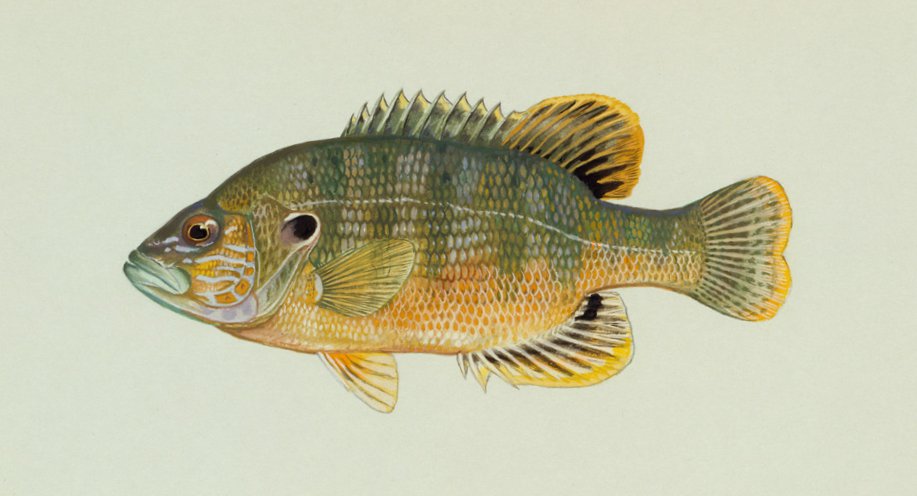

The green sunfish is the tough, bold, endlessly adaptable everyman of the sunfish family, a scrappy, big-mouthed little bruiser that lives in nearly every warm-water creek, pond, ditch, and lake across a huge range and bites almost anything you put in front of it. Aggressive out of all proportion to its size, the green sunfish (Lepomis cyanellus) is many an angler's first fish and countless kids' introduction to the sport, precisely because it's everywhere, always hungry, and remarkably hardy, it thrives in warm, murky, low-oxygen water that would kill more delicate fish. A typical green sunfish runs a modest 4 to 7 inches, with a good one reaching 8 inches or better and a genuine trophy pushing 9 to 10 inches and a pound, but pound for pound it fights like a fish twice its size, boring and bulldogging with surprising power on light tackle.
Often dismissed as a "trash fish" or a bait-stealer by anglers after bigger game, the green sunfish is actually one of the most fun, accessible, and dependable fish there is, a perfect target for ultralight tackle, fly fishing, kids, and anyone who just wants nonstop action from a nearby pond or creek. It's beautiful up close, too, with iridescent blue markings and orange-trimmed fins. This guide covers what a green sunfish is, where to find them, and the dead-simple techniques that turn a warm afternoon into a bucket of scrappy, willing panfish.
What Is a Green Sunfish?
The green sunfish is a member of the sunfish family (Centrarchidae) in the genus Lepomis, alongside the bluegill and pumpkinseed, but it's one of the larger-mouthed, more predatory sunfishes, more like a miniature bass in its habits and attitude. It has a stout, elongated body (more torpedo-shaped than the disc-like bluegill), a notably large mouth for a sunfish, and lovely coloration: a blue-green to olive body flecked with iridescent blue and turquoise spots, wavy sky-blue lines radiating across the cheeks and gill covers, and orange or yellow edges on the fins. It has a black ear-flap spot (often with a pale or orange border). Its large mouth and elongated shape can cause confusion with the warmouth and even small bass, and it readily hybridizes with bluegill and other sunfish, producing intermediate-looking fish.
How to Catch Green SunfishGreen sunfish are aggressive, opportunistic predators that eat a wide variety of food, insects, crayfish, small fish, larval invertebrates, and just about anything else they can fit in their big mouths. They're famously hardy and tolerant, thriving in warm, murky, stagnant, and low-oxygen water, small isolated pools, and disturbed habitats where other fish can't survive, which is a big part of why they're so widespread and abundant (and, outside their native range, sometimes an invasive pest). This toughness and aggression make them one of the easiest fish in the world to catch.
Where to Find Green Sunfish
Green sunfish are native to a vast swath of central North America and have been widely introduced (sometimes problematically) across the continent and beyond. They live in an enormous variety of warm waters and are famous for turning up everywhere, ponds, lakes, reservoirs, creeks, rivers, ditches, stock tanks, and even tiny isolated pools. Wherever they live, they relate to cover in warm, quiet water. Focus on:
- Cover of all kinds, weed beds, brush, submerged wood, rocks, and undercut banks, where green sunfish lurk and ambush.
- Creeks and small streams, green sunfish are a staple of creek fishing, holding in pools, eddies, and around cover.
- Ponds and small lakes, especially warm, fertile, weedy ones; many small ponds are packed with green sunfish.
- Shallow, warm, sheltered water, shorelines, bays, and backwaters where the water warms and cover concentrates them.
- Marginal and murky habitats, ditches, stock tanks, muddy pools, and warm, low-oxygen water where few other fish thrive.
Because green sunfish are so tolerant, aggressive, and widespread, they're one of the most reliable fish there is to locate, if there's warm water with any cover near you, there are almost certainly hungry green sunfish in it. They tend to hold near cover and hit fast, so fish tight to structure and expect an immediate, aggressive bite.
Worms Under a Bobber
There is no easier or more dependable way to catch green sunfish than the timeless worm under a bobber. These aggressive, unfussy little fish attack a piece of worm the instant it hits the water, which makes this the perfect method for kids, beginners, and anyone who just wants guaranteed action.
Creek Fishing for Green Sunfish with a Worm and BobberRig a small hook (size 6 to 10) a foot or two below a small bobber, thread on a piece of worm, a red wiggler, or a nightcrawler chunk, and cast it near cover, brush, weeds, rocks, or a creek pocket. Green sunfish have relatively big mouths for their size, so they can take a good-sized bait, but a small piece works fine and hooks them well. The bobber will dart under almost immediately; set the hook and hang on for a scrappy little fight. Other small baits, crickets, grasshoppers, mealworms, bits of hot dog, even a kernel of corn or a piece of bread, all work, because green sunfish will eat almost anything. Keep it simple, fish near cover, and enjoy nonstop bites.
Small Jigs and Micro Lures
Green sunfish are aggressive predators that hammer small jigs and micro lures, which makes them a fantastic ultralight target and a great way to catch them without bait. Their willingness to attack a lure much larger than you'd expect (thanks to that big mouth) makes them genuinely fun on light gear.
Catching Big Green Sunfish on JigsFish a tiny jig (1/64 to 1/16 oz) tipped with a small soft-plastic grub, tube, or curly tail around cover and weed edges, retrieving it slowly or hopping it along the bottom. Small inline spinners, tiny spoons, micro crankbaits, and even small soft-plastic craws all draw savage strikes, green sunfish attack reaction baits with abandon. Bright colors (chartreuse, orange, white) trigger their aggression. On an ultralight rod with light line, even a modest green sunfish feels like a real fish, and the fast, dependable action makes lure fishing for them a blast. Because they hit so readily, green sunfish are also a great fish for practicing new lures and building light-tackle confidence.
Fly Fishing and Poppers
Few fish are more fun or more forgiving on a fly rod than a green sunfish. These insect-and-minnow eaters are ideally suited to fly fishing, they smash both surface and subsurface flies with reckless aggression, and their sheer willingness makes them one of the best fish there is for learning to fly fish.
Fly Fishing Poppers for Green SunfishOn a light fly rod (a 3- to 5-weight is perfect), cast small poppers, foam spiders, and dry flies for explosive surface takes, or fish small wet flies, nymphs, wooly buggers, and streamers subsurface for even more consistent action. Work the flies near weed edges, cover, and creek pockets where green sunfish hold. The surface bite is especially thrilling, a little popper twitched over the shallows draws splashy, aggressive strikes all day. Green sunfish are forgiving of imperfect casts and presentations, making them the ideal beginner's fly-rod fish, and a fine warm-up for any angler. Their aggression means the flies don't have to be perfect; they just have to be there.
Creek and Pond Fishing
Some of the very best green sunfish fishing happens in small creeks and ponds, where these ubiquitous fish reach high densities and bite nonstop. Exploring a small creek or a neighborhood pond for green sunfish is one of fishing's simplest, most accessible pleasures, and a wonderful way to spend an afternoon with a kid.
The Big Green Sunfish PondIn creeks, wade or walk the banks and fish the pools, eddies, undercut banks, and cover, dropping a worm, a small jig, or a fly into every likely pocket, green sunfish often stack up in the deeper pools and you can catch several from one spot. In ponds, work the shorelines, weed edges, and any cover; warm, fertile little ponds can be absolutely loaded with them. Because green sunfish are so tolerant, they'll be in waters other fish avoid, the small, warm, murky, overlooked spots that get little pressure. A light rod, a few worms or small jigs, and a willingness to explore are all you need for a fantastic, low-key day of green sunfish fishing.
Urban and Overlooked Waters
One of the green sunfish's greatest gifts to anglers is that it lives where nobody else bothers to fish. Because it tolerates warm, murky, low-oxygen, and disturbed water so well, the green sunfish colonizes the small, overlooked, urban, and marginal waters that most anglers drive right past, retention ponds, drainage ditches, roadside creeks, golf-course water hazards, stock tanks, city park lakes, and tiny isolated pools left behind when a creek drops.
Catching Big Green Sunfish in a Small Urban PondThese waters get almost no fishing pressure, which means the green sunfish in them are often numerous, aggressive, and surprisingly large. A weedy stormwater pond behind a shopping center or a trickling ditch along a country road can hold dozens of willing fish, including the occasional bruiser pushing 8 or 9 inches. For the urban or suburban angler with limited time, a nearby "junk" pond full of green sunfish is a genuine treasure, a place to grab a rod, catch fish in 20 minutes, and introduce a kid to fishing without a long drive or a boat. Keep a light rod and a few worms or jigs in the car, and you'll be amazed how many green sunfish you can catch from the humble waters everyone else ignores. Learning to spot and fish these overlooked places is a skill that pays off in nonstop action.
Tackle and Handling
Green sunfish fishing calls for the lightest gear you have, and that's the whole fun of it. An ultralight or light spinning combo with 2 to 6 pound line makes their surprisingly strong fight a blast and suits the small baits and lures they eat; a simple cane pole or spincast outfit is perfect for kids. Use small hooks (size 6 to 10) and small bobbers, though their big mouths mean they can handle a slightly larger hook than other sunfish. They have sharp dorsal spines, so grip them gently, and their big mouths can inhale a bait deep, so bring pliers or a hook remover. That's really all there is to it, green sunfish fishing is about as simple, cheap, and accessible as the sport gets, which is exactly why it's so beloved by beginners and so perfect for introducing kids to fishing.
Where the Green Sunfish Fits
The green sunfish is one of the boldest and most adaptable members of the sunfish family, and it shares its waters and tactics with several relatives. The wildly popular bluegill is its most familiar cousin, often sharing the same ponds and caught the same ways (the two even hybridize, producing hard-fighting intermediate fish). The warmouth is another large-mouthed, aggressive, cover-loving sunfish of similar habits, and the gorgeous pumpkinseed rounds out the panfish group, sharing the same light-tackle, family-friendly appeal. Learn to catch green sunfish, and you've mastered one of the most dependable and willing fish in all of fresh water.
Eating Green Sunfish
Small as they are, green sunfish are good eating, their flesh is white, flaky, and mild, the same quality panfish fare as bluegill and other sunfish. The catch is their small size, which means a lot of cleaning for a meal's worth of fillets; many anglers who keep them fry them whole (scaled and gutted, head off). Because green sunfish are extraordinarily prolific and prone to overpopulating and stunting small waters, where they can crowd out and stay small, harvesting them is not just fine but genuinely beneficial to the fishery, and there's rarely any need to hold back on keeping a mess for the pan (within local regulations). Rolled in seasoned cornmeal and fried crisp, a plate of green sunfish is a humble, tasty reward, and thinning them out helps the pond.
Put It All Together
Catching green sunfish is about as easy, accessible, and enjoyable as fishing gets: find warm water with cover, a creek, a pond, a ditch, almost anywhere, present a small bait or lure near the cover, and get ready for immediate, aggressive action. Hang a piece of worm under a small bobber, cast a tiny jig or a little popper on ultralight or fly tackle, or explore a small creek or pond and pick apart the pools and cover. Keep everything small and light, fish tight to structure, and enjoy one of the toughest, boldest, most willing, and most kid-friendly fish in all of fresh water. No fancy gear, no expertise, no boat, just a scrappy little bruiser that's always ready to bite, wherever there's warm water and a bit of cover to hide in.
Want a guaranteed-fun day on the water, especially with kids? The beauty of green sunfish is that you rarely have to go far, a nearby creek, pond, or ditch with warm water and a bit of cover almost always holds them. Scout the small, overlooked waters close to home, keep a light rod and a few worms or jigs handy, and you and your family can be into fast, scrappy green sunfish action just about anywhere there is water to fish.