Fish
Fish Fire
Fire Hike
Hike Bird
Bird

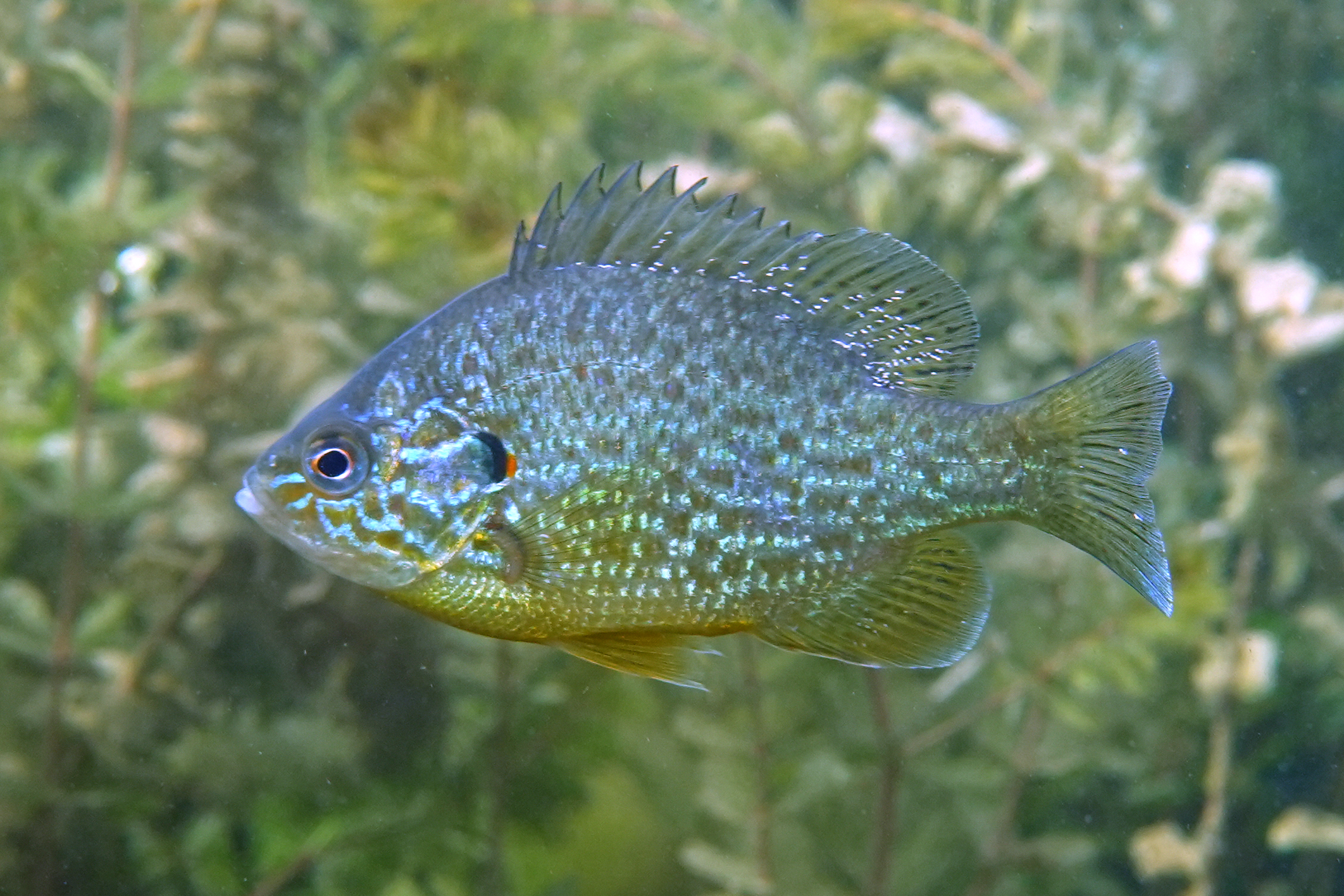

The pumpkinseed is one of the most beautiful and beloved little fish in fresh water, a jewel-colored sunfish, painted in orange, gold, turquoise, and green, that eagerly bites a worm from nearly any pond, lake, or slow stream across its wide range. Small, abundant, willing, and stunning to look at, the pumpkinseed (Lepomis gibbosus) is the quintessential kids' fish and beginner's fish: it lives everywhere, holds in shallow water within easy reach of a bank angler, and attacks a simple baited hook with reckless enthusiasm. A typical pumpkinseed runs just 4 to 8 inches, with a big one reaching 8 to 9 inches and rare "dinner-plate" specimens pushing past that, but what it lacks in size it makes up for in sheer numbers, willingness, and beauty, and, pound for pound, a chunky pumpkinseed pulls surprisingly hard on ultralight tackle.
For countless anglers, the pumpkinseed was the very first fish they ever caught, a wriggling, brilliantly colored little sunfish hauled up from a dock or a pond bank on a summer afternoon, and it remains one of the finest ambassadors the sport has. This guide covers what a pumpkinseed is, where to find them, and the dead-simple, fun techniques that fill a summer day (and delight a child) with these gorgeous, ever-willing panfish.
What Is a Pumpkinseed?
The pumpkinseed is a member of the sunfish family (Centrarchidae) and one of the true sunfishes in the genus Lepomis, closely related to the bluegill, redear, and green sunfish. It's named for its shape, a small, round, deep, laterally compressed body shaped like a pumpkin (or apple) seed. But it's the coloration that makes the pumpkinseed unforgettable: an olive-to-golden body sprinkled with iridescent orange, red, and blue spots, wavy sky-blue lines radiating across the cheeks and gill covers, orange-and-brown flanks, and, the surest identifying mark, a bright red or orange spot on the tip of the black "ear" flap at the rear of the gill cover. No other common sunfish combines these features, and a spawning male pumpkinseed is one of the most spectacularly colored fish in North America.
Pumpkinseed Sunfish ID Guide and Fishing TipsPumpkinseeds are shallow-water fish that stick close to cover and vegetation, feeding on insects, small invertebrates, snails (their strong jaws are built for crushing snail shells), tiny crustaceans, and small baitfish. They're abundant and prolific, spawning in colonies in shallow water in late spring and early summer, when the males build and guard saucer-shaped nests. They're active, aggressive little feeders that bite readily all day, which, combined with their shallow, accessible habitat, makes them one of the easiest fish in all of angling to catch.
Where to Find Pumpkinseed
Pumpkinseeds are native to the northeastern United States and southeastern Canada and have been widely introduced elsewhere, thriving in ponds, lakes, reservoirs, and the slow, quiet sections of streams and rivers across a huge range. Wherever they live, they favor warm, shallow, weedy, protected water near cover, find the shallows and the vegetation, and you'll find pumpkinseeds. Focus on:
- Weed beds, lily pads, and submerged vegetation, pumpkinseeds live in and around the salad, hunting insects and snails.
- Docks, piers, and swim platforms, the shade and cover concentrate them, and they're a classic dock-fishing target.
- Shallow shorelines, bays, and coves, especially warm, protected, weedy ones with a foot or few of water.
- Sunken wood, brush, and overhanging cover, anything that provides shade and shelter in the shallows.
- Spawning colonies in late spring, clusters of round, swept-clean nests in the shallows, often visible in clear water.
Because pumpkinseeds are so shallow, so tied to visible cover, and so abundant, they're one of the most reliable and accessible fish there is. A neighborhood pond, a lake dock, a park shoreline, if there's shallow weedy water, there are almost certainly willing pumpkinseeds in it, waiting for a bait.
Worms Under a Bobber: The Classic
There is no simpler, more effective, or more time-honored way to catch pumpkinseeds than a piece of worm under a bobber. This is the setup that has introduced more children to fishing than any other, and it works because it's exactly what a pumpkinseed wants: an easy, wriggling meal presented right in front of its nose.
Fishing for Pumpkinseed SunfishRig a small hook (size 6 to 10) a foot or two below a small bobber, thread on a piece of worm, a red wiggler, or a garden worm (pumpkinseeds have small mouths, so a small piece works better than a whole nightcrawler), and cast it near weeds, docks, or shoreline cover. The bobber will dance and dip almost immediately, pumpkinseeds are quick, eager biters, and when it goes under, lift the rod to set the hook. That's the entire method, and it will catch pumpkinseeds all day long. Other small baits work just as well: bits of nightcrawler, crickets, grasshoppers, mealworms, or even a tiny piece of hot dog or bread. Keep it small, keep it near cover, and get ready for nonstop action.
Tiny Jigs and Small Lures
Pumpkinseeds may be small, but they're aggressive predators, and they'll readily hit tiny jigs and small lures, which makes for fantastic light-tackle fun and is a great way to catch them without bait. A small jig imitates the insects and tiny baitfish they eat, and the strikes come fast.
Fishing Small Jigs for Pumpkinseed and PanfishFish a tiny jig (1/64 to 1/32 oz) tipped with a small soft-plastic grub, tube, or curly tail, or a micro version tipped with a bit of worm, around weed edges, docks, and shallow cover, retrieving it slowly or hanging it under a small float. Little inline spinners (the smallest sizes), tiny spoons, and micro crankbaits also draw eager strikes. Bright colors (chartreuse, orange, red, white) show up well and trigger the pumpkinseed's aggression. On an ultralight rod with light line, even a modest pumpkinseed feels like a real fish, and the fast, dependable action makes lure fishing for them a joy. It's a great way to sharpen light-tackle skills and to catch pumpkinseeds when you don't have bait handy.
Fly Fishing
Few fish are more fun on a fly rod than a pumpkinseed. These insect-eaters are perfectly suited to fly fishing, they hit both dry and wet flies with abandon, and their willingness makes them one of the best fish there is for learning fly fishing or for a relaxing evening of surface strikes.
Fly Fishing for Pumpkinseed SunfishOn a light fly rod (a 3- to 5-weight is perfect), cast small poppers, foam spiders, and dry flies for explosive surface takes, or fish small wet flies, nymphs, and soft-hackles subsurface for even more consistent action. Work the flies near weed edges, docks, lily pads, and shallow cover where pumpkinseeds hold. The surface bite, especially, is pure fun, a little popper twitched over the shallows draws splashy, eager strikes all evening long. Pumpkinseeds are forgiving of imperfect casts and presentations, making them the ideal fish for a beginning fly angler, and a fine warm-up for anyone. Bring plenty of small flies; the action can be nonstop.
Ice Fishing
In the northern part of their range, pumpkinseeds are a popular and colorful ice-fishing target that keeps the panfish action going all winter. Under the ice they group up in the deeper weeds and basins, and they'll readily bite a small jig, making them a favorite of hardwater panfish anglers.
Ice Fishing for Pumpkinseed SunfishDrop a small tungsten ice jig tipped with a waxworm, spike (maggot), or a tiny soft plastic, and work it with a subtle jiggle just off the bottom or at the depth the fish are holding, over and around remaining green weeds and in the deeper holes. A sensitive spring bobber or float helps you detect the pumpkinseed's light, delicate bite. Pumpkinseeds often mix with bluegills and other panfish under the ice, so a good hole can produce a steady, colorful mixed bag. A small jig, a bag of waxworms, and a bucket to sit on make for one of winter's most accessible and family-friendly fisheries, and those brilliant colors are a welcome sight on a gray winter day.
Tackle and Handling
Pumpkinseed fishing needs no special or expensive gear, in fact, the lighter, the better. An ultralight or light spinning combo with 2 to 6 pound line makes their spunky fight fun and is ideal for the small baits and lures they eat; a simple cane pole or spincast outfit works great for kids. Use small hooks (size 6 to 10) to match their small mouths, and small bobbers to detect their quick bites. Their dorsal fin has sharp spines, so handle them with a gentle grip, and use a small hook or a hook remover for the occasional deep-hooked fish (small hooks and prompt hooksets help avoid this). That's all it takes, pumpkinseed fishing is the definition of simple, accessible, and fun.
Where the Pumpkinseed Fits
The pumpkinseed is one of the most colorful members of the sunfish family, and it shares its waters and its tactics with several close relatives. Its famous cousin the bluegill is the most popular sunfish of all and is caught the exact same ways, often from the very same spots. The redear sunfish (or "shellcracker") is a larger, snail-crushing relative that shares the pumpkinseed's love of the bottom and mollusks, and the longear sunfish is another jewel-colored little sunfish of similar habits and stunning looks. Learn to catch pumpkinseeds, and you've learned to catch nearly the whole sunfish clan, and you'll have a wonderful time doing it.
The Perfect First Fish
If there is one species tailor-made for a child's first fishing trip, it is the pumpkinseed. Everything about it aligns with what a young or brand-new angler needs: it lives in shallow, easy-to-reach water right off a dock or bank; it bites almost immediately and almost constantly, so there's no soul-testing wait; it takes the simplest possible tackle, a hook, a bobber, and a worm; and, when it comes up, it is breathtakingly beautiful, a living jewel of orange and turquoise that makes a kid's eyes go wide. That combination of instant success and visual payoff is exactly what turns a curious child into a lifelong angler.
Set a beginner up for success by keeping it simple and staying mobile: fish a small worm under a bobber tight to a weed edge or dock, and if the bites slow, move a few feet and try again, pumpkinseeds are everywhere along the shallows, and there's almost always a willing school nearby. Celebrate every fish, handle them gently around the spiny dorsal, and let the kid do the reeling. Few days on the water are as rewarding as a summer afternoon of nonstop pumpkinseeds with a young angler, and few fish give back so much for so little.
Reading the Spawn
Late spring and early summer, when pumpkinseeds spawn, is the most exciting and productive time to target them, and learning to read the spawn pays off. As the shallows warm into the high 60s and low 70s (°F), male pumpkinseeds fan out saucer-shaped nests, sweeping the bottom clean down to sand or gravel in colonies, often in just one to three feet of clear water. In clear ponds and lakes you can literally see the light-colored round nests clustered along the shoreline, each guarded by a vividly colored male. These spawning fish are shallow, concentrated, and highly aggressive, they'll attack a bait or lure that invades their nest, and the fishing can be as fast as it ever gets. Ease along the shoreline (a stealthy approach matters in shallow clear water), spot the beds, and drop a small bait or jig near them. It's sight-fishing at its most accessible, and a wonderful way to introduce anyone to the thrill of watching a fish take.
Eating Pumpkinseed
Small as they are, pumpkinseeds are excellent eating, their flesh is white, flaky, sweet, and mild, the same delicious panfish quality that makes bluegills and other sunfish so prized. The catch (literally) is their small size, which means a lot of cleaning for a meal's worth of fillets; many anglers who keep them fry them whole (scaled and gutted, head off), which is easier and traditional. Because pumpkinseeds are prolific and often overpopulate small ponds, where they can stunt and stay small, keeping a mess of them for the pan is perfectly sustainable and even beneficial, within local regulations. Rolled in seasoned cornmeal and fried crisp, a plate of pumpkinseeds is a humble, delicious reward for a fun day of fishing.
Are Pumpkinseed Sunfish Good to Eat?Put It All Together
Catching pumpkinseed is about as easy, accessible, and enjoyable as fishing gets: find shallow, weedy, cover-filled water; present a small bait or lure near the cover; and get ready for fast, eager action. Hang a piece of worm under a small bobber near the weeds and docks, cast a tiny jig or a little popper on ultralight or fly tackle, or drop a small ice jig through the hardwater in winter. Keep everything small and light, fish near cover in the shallows, and enjoy one of the prettiest, most willing, and most kid-friendly fish in all of fresh water. No fancy gear, no expertise, no boat, just a gorgeous little sunfish that's always ready to bite.
Want a guaranteed-fun day on the water, especially with kids? Find a shallow, weedy pond or a lake dock, rig a small worm under a small bobber, and stay mobile until you hit a willing school, the simple, dependable tactics that put you and your family onto fast, colorful pumpkinseed action.