Fish
Fish Fire
Fire Hike
Hike Bird
Bird

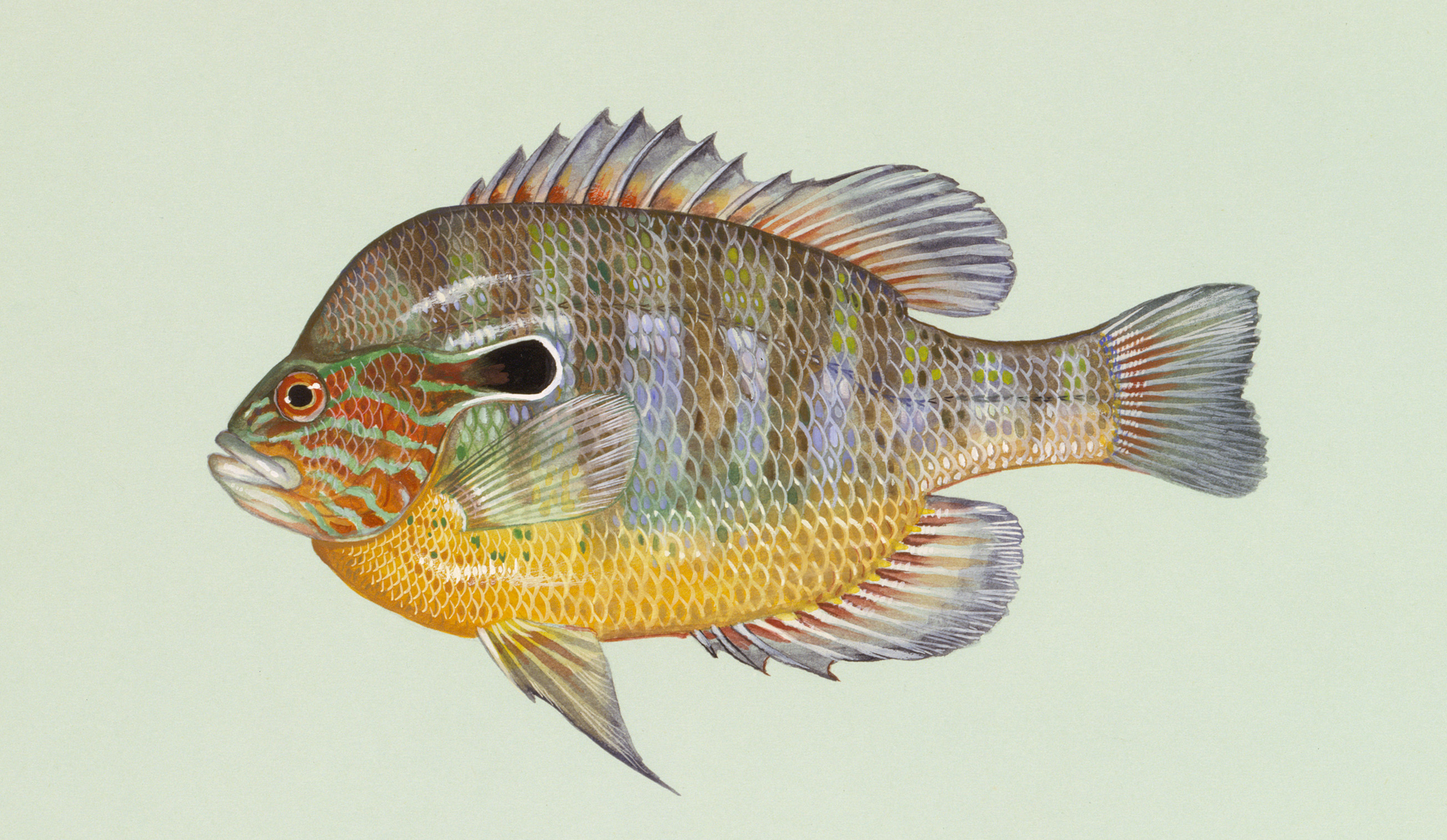

The longear sunfish may well be the single most beautiful freshwater fish in North America, a small, dazzling jewel painted in electric turquoise, fiery orange, and iridescent blue, with the long, flag-like black "ear" flap that gives it its name. To catch one from a clear little creek and hold it in your hand, glowing with color in the sunlight, is one of angling's genuine joys. The longear sunfish (Lepomis megalotis) is a small, willing panfish of the clear, flowing creeks and rivers of central and eastern North America, and while it rarely grows large, a typical fish runs just 3 to 6 inches, with a big one reaching 7 to 9 inches, it makes up for its size with jaw-dropping beauty, eager aggression, and a scrappy, spirited fight on ultralight tackle.
For creek anglers, microfishers, fly rodders, and anyone who appreciates a gorgeous fish, the longear is a beloved target, abundant in the right water, willing to hit worms, tiny jigs, and flies, and stunning to behold. It's also a fantastic fish for kids and beginners, providing fast action and a payoff of pure color. This guide covers what a longear is, where to find them, and the simple techniques that fill a summer creek day with these living jewels.
What Is a Longear Sunfish?
The longear sunfish is a member of the sunfish family (Centrarchidae) in the genus Lepomis, alongside the bluegill and pumpkinseed. It has the classic deep, rounded, laterally compressed sunfish body, but it's the coloration that sets it apart and makes it famous: a body flecked and marbled with brilliant turquoise, emerald, and blue, a belly and lower flanks washed in bright orange and red, and wavy, electric-blue lines streaking across the face and gill cover. Its defining feature is the long, flexible black ear flap (the "long ear") extending back from the gill cover, often edged in white or pale blue, longer than in any other sunfish, and especially elongated in breeding males. A spawning male longear is almost impossibly vivid, a fish that looks more like a tropical reef dweller than a creek minnow.
Longear Sunfish Underwater and Creek FishingLongear sunfish are fish of clear, warm, flowing water, creeks, small rivers, and the clear margins of lakes, where they hold near cover and feed on insects, small invertebrates, and tiny crustaceans, hunting largely by sight in the clear water they favor. Unlike the murky-water-loving green sunfish, longear prefer clean, clear streams with some current and gravel or rocky bottoms. They're aggressive, willing feeders that readily attack small baits and lures, and they spawn in colonies in the shallows in late spring and summer, when the males' colors reach their electric peak.
Where to Find Longear Sunfish
Longear sunfish range across the central and eastern United States, the Mississippi Valley, the Great Lakes drainage, the South, and into Mexico, and thrive in clear, flowing water. Wherever they live, they favor clear creeks and small rivers with current, cover, and gravel or rocky bottoms. Find the clear, cover-filled creek water, and you'll find longears. Focus on:
- Clear creeks and small rivers, the longear's classic habitat; they're a staple of creek fishing.
- Pools, eddies, and runs, especially the slower water and pools off the main current, where longear hold.
- Cover, near submerged wood, rocks, undercut banks, root wads, and vegetation.
- Gravel and rocky bottoms, longear favor clean, firm bottoms over mud.
- Clear lake margins and the mouths of feeder creeks, where they'll hold near cover in clean water.
Longear are strongly tied to clear, flowing water with cover, so look for the clean, gravelly, cover-rich creeks and streams that other anglers might overlook. In a good longear creek, they're often abundant, holding in nearly every likely pool and pocket. Because they favor clear water and feed by sight, a stealthy approach helps, these are shallow, wary little fish in gin-clear creeks.
Worms and Small Baits
The simplest and most dependable way to catch longear sunfish is with a small piece of worm, few fish are more willing, and a bit of worm drifted through a clear creek pool is almost irresistible. This is the perfect method for kids, beginners, and anyone who wants guaranteed action and a payoff of color.
How to Catch Longear SunfishRig a small hook (size 8 to 12, longear have small mouths) with a small piece of worm, a red wiggler, or a garden worm, either under a tiny bobber or on a split-shot rig, and drift or dangle it through creek pools, eddies, and near cover. The bite is fast and eager, longear dart out to grab the bait almost instantly. Keep the bait small to match their little mouths. Other tiny baits work too: bits of nightcrawler, crickets, small grubs, mealworms, and even tiny pieces of other natural bait. Because longear favor clear water and hold in creeks, present the bait naturally in the current and near cover, and be ready for an immediate, colorful catch. A simple worm is the classic longear method for good reason.
Micro Jigs and Small Lures
Longear sunfish are aggressive little predators that readily hit micro jigs and small lures, which makes them a superb ultralight and microfishing target. Their eager, sight-feeding aggression means they'll dart out and smack a tiny jig, providing fast, fun action for anglers who prefer artificials.
Longear Sunfish Creek FishingFish a tiny jig (1/80 to 1/32 oz) tipped with a small soft-plastic grub, tube, or micro trailer, or a micro spinner or tiny spoon, working it through creek pools and near cover with a slow retrieve or subtle hops. Because longear have small mouths, downsize your offerings, micro jigs and small hooks hook far more fish than larger lures. Bright colors (chartreuse, orange, red) trigger their aggression and show up in the water. On an ultralight or microfishing rod with light line, even a small longear is a spirited, colorful catch, and the fast action makes lure fishing for them a delight. Their willingness makes them a favorite of the growing microfishing and "creek-stomping" community.
Fly Fishing
Few fish are more rewarding on a fly rod than a longear sunfish, these clear-water insect-eaters are ideally suited to the fly, they hit both surface and subsurface offerings with eager aggression, and holding a fly-caught longear glowing with color is a special kind of joy. The longear is a fantastic fish for learning fly fishing and for a beautiful, relaxing day on a creek.
Fly Fishing for Longear SunfishOn a light fly rod (a 2- to 4-weight is ideal for these small fish), cast tiny poppers, foam spiders, and small dry flies for surface strikes, or fish small nymphs, wet flies, and soft-hackles subsurface through creek pools and near cover. Work the flies naturally in the current and around cover where longear hold. The surface bite is especially fun, a tiny popper or dry fly drifted over a clear pool draws eager, splashy takes. Longear are forgiving of imperfect presentations, making them ideal for the beginning fly angler, and their beauty makes every catch a photo opportunity. Small flies, a light rod, and a clear creek are a recipe for a wonderful day.
Creek Fishing and Microfishing
The heart and soul of longear fishing is creek fishing, wading or walking a clear, gravel-bottomed stream, picking apart the pools and pockets, and catching these living jewels one gorgeous fish at a time. It's one of angling's most accessible, low-cost, and purely enjoyable pursuits, and increasingly popular through the "microfishing" movement that celebrates small, beautiful, often-overlooked species.
Longear Sunfish: A Creek Fishing Crash CourseTo creek-fish for longear, wade or walk a clear creek and target the pools, eddies, runs, and cover where the fish hold, presenting a small worm, micro jig, or fly into each likely spot. Move quietly and approach with stealth, in clear, shallow creek water, longear can be spooky. You'll often catch several colorful fish from a single good pool, sometimes mixed with other sunfish and creek species. Microfishing, using ultralight tackle, tiny hooks, and small baits to target small species, is a perfect fit for longear, and dedicated microfishers prize the longear as one of the most beautiful catches available. A light rod, a few small hooks and worms or micro jigs, and a clear creek to explore are all you need for a fantastic, colorful day.
Tackle and Handling
Longear fishing calls for the lightest tackle you own, which is exactly what makes it so fun. An ultralight or microfishing spinning combo with 2 to 4 pound line is ideal, letting you cast tiny baits and lures and turning a small longear into a spirited fight; a light fly rod or a simple cane pole works beautifully too. Use small hooks (size 8 to 12) to match their small mouths, this is the single most important tackle choice, since large hooks will miss most bites. Small bobbers, a few split shot, and micro jigs round out the kit. Handle these little jewels gently and briefly (they have small dorsal spines), and if you want a photo, take it quickly and get the fish back in the water, their colors fade fast out of the water, and a healthy release keeps the creek full of beauty. Simple, cheap, and light: longear fishing is the essence of accessible angling.
Longear and Its Creek Neighbors
Part of the fun of creek fishing for longears is the mixed bag, a good clear stream often holds several small, colorful sunfish species, and learning to tell them apart adds to the enjoyment. In many creeks the longear shares the water with the redspotted sunfish, the dollar sunfish, and other look-alikes, along with green sunfish, bluegill, and sometimes rock bass, warmouth, and creek chubs.
Longear and Look-alike Sunfish in a Small CreekTelling a longear from its neighbors comes down to a few marks: the long, flexible black ear flap edged in white (longer than any other sunfish's), the electric turquoise-and-orange coloration, and the wavy blue face lines. The redspotted sunfish, a close relative, is similar but shows rows of small red spots and a shorter ear flap; the dollar sunfish is smaller with fewer, larger scale rows. For the microfishing enthusiast, sorting out these species is half the pleasure, and many creek anglers keep a "life list" of the sunfish they've caught and photographed. Whatever the exact species, a clear creek full of small, jewel-colored sunfish is a delight, and the longear, with its flag-like ear and neon colors, is usually the star of the show. Take a moment to appreciate (and photograph) each colorful catch before releasing it.
Where the Longear Fits
The longear sunfish is arguably the most beautiful member of the sunfish family, and it shares its waters and tactics with several relatives. The gorgeous pumpkinseed is another jewel-colored little sunfish of similar habits and stunning looks, often mentioned in the same breath as the longear for sheer beauty. The wildly popular bluegill shares many of the same waters and the same light-tackle, family-friendly appeal, and the bold green sunfish is another close relative, though it favors murkier water than the clear-creek-loving longear. Learn to catch longears, and you've added one of freshwater fishing's true living jewels to your repertoire.
Eating Longear Sunfish
Longear sunfish are good eating, like all sunfish, their flesh is white, flaky, sweet, and mild, and they fry up nicely. The catch, of course, is their small size: a longear rarely provides much more than a few bites of fillet, so it takes a good number of them to make a meal, and most anglers fry the small ones whole (scaled and gutted). Because of their modest size and, frankly, their extraordinary beauty, many anglers choose to release most or all of their longears, preferring to enjoy the catch and the color and let these little jewels swim on. Where they're abundant, keeping a few for a creek-side fry is perfectly fine within local regulations, but the longear is a fish most people catch for the sheer joy and beauty of it rather than for the frying pan. Whether you keep or release, handle them gently and admire that color.
Put It All Together
Catching longear sunfish is one of angling's simplest and most rewarding pleasures: find a clear, gravel-bottomed creek with cover, present a small worm, micro jig, or fly in the pools and pockets, and get ready for fast action and a payoff of jaw-dropping color. Keep everything small and light, small hooks are the key, approach clear water with stealth, and fish tight to cover and current. Whether you're wading a creek with a kid, microfishing for beautiful species, or casting a fly on a lazy summer afternoon, the longear delivers eager bites and living-jewel beauty like few other fish. It may be small, but ounce for ounce, the longear sunfish is one of the most gorgeous and delightful fish you can catch in fresh water.
Want a day of catching living jewels? Find a clear, gravel-bottomed creek with cover, pack the lightest rod you own and a few small hooks and worms, and approach the pools with stealth. The longears will do the rest, rewarding a quiet, well-placed bait with fast bites and one glowing, electric-colored fish after another. It's the kind of simple, low-cost creek day the whole family can share.