Fish
Fish Fire
Fire Hike
Hike Bird
Bird

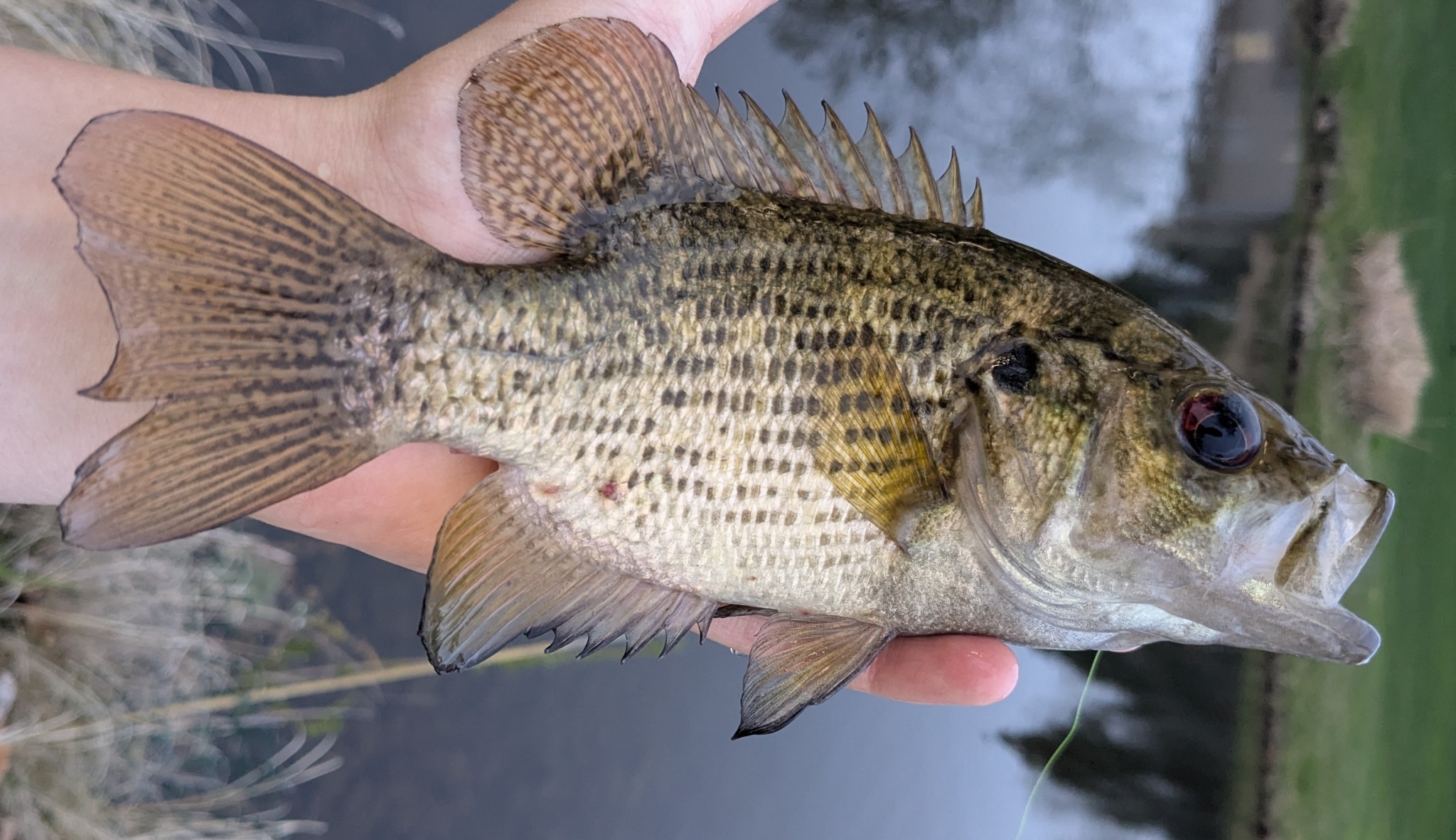

The rock bass is one of freshwater fishing's most underrated little brawlers, a chunky, red-eyed, hard-fighting member of the sunfish family that lurks around rocky cover, ambushes almost anything that moves, and pulls far harder than its modest size suggests. Known affectionately as the "goggle-eye," "redeye," or "rock perch" across its range, the rock bass (Ambloplites rupestris) is a favorite of creek waders, smallmouth anglers, and kids alike, precisely because it's so willing: it attacks worms, jigs, crankbaits, and flies with reckless aggression, it's abundant in the clear, rocky rivers and lakes where it lives, and it's genuinely delicious on the table. A typical rock bass runs 6 to 10 inches, with a good one reaching 10 to 12 inches and rare specimens topping a pound, but its bulldog fight and constant willingness make it far more fun than the numbers suggest.
Often caught incidentally by anglers targeting smallmouth bass, with which it shares the same clear, rocky, current-swept water, the rock bass is worth pursuing in its own right. It's the perfect fish for a summer day of creek wading, a fun light-tackle target, and a reliable bet when you just want steady action. This guide covers what a rock bass is, where to find them, and the simple, effective techniques that fill a day with scrappy, red-eyed goggle-eyes.
What Is a Rock Bass?
Despite its name, the rock bass is not a true bass but a member of the sunfish family (Centrarchidae), specifically one of the larger, more predatory sunfishes, closely related to the warmouth and the crappies. It has a robust, chunky, deep body (more elongated than a bluegill's, but rounder than a smallmouth's), a large mouth for a panfish, and, its most distinctive feature, a bright red eye that gives it the nickname "goggle-eye" or "redeye." Its body is a mottled, brassy olive-to-golden color, marked with rows of dark spots that run in lines along the flanks (each scale bearing a dark spot), and it can rapidly change its shade to match its surroundings, sometimes appearing almost black when agitated. It also has spiny dorsal and anal fins typical of the sunfish family.
Lures That Catch Rock Bass, for BeginnersRock bass are ambush predators that hold tight to rocky cover, waiting to dart out and grab prey. They eat a wide variety of food, insects, crayfish (a favorite), small fish, and larval aquatic invertebrates, and they're not picky, which is exactly why they're so easy to catch. They favor clear, cool, rocky water and are frequently found alongside smallmouth bass, sharing the same habitat and often the same lures. Aggressive, abundant, and willing, the rock bass is a dependable, hard-hitting little fish.
Where to Find Rock Bass
Rock bass are native to the east-central United States and southeastern Canada, the Great Lakes, the Mississippi and Ohio river basins, and the Appalachian and Ozark regions, and have been introduced elsewhere. As their name promises, they love rocky habitat in clear, cool water. Find the rocks, and you'll find the rock bass. Focus on:
- Rocky and gravelly bottoms, the number-one rock bass habitat, in both lakes and streams.
- Boulders, ledges, rock piles, and riprap, rock bass tuck in beside and beneath rocky cover, ambushing prey.
- Rocky river and creek cover, undercut banks, submerged logs, and boulders in current, especially the slower pools and eddies.
- Weed edges and submerged wood near rocky areas, they'll use these too, especially in lakes.
- Docks, bridge pilings, and shaded cover, anywhere that offers shade and ambush points near rock.
Rock bass are strongly tied to structure and cover, so fish tight to the rocks. In streams and rivers, target the deeper, slower pools, eddies, and current breaks around rocky cover; in lakes, focus on rocky shorelines, points, humps, and reefs. Because they so often share water with smallmouth bass, a good smallmouth spot is very often a good rock bass spot, and vice versa.
Jigs and Soft Plastics
The small jig, a leadhead tipped with a soft-plastic grub, tube, or curly tail, is one of the best and most versatile rock bass lures. It gets down into the rocky cover where they hold, imitates the crayfish and baitfish they love, and draws their aggressive ambush strike.
How to Catch Rock BassFish a 1/16 to 1/8 oz jig tipped with a small tube (crayfish colors are deadly), grub, or twister tail, hopping and dragging it along the rocky bottom and around boulders, ledges, and cover. Rock bass hit a jig hard and often, so stay in contact with the bottom and be ready. Small soft-plastic craws, Ned rigs, and finesse worms on light jigheads are all excellent, as are marabou and hair jigs. Work the jig slowly through the rocks, let it fall into pockets and beside boulders, and expect a sharp thump. Because rock bass share water and tactics with smallmouth, the same finesse jig approaches that catch smallmouth catch rock bass, often on the same cast. It's a productive, fun, bottom-bouncing way to target them.
Live Bait: Worms and Crayfish
If you want to make catching rock bass absolutely foolproof, use live bait, few fish are easier to fool. A worm or a small crayfish presented near rocky cover is irresistible to a rock bass, and live bait is the classic, dependable, and kid-friendly way to load up on goggle-eyes.
Fishing for Rock Bass with WormsFish a worm, nightcrawler, or small crayfish on a hook (size 4 to 8) under a bobber, or on a split-shot or light bottom rig, and present it near boulders, ledges, and rocky cover. The bobber will dip quickly, rock bass are eager, aggressive biters, and when it does, set the hook. Crayfish are a rock bass's favorite natural food, so a small live or soft-shell crawfish is especially deadly, but garden worms and nightcrawlers are far easier to get and work nearly as well. Minnows, crickets, and grasshoppers also produce. Live bait near the rocks is the simplest, surest way to catch rock bass, and a great choice for beginners and young anglers.
Creek and River Fishing
Some of the best and most enjoyable rock bass fishing happens in small creeks and rivers, where wading anglers can pick apart rocky pools and current breaks for nonstop action. Rock bass thrive in the clear, rocky, flowing water of streams, and a summer day of creek wading for them is one of fishing's simple pleasures.
Creek Fishing for Rock BassWade or walk the stream and target the deeper pools, eddies, undercut banks, and slack water behind boulders and logs where rock bass hold out of the main current. Cast a small jig, an inline spinner, a live worm, or a fly upstream or across, and let it work through the rocky cover. Rock bass in creeks are typically aggressive and unpressured, and you'll often catch several from a single good pool, frequently mixed in with smallmouth bass, sunfish, and other creek species. A light rod, a handful of small jigs or a container of worms, and a willingness to get your feet wet are all you need for a fantastic, low-key day of creek rock bass fishing.
Small Crankbaits, Spinners, and Flies
Rock bass are aggressive predators that readily chase down moving lures, which makes them a blast on small crankbaits, inline spinners, and flies. These active presentations trigger the rock bass's ambush instinct and add variety and fun to targeting them.
Fly Fishing for Rock BassSmall crankbaits and inline spinners (think small sizes, in crayfish, shad, or bright patterns) cast around rocky cover and retrieved with the occasional pause draw savage strikes. On the fly rod, rock bass eagerly take streamers, wooly buggers, crayfish patterns, nymphs, and even poppers, fish subsurface flies through the rocky pools and cover, or work a popper for surface strikes. Because rock bass hold tight to cover and hit reaction baits so willingly, moving lures are a great way to cover water and pick off the aggressive fish. On light spinning or fly tackle, these hard-fighting little goggle-eyes are genuinely fun, and the variety of ways to catch them is a big part of their appeal. One tip with reaction baits: rock bass often strike right as the lure passes a rock or ledge, so keep your bait working through the cover rather than in open water, and slow down or add a twitch as it comes past an ambush point. Their willingness to hit almost anything moving makes them a superb fish for experimenting with new lures and building confidence in reaction-strike tactics.
Tackle for Rock Bass
Rock bass require no specialized or expensive gear, light and simple is the way to go, and it makes their surprisingly stubborn fight all the more fun. A light or ultralight spinning combo with 4 to 8 pound line is ideal for the small jigs, spinners, crankbaits, and live-bait rigs they eat, and it turns a chunky goggle-eye into a genuinely spirited scrap. In the clear, rocky water rock bass favor, a fluorocarbon line or leader helps, since its low visibility can matter to fish in gin-clear pools. Use hooks in the size 4 to 8 range for live bait to match their large-for-a-panfish mouths, and a small assortment of jigheads (1/16 to 1/8 oz), soft-plastic tubes and craws, and a few small hard baits covers most situations. A handful of split shot, some small bobbers, and a container of worms round out a complete, inexpensive rock bass kit. That accessibility, no boat, no fancy equipment, just a light rod and a few small offerings, is a big part of why rock bass are such a beloved fish for creek waders, families, and anyone who just wants dependable action.
Seasonal Patterns
Understanding how rock bass move through the year helps you stay on them. In spring, as water warms into the 60s (°F), rock bass move shallow to spawn, the males fanning out nests over gravel and rock in colonies, often near the same areas smallmouth use; these spawning and pre-spawn fish are shallow, concentrated, and aggressive, offering some of the year's fastest fishing. Through summer, rock bass settle into their classic pattern, holding tight to rocky cover, boulders, ledges, and the shaded pools and current breaks of streams, and creek wading comes into its own, with steady action all day and especially in the cooler light of morning and evening. As fall arrives and the water cools, rock bass feed actively to fatten for winter, remaining catchable around the same rocky structure. In winter, they move to deeper, rocky wintering holes and slow down, though in the northern part of their range they can still be caught through the ice on small jigs. Across every season, the constant is rock: find clean, rocky, cool water, fish tight to the cover, and the goggle-eyes will be there.
Where the Rock Bass Fits
The rock bass is a distinctive member of the sunfish family, and it shares its rocky waters with several familiar relatives. It's most often caught alongside the smallmouth bass, which loves the very same clear, rocky, current-swept habitat and falls for the same jigs, crankbaits, and crayfish, learn one and you'll catch the other. Its close cousin the warmouth is another large, big-mouthed, aggressive sunfish of similar habits, and the ever-popular bluegill shares many of the same panfish waters and light-tackle tactics. Master the rock bass, and you've added a scrappy, dependable, and delicious fish to your repertoire.
Eating Rock Bass
Rock bass are good eating, better than their humble reputation suggests. Their flesh is white, flaky, and mild, the same quality panfish fare as bluegill and crappie, and they fry up nicely. They have a reputation in some circles for a slightly stronger or "muddier" flavor than crappie, but this is largely a function of water quality and handling: rock bass from clean, cool, rocky water taste excellent, and bleeding and icing your catch promptly makes a big difference. Because they're abundant and reproduce well, keeping a mess of rock bass for the pan is perfectly sustainable, within local regulations. Fillet or pan-dress them, roll them in seasoned cornmeal, and fry them crisp, a plate of goggle-eyes is a fine, honest meal.
Put It All Together
Catching rock bass comes down to fishing rocky cover in clear, cool water with a simple, willing-to-be-eaten presentation: hop a small jig or soft-plastic craw through the boulders and ledges, drift a worm or small crayfish under a bobber near the rocks, wade a creek and pick apart the rocky pools, or cast a small crankbait, spinner, or fly for their aggressive ambush strike. Fish tight to the rocks, keep it small and simple, and, because they so often share water with smallmouth, enjoy a scrappy, red-eyed bonus everywhere smallmouth swim. Hard-fighting, abundant, willing, and tasty, the rock bass is one of freshwater fishing's most dependable and underrated good times.
Want a day of nonstop goggle-eye action? Scout the rocky rivers and lakes near you, the clear, cool, boulder-strewn water that holds scrappy rock bass (and the smallmouth that swim right alongside them), grab a light rod and a handful of small jigs or a container of worms, and go pick apart the pools and ledges.