Fish
Fish Fire
Fire Hike
Hike Bird
Bird

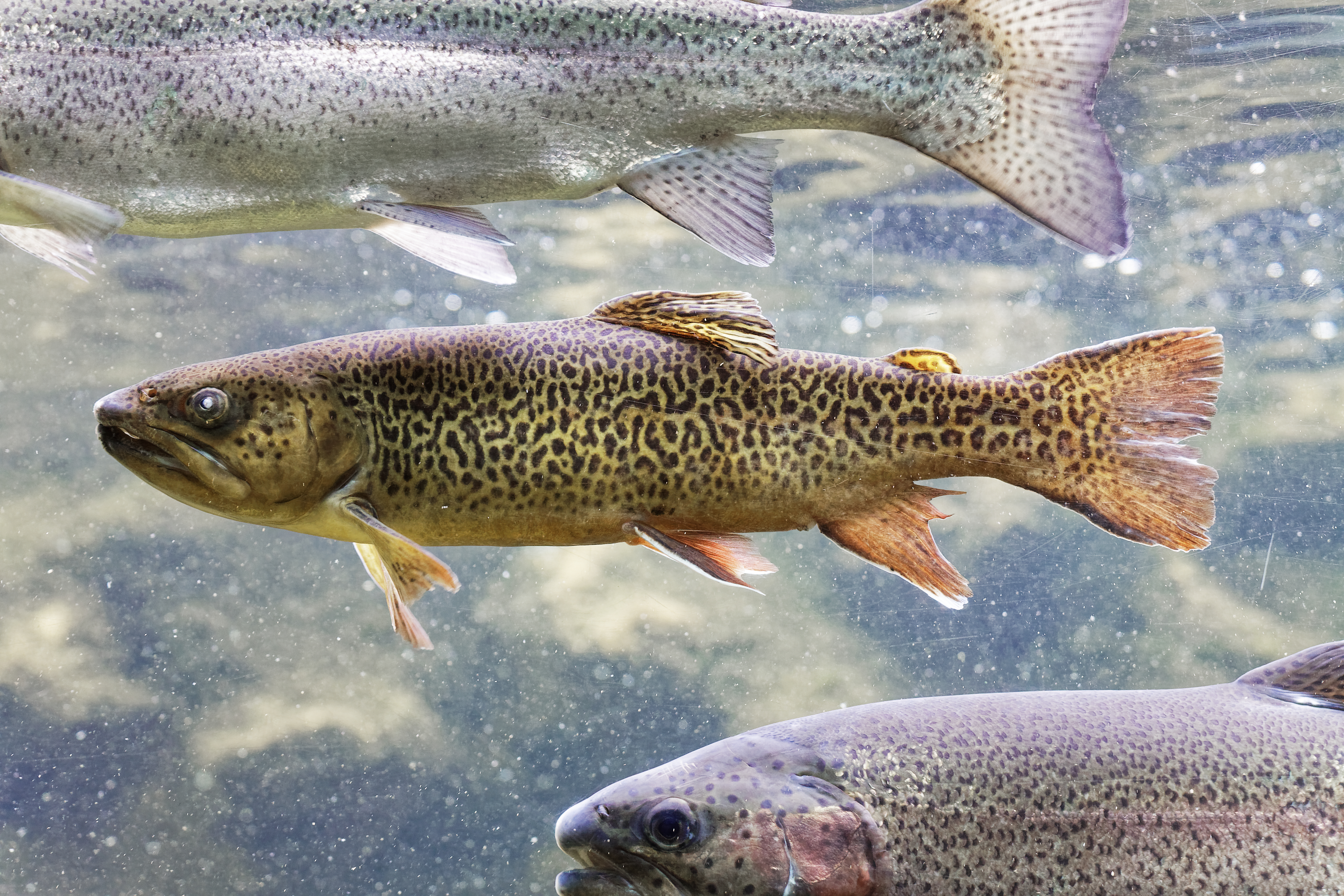

The tiger trout is one of the most striking and aggressive fish in fresh water, a boldly patterned hybrid that looks like it was painted by an artist and fights like it has a grudge. A cross between a female brown trout and a male brook trout, the tiger gets its name from the dramatic maze of dark, worm-like "tiger stripes" that cover its olive-brown body, set off by orange fins and belly. It's a fish that turns heads in the net. But its beauty is only half the appeal: as a sterile hybrid, the tiger trout channels all its energy into feeding and growing, producing an unusually aggressive, predatory, hard-charging fish that hammers lures and grows fast where the forage is rich. Stocked in lakes and reservoirs across the West and beyond, often to help control rough-fish populations while providing a trophy sport fishery, the tiger trout has become a favorite of anglers who love a fish that hits hard and looks incredible.
Catching tiger trout is largely a game of appealing to their aggression. They're predators that chase and crush baitfish, so lures and flies that trigger a reaction bite are the name of the game. This guide covers where tiger trout live, the aggressive techniques that catch them, and the tackle you'll want for one of fresh water's most beautiful and combative fish.
Understanding the Tiger Trout
The tiger trout is a man-made (and occasionally naturally occurring) hybrid: female brown trout crossed with male brook trout. Because the parents are different enough genetically, the offspring are sterile, and that sterility is the key to what makes tigers special. Unable to spawn, they pour all their energy into eating and growing, becoming fast-growing, aggressive predators. Their signature look is unmistakable: a dark olive-to-brown body covered in bold, labyrinth-like vermiculations (the "tiger stripes"), with orange-tinted lower fins and belly and, often, a slightly downturned, brown-trout-like mouth. They typically run from a modest stocker size up to several pounds, with trophy fisheries producing tigers of 5, 10, or even more pounds where forage is abundant.
What defines the tiger trout behaviorally is aggression and a taste for fish. Tigers are predatory, hunting other fish (including the very rough fish, like Utah chub, they're often stocked to control) with a ferocity that outstrips their trout parents. That makes them willing chasers of lures and streamers and a blast to catch. They're stocked mainly in lakes and reservoirs, and to a lesser extent rivers, in cold, productive water where they can grow fast. Understanding that you're fishing for an aggressive fish-eater is the foundation of catching them.
Tiger Trout: 3 Must-Have LuresAggressive Lures: The Go-To Approach
Because tiger trout are aggressive predators, lures that trigger reaction strikes are the most consistent way to catch them. The classics:
- Inline spinners (Panther Martin, Mepps, Rooster Tail), flash and vibration that tigers can't resist, cast and retrieved through likely water.
- Casting spoons (Kastmaster, Little Cleo, and similar), great for casting distance and imitating fleeing baitfish, in lakes and larger water.
- Jerkbaits and small crankbaits, minnow imitations that appeal to the tiger's fish-eating instincts, worked with an erratic, wounded-baitfish action.
- Tube jigs and soft plastics, deadly on tigers, especially in lakes and through the ice, jigged near the bottom or structure.
Fish these with an aggressive, erratic retrieve that makes the lure look like an easy, fleeing meal. Tigers often smash a lure with a jarring strike, that predatory reaction is exactly what you're playing to. Vary your speed and add pauses and twitches until you find what triggers them on a given day; sometimes a fast, steady burn draws the strike, other times a stop-and-go stutter that makes the lure look wounded is what flips the switch on a following fish.
Catching Giant Tiger TroutFly Fishing: Streamers for a Predator
Tiger trout are a fantastic fly-rod target, and because they eat fish, streamers are the go-to. Strip baitfish, sculpin, and leech patterns through the water where tigers hunt, along drop-offs, weed edges, inlets, and structure in lakes, or through the runs and pools in rivers, with an aggressive, darting retrieve. A tiger trout crushing a streamer is an explosive, memorable eat. Woolly buggers, minnow patterns, and small articulated streamers in natural and flashy colors all produce. Fish them on a floating or sink-tip line depending on depth, and don't be afraid to strip fast, you're trying to provoke a predator, not fool a sipping riser.
Streamer Fly Fishing a River for Tiger TroutFishing the Lakes and Reservoirs
Most tiger trout live in stocked lakes and reservoirs, and dialing in the lake game is key. Tigers cruise and hunt along structure and edges, drop-offs, points, weed lines, rocky shorelines, inlets and outlets, and around submerged structure, where baitfish concentrate. From shore, cast spinners, spoons, and jerkbaits along these edges and retrieve them through the strike zone. From a boat, you can cover more water: cast to structure, or troll spoons, spinners, and small crankbaits (with or without downriggers/leadcore depending on depth) to locate cruising fish across the lake. Early morning and evening are prime, as tigers often move shallow to feed in low light. Watch for the depth the fish are holding and put your lure at that level.
Fly Fishing High Mountain Lakes for Big Tiger TroutIce Fishing for Tiger Trout
In the cold-country lakes where they're stocked, tiger trout are a prized ice fishing target, and they stay aggressive under the ice. Jig small spoons, tube jigs, and soft plastics, tipped with bait like a piece of worm or a wax worm where legal, near the bottom and through the water column over structure and drop-offs, using sharp jigging motions to draw fish in and trigger strikes. A flasher or electronics helps you find fish and watch them react. Tigers hit hard even in frigid water, making them a highlight of the hard-water season. Fish the same structure-and-edge areas you'd target in open water, and be ready for a jarring strike through the hole.
Ice Fishing Tips for Tiger TroutNight Fishing and Low Light
Like their big brown trout parents, tiger trout, especially the larger ones, often feed most aggressively in low light and after dark. Big tigers can be nocturnal hunters, moving shallow at dusk and through the night to ambush baitfish. Fishing the last light of evening, the first light of morning, and into darkness with streamers, jerkbaits, and spoons can produce the biggest fish of the trip. If your water and regulations allow night fishing, targeting trophy tigers after dark is a proven big-fish tactic. Even during the day, overcast skies and choppy, low-light conditions tend to fire up the bite.
Night Fly Fishing for Tiger TroutWhy Tiger Trout Are Stocked
Understanding why fisheries managers create tiger trout helps you catch them. Beyond being a gorgeous, hard-fighting sport fish, tigers serve a practical purpose: they're voracious predators, and because they're sterile, they can be stocked without the risk of overpopulating or interbreeding with wild trout. Many Western reservoirs suffer from booming populations of rough fish like the Utah chub, which compete with trout and stunt the fishery. Stocking aggressive, fish-eating tiger trout is a management tool to help keep those rough-fish numbers in check, and the tigers grow big and fast on that abundant, protein-rich forage. For anglers, that's a win-win: a fishery managed to produce big, aggressive predators feeding heavily on baitfish. It also tells you something useful about how to catch them: on chub-and-baitfish waters, lures and flies that imitate those forage fish, fished where the baitfish concentrate, are especially effective, because the tigers are keyed on eating exactly that.
The Fight and the Beauty
Two things make tiger trout unforgettable: how they fight and how they look. For a trout, a good tiger pulls exceptionally hard, using its aggressive, muscular build to make strong runs and dogged head-shakes that test light tackle, a direct result of all that energy the sterile fish pours into growth and muscle rather than spawning. Hooking a big tiger in a mountain reservoir is a genuine tussle. And then there's the payoff at the net: few freshwater fish are as spectacular as a tiger trout, its flanks a swirling maze of dark vermiculations over a golden-olive base, with fiery orange fins and belly. It's the kind of fish that makes everyone crowd around for a photo. That combination of a brawler's fight and a showstopper's looks is exactly why tiger trout have such a devoted following, and why landing a big one is a highlight of any trout angler's year. Handle them carefully for that photo, keep them wet, and release them to grow even bigger.
Reading a Tiger Trout Lake
Success on tiger trout lakes comes down to finding where the fish and forage intersect. Start by identifying the productive edges and structure: points that funnel cruising fish, drop-offs where shallow flats fall into deeper water, weed lines that hold baitfish and invertebrates, rocky shorelines, and inlet and outlet areas where current, oxygen, and food concentrate. Tigers patrol these edges hunting, so they're where you want your lure or fly. Pay attention to depth and temperature: in the cool water of spring and fall, tigers roam and feed shallow, making shoreline casting deadly; in summer's heat, they follow cooler water deeper, so trolling or fishing the thermocline pays off. Wind matters too, a breeze pushing into a shoreline stacks up food and often concentrates feeding fish along that windblown edge. Cover water until you contact fish, then work that productive zone thoroughly, and let the tigers' aggression do the rest.
Tackle for Tiger Trout
Tiger trout hit and fight hard, so use tackle with a little backbone:
- Spinning: A light to medium-light spinning outfit with 4- to 8-pound line handles spinners, spoons, jerkbaits, and jigs well and lets you enjoy the scrappy fight; step up for trophy waters.
- Fly: A 4- to 6-weight rod with a floating or sink-tip line for stripping streamers, plus a stout leader.
- Ice: A quality ice rod with a smooth drag, light line, and a selection of small spoons, tube jigs, and soft plastics.
- Terminal tackle: Good spinners, spoons, jerkbaits, and jig heads, plus a net for landing these hard-fighting fish.
Match the outfit to the water: light gear is plenty for typical stockers, but trophy tiger fisheries can produce fish big and strong enough to demand a beefier setup.
Where and When to Find Tiger Trout
Tiger trout are stocked widely across the West and other cold regions, Utah is especially famous for them (waters like Scofield and Panguitch are legendary), along with Wyoming, Colorado, and many other states. They thrive in cold, productive lakes and reservoirs (and some rivers) with good forage. Seasonally:
- Spring and fall are prime, with cool water and aggressive, shallow-feeding fish, the best times for big tigers from shore.
- Summer fishing is good early and late in the day and by going deeper (trolling or fishing the thermocline) as fish follow cool water and bait.
- Winter brings the ice fishery in cold country, where tigers stay aggressive under the hard water.
Across all seasons, low light and structure are your friends, fish the edges and drop-offs during dawn, dusk, and overcast conditions.
Common Tiger Trout Mistakes
- Fishing too passively. Tigers are aggressive predators. Reaction lures and active, erratic retrieves beat a static bait most of the time.
- Ignoring structure and edges. Tigers hunt along drop-offs, weed lines, and points. Fish the edges, not the open middle.
- Skipping low light. Big tigers feed hardest at dawn, dusk, and after dark. Fish those windows for the biggest fish.
- Too-light tackle on trophy water. A big tiger pulls hard. Match your gear to the size of fish the water produces.
- Not covering water. Tigers roam. Keep moving and covering water (casting or trolling) until you contact fish.
Put It All Together
Catching tiger trout comes down to playing to their aggression: fish the cold, productive lakes and reservoirs where they're stocked, work spinners, spoons, jerkbaits, tube jigs, and streamers along the structure and edges where they hunt, and retrieve them with an erratic, fleeing-baitfish action that triggers a predatory strike. Focus on low-light windows for the biggest fish, cover water to find them, ice-jig for them in winter, and bring tackle stout enough for a hard-charging fish. Do that, and you'll catch one of fresh water's most beautiful and combative trout, a maze-striped predator that hits like a freight train.
The tiger trout is a hybrid of two classic trout, and getting to know its parents will make you a better tiger angler. The brown trout lends the tiger its predatory, low-light hunting instincts, and the brook trout gives it those gorgeous vermiculated markings. Learn all three and you've mastered one of the most beautiful and hard-fighting branches of the entire trout family.
Ready to tangle with a tiger? Scout the tiger trout lakes near you, learn the structure and the aggressive presentations that trigger them, and time your trips for the low-light windows and cool-water seasons when big tigers roam shallow, and put yourself on a maze-striped trophy of a lifetime.