Fish
Fish Fire
Fire Hike
Hike Bird
Bird

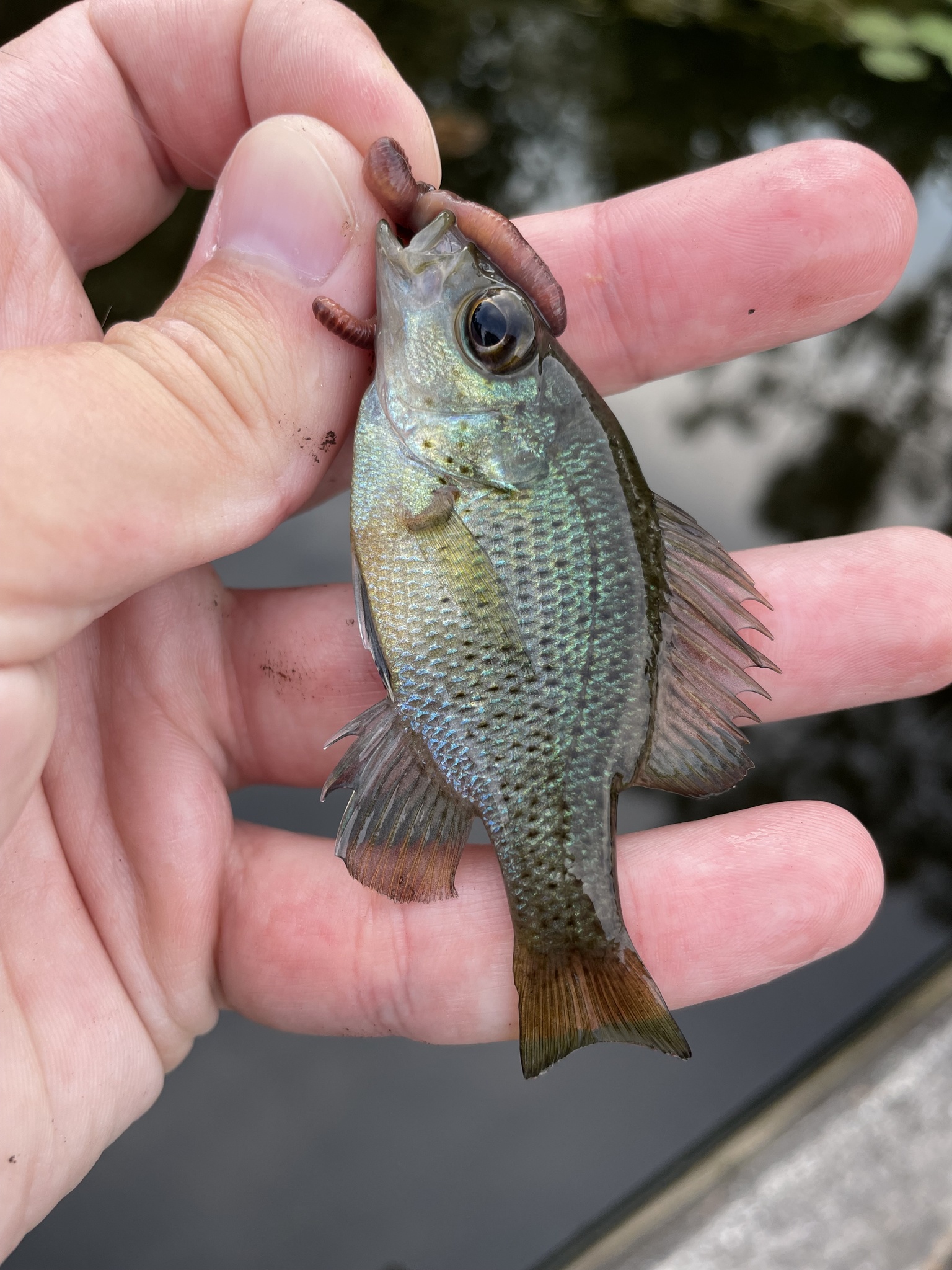

The spotted sunfish (Lepomis punctatus), known across the South as the "stumpknocker" for its habit of picking food off submerged stumps, logs, and roots, is one of the most characterful little panfish in America. Small, scrappy, and covered in neat rows of dark spots over a golden-green body, the stumpknocker is a fixture of Southern rivers, swamps, and cypress-lined creeks, where it tucks into wood and cover and pounces on crickets, worms, and small lures. It rarely tops half a pound, but it fights hard, bites willingly, and is superb eating, making it a beloved target for cane-pole, ultralight, and fly anglers throughout the Southeast. This guide covers how to find and catch stumpknockers.
What Is a Spotted Sunfish?
The spotted sunfish is a member of the sunfish family (Centrarchidae) and the genus Lepomis, related to bluegill, redbreast, and warmouth. It's a small, chunky sunfish with a golden-olive to dusky green body marked by distinctive rows of small black, brown, or reddish spots running along the scales, one spot per scale, forming neat rows of dots down the sides, which is the source of its name. It has a short ear flap and, on breeding fish, warm gold and orange tones. The related and very similar "redspotted sunfish" (Lepomis miniatus) of more western drainages was long lumped with it. Stumpknockers are small: most run 3 to 6 inches, with a big one reaching 7 to 8 inches and rarely more than half a pound.
For anglers, the defining trait is right there in the nickname: spotted sunfish are cover-and-wood specialists. They live tight to submerged stumps, logs, roots, brush, cypress knees, undercut banks, and vegetation, especially in slow rivers, swamps, sloughs, and creeks, where they "knock" small invertebrates, insect larvae, snails, and tiny crustaceans off the wood and cover. They're aggressive, willing biters at close range but hold so tight to structure that catching them is all about presenting right into the cover where they live. Small, spunky, abundant, and delicious, the stumpknocker is a classic Southern "bream" and a favorite of anglers who love picking apart wood and cover for panfish.
Where and When to Catch Spotted Sunfish
Spotted sunfish are native to the Southeast, the Atlantic and Gulf coastal plains from the Carolinas through Florida and along the Gulf Coast, with the closely related redspotted sunfish extending farther west into the Mississippi drainage. They're at their most abundant in Florida and the Deep South, in slow rivers, swamps, sloughs, oxbows, creeks, canals, and vegetated lakes and ponds, especially tannic, cypress-lined blackwater and spring-fed rivers. Wherever you fish, the constant is wood and cover: look for submerged stumps, logjams and laydowns, cypress knees and root wads, brush piles, dock pilings, undercut banks, and thick vegetation edges. Stumpknockers hold tight to this structure, so fish tight to the wood.
The best fishing is generally spring through fall, with the warm months and the spawn (late spring into summer, when water warms into the 70s°F) being especially productive as fish move to nest near cover and feed aggressively. In Florida and the Deep South, stumpknockers can be caught year-round in the warm climate. They feed throughout the day, though morning and evening are often best in summer heat. Because they live in cover, the approach barely changes with the season: find wood and structure in slow, vegetated water, and pick it apart. A cane pole or ultralight and a bucket of crickets on a Southern river is the timeless stumpknocker setup.
Crickets, Worms, and Bait Tight to Cover
The classic and deadliest way to catch stumpknockers is live bait presented right into the wood and cover where they live.
Bank Fishing Crickets for StumpknockersThe go-to baits are live crickets, red worms, and nightcrawler pieces, with grass shrimp, mealworms, catalpa worms, and small grubs also excellent. Fish them on a small hook (size 6 to 10) under a small float, and drop the bait right against stumps, logs, roots, brush, and cover, often just a foot or two deep, tight to the wood. A cane pole, jig pole, or ultralight lets you dab and drop baits precisely into pockets and holes in the cover, which is exactly how generations of Southern anglers have caught stumpknockers. Set the float shallow, swing or lower the bait into each likely spot, and be ready for a fast, sharp take. Because these fish hold so tight to structure, precise presentation into the cover matters far more than distance, the angler who can drop a cricket into a tight pocket in a logjam will out-fish everyone.
Small Lures and Jigs
Though bait is king for stumpknockers, they'll also readily hit small lures, which makes for fun, active fishing around cover.
Small Lures for PanfishEffective lures include tiny curly-tail grubs and tube jigs on light jigheads, small beetle spins and in-line spinners, micro soft plastics, and small crankbaits. Work them tight to the wood and cover, casting or flipping into pockets, along logjams, and past stumps and letting the lure fall and swim through the strike zone. Small jigs tipped with a bit of worm or a grub tail are especially effective, combining the appeal of a lure with a hint of scent. Because stumpknockers are small and hold tight to snaggy cover, keep your lures tiny, use light line and gear, and be prepared to lose some tackle in the wood, that's where the fish are. Ultralight spinning gear makes fishing these tiny lures manageable and turns even a small stumpknocker into a scrappy, fun fight around the structure.
Fly Fishing for Spotted Sunfish
For anglers who enjoy it, stumpknockers are a delightful and willing fly-rod target, especially in clear Southern spring runs and creeks.
Fly Fishing for PanfishA light fly rod (2- to 4-weight) is ideal. Stumpknockers readily take small poppers and foam bugs, sponge spiders, rubber-legged terrestrials, small nymphs, and tiny streamers or Woolly Buggers. Cast tight to the wood and cover, along logjams, past stumps, and to the edges of vegetation, and work the fly slowly through the pockets and holes where the fish hold. Topwater poppers and bugs bring fun surface strikes in the shallows around cover. Subsurface, dead-drift or slowly swim a nymph or small bug past the structure. As with bait and lures, the key is presenting right into the cover where stumpknockers live. In the clear, tannic spring-fed rivers of the Southeast, sight-fishing willing stumpknockers around cypress knees and submerged wood on a light fly rod is a simple, beautiful pleasure.
Fishing Stumps, Wood, and River Cover
The single biggest key to catching stumpknockers is fishing wood and cover, it's literally in their name, and it dictates everything about how you target them.
River Fishing for StumpknockersSpotted sunfish are ambush feeders that live tucked into submerged structure, so the water you fish should be full of it: stumps, logs and laydowns, root wads, cypress knees, brush piles, undercut banks, dock pilings, and vegetation. In a river or creek, work the slow water and the inside of bends where wood collects, the cover along the banks, and any snag or logjam. In swamps, sloughs, and canals, target the cypress knees, stumps, and vegetation edges. Approach quietly, get close, and drop or swing your bait, lure, or fly precisely into the pockets and holes in the cover, right against the wood, not near it. Pick apart each piece of structure methodically before moving on, since stumpknockers hold in specific spots and often several share a good piece of cover. Master the art of fishing wood, and you'll catch stumpknockers consistently wherever they live.
Telling Spotted Sunfish from Other Sunfish
Spotted sunfish are distinctive once you know them, though they can be confused with other small sunfish and with juvenile bass.
Identifying the SunfishesThe clinching feature is the rows of small dark spots, one dark (black, brown, or reddish) spot on each scale, forming neat, orderly rows of dots along the golden-green sides. No other common sunfish has quite this pattern of regular spot rows. The related redspotted sunfish (of western drainages) is nearly identical but has red spots and was long considered the same species. Compare to the bluegill (deeper body, dark ear flap, dark dorsal-fin blotch, vertical bars), the redbreast (long black ear flap, orange breast, wavy blue face lines), and the warmouth (bigger mouth, mottled brown, red-brown lines through the eye, which shares similar swampy habitat). Stumpknockers are also small, a sunfish over 8 inches is almost certainly something else. When you catch a small, chunky sunfish covered in tidy rows of spots from Southern wood and cover, you've got a stumpknocker.
Understanding Spotted Sunfish Behavior
Everything about catching stumpknockers flows from the fact that they're small, cover-loving, wood-associated ambush feeders. They live tucked into submerged stumps, logs, roots, and vegetation, where they knock and pick small invertebrates, larvae, snails, and crustaceans off the structure, which is exactly why presenting bait, lures, or flies right into the cover is the whole game. They're aggressive and willing at close range, rarely requiring finesse; the challenge is getting your offering into the tight spots where they hold, not coaxing a bite. They're spunky fighters for their size, using cover to their advantage, and abundant where habitat is good.
The Spotted Sunfish BiteLocation and season are simple: find slow, vegetated Southern water full of wood and cover, and fish the warm months, especially around the spawn, though in Florida and the Deep South they bite much of the year. When you find a stretch loaded with stumps and laydowns and the fish are active, the action can be fast and steady, stumpknockers pack into good cover and bite aggressively, so a productive logjam or cypress-lined bank can produce fish after fish once you dial in the depth and presentation. Stumpknockers often share good cover, so where you catch one, keep working that spot. Approach quietly, get close, and present precisely into the structure, and these characterful little fish will reward you. Their love of cover makes them accessible from the bank and by small boat or kayak, and their abundance in creeks, rivers, and swamps means excellent panfishing close to home across the Southeast.
Conservation and Handling
Spotted sunfish are abundant across their Southeastern range and are not a conservation concern in most waters, but they're a valuable panfishery worth stewarding. As with all panfish, populations can handle harvest well but benefit from anglers keeping a moderate number of average fish and releasing the biggest, along with protecting the habitat they depend on. Because stumpknockers rely so heavily on submerged wood and cover in slow, often tannic Southern waters, protecting that habitat, leaving woody structure in place, and keeping rivers and swamps clean and undisturbed, is the best thing anglers can do for the fishery.
Handle stumpknockers gently if releasing: wet your hands, support the fish, watch the sharp dorsal spines, and return it quickly, especially in warm summer water. Because they're small and abundant, many anglers keep a mess of them for the table, which is perfectly sustainable where legal, but it's still good practice to leave plenty behind and avoid cleaning out a single good piece of cover. Always follow local regulations, which in most Southeastern states group stumpknockers with other "bream" under a generous panfish limit.
Cleaning and Eating Spotted Sunfish
Spotted sunfish are excellent eating and are a prized part of Southern "bream" fries, like other sunfish, they have sweet, white, flaky, mild flesh that's among the best of all freshwater panfish, and many Southern anglers consider stumpknockers especially tasty.
Cleaning and Filleting PanfishBecause they're small, stumpknockers are almost always scaled and cooked whole (pan-fried), rather than filleted, there's simply not enough meat on a small fish to fillet, and cooking them whole is traditional and delicious. The classic preparation is a cornmeal coating and a hot fry, served up with hushpuppies and sides as part of a Southern fish fry. Scale and gut the fish, dredge in seasoned cornmeal or flour, and fry whole until golden and crisp; the meat pulls easily off the bones. As with all fish, ice your catch promptly and cook it fresh for the best quality. A mess of stumpknockers from a Southern river or swamp makes a fantastic, traditional meal, and their fine flavor is a big reason they've been a beloved food fish for generations. Keep what you'll eat, within regulations.
Bringing It All Together
The spotted sunfish, or stumpknocker, is a small package of Southern fishing tradition, a scrappy, willing, beautifully spotted panfish that lives tight to the stumps, logs, and cover of slow rivers and swamps. Find the wood and cover in slow, vegetated Southern water, and present a cricket, worm, small lure, or fly precisely into the pockets and holes where these fish hold, right against the structure. Learn to pick apart wood methodically, fish the warm months, and enjoy the fast bites and spunky fights of these characterful little fish. Whether you dab crickets with a cane pole, flip tiny jigs on an ultralight, or cast bugs on a fly rod, the stumpknocker delivers accessible, fun, delicious fishing, and a genuine taste of Southern angling heritage.
For more outstanding panfish and sunfish action, see our guides to the redbreast sunfish, the bluegill, and the warmouth.
Want to explore the best Southern rivers and swamps for stumpknockers and other panfish? Use Guidepole to scout new water close to home, mapping the boat launches, public access, and legal ways onto the slow, woody creeks and blackwater rivers where stumpknockers thrive.