Fish
Fish Fire
Fire Hike
Hike Bird
Bird

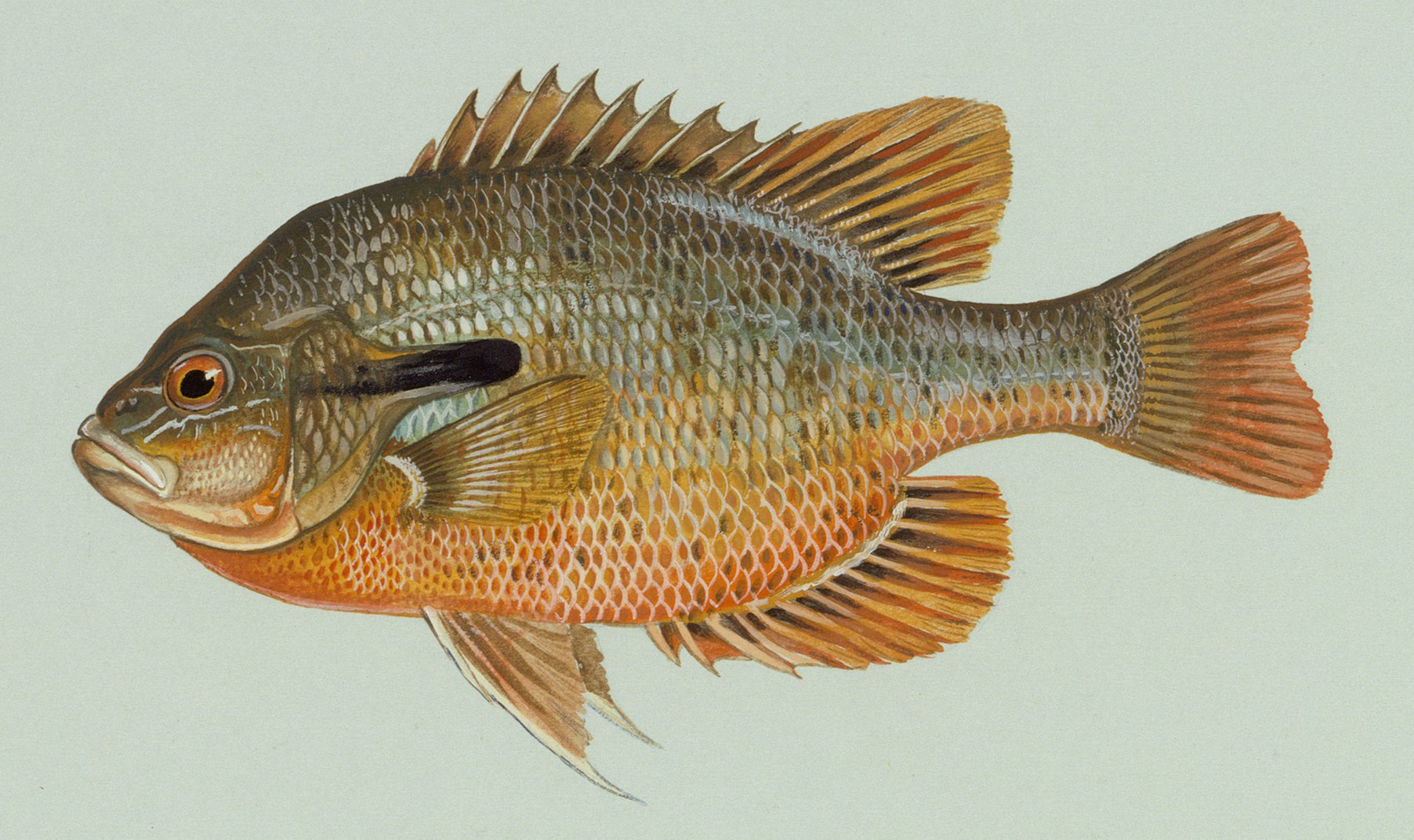

The redbreast sunfish (Lepomis auritus) is one of the most beautiful and spirited panfish in North America, a stream-loving sunfish, often called "redbelly," "robin," "redbreast bream," or "yellowbelly," that lights up with a fiery orange-red breast, electric-blue face streaks, and a long, distinctive black ear flap. Native to the rivers and creeks of the Atlantic slope and increasingly found across the Southeast, the redbreast is a fixture of flowing water: it holds behind logs and rocks in current, smashes small lures, flies, and crickets with abandon, and fights far above its weight on light tackle. For anyone who loves wading a creek with an ultralight or a fly rod, the redbreast sunfish is pure joy. This guide covers how to find and catch them.
What Is a Redbreast Sunfish?
The redbreast sunfish is a member of the sunfish family (Centrarchidae) and the genus Lepomis, the same group that includes bluegill and pumpkinseed. It's built a bit more slender and streamlined than a bluegill, an adaptation to life in current. Its most striking features are a brilliant orange-to-red breast and belly (especially on breeding males), wavy powder-blue streaks radiating across the cheeks and gill covers, and, the clincher for identification, a very long, narrow, all-black ear flap (the extension of the gill cover) with no pale margin, longer than in almost any other sunfish. The back and sides are olive to bronze with blue-green flecks. Redbreast commonly run 4 to 8 inches, with quality fish reaching 9 to 10-plus inches and around a pound; the largest can exceed a pound.
For anglers, the defining trait is that redbreast sunfish are river and creek specialists. More than most sunfish, they favor flowing water, streams, rivers, and the flowing sections of lakes and ponds, where they hold near cover in current and feed on insects, larvae, small crayfish, snails, and small fish. They're aggressive, opportunistic feeders that readily hit small lures, flies, and live baits, and pound for pound they pull hard, using the current to their advantage. Colorful, willing, and scrappy, the redbreast is a favorite of creek waders, fly anglers, and kids alike, and a staple of Southern "bream" fishing.
Where and When to Catch Redbreast Sunfish
Redbreast sunfish are native to the Atlantic coastal drainages from New Brunswick south to Florida, and have been widely introduced across the Southeast and beyond, including into Gulf Coast rivers. Unlike pond-loving bluegill, redbreast are strongly associated with moving water, look for them in creeks, streams, and rivers, holding near cover that breaks the current: undercut banks, laydowns and logjams, root wads, rock ledges and boulders, bridge pilings, and the edges of runs and pools. They also live in the flowing sections and backwaters of lakes and reservoirs. Target eddies, current seams, pool tailouts, and the slack water behind any structure, that's where redbreast wait to ambush food drifting by.
The best fishing is generally late spring through summer, with the spawn, when water warms into the 68 to 75°F range, often May through July, being especially productive as males build and guard nests in the shallows over sand and gravel, aggressively striking anything that comes near. Warm-weather months bring fast action throughout the day, with early morning and evening often best in the heat. Redbreast feed actively in current and can be caught all through the warm season. Wading a creek on a summer morning, casting to every piece of cover, is the classic and deadly approach.
Small Lures and Beetle Spins
Redbreast sunfish are aggressive and will readily chase and hit small lures, making artificials a fun and effective way to cover water.
Beetle Spin for Redbreast SunfishThe best lures are small in-line spinners, beetle spins, tiny curly-tail grubs on light jigheads, small crankbaits, and micro soft plastics. A 1/16- or 1/32-ounce beetle spin or in-line spinner is a classic redbreast lure, cast it up-current or across, and swim it past cover and through seams and eddies. Small grubs and tube jigs hopped along the bottom or swung through current also draw strikes. Because redbreast hold near current-breaking cover, target your casts tight to logs, rocks, undercut banks, and seams, and let the lure work past the fish. Ultralight spinning gear with light line makes casting these tiny lures manageable and turns even a small redbreast into a lively fight. Cover water, hit every likely spot, and you'll find redbreast are more than willing to strike.
Crickets, Worms, and Bait Under a Bobber
For steady, simple action, and for the biggest redbreast, nothing beats live bait, and the classic Southern rig is a cricket or worm under a float.
Bobber and Cricket for RedbreastThe go-to baits are live crickets, red worms, and nightcrawler pieces, with grasshoppers, catalpa worms, mealworms, and small minnows also excellent. Fish them on a small hook (size 6 to 10) under a small bobber, set so the bait drifts at the depth where redbreast are holding, and float it naturally through pools, runs, and past cover. This drift-a-cricket-through-the-current approach is how generations of anglers have caught "redbellies," and it's deadly effective. You can also fish bait on a light split-shot rig without a float, letting it tumble naturally through the current, often the best way to reach bigger redbreast holding deep behind cover. Keep it simple, keep the bait natural in the current, and be ready for the sharp, aggressive take.
Fly Fishing for Redbreast Sunfish
For many anglers, fly fishing is the most enjoyable way to catch redbreast, and these willing, hard-fighting river fish are a perfect fly-rod target.
Fly Fishing for Redbreast SunfishA light fly rod (2- to 5-weight) is ideal. Redbreast eagerly take small poppers and foam bugs, sponge spiders, rubber-legged terrestrials, small streamers and Woolly Buggers, and nymphs. Topwater poppers and bugs worked along cover and through slack water bring explosive surface strikes and are hard to beat for fun. Subsurface, swing or dead-drift a nymph, small streamer, or Woolly Bugger through runs, seams, and past logs and rock. Cast to the same current-breaking cover you'd target with lures, the edges of pools, seams, undercut banks, and structure, and let the fly drift or swim naturally. On a light fly rod, a good redbreast pulls hard and darts for cover. Wading a small river and casting bugs to willing, colorful redbreast is one of freshwater fly fishing's simplest pleasures.
Reading Rivers and Creeks
The single biggest key to catching redbreast is understanding moving water and where these fish hold in it.
Creek Fishing for Redbreast SunfishRedbreast are current-oriented ambush feeders: they tuck into slack water beside faster current, waiting for food to wash by, and they use cover to break the flow. So read the water for current seams (the line between fast and slow water), eddies behind rocks and logs, undercut banks, the slower water at the head and tail of pools, and any structure that creates a current break. Cast up-current or across and present your lure, fly, or bait so it drifts or swims naturally down to the fish, the way real food moves in a stream. Approach from downstream when wading, since redbreast face into the current and you can sneak up behind them. Work upstream methodically, hitting every piece of cover and every seam. Once you learn to read a creek and recognize redbreast water, you'll catch these fish consistently wherever current meets cover.
Tackle and Light-Line Tips
Because redbreast are creek and river fish that seldom top a pound, light, balanced tackle is what makes them fun and keeps you catching.
River Fishing for Redbreast and PanfishAn ultralight spinning rod with 2- to 6-pound-test line is ideal for casting tiny lures and drifting bait; it lets small offerings move naturally in current and turns every redbreast into a lively scrap. Fluorocarbon or light monofilament helps in the clear water many creeks have. For fly anglers, a 2- to 5-weight rod covers everything from poppers to nymphs. Scale your hooks and terminal tackle down, small hooks (size 6 to 10), a couple of split shot, and a small float or none at all. Because redbreast hold tight to wood and rock, a rod with enough backbone to steer a hooked fish away from cover helps you land the bigger ones. Keep a handful of beetle spins, in-line spinners, small jigs, and hooks in a pocket box, and you can travel light and wade for miles, one of the great pleasures of redbreast fishing is how little gear it takes. Match the tackle to the small water and light fish, and both your catch rate and your enjoyment go up.
Telling Redbreast Sunfish from Bluegill and Other Sunfish
Redbreast are easy to distinguish from other sunfish once you know what to look for, which matters where regulations or records are involved.
Identifying the SunfishesThe clinching feature is the ear flap: the redbreast's is very long, narrow, and entirely black, with no pale or red margin, longer than in nearly any other sunfish. Compare that to the bluegill, whose ear flap is shorter and black but which also has a dark blotch at the rear of the dorsal fin and vertical bars (and a black-only, short flap), and to the pumpkinseed, whose short ear flap has a bright red or orange spot on the tip. The redbreast's fiery orange-red breast, powder-blue wavy face streaks, and slimmer, more streamlined body (built for current) round out the ID. The related redear sunfish (shellcracker) has a red-margined ear flap and lives in stiller water. When you land a slim sunfish with a long black ear flap and a glowing red-orange belly from flowing water, you've got a redbreast.
Understanding Redbreast Sunfish Behavior
Everything about catching redbreast flows from the fact that they're aggressive, current-loving, cover-oriented insectivores. They hold near current breaks, logs, rocks, undercut banks, seams, and dart out to grab insects, larvae, small crayfish, and small fish drifting past, which is why they hit small lures, flies, and drifted baits so readily. They're opportunistic and willing, rarely requiring finesse; the challenge is finding them and presenting naturally in current, not coaxing a bite. They're also spirited fighters that use the flow, giving a fun tussle on light tackle out of proportion to their size.
Location and season are straightforward: find flowing water with cover, and fish the warm months, especially around the late-spring-to-summer spawn when males aggressively guard nests in the shallows. Redbreast school loosely, so where you catch one, you'll often catch several. Approach quietly, cover water, and present naturally in the current, and these colorful stream fish will reward you. Because they thrive in small waters that bigger gamefish can't, redbreast offer accessible, high-quality fishing in creeks and rivers close to home, a big part of their enduring appeal.
Conservation and Handling
Redbreast sunfish are abundant across their range and are not a conservation concern in most waters, but they remain a valuable and beloved fishery worth stewarding. As with all panfish, redbreast populations in small waters can be affected by overharvest of the biggest fish, and the largest redbreast, the trophy males with the most brilliant color, are the ones that do the most spawning. Consider releasing the biggest fish, especially during the spawn, and keeping a moderate number of average-size fish for the table where legal.
Handle redbreast gently if releasing: wet your hands, support the fish, and return it quickly, especially in warm summer water where fish are stressed. Watch the sharp dorsal spines when handling. Because redbreast live in creeks and rivers that are sensitive to pollution, siltation, and habitat loss, protecting clean flowing water is the best thing anglers can do for them, healthy streams mean healthy redbreast fishing. Always follow local regulations on limits and any special creek or river rules.
Cleaning and Eating Redbreast Sunfish
Redbreast sunfish are excellent eating, like other sunfish and "bream," they have sweet, white, flaky, mild flesh that's among the best of all freshwater panfish. They're a traditional and prized part of Southern fish fries, cooked whole or filleted.
Cleaning and Filleting PanfishBecause they're small, redbreast are often scaled and cooked whole (pan-fried), or filleted if they're big enough; many anglers fry them whole, which is simple and delicious. The classic preparation is a cornmeal coating and a hot fry, served up as part of a bream-and-hushpuppies fish fry. Fillet or dress the fish, dredge in seasoned cornmeal or flour, and fry until golden. As with all fish, ice your catch promptly and cook it fresh for the best quality. A stringer of redbreast from a summer creek makes a fantastic meal, and their fine flavor is a big reason they've been a Southern favorite for generations. Keep only what you'll eat, within regulations, and release the trophies.
Bringing It All Together
The redbreast sunfish is a gem of America's creeks and rivers, a gorgeous, aggressive, hard-fighting panfish that brings flowing water to life. Find them near current-breaking cover in streams and rivers, present a small lure, fly, or drifted cricket naturally in the current, and enjoy the spirited fight and stunning colors of these "redbellies." Learn to read the water, target the seams and structure where they hold, and fish the warm months, especially around the spawn. Whether you wade a small creek with an ultralight, cast poppers on a fly rod, or drift crickets under a bobber, the redbreast sunfish delivers accessible, beautiful, joyful fishing, and a fine meal to boot.
For more outstanding panfish and sunfish action, see our guides to the bluegill, the redear sunfish, and the longear sunfish.
Want to explore new rivers and creeks for redbreast and other panfish? Pull up a map of the flowing water, public land, and boat launches near you, scout for a stretch with good current and cover, and go find fresh redbreast water close to home.