Fish
Fish Fire
Fire Hike
Hike Bird
Bird

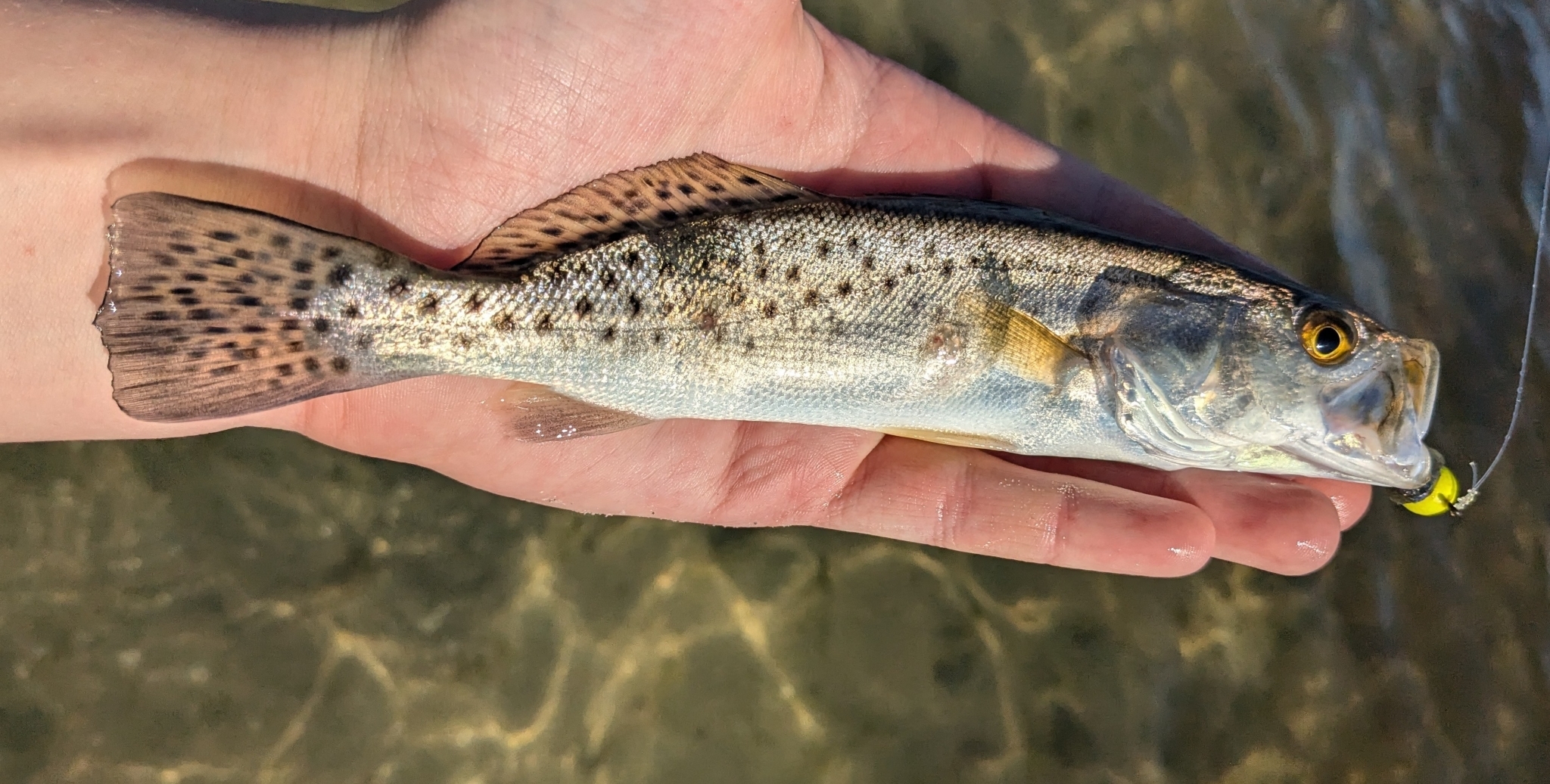

The spotted seatrout is the bread and butter of inshore saltwater fishing, the silver, black-flecked "speck" that swims the grass flats and bays of the Gulf and Atlantic coasts in enormous numbers, and probably the first saltwater gamefish a huge share of anglers ever catch. Seatrout are willing, widespread, delicious, and available to everyone from a kid with a shrimp under a cork to an expert working a topwater at dawn for a trophy "gator." They school on the flats, they eat lures and bait eagerly, and the big ones, the solitary, tackle-testing gator trout, are a genuine prize. This guide covers where specks hold and feed, and every core technique, with step-by-step instruction, to catch them.
Seatrout are a key leg of the inshore slam, see our companion guides on how to catch redfish and how to catch snook.
The Speckled Trout
Despite the name, the spotted seatrout (Cynoscion nebulosus) isn't a trout at all, it's a member of the drum family (a cousin of the redfish and the weakfish). It's easy to identify: a sleek, silvery body with a dark, iridescent back and distinct round black spots scattered over the upper body, tail, and dorsal fin, and, its calling card, a pair of prominent canine "fangs" at the front of the upper jaw. Its mouth is notably soft, which matters when you set the hook and fight a fish.
Most seatrout run 14 to 20 inches (a pound or two), and they school by size, so where you catch one keeper, there are usually more. The prized "gator trout", the big, old females, exceed 25 inches and several pounds, and the giants top 10 pounds; these trophies tend to be solitary and behave more like a big predator than a schooling fish. Found from the mid-Atlantic around Florida and throughout the Gulf, seatrout are among the most popular and accessible inshore gamefish anywhere in that range.
Where Seatrout Live and How They Feed
Seatrout relate above all to grass and to the baitfish and shrimp they ambush. Understanding that they often suspend and feed upward over grass is key. Target:
- Grass flats, the number-one seatrout habitat, especially flats with a mix of grass and sandy "potholes" where trout ambush prey.
- Sand potholes in the grass, drop-offs, and the edges of flats, prime ambush spots.
- Deeper channels, holes, and basins, where trout (especially bigger ones) retreat in cold weather and midday heat.
- Passes, points, and moving-water areas, and around docks, oyster bars, and mangrove edges.
Seatrout feed most actively in low light and on moving water, hovering over the grass and crushing shrimp and baitfish that pass overhead. Read the flat for grass, potholes, and bait, fish the tides, and you'll find specks.
The Techniques That Catch Spotted Seatrout
Specks eat lures, bait, and flies readily. Here are the core methods, how to fish each, and when to use it.
The Popping Cork, the deadliest speck rig
A popping cork, a float that pops and chugs, suspends a bait or lure over the grass and calls trout in with sound, imitating feeding fish. It's the single most productive and beginner-friendly seatrout technique.
How to fish it: Below a popping cork, tie 18–36 inches of leader to a jighead with a soft plastic (a shrimp or paddle-tail) or a live shrimp. Cast it over a grass flat or pothole, then sharply pop the cork every few seconds with a snap of the rod tip, pausing between pops. The pop mimics a trout slurping shrimp and draws fish in, while the suspended bait hangs right in the strike zone above the grass. When the cork disappears, reel down and set. It catches specks everywhere they swim.
How to Fish Popping Corks for Speckled TroutSoft Plastics on a Jighead, the everyday lure
A soft-plastic bait on a jighead is the most versatile seatrout lure, you can cover water, work different depths, and pick apart the flats.
How to fish it: Rig a paddle-tail, jerk shad, or shrimp on a jighead (1/8 to 1/4 oz, matched to depth and current), and work it over the grass with a slow, steady swim or a hop-and-drop, keeping it just above the grass tops where trout hover. Count it down over deeper edges and potholes. Vary the retrieve until you find what they want, and hold on for the tap. Natural and glow colors shine in clear water, darker in stained. It's the do-everything speck bait.
How to Retrieve Soft Plastics for TroutTopwater, the gator-trout thrill
Big seatrout crush topwater lures, and working one across a shallow grass flat at dawn is the classic way to tempt a trophy gator trout.
How to fish it: At first light and on calm mornings, walk a topwater (a Rapala Skitter Walk, a Heddon Spook Jr, or a MirrOlure She Dog) across shallow grass flats and pothole edges with a steady "walk-the-dog" cadence. Big trout follow and strike, often swiping and missing (their soft mouths and slashing attacks), so keep the lure moving and wait to feel the fish's weight before setting. The explosive surface blowup of a gator trout at sunrise is a seatrout highlight, and topwater tends to weed out the bigger fish.
Topwater Fishing for Speckled TroutTwitchbaits and Suspending Plugs, for big, wary specks
Suspending twitchbaits (like a MirrOlure or a Paul Brown "Corky") hang in the strike zone and mimic a wounded baitfish, a top trophy-trout lure, especially in cooler water.
How to fish it: Tie on a suspending twitchbait (a MirrOlure MirrOdine or a Paul Brown Devil/Corky) and work it with a twitch-twitch-pause cadence so it darts and then suspends enticingly at the fish's level. The long pauses, with the lure hovering, are when big trout eat. It excels over grass and around deeper edges, and it's a renowned big-gator-trout bait in the winter and pre-spawn, when the largest females are catchable and want a slow, suspending target.
How to Fish MirrOlure Twitchbaits for TroutLive Bait, hard to beat
Live bait is deadly on seatrout, a lively shrimp or baitfish is exactly what they're hunting, and it produces both numbers and big fish.
How to fish it: Fish a live shrimp under a popping cork (the classic speck combo) over the grass and potholes, or free-line/cork a live pinfish, croaker, or mullet for bigger trout, a live croaker, in particular, is a legendary big-gator-trout bait in parts of the Gulf. Hook the shrimp under the horn or through the tail, keep it lively, and let it work in the strike zone. When you want to be sure, or you're after a trophy, live bait is the surest path to seatrout.
How to Rig Live Shrimp Under a Popping CorkDrifting the Grass Flats, cover water to find schools
Because seatrout school and scatter across big grass flats, drifting lets you cover water efficiently to locate the fish.
How to fish it: Set up a drift across a grass flat with the wind or current, fan-casting soft plastics or a cork rig as you go, and pay attention to where you get bites, seatrout school, so a couple of quick hookups mean you've found a pod. When you locate them, you can drift the same line again, or use a stakeout pole or trolling motor to hold on the school and work it thoroughly. Drifting is the efficient way to find scattered specks on a big flat.
How to Drift Grass Flats for Speckled TroutFly Fishing, specks on the fly
Seatrout are a fun, willing fly-rod target, eager to eat a stripped baitfish or shrimp fly over the grass.
How to fish it: With a 7- or 8-weight fly rod, cast a Clouser Minnow, a baitfish streamer, or a shrimp fly over grass flats, potholes, and edges, and strip it back in short, steady pulls just above the grass tops. Seatrout chase and eat it readily, and sight-casting to a big trout on a shallow flat, or blind-casting a productive pothole, is rewarding fly fishing. A popping/gurgler fly fished like a small topwater also draws exciting surface eats. It's an accessible entry into saltwater fly fishing.
Fly Fishing for Speckled TroutTides and Seasons
Seatrout are catchable year-round in much of their range, and, like all inshore fish, the tide and low light drive the bite. Fish the moving water and the low-light windows (dawn and dusk) for the most active feeding. Seasonally, spring and fall are prime, with the pre-spawn and spawn (spring into summer) putting big fish shallow on the flats, and fall bringing aggressive feeding. In the cold of winter, trout, especially the big ones, pull into deeper holes, channels, and basins and feed slowly on warm afternoons (a top time for a trophy on a suspending twitchbait). In summer heat, fish early and late and target deeper edges midday. Match the depth and technique to the season, and specks are one of the most reliable inshore fish there is. One local rhythm worth knowing: in much of the Gulf, the summer spawn coincides with the arrival of croakers, and drifting a live croaker over the flats becomes a legendary way to target the biggest trout of the year, if you can get past the smaller fish to reach the gators. Tune into your area's seasonal bait and spawn timing, and you'll know exactly when and how to chase a personal best.
Reading a Grass Flat
Not all grass flats are equal, and learning to read one turns a big, featureless-looking expanse into a set of high-percentage targets. Seatrout key on structure within the grass and on signs of life, so train your eye for a few things.
- Sand potholes: Light-colored sandy holes scattered in the dark grass are prime ambush spots, trout sit on the edges and grab prey that crosses the open sand. Cast to and through every pothole you see.
- Grass edges and drop-offs: The line where a flat drops into deeper water, and the edges of channels and cuts, concentrate fish, especially as the tide falls.
- Bait: Nervous water, flipping shrimp and mullet, and diving birds all mean bait, and where there's bait, there are trout. Fish under working birds and around bait schools.
- Slicks: An oily-looking "slick" on the surface (from feeding trout regurgitating or oily bait) is a dead giveaway of a feeding school nearby; fish up-current of it.
- The right depth of grass: A flat with grass in roughly 2 to 5 feet, mixed with potholes and adjacent to deeper water, is classic seatrout real estate.
Put these together, potholes and edges, plus bait and slicks, on the right tide, and you'll spend your time casting where the fish actually are instead of covering dead water.
Gear for Spotted Seatrout
Seatrout gear is light, sensitive inshore tackle:
- Spinning combo: A 7-foot medium-light or medium fast-action inshore rod with a 2500–3000-size reel is the ideal speck setup, sensitive enough for the bite, with enough tip to protect their soft mouths.
- Fly setup: A 7- or 8-weight fly rod with a floating line for the flats.
- Line and leader: 10- to 15-lb braid with a 15- to 20-lb fluorocarbon leader.
- Terminal tackle and lures: Popping corks, jigheads and soft plastics (shrimp and paddle-tails), a walking topwater, a suspending twitchbait, and hooks for live shrimp, plus baitfish/shrimp flies, cover every technique above.
Handle Specks Gently; Mind the Limits and the Gators
Seatrout are excellent eating (mild, flaky white fillets) and are managed with slot and bag limits that vary by state, know and follow them. Two handling notes matter: first, seatrout have a soft mouth, so set the hook with a firm sweep rather than a violent jerk and keep steady pressure so you don't tear the hook out. Second, the big gator trout are the important breeding females, and they're also delicate, many anglers release the biggest fish to protect the fishery, so if you're letting a trophy go, keep it in the water, handle it minimally with wet hands, and revive it before release. Keep a few eaters within the slot, release the gators, and the speck fishing stays strong.
Putting It All Together on the Flats
An inshore guide who knows the productive grass flats, the potholes, the tides, and where the trout (and the gators) are holding can put you on fast action and a shot at a trophy, and teach you to read the flats yourself, so a trip is worth considering for anglers of every level. But the flats reward the DIY angler too. Learn to read the grass, work the potholes and edges on a moving tide, and cycle through the popping cork, soft plastics, topwater, twitchbait, and live bait until the specks tell you what they want. Keep a few eaters within the slot, release the gators, and you'll be catching seatrout, and eventually your own trophy, on your own terms.