Fish
Fish Fire
Fire Hike
Hike Bird
Bird

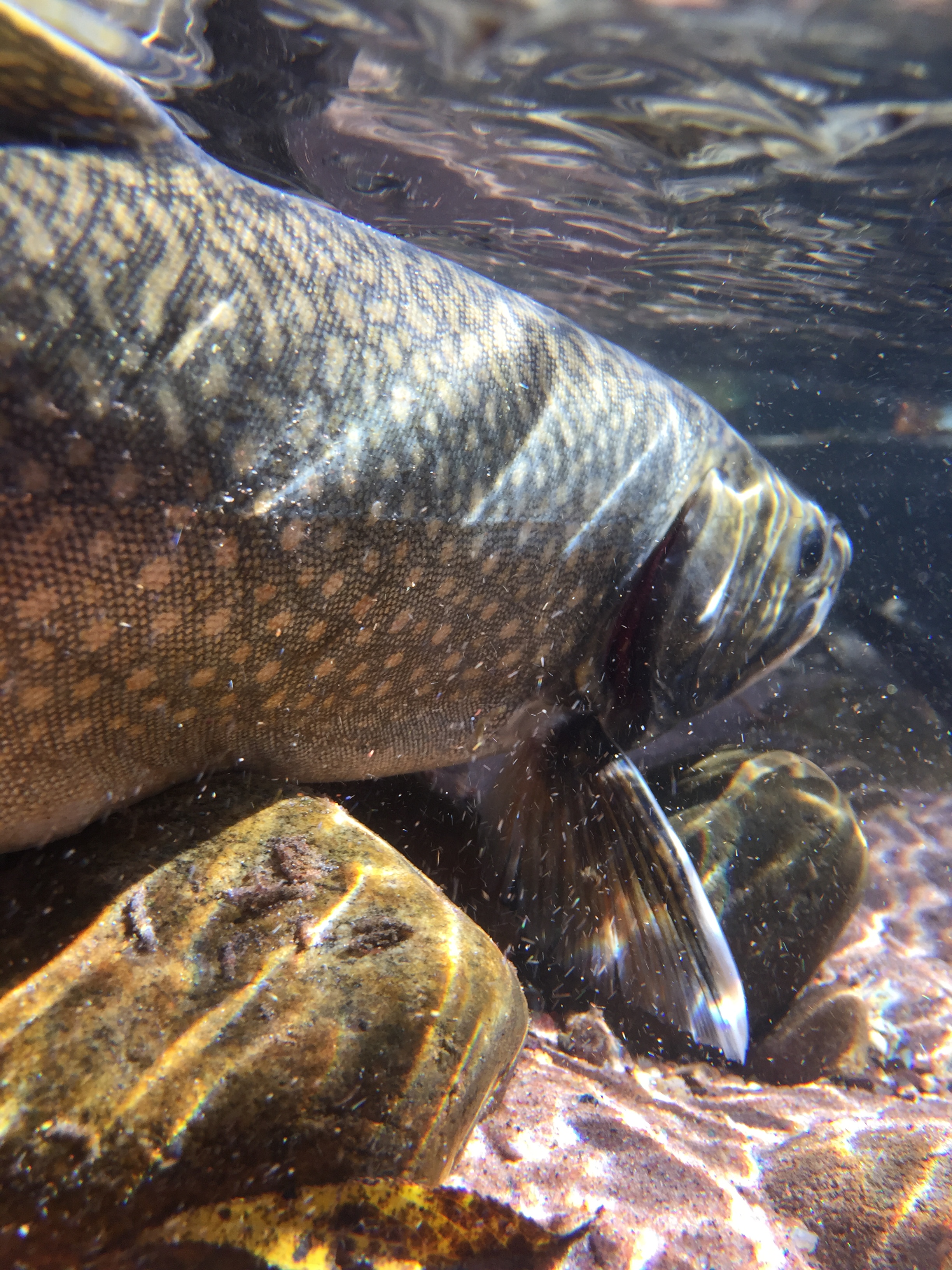

The splake is a hybrid char that has quietly become one of the most popular stocked gamefish in cold-water lakes across the northern United States and Canada. A cross between a female lake trout and a male brook trout, its name a blend of speckled (brook) trout and lake trout, the splake combines the best traits of both parents: the fast growth and catchability of a brook trout with the size potential and deep-water tolerance of a lake trout. The result is a handsome, hard-hitting fish that grows quickly, matures early, and readily takes lures and bait, making it a favorite of ice anglers, trollers, and springtime shore fishermen alike. Stocked widely, especially across the Great Lakes region, Ontario, the Northeast, and beyond, the splake gives anglers a chance at a trout-family fish that's often more accessible and more aggressive than its lake trout parent.
Catching splake is largely about knowing where they hold at a given season and putting a spoon, jig, or bait in front of these willing char. This guide covers what a splake is, where to find them, and the techniques, from ice fishing to trolling to spring shore casting, that consistently catch them.
Understanding the Splake
The splake (Salvelinus fontinalis × Salvelinus namaycush) is a char, like both of its parents, and it looks the part: a dark greenish-to-gray body with pale, light-colored spots (never black), wavy worm-like vermiculations on the back reminiscent of a brook trout, orange-tinted lower fins with white leading edges, and a tail that's moderately forked, intermediate between the brook trout's square tail and the lake trout's deeply forked one. That tail shape is a handy field mark for telling a splake from its parents. Unlike many trout hybrids, splake are fertile and can reproduce, though they rarely establish self-sustaining wild populations, so most fisheries are maintained by stocking.
The splake's great advantage, and the reason it's stocked so widely, is that it grows faster than a brook trout, matures earlier than a lake trout, and occupies a useful middle ground. It tolerates cold, deep water like a lake trout but tends to roam and feed more actively and at more moderate depths, and it grows quickly to a satisfying size (commonly 1 to 4 pounds, with trophies well into double digits in the best waters). Behaviorally, splake are aggressive, willing feeders that hunt insects, invertebrates, and especially baitfish, which is exactly why they hit lures and bait so readily.
Splake Fishing SecretsIce Fishing: The Splake Angler's Season
For many anglers, ice fishing is the premier splake fishery, and splake are one of the most prized hard-water targets in the North. Under the ice, splake roam and feed actively, often relating to structure, drop-offs, points, humps, and the edges of basins, where they hunt baitfish. The go-to approach is jigging: drop a jigging spoon or a tube jig (often tipped with a minnow or a piece of cut bait where legal) down near the bottom or the holding depth, and work it with sharp lifts and flutters to draw fish in and trigger strikes. A flasher or sonar is a huge help for spotting cruising splake and watching them react to your jig. Splake hit hard even in frigid water, and the combination of an aggressive char and the hard-water setting makes them a highlight of the ice season. Set up over structure, stay mobile if the fish aren't coming, and be ready for a jarring strike.
Ice Fishing for Splake Through the IceSpring Shore Fishing: Shallow and Aggressive
One of the best-kept secrets in splake fishing is the spring bite right after ice-out. As the ice melts and the shallows warm first, splake move shallow to feed aggressively, often within easy reach of shore anglers. This is prime time to cast spoons, spinners, and small crankbaits from the bank, points, and rocky shorelines, or to still-fish bait, and connect with hungry, shallow fish without a boat. The spring shallow-water window can offer some of the fastest, most accessible splake fishing of the year, a great time to catch numbers of fish and introduce newcomers to the species. Fish the warming shallows, inlets, and rocky points early and late in the day, and cover water until you find active fish. Dark, rocky, or mud-bottom areas that soak up the sun warm fastest and draw both baitfish and feeding splake, so prioritize those sun-warmed shallows and the first coves to open up. This is also a superb time to fish from a kayak or small boat, easing along the shoreline and casting ahead to cruising fish in the clear, cold, post-ice-out water.
Spring Shallow-Water Splake FishingTrolling: Covering Water for Bigger Fish
In open water, trolling is one of the most effective ways to locate and catch splake, especially bigger fish and during the warmer months when they follow cool water deeper. Pull spoons, blade baits, small crankbaits, and flashy trolling lures at the depth the fish are holding, using downriggers, leadcore, or diving planers to reach them in summer, or flat-lining and shallow-trolling in spring and fall when fish are up higher. Trolling lets you cover big water to find scattered fish, dial in the productive depth, and put multiple lines in the strike zone. Fall in particular can produce big splake as they feed heavily before winter, and slow-trolling spoons and blades along structure is a proven trophy tactic.
Trolling Spoons and Blade Baits for Bigger SplakeJigging in Open Water
You don't have to wait for ice to jig for splake. In open water, vertical jigging over structure and drop-offs with spoons, tube jigs, and soft plastics is deadly, especially when you've located fish on your electronics. Drop to the bottom or the holding depth and work the jig with lifts and flutters to imitate a dying or fleeing baitfish. Jigging shines when fish are concentrated on specific structure, humps, points, and the edges of deep basins, and lets you pick them apart efficiently. Pair it with good electronics to find the fish and the depth, and jigging becomes one of the most productive open-water splake methods, particularly for the bigger fish holding on deeper structure.
Jigging for Splake and Lake TroutFishing Structure: Where Splake Hold
Whatever the method, splake relate strongly to structure, and finding it is key. Look for and fish:
- Drop-offs and breaklines where shallow water falls into deep, prime feeding edges.
- Points and humps that concentrate baitfish and cruising fish.
- Rocky shorelines and reefs, especially in spring when fish are shallow.
- Inlet and outlet areas where current, oxygen, and food gather.
- The edges of deep basins where splake hold in summer and winter.
Use your electronics to find both the structure and the fish, and concentrate your effort on these high-percentage areas rather than open, featureless water.
Finding Splake on StructureWhy Splake Are Stocked
Understanding why managers create splake helps you catch them. Fisheries agencies stock splake for several practical reasons that also tell you something about the fish. First, splake grow faster and mature earlier than lake trout, so they provide a catchable, satisfying trout-family fishery more quickly, a big advantage in lakes where slow-growing lake trout struggle or take too long to reach size. Second, splake tolerate the same cold, deep, well-oxygenated water lake trout need, so they thrive in the deep, cold northern lakes where warmer-water species can't survive. Third, because they rarely establish self-sustaining wild populations, they can be stocked to create a put-grow-take fishery without permanently altering the lake's ecology. For anglers, the takeaway is that splake are a managed fish of cold, deep, often northern lakes, and because they're stocked to feed and grow on the available forage (especially baitfish), lures and jigs that imitate that forage, fished on the structure where baitfish gather, are your best bet.
The Fight and the Table
Splake are a genuinely fun fish to catch. They hit hard, a direct result of their aggressive, baitfish-hunting nature, and fight with the dogged strength of a char, making strong runs and stubborn head-shakes, especially the bigger fish. On the light-to-medium tackle they're typically caught with, a good splake gives a very satisfying account of itself, whether it's pulling drag under the ice or bending a spinning rod on a spring shoreline. And beyond the fight, splake are excellent eating: like their brook and lake trout parents, they offer firm, flavorful flesh (often pink-orange, depending on diet) that's superb pan-fried, baked, grilled, or smoked. Because they're a stocked, put-grow-take fishery in most waters, keeping a few for the table within the legal limits is often perfectly appropriate, though as always, check your local regulations for size and bag limits, and handle and release any fish you don't intend to keep with care. That combination of an aggressive bite, a strong fight, and fine table quality is a big part of why splake have such a loyal following in the North.
Using Your Electronics
More than almost any other factor, good use of electronics separates successful splake anglers from the rest. Whether you're jigging through the ice with a flasher or working open water with a modern sonar/GPS unit, your electronics do two crucial jobs: they help you find the structure splake relate to, the drop-offs, humps, points, and basin edges, and they show you the fish themselves and the depth they're holding. On the ice especially, watching a splake rise to inspect your jig and reacting to its mood (speeding up, slowing down, or changing your lure) can turn a looker into a biter. In open water, sonar lets you troll or jig at the exact depth fish are marking rather than guessing. Mapping and GPS also let you return to productive structure trip after trip. If you invest in one thing to catch more splake, make it learning to read your electronics, it shortens the search and puts your lure where the fish actually are.
Tackle for Splake
Splake tackle is straightforward cold-water trout gear:
- Ice: A quality ice rod with a smooth drag and light line, plus jigging spoons, tube jigs, and soft plastics (and bait like minnows where legal).
- Open-water casting/jigging: A light to medium-light spinning outfit with 6- to 10-pound line for spoons, spinners, crankbaits, and jigs.
- Trolling: A medium trolling outfit with the depth-control gear (downriggers, leadcore, or diving planers) needed to reach fish in summer.
- Terminal tackle: A selection of spoons, blade baits, tube jigs, and small crankbaits, plus a net for landing fish.
Match the outfit to the season and method, and keep a few classic trout spoons and jigging lures on hand, splake rarely require anything exotic.
Timing and Seasons
- Winter (ice): A premier splake fishery, active, aggressive fish jigged over structure through the ice.
- Spring (ice-out): Splake move shallow to feed; excellent, accessible shore and shallow-water fishing.
- Summer: Fish follow cool water deeper; troll or jig the depths and structure to reach them.
- Fall: Aggressive pre-winter feeding, with big fish available to trolling and jigging along structure.
Across the open-water seasons, low light (dawn, dusk, and overcast days) tends to fire up the bite, and structure is always the key.
Common Splake Mistakes
- Fishing open, featureless water. Splake relate to structure. Fish the drop-offs, points, humps, and reefs, not the empty middle.
- Ignoring the spring shallow window. Right after ice-out, splake are shallow and easy to reach from shore. Don't miss it.
- Wrong depth in summer. Splake go deep in warm months. Use your electronics and depth-control gear to get down to them.
- Sitting still when fish aren't biting. On the ice and in open water, splake roam. Stay mobile and cover water/holes until you find active fish.
- No electronics. A flasher or sonar dramatically improves your success by showing you the fish and the depth they're holding.
Put It All Together
Catching splake comes down to season and structure: jig spoons and tube jigs over drop-offs and points through the ice in winter, cast spoons and spinners to the warming shallows right after ice-out, troll and jig the depths and structure to reach fish in summer and fall, and always concentrate on the breaklines, humps, and reefs where these aggressive char hunt. Use your electronics to find fish and depth, fish the low-light windows, and bring a handful of classic trout spoons and jigs. Do that, and you'll catch one of the North's most accessible and hard-hitting stocked gamefish, a fast-growing hybrid char that's a joy on the ice and off.
The splake is a hybrid of two classic char, and knowing its parents makes you a better splake angler. The lake trout lends the splake its size and deep-water habits, and the brook trout gives it fast growth, aggression, and those beautiful vermiculated markings. Learn all three and you've mastered a cold-water corner of the char family.
Ready to jig up a splake? Start by pinpointing the cold, deep, stocked lakes near you, then lean on the seasonal playbook above: jig over structure through the ice in winter, cast the warming shallows at ice-out, and troll or jig the depths in summer and fall. Learn the splake lakes, the structure, and the seasonal patterns, and you can put yourself on these hard-hitting hybrid char through the ice or in open water.