Fish
Fish Fire
Fire Hike
Hike Bird
Bird

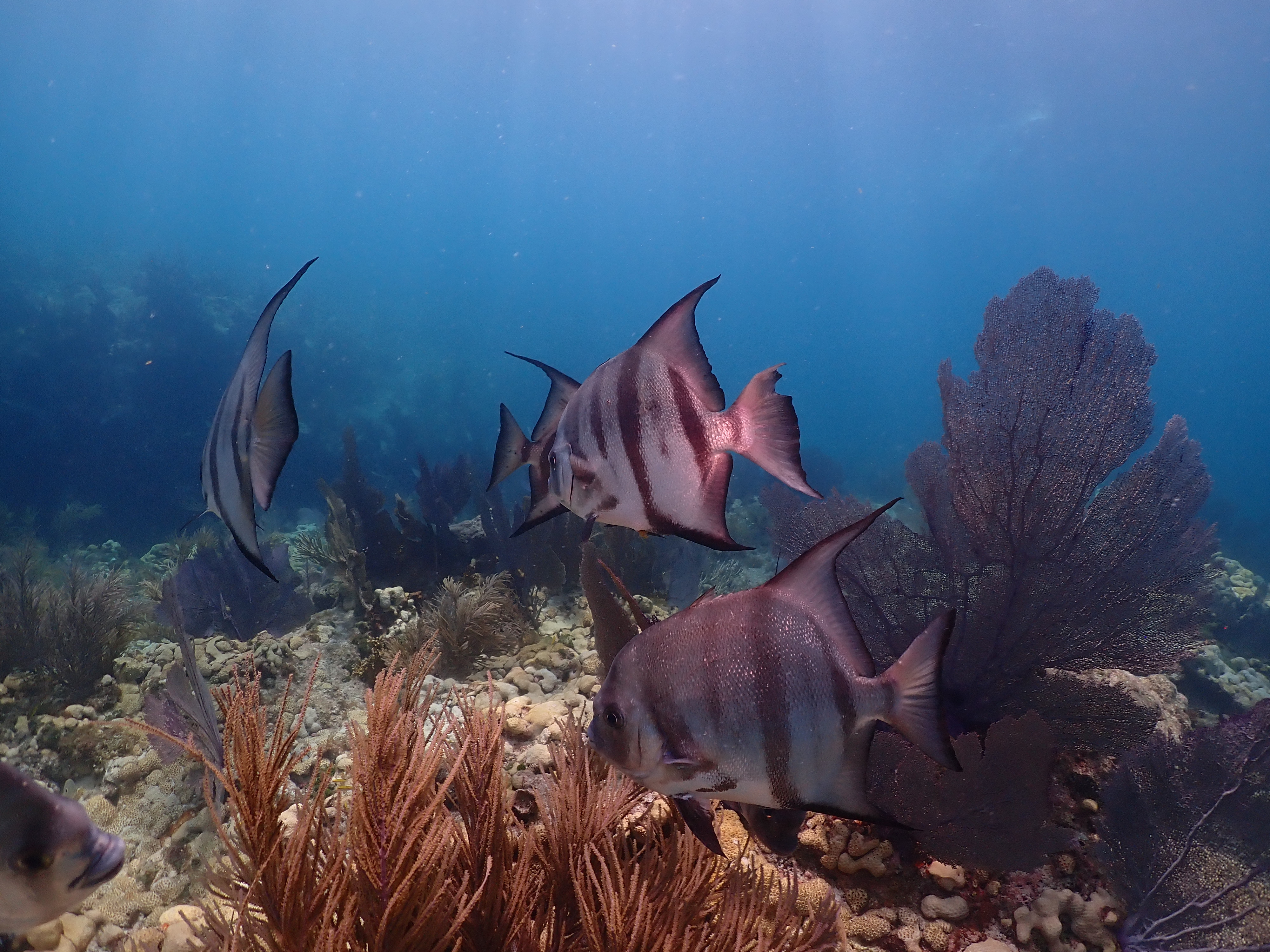

Few fish surprise a first-timer like the Atlantic spadefish. From a distance it looks like an oversized silver angelfish, a round, disc-shaped body crossed by bold black bars, but hook one on light tackle and it turns sideways, uses that broad body against you, and fights like a fish three times its size. Spadefish swarm wrecks, reefs, buoys, bridge pilings, and offshore light towers in the warm months, gathering in big schools that can be chummed into a frenzy right behind the boat. They are a superb light-tackle target, a genuine test of finesse and tackle, and fine eating too, which is why anglers up and down the Atlantic and Gulf coasts look forward to the summer spadefish run.
The Atlantic spadefish (Chaetodipterus faber) is unmistakable: a deep, rounded, laterally compressed silver body marked with four to six dark vertical bars (which fade in larger fish), a small mouth, and long, trailing dorsal and anal fin lobes. They range from a pound or two up to genuine "dinner plate" fish of ten to fourteen pounds, and their small mouths and finicky, nipping feeding style mean they are caught on small hooks and small baits, a finesse game built around a good chum slick. Understanding that they are schooling, structure-oriented, small-mouthed filter-and-nip feeders is the key to catching them.
This guide covers the spadefish playbook: the light rig, chumming, where and when to find them, bait, and cleaning your catch. Because the fishery is so tied to specific structure and a narrow summer window, knowing which wrecks and towers are holding fish, and getting there when the schools are stacked up, is half the battle.
Understanding spadefish: behavior and season
A little understanding of how spadefish live makes them far easier to catch. They are schooling, structure-oriented fish that spend the warm months gathered in large numbers around wrecks, reefs, towers, and pilings, feeding on drifting and attached invertebrates, jellyfish, small crustaceans, worms, and other small organisms they nip and pick from the water and structure. That small-mouthed, nipping, drift-feeding style is exactly why the fishing is a finesse game of small hooks, small baits, and a natural drift in a chum slick, rather than a heavy bottom-fishing approach.
Season is central to spadefish fishing. They are warm-water fish that move inshore and onto the structure as the water warms in late spring, blanket the wrecks and towers through the summer, and drop back offshore as it cools in fall. So the fishery has a clear window, the summer months, and knowing your local run timing is the single biggest factor in success. Show up when the schools are stacked on the structure and the fishing can be spectacular; fish the same spot out of season and you may not find them at all.
Spadefish also school by size to some degree, so a spot loaded with small "silver dollars" may not hold the big dinner-plate fish, and vice versa. When you want the bigger fish, seek out the structure and the schools that hold them, often the more prominent offshore wrecks and towers. Because they relate so strongly to structure and to the chum slick, everything comes back to bringing the school to you and presenting a small, natural bait where they are feeding.
The spadefish rig and light tackle
Spadefish are caught on light tackle with small hooks, a deliberate finesse approach that matches their small mouths and shy, nipping bite. A typical rig is simple: a small, strong hook (size 1 to 2, often a circle or a light live-bait hook) tied to a fluorocarbon leader, with just enough weight, a small split shot or a light egg sinker, to get the bait down to the fish in the chum slick, and sometimes no weight at all when the fish are up high. Fish it on a light spinning or conventional outfit with 10- to 20-pound line so you can feel the subtle bite and enjoy the outsized fight.
The key details are small hooks, light fluorocarbon (spadefish can be leader-shy in clear water), and a bait presented naturally drifting back in the chum. Because spadefish nip and mouth a bait rather than crushing it, watch your line closely and set with a smooth sweep when you feel the take, with a circle hook, just come tight and let it find the corner of the jaw. Too heavy a rig or too big a hook, and these finicky fish simply will not eat.
Spadefish 101: how to catch spadefishMatch everything to the finesse nature of the fish: light line, small hooks, small baits, and a natural drift. Get that dialed in over a good chum slick and a wall of spadefish will line up behind the boat.
Chumming: the heart of spadefish fishing
Chumming is what turns a school of spadefish into a catchable frenzy. Because spadefish gather in numbers around structure and feed on drifting food, a steady chum slick draws them up behind the boat and gets them competing, which is exactly when they lose their caution and eat. The classic spadefish chum is clams, crushed or chopped clams, often supplemented with jellyfish (cannonball "jellyballs," a natural spadefish food), dispensed steadily to hold the fish in the slick.
Anchor up-current of the structure so your chum drifts back over it, and put out a consistent stream of chum to raise the school and keep them behind the boat. Once the spadefish are up and feeding in the slick, drift your baited hook back naturally among the chum particles so it looks like just another drifting morsel. The takes can be subtle, a spadefish sips the bait as it drifts, so stay connected and watch your line. Matching your hook bait to the chum (a small piece of clam or jellyfish) is essential; the bait must blend into the slick.
Chumming for spadefish over a reefThe better and steadier your chum, the better your fishing, a thin or intermittent slick lets the school scatter, while a strong, consistent slick keeps them stacked and competing. Chumming is not optional for spadefish; it is the technique.
Managing the slick is a skill in itself. Start chumming as soon as you are anchored and let the slick build, because it takes time for the scent and particles to drift over the structure and draw the fish up. Once the school is behind the boat, keep the chum steady, a lull lets the fish drift back down or scatter, and you may have to rebuild the bite. Try to keep your hook bait drifting at the same pace and depth as the chum so it disappears into the stream of food; a bait that sinks faster or drags unnaturally stands out and gets refused by these cautious feeders. When a big school is up and competing in a heavy slick, the fishing can be as fast and visual as anything in nearshore angling.
Finding spadefish: wrecks, towers, and structure
Spadefish are structure fish that gather in large summer schools around wrecks, artificial reefs, bridge and pier pilings, buoys, navigation towers, and offshore light towers. Famous fisheries like the Chesapeake Light Tower and the Chesapeake Bay Bridge-Tunnel draw anglers specifically for their spadefish, and any prominent structure in the right depth and season can hold them. The fish relate to the structure but often stack in the water column around and above it, which is why chumming to bring them up works so well.
Look for them in the warm months, late spring through summer into early fall, when the schools move inshore and onto the structure. On the water, you can often see the schools finning near the surface around the structure, or mark them on your sounder stacked around the wreck or tower. Approach quietly, anchor to set up a chum slick that drifts over the structure, and bring the fish to you rather than spooking the school.
Fishing offshore structure for giant spadefishTide and current matter, since they carry the chum slick and position the fish; a moving current that sweeps your slick over the structure turns on the bite. Calm, clear conditions let you sight-fish the schools and see the takes, which is part of the fun.
Bait and presentation
Bait for spadefish is all about small and natural. Clam is the classic and most reliable hook bait, a small, tough piece threaded so it stays on the hook and blends with a clam chum. Jellyfish, specifically the cannonball or "jellyball" jellyfish, is a favorite natural food and a deadly bait when you can get it; a small strip of jellyball drifted in the slick is often irresistible. Squid and other small baits can work too, but clam and jellyball are the standards.
The presentation is everything: the bait must drift naturally in the chum slick, looking like just another morsel among the chum particles, on as light and invisible a leader as you can get away with. Keep the bait small to match the spadefish's small mouth, and refresh it often so it stays soft and enticing. When the fish are being especially finicky, common with these shy feeders, downsizing the bait and the hook and lightening the leader is usually the answer.
Presenting clam bait to spadefishBecause spadefish feed on drifting food, a natural, drag-free drift of your bait back in the current is far more effective than a bait sitting still on the bottom. Manage your line so the bait drifts naturally at the depth the fish are feeding. Feeding line to let the bait drift back with the current, rather than casting and holding, is often the key, the bait should tumble downstream in the slick just like the chum, with as little resistance from the line as possible. Watch where in the slick the fish are eating and adjust how much line you let out to put your bait right in that zone.
Playing and landing spadefish
Hooking a spadefish is only half the battle, landing one on light tackle is the other half, and it is why anglers love them. A spadefish turns its broad, flat body against the pull and fights in stubborn circles and surges, using its shape like a permit or a big bluegill to make a modest-sized fish feel enormous. On light line and small hooks, you cannot horse them, so a smooth drag and patience are essential.
Let the fish fight against a light, steady drag, keep your rod bent, and do not try to muscle it, especially near the structure where it can break you off. Because the hooks are small and the mouths are tough, keep steady pressure so the hook does not pull. A landing net helps with the bigger dinner-plate fish, which are genuinely hard-won on finesse tackle.
Techniques for catching and landing spadefishThe fight is a big part of the spadefish's appeal, pound for pound they are among the hardest-pulling fish you can catch on light inshore and nearshore tackle, and landing a big one over a wreck is a real accomplishment. Keep the fish out of the structure during those stubborn circling runs, using steady side pressure to lead it away from the wreck or pilings, and be patient as it makes its last dogged surges near the boat. Rushing a green spadefish at the net is a common way to lose one.
Cleaning and eating spadefish
Spadefish are good eating, with firm, white, mild fillets that many anglers rate highly, a pleasant surprise given how hard they fight. As with all fish, bleed and ice your catch promptly to keep the fillets fresh. Their deep, flat body yields a nice fillet, though the fish are a bit thick through the middle, so a sharp, flexible knife helps you get clean fillets off the frame.
Fillet along the backbone and over the ribs, then skin the fillet. The mild white flesh takes well to frying, grilling, and baking, and holds together nicely in the pan. A few good spadefish make a fine meal and a fitting reward for the finesse and effort they demand.
Catch and cook Atlantic spadefishRespect the regulations, which include size and bag limits that vary by state. Because spadefish school so densely and can be caught in numbers over a chum slick, keep only what you will eat and release the rest carefully to keep these summer schools strong.
Bringing it together
Spadefish reward the finesse angler who fishes structure the right way: anchor up-current of a wreck, reef, or tower, put out a steady clam-and-jellyball chum slick to raise and hold the school, and drift a small piece of clam or jellyball on a small hook and light leader naturally back in the slick. Set smoothly, fight them patiently on light tackle, and enjoy one of the hardest-pulling, most surprising fish in nearshore waters, a summer favorite that is as fun and challenging to catch as it is good to eat.
Ready for the summer schools? Find the wrecks, towers, and reefs where the spadefish stack up, time your trip to the local run, and come with plenty of clam and jellyball for the slick, do that, and the fish will take care of the rest.
For more nearshore structure targets, see our guides on how to catch sheepshead, how to catch black drum, and how to catch cobia.