Fish
Fish Fire
Fire Hike
Hike Bird
Bird

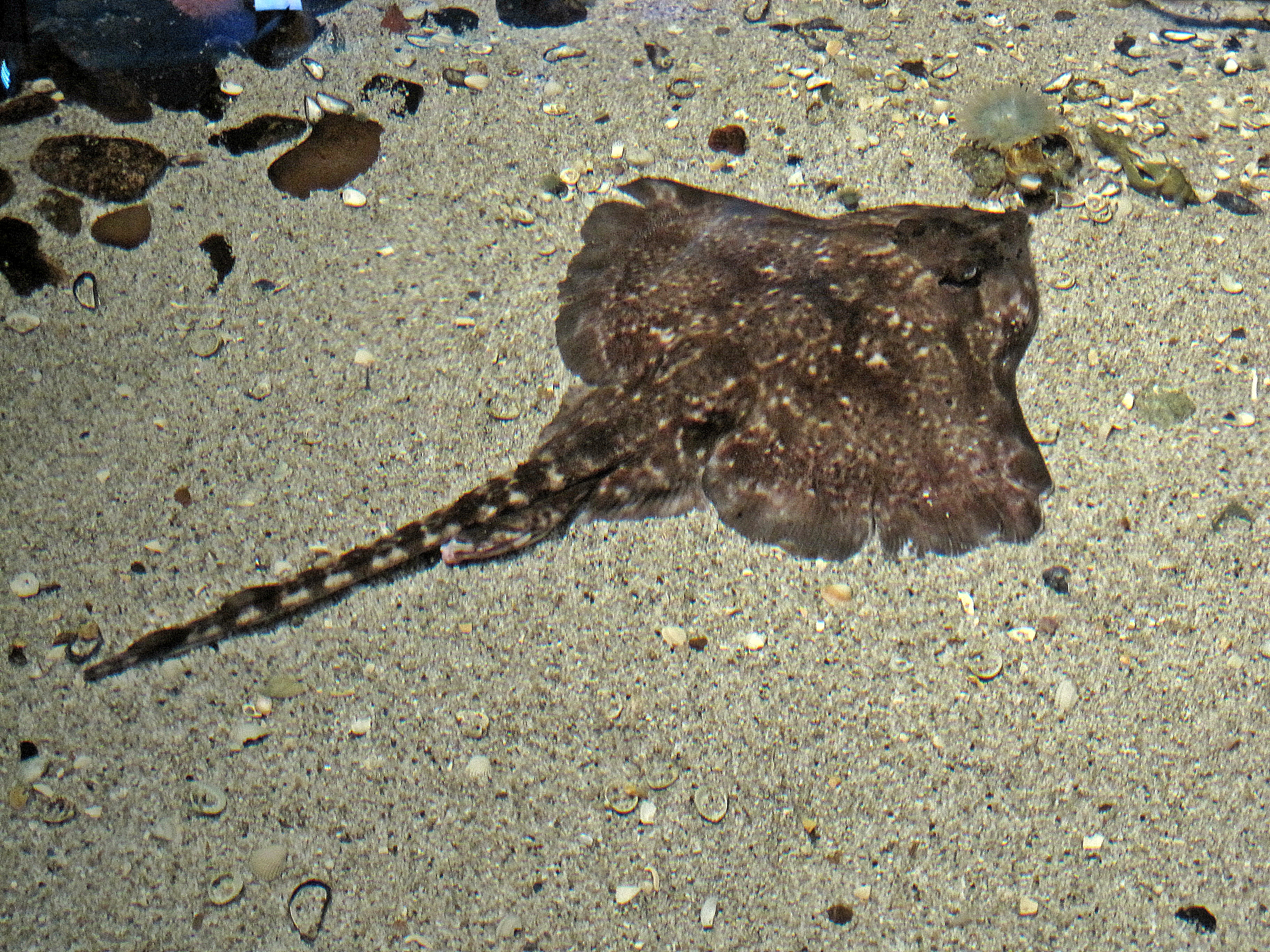

Skates are among the most rewarding bottom fish an angler can target, flat, disc-shaped relatives of the rays that pull with a heavy, dogged power out of all proportion to their looks. Unlike stingrays, skates have no venomous tail spine; instead they carry rows of bony thorns down the back and tail, which is why one popular species is called the thornback ray. They are a mainstay of shore and boat sea fishing, particularly around the UK, Ireland, and the cooler coasts of North America and beyond, where anglers prize species like the thornback, blonde, small-eyed, and spotted rays, and, for the true heavyweight enthusiast, the giant common (flapper) skate.
The word "skate" and the angling term "ray" are used loosely and interchangeably for these fish, and they all fish the same way: a fresh, oily bait pinned to the bottom, a strong rod, and a steady, patient approach. From modest thornbacks in an estuary to a common skate over a hundred pounds hauled up from deep water, they are a reliable, satisfying, and accessible target that fights hard and, handled correctly, releases well. This guide covers how to identify a skate, where and when to find them, the tackle and rigs that work, the baits they cannot resist, how to win the heavy pull-up, and how to handle and release them safely.
Understanding Skate Behavior
Skates are bottom-dwelling fish that live on and in soft or mixed seabeds, sand, mud, gravel, and the edges of reefs and banks. They spend much of their time resting on the bottom, often partly buried, and cruise slowly over the seabed hunting for food. They feed on crabs, shrimp, shellfish, worms, sandeels, and small fish, using their flattened bodies to pin and root out prey and their crushing mouthparts to deal with hard-shelled food. This bottom-scavenging, scent-driven feeding is exactly why a fresh, smelly bait fished hard on the bottom is so effective.
Skates are strongly influenced by season, tide, and temperature. Many species move inshore to feed at predictable times of year, for thornbacks and other common rays, spring through autumn is often prime as they come into estuaries, bays, and shallower coastal marks. Bigger skates hold over deeper marks and are targeted year-round from boats. They feed best on moving water, and low light and the hours around a tide change often produce the strongest bites. Because skates orient to the bottom and hunt by scent, you catch them by putting a bait on the seabed in a productive spot, a gully, a bank edge, a patch of clean ground near structure, and letting the scent draw a cruising fish in.
Learning the ground you fish pays off enormously with skates, because they follow predictable travel and feeding routes across the seabed. From the shore, look for clean sand or mixed ground next to deeper water, the mouths of estuaries, gullies running off a beach, and the edges of banks and channels where the tide funnels food. Skates often move up onto shallower feeding areas as the tide floods and drop back into deeper water as it ebbs, so timing a mark to the right stage of the tide can transform a session. From a boat, skate skippers work known banks, drop-offs, and deep holes, dropping baits onto ground that has produced before. Keep a log of where and when you catch, note the tide and conditions, and over a season you build a picture of when each mark comes good, knowledge that consistently out-fishes simply casting and hoping.
Skate fishing overviewIdentifying a Skate
Skates are flat, roughly diamond- or kite-shaped fish, with the "wings" being enlarged pectoral fins, eyes on top of the body, and mouth and gills underneath. Unlike stingrays, skates have a fleshier tail without a venomous spine, typically bearing small dorsal fins near the tip and, in many species, rows of sharp bony thorns down the back and tail. The thornback ray, one of the most commonly caught, is named for exactly these prominent thorns and shows a mottled, marbled brown pattern on its back that camouflages it against the seabed.
Different species have their own markings: the blonde ray is pale with fine dark spots that extend to the very edges of the wings; the small-eyed ray has pale streaks and lines; the spotted ray has a pattern of dark spots that stop short of the wing edges. For the angler, the shared points matter most, the flat disc, the thorny (not venomous) tail, and the bottom-hugging lifestyle. Knowing your local species helps with regulations and with appreciating what you have caught, but they are all fished and handled in much the same way.
Tackle for Skate
Match your tackle to the size of skate where you fish. For thornbacks and other common rays from the shore, a beachcaster or heavy spinning rod paired with a 6000-to-8000-size reel or a conventional, loaded with 20- to 40-pound line or braid, gives you the casting reach and the backbone to lift a heavy, clamped-down fish off the bottom. For boat fishing over deeper marks, a boat rod matched to a suitable multiplier reel covers most rays. For the giant common skate, you step up to heavy boat tackle, 50-pound-class gear or heavier, because these fish can exceed a hundred pounds and pull like a submarine.
Whatever the size, you need a rod with genuine lifting power, because a skate's first trick is to clamp its flat body to the seabed and become a dead weight. Use a strong shock leader when casting heavy leads from the shore, set the drag firm, and have a landing net, a way to control the fish, and long-nosed pliers or a T-bar dehooker ready before you start. A firm rod rest or tripod is useful on the shore, since a skate often gives a slow, heavy pull-down rather than a sharp bite.
Getting started ray and skate fishing from the shoreThe Right Rig and Leader
Skate fishing is bottom fishing, so a strong, simple rig that presents a bait on the seabed and holds bottom in the tide is what you want. From the shore, a pulley rig is a favorite for rays: it lifts the lead on the retrieve to help clear snags and handles a big bait and a heavy fish well. A simple running ledger or a pennel-hooked flowing trace also works well, and from a boat a running ledger with a long trace lets a skate move off with the bait naturally. Use a lead heavy enough to hold bottom in the current, often a gripper lead from the shore.
Use strong, abrasion-resistant hooklengths of heavy mono, since skates have rough skin and thorns and are often fished over mixed ground. A wire leader is not usually needed as skates lack cutting teeth, but heavy mono guards against abrasion. Hooks in the 2/0 to 6/0 range, often as a pennel pair to hold a large bait, are standard; strong, sharp hooks are essential to set in a skate's tough mouth. Circle or semi-circle patterns give reliable corner-of-the-mouth hookups that are easy to remove. Let the fish take the bait and load the rod rather than striking hard, and the hook will find its hold.
Tying a pulley rig for ray and skateBait and Chum
Skates are scent-driven scavengers, so fresh, oily, smelly baits fished on the bottom are the key. Squid and cuttlefish are outstanding skate baits, tough enough to stay on the hook and full of scent; sandeel, mackerel, herring, and other oily fish are also top choices, along with peeler crab, which is deadly for rays in season. A "cocktail" bait, such as squid tipped with a strip of mackerel, combines the toughness of squid with the extra scent of oily fish and is a proven ray-catcher. Fresh bait always beats stale, so use the best you can get and re-bait regularly.
Present a big, well-secured bait, because skates have large mouths and a generous bait puts out more scent and discourages small pickers from stripping it before a ray arrives. Whip the bait to the hook with bait elastic so it survives the cast and holds together on the bottom. Because skates hunt by scent, keeping a fresh, smelly bait on the seabed in a productive spot and giving it time is the whole game, a skate often needs a while to work its way up the scent trail to your bait. Patience, fresh bait, and a bait left to soak in the right place will out-produce constant recasting.
It helps to think about how the bite develops. A skate typically settles over a bait and mouths it before committing, so on the shore you often see a slow, heavy pull-down building on the rod tip rather than a sharp rattle, resist the urge to strike at the first movement and let the fish take the bait properly. Recast on a schedule to keep fresh scent in the water; a bait that has soaked for an hour has washed out much of its oil and pulling power, so refreshing it regularly keeps the scent trail strong even when bites are slow. If crabs are a problem on your mark, a tougher bait such as whole squid, or squid tipped with fish, will survive their attention long enough for a ray to find it.
Baits and traces for skate and rayFighting a Skate
Hooking a good skate is one thing; getting it off the bottom is another. A skate's first move is to clamp its flat body to the seabed and turn into an immovable weight, using suction and its broad wings to resist. Breaking that hold is the first challenge: apply firm, steady pressure and, if it will not lift, keep the pressure on and change your angle until the fish comes free of the bottom. Once it is up, a skate fights with heavy, dogged resistance, powerful and stubborn rather than fast, and will repeatedly try to plane back down and re-clamp.
Keep constant pressure and pump the fish up steadily, gaining line and never giving slack, because a skate that gets its wings flat to the bottom again will make you start the whole lifting job over. From the shore, use the surge of the waves to help work the fish in through the shallows; from a boat, keep the rod loaded and pump the fish up from the depths in stages, letting the tackle do its share. Bigger skates, especially the giant common skate, are a serious test of stamina, a genuine pull-you-around battle that can take real time and muscle to bring to the surface. Use your body and legs on the rod, pace yourself, and enjoy the grind, because there is real satisfaction in prying one of these heavyweights off the bottom.
Boat fishing tactics for skate and rayHandling and Safe Release
Skates lack a venomous sting, which makes them safer to handle than stingrays, but they do have rows of sharp thorns down the back and tail and rough, abrasive skin, so handle them with care and, ideally, with gloves. Support a skate's whole body when you lift it, never lift a large one by the tail or a single wing, which can injure the fish, and lay it flat on a soft, wet surface or keep it in the water while you unhook it. Watch for the thorns, which can give you a nasty scratch.
Use long-nosed pliers or a T-bar dehooker to remove the hook quickly from the corner of the mouth, or cut the trace close to the hook if it is set deep. Keep the fish out of the water for as little time as possible, and if you want a photo, support the fish properly and be quick. Return the skate gently to the water and let it swim off on its own. Where regulations set minimum sizes, bag limits, or protections, the common skate in particular is a slow-growing, vulnerable species that is protected in many areas and must be released, follow them carefully, and handle every fish as one to send back healthy.
Landing and handling thornback raysPutting It All Together
Catching a skate comes down to soaking a fresh, oily bait on a strong bottom rig over the right ground, on a moving tide, and being ready for the slow, heavy pull-down and the immovable weight of a fish clamped to the seabed. Use tackle with real lifting power, present a big, well-secured squid or fish bait, and break the fish off the bottom with steady pressure before grinding it up. Handle it carefully, mind the thorns, support the body, and release it quickly, and you have one of the most dependable and satisfying heavyweights available to the shore and boat angler.
For more bottom-fishing action, learn how to catch stingray on similar rigs, how to catch flounder over the same soft-bottom ground, or how to catch black drum on the same fresh, smelly bottom baits.