Fish
Fish Fire
Fire Hike
Hike Bird
Bird

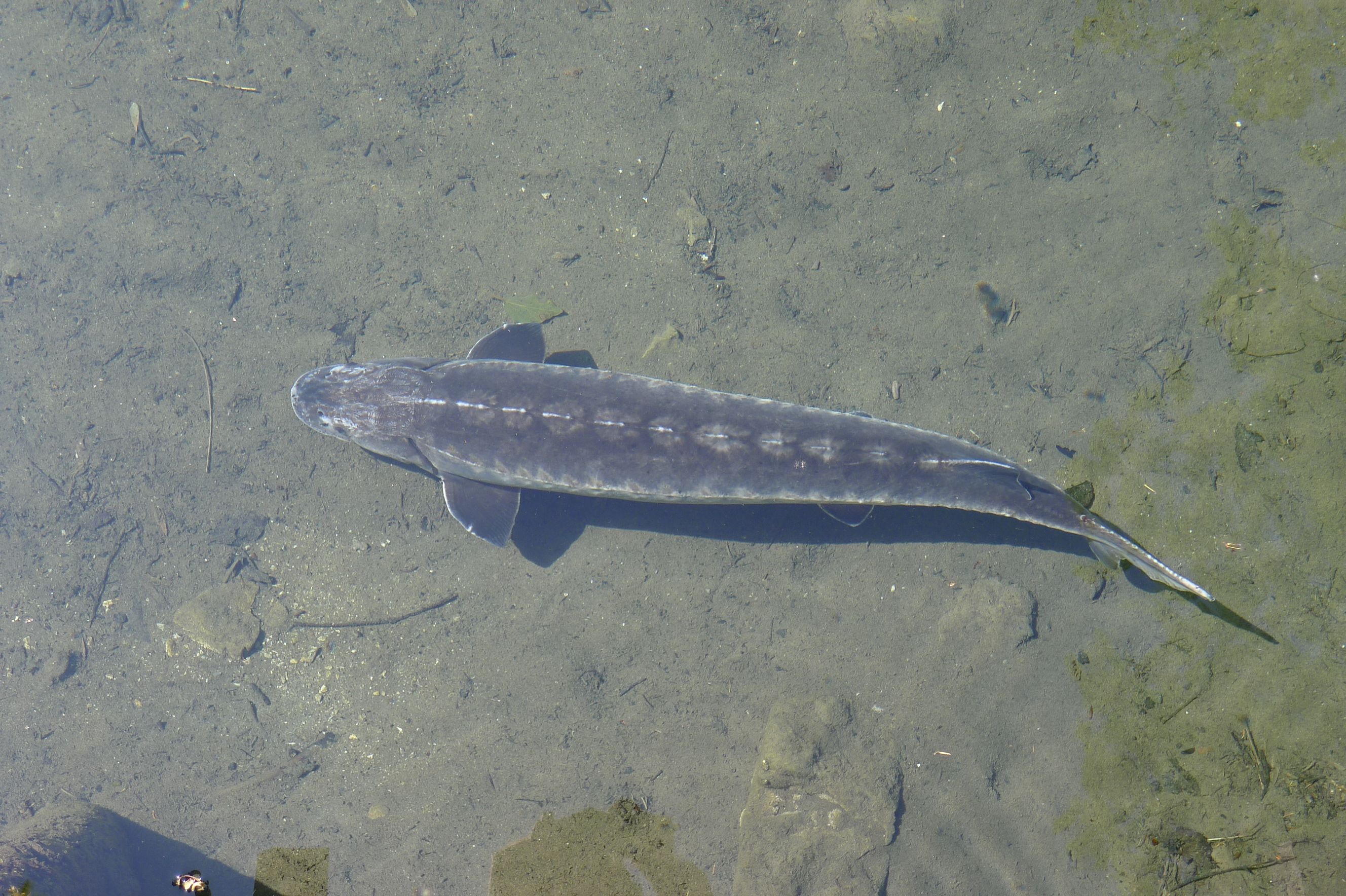

The shortnose sturgeon is a small, ancient, and quietly remarkable fish, the diminutive cousin of the giant Atlantic sturgeon, sharing the same East Coast rivers but rarely exceeding 3 to 4 feet and 20 pounds. Like its larger relative, though, it comes with an essential caveat for any angler: the shortnose sturgeon is federally endangered, and it is illegal to target, catch, or keep one. In fact, the shortnose sturgeon holds a notable place in conservation history, it was one of the very first fish protected under U.S. endangered species law, listed all the way back in 1967, and it remains endangered throughout its range today. The shortnose sturgeon (Acipenser brevirostrum) is not a fish to pursue; it's a fish to understand, respect, and protect.
If you've searched for how to catch a shortnose sturgeon, this guide will give you something more useful than fishing tips: a clear understanding of what the fish is, where it lives, why it's off-limits, and, most importantly, exactly what to do if you accidentally hook one while fishing for legal species in an East Coast river or estuary. Because shortnose sturgeon live in the same waters where anglers pursue striped bass, catfish, and other fish, an incidental encounter is possible, and handling it correctly is both a legal obligation and a contribution to the recovery of a species that has been protected for over half a century.
What Is a Shortnose Sturgeon?
The shortnose sturgeon is a member of the ancient sturgeon family (Acipenseridae), the "living fossil" lineage that predates the dinosaurs. As its name suggests, it has a short, blunt snout (much shorter than the Atlantic sturgeon's) and a relatively large mouth for a sturgeon. Like all sturgeon, it wears the family's prehistoric armor: a long body covered in five rows of bony scutes instead of scales, a shark-like heterocercal tail, four sensory barbels in front of a toothless, protrusible, vacuum-like mouth on the underside of the head, and a cartilaginous skeleton. It's colored dark olive-brown to blackish above with a pale belly. Crucially, the shortnose is much smaller than the Atlantic sturgeon, typically 2 to 3.5 feet and up to about 20 pounds (rarely larger), a key difference, though the two can be confused where they overlap.
Shortnose Sturgeon: Species ProfileShortnose sturgeon are largely freshwater and estuarine fish, spending most of their lives in the rivers and estuaries of the Atlantic coast rather than venturing far into the ocean (unlike the more migratory Atlantic sturgeon). They're bottom feeders, using their barbels to find and their tube-like mouths to vacuum up crustaceans, mollusks, insect larvae, worms, and other invertebrates from the bottom. They're long-lived and slow-maturing, and they move within their home river systems seasonally, running upriver to spawn over rocky bottoms in spring. This bottom-feeding, river-dwelling life is why they occasionally cross paths with anglers.
Why the Shortnose Sturgeon Is Protected
The shortnose sturgeon was listed as endangered in 1967, among the earliest species ever granted federal protection, predating even the modern Endangered Species Act of 1973, after a long history of overharvest (both as an incidental catch in the Atlantic sturgeon caviar fishery and in its own right), compounded by dams blocking its spawning migrations, pollution, dredging, and habitat loss. It remains listed as endangered throughout its entire range to this day.
Endangered Shortnose Sturgeon in the Connecticut RiverBecause it is federally endangered, it is illegal to target, catch, retain, or harm a shortnose sturgeon anywhere in U.S. waters, and any incidental catch must be released immediately and unharmed. Violations carry serious federal penalties. Decades of protection, along with dam removals, fish passages, and improved water quality, have helped some populations stabilize or grow, and shortnose sturgeon persist in rivers from Canada to Florida, with notable populations in the Hudson, Connecticut, Delaware, Kennebec, and other river systems. But the species remains vulnerable, and its continued recovery depends on anglers never targeting it and handling any accidental catch with great care.
Where Shortnose Sturgeon Live
Shortnose sturgeon inhabit the rivers and estuaries of the Atlantic coast of North America, from New Brunswick, Canada, south to Florida, but unlike the ocean-going Atlantic sturgeon, they spend most of their lives within their home rivers and adjacent estuaries, rarely straying far into the sea. Knowing where they are helps you recognize when you might encounter one:
- Large coastal rivers, their primary habitat; they live year-round in rivers like the Hudson, Connecticut, Delaware, and Kennebec.
- Estuaries and the freshwater-saltwater transition zone, where many shortnose sturgeon spend much of the year feeding.
- Deep river holes, channels, and pools, where they rest and feed on the bottom.
- Upriver rocky reaches in spring, where adults migrate to spawn over hard, rocky bottoms.
- Below dams, where their upstream migrations are often blocked and fish concentrate.
If you're bottom-fishing in an East Coast river or estuary, particularly in the deeper holes and channels, or below a dam, you're potentially sharing the water with shortnose sturgeon, and there's a small chance of an incidental hookup. This is exactly why every angler fishing these waters should know how to identify and properly release one.
What to Do If You Accidentally Hook One
Because shortnose sturgeon are bottom feeders in the same rivers where anglers pursue striped bass, catfish, white perch, and other species, they are occasionally hooked by accident, and knowing how to respond is the single most important practical takeaway of this guide. The law and the fish's survival require quick, careful action.
A Rare Shortnose Sturgeon CatchIf you hook a shortnose sturgeon: keep it in the water the entire time if at all possible, and do not remove it. Never lift it vertically by the head, gills, or tail, and never gaff it, support its body horizontally if you must handle it at all. Remove the hook quickly and gently with pliers, or, if it's deeply hooked, cut the line as close to the hook as possible rather than causing injury. Use wet hands, minimize handling and air exposure, do not keep the fish, do not delay for photos, and release it immediately, reviving it in the water if needed. Retaining or harming an endangered shortnose sturgeon is a federal offense. Many regions ask that you report incidental catches to fisheries authorities, since these reports provide valuable data on a hard-to-study species. In short: get it off the hook, keep it wet, let it go fast, and report it if asked.
Identifying a Shortnose Sturgeon
Being able to recognize a shortnose sturgeon, and to distinguish it from the also-protected Atlantic sturgeon, helps you handle an incidental catch correctly and appreciate what you've encountered. Both are protected, so precise ID isn't legally critical, but it's useful to know.
The Sturgeon Species of North AmericaLook for the classic sturgeon features first: the long body armored with five rows of bony scutes, the four barbels, the toothless tube-like mouth on the underside of the head, and the shark-like tail. To tell a shortnose from an Atlantic sturgeon, note the short, blunt snout and relatively large mouth (the Atlantic has a longer, more pointed snout and smaller mouth), and, most tellingly, the much smaller size (a shortnose maxes out around 3.5 feet and 20 pounds, while an Atlantic can reach many times that). The shortnose also tends to be more of a homebody within its river. But remember: any sturgeon you encounter on the Atlantic coast is protected and must be released, so if you're ever unsure, treat the fish as endangered and release it immediately and carefully. When in doubt, hands off and back in the water.
Research and Recovery
Much of what we know about the elusive shortnose sturgeon, and much of the reason some populations are stabilizing, comes from decades of dedicated research and restoration work by biologists and river conservation groups.
Sturgeon of the Rivers: Shortnose and AtlanticScientists study shortnose sturgeon using acoustic tagging, netting surveys, and genetic analysis to map their river populations, track their movements and spawning, and gauge their slow recovery. This work, much of it centered on rivers like the Hudson, Connecticut, and Delaware, has revealed that shortnose sturgeon are more river-bound than their Atlantic cousins, that distinct populations persist in individual river systems, and that dam removal and fish passage are critical to their future. Anglers contribute to this effort by reporting incidental catches and sightings, by never targeting the fish, and by supporting clean water, dam removals, and habitat restoration. The shortnose sturgeon's story, one of the first fish ever protected, still hanging on more than half a century later, is a testament to the power of long-term conservation and a reminder that recovery is slow, fragile work that every angler can support.
The Threats They Still Face
Understanding why the shortnose sturgeon remains endangered, after more than half a century of protection, helps explain why anglers' care matters so much. The species faces a stubborn combination of threats, most of them rooted in the way we've reshaped its rivers. Dams are perhaps the biggest: by blocking upstream migrations, they cut sturgeon off from the rocky spawning reaches they need to reproduce, fragmenting populations and shrinking the habitat available to them. Water quality matters enormously too, sturgeon are bottom feeders sensitive to pollution, low oxygen, and contaminated sediments, and a century of industrial and urban runoff took a heavy toll on their rivers. Dredging of shipping channels can destroy the bottom habitat where they feed and rest, and can kill fish outright. Vessel strikes and bycatch in nets and on hooks add to the losses, and because shortnose sturgeon are so slow to mature and reproduce, even small numbers of extra deaths can outpace their ability to recover. Climate change and warming, altered river flows loom as newer concerns. The encouraging news is that many of these threats are being addressed, dams removed, fish passages built, water cleaned, dredging regulated, which is why some populations are finally holding steady or growing. But the fish's slow life history means recovery is measured in decades, and every avoidable loss still counts.
Their Role in the River
It's worth appreciating what the shortnose sturgeon does in its river, because a healthy sturgeon population is a sign of a healthy river. As bottom feeders vacuuming up invertebrates, sturgeon are part of the ancient machinery that processes a river's productivity, cycling nutrients and linking the bottom-dwelling life of the river to the larger food web. Their presence, or absence, tells a story about water quality, connectivity, and habitat. When shortnose sturgeon return to or thrive in a river, it often means that decades of cleanup, dam removal, and protection are working, and that the river is once again capable of supporting one of the most demanding and ancient fish in North America. In that sense, the shortnose sturgeon is a living indicator, a barometer of river health whose recovery benefits countless other species, including the game fish that anglers legally pursue in the same waters. Protecting sturgeon and improving the fishing for other species go hand in hand: a river clean and connected enough for spawning sturgeon is a river that's better for striped bass, shad, herring, and everything else that lives there. That's one more reason the responsible angler roots for the shortnose sturgeon's comeback.
Where the Shortnose Sturgeon Fits
The shortnose sturgeon is one of several North American sturgeons, all ancient and imperiled. Its larger cousin, the Atlantic sturgeon, shares the same East Coast rivers but grows enormous, ranges far into the ocean, and is likewise federally protected and off-limits. The freshwater lake sturgeon of the Great Lakes and interior river systems is protected too, but supports tightly regulated catch-and-release (and rare, lottery-controlled harvest) fisheries in some waters. Among these ancient fish, the shortnose sturgeon is the small, river-dwelling, endangered survivor of the Atlantic coast, a living fossil that has been under federal protection longer than almost any other fish, and that depends on continued care to endure.
The Responsible Angler's Bottom Line
The bottom line is simple and important: you cannot legally fish for shortnose sturgeon, and you should never try. It has been federally endangered since 1967 and is protected throughout its range. If you're fishing East Coast rivers and estuaries, know that you might hook one by accident, and be ready to release it instantly, keeping it in the water, never lifting it vertically, cutting the line if it's deeply hooked, and letting it go unharmed and without delay. Report the catch if your local authorities request it, since data on this elusive fish is precious. Beyond that, the best way to appreciate a shortnose sturgeon is to know it's there, an ancient armored survivor quietly patrolling the bottom of a river that people have worked for generations to clean and restore. Some fish are meant to be caught. This one is meant to be protected, and the fact that it's still here at all is something worth celebrating.
Fishing East Coast rivers responsibly comes down to knowing the water you are on: which species are legal to target, which are protected, and exactly how to handle a fish like the shortnose sturgeon if one ever turns up on your line. Before you head out, confirm the current regulations for your river with your state fisheries agency, learn to recognize the protected sturgeons that share these waters, and have a plan for a quick, careful release ready before you need it. That bit of preparation is what separates a responsible angler from someone who lands an endangered fish and has no idea what to do next.