Fish
Fish Fire
Fire Hike
Hike Bird
Bird

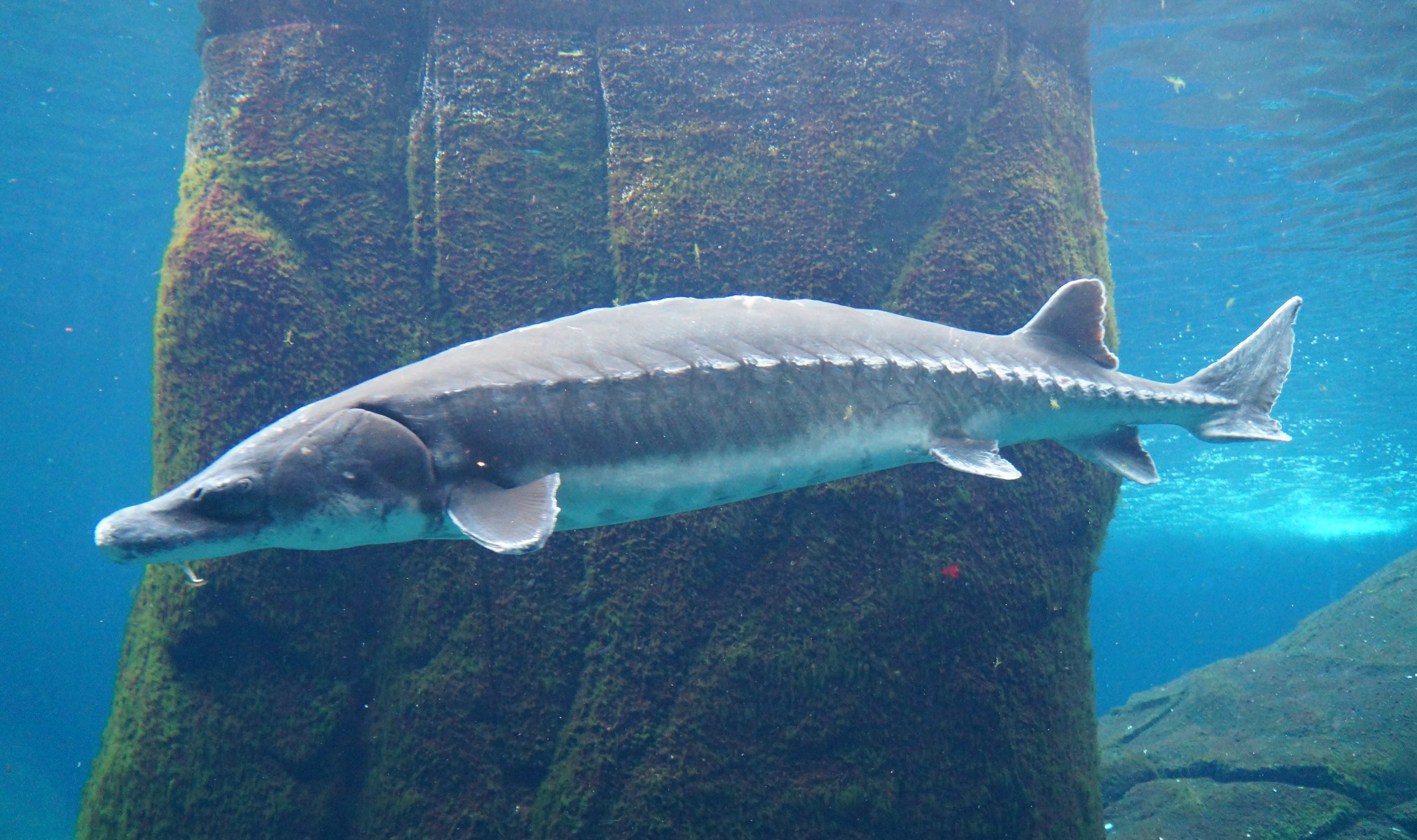

The Atlantic sturgeon is one of the most magnificent fish in North American waters, a giant, ancient, armor-plated leviathan that can reach 14 feet and 800 pounds, live 60 years, and trace its lineage back over 100 million years to the age of the dinosaurs. But if you've come here looking for tips on how to catch one, you need to know the single most important fact first: the Atlantic sturgeon is federally endangered, and it is illegal to target, catch, or keep one. Protected under the U.S. Endangered Species Act (all five distinct population segments are listed as threatened or endangered), the Atlantic sturgeon (Acipenser oxyrinchus) cannot be legally fished for, and any that are hooked incidentally must be released immediately and unharmed. This isn't a fish to catch, it's a fish to know, respect, and protect.
That said, understanding the Atlantic sturgeon matters for every coastal and river angler, because you might encounter one: they're occasionally hooked by accident by anglers fishing for other species in East Coast rivers and estuaries, and knowing what you've got, and how to release it properly and legally, is essential. This guide covers what an Atlantic sturgeon is, where it lives, why it's protected, and, crucially, exactly what to do if you accidentally hook one. Think of it as the responsible angler's guide to a fish you must not catch.
What Is an Atlantic Sturgeon?
The Atlantic sturgeon is a member of the ancient sturgeon family (Acipenseridae), a lineage of "living fossil" fishes that predates the dinosaurs and has changed little in over 100 million years. It has the classic prehistoric sturgeon appearance: a long, torpedo-shaped body armored with five rows of bony plates (scutes) instead of scales, a shark-like heterocercal tail, a hard, pointed snout, four sensory barbels in front of a toothless, protrusible, vacuum-like mouth on the underside of the head, and a cartilaginous skeleton. It's colored dark blue-black to olive-brown above with a pale belly. The Atlantic sturgeon is enormous, one of the largest fish in East Coast waters, historically reaching up to 14 feet and 800 pounds, though such giants are extremely rare today; most fish encountered are smaller but still very large.
The Search for Sturgeon: A Prehistoric and Endangered FishAtlantic sturgeon are anadromous: they live much of their lives in the ocean and coastal waters but return to the large coastal rivers where they were born to spawn, migrating far upriver over rocky bottoms. They're bottom feeders, using their sensitive barbels to detect and their tube-like mouths to vacuum up worms, crustaceans, mollusks, insect larvae, and other invertebrates from the bottom. Slow-growing and late-maturing (they don't spawn until many years old and only spawn periodically), they're extraordinarily vulnerable to overharvest, which is exactly what happened.
Why the Atlantic Sturgeon Is Protected
For centuries, the Atlantic sturgeon was heavily exploited, first as a staple food and then, in the late 1800s, in a devastating "black gold" caviar rush that saw the fish harvested to near-collapse for its prized roe. Combined with dams blocking spawning rivers, pollution, habitat degradation, and deaths from vessel strikes and bycatch, this drove Atlantic sturgeon populations to a tiny fraction of their historic abundance.
Tracking the Recovery: Atlantic Sturgeon in the Hudson RiverAs a result, the Atlantic sturgeon is now protected under the U.S. Endangered Species Act, the New York Bight, Chesapeake Bay, Carolina, and South Atlantic population segments are listed as endangered, and the Gulf of Maine segment as threatened. It is illegal to target, catch, retain, or harm an Atlantic sturgeon, and violations carry serious federal penalties. There has been no legal fishery for them in the U.S. since a coast-wide moratorium in 1998. These protections, along with dam removals, improved water quality, and bycatch-reduction efforts, are slowly helping the species recover in some rivers, a fragile success story that depends on every angler doing their part by never targeting them and handling any incidental catch with extreme care.
Where Atlantic Sturgeon Live
Atlantic sturgeon range along the Atlantic coast of North America, from Canada's Maritime provinces down to Florida, living in coastal ocean waters, estuaries, bays, and the large coastal rivers they ascend to spawn. Major populations are associated with rivers like the Hudson, Delaware, James, Kennebec, Altamaha, and others. Understanding where they are helps you recognize when you might encounter one:
- Large coastal rivers and estuaries, especially during spring and fall spawning migrations, when adults move far upriver.
- Nearshore ocean and coastal waters, where sub-adults and adults feed and migrate along the coast.
- Bays and sounds, productive estuarine feeding areas.
- Deep river holes and channels, where sturgeon rest and feed on the bottom.
If you're bottom-fishing in an East Coast river, estuary, or nearshore area, for striped bass, catfish, or other species, you're in Atlantic sturgeon country, and there's a real (if small) chance of an incidental hookup. This is exactly why every coastal angler should know how to identify and properly release one.
The Famous Jumping Behavior
One of the most remarkable things about Atlantic sturgeon is that, like some other sturgeons, they leap clear out of the water, a spectacular sight in rivers like the James, the Hudson, and Florida's Suwannee (where the closely related Gulf sturgeon's leaping is a genuine boater hazard). A breaching sturgeon, a huge armored fish launching itself into the air, is an unforgettable glimpse of a living dinosaur.
Atlantic Sturgeon Breaching on the RiverScientists aren't entirely certain why sturgeon jump, theories include communication, shedding parasites, gulping air to fill the swim bladder, or simply orienting during migration, but for anglers and river-goers, the leaping is both a thrill and a reminder. In some rivers, leaping sturgeon pose a real danger to boaters (a large fish colliding with a person at speed can cause serious injury), so awareness matters. But mostly, watching an Atlantic sturgeon breach is a privilege, a chance to witness one of the continent's most ancient and endangered animals, doing something wondrous, in a river that's slowly nursing the species back. If you see one jump, appreciate it: you're looking at a survivor from before the dinosaurs.
What to Do If You Accidentally Hook One
Because Atlantic sturgeon are bottom feeders in the same waters where anglers pursue striped bass, catfish, and other species, they are occasionally hooked by accident. If it happens to you, the law and the fish's survival require you to act quickly and carefully. This is the most important practical section of this guide.
What to Do With an Accidental Sturgeon CatchIf you hook an Atlantic sturgeon: do not remove it from the water if at all possible, keep it in the water the entire time. Never lift it vertically by the head, gills, or tail, and never gaff it. Support its body horizontally if you must handle it. Remove the hook quickly and gently with pliers, or, if the fish is deeply hooked, cut the line as close to the hook as possible rather than causing injury. Minimize handling and air exposure, use wet hands, and get the fish back to swimming as fast as you can, reviving it in the water if needed. Do not keep the fish, do not delay for photos, and release it immediately, retaining or harming an endangered Atlantic sturgeon is a federal offense. Some regions ask that you report incidental catches to fisheries authorities to aid research. In short: get it off the hook, keep it wet, and let it go, fast and unharmed.
Research and Recovery
Much of what we know about Atlantic sturgeon, and much of the hope for their recovery, comes from the dedicated work of biologists who track, tag, and study these elusive giants. Understanding this effort helps put the protection in context and shows why every angler's cooperation matters.
Tracking the Endangered Atlantic SturgeonResearchers use acoustic and satellite tags, netting surveys, and genetic studies to monitor Atlantic sturgeon populations, map their spawning rivers and migration routes, and measure their slow recovery. This work has revealed which rivers still host spawning populations, how far the fish migrate along the coast, and where the biggest threats (vessel strikes, bycatch, habitat loss) remain. Anglers contribute by reporting incidental catches and sightings, by never targeting the fish, and by supporting clean water and dam-removal efforts that restore spawning habitat. The recovery of the Atlantic sturgeon, still very much a work in progress, is one of the great fisheries conservation stories of our time, and it depends on a collective commitment to protecting a fish that cannot afford any more losses.
Spawning Rivers and Seasons
Atlantic sturgeon return to their natal rivers to spawn, and these spawning migrations, up rivers from Maine to Georgia, generally in spring (and, in some southern rivers, fall), are when the fish are most concentrated and most vulnerable. Knowing this helps anglers avoid inadvertently disturbing them.
Atlantic Sturgeon Come to SpawnDuring spawning runs, adult Atlantic sturgeon move far upriver to deposit eggs over hard, rocky bottoms in flowing water, often in the same reaches used for generations. These spawning areas and times are critical to the species' survival and are frequently the focus of protection and monitoring. For anglers, the takeaway is awareness: if you're fishing an East Coast river in spring, especially in the deeper holes and runs, you're sharing the water with spawning sturgeon and should be especially prepared to release any incidental catch instantly and to avoid disturbing spawning areas. Respecting these migrations, giving the fish space and never targeting them, is a direct contribution to bringing the species back.
Identifying an Atlantic Sturgeon
Being able to identify an Atlantic sturgeon matters, both so you handle an incidental catch correctly and so you can appreciate what you're seeing. Look for the unmistakable sturgeon features: the long, sub-cylindrical body armored with five rows of prominent bony scutes, the hard, pointed, upturned snout with four barbels underneath, the toothless tube-like mouth on the underside of the head, the shark-like tail with a longer upper lobe, and the dark bluish-black to olive back with pale sides and belly. Atlantic sturgeon are distinguished from the similar shortnose sturgeon (also protected) by their larger size, longer snout, and smaller mouth, among other features, but for practical purposes, any sturgeon you encounter on the Atlantic coast is protected and must be released, so precise species ID is less important than knowing that all sturgeon there are hands-off. When in doubt, treat any sturgeon as a protected fish.
Avoiding Incidental Catches
Beyond knowing how to release a sturgeon, thoughtful anglers can reduce the odds of hooking one in the first place, which is the best outcome for both the fish and the fisherman. If you're fishing an East Coast river or estuary known to hold sturgeon, a few practices help: use circle hooks (which hook in the jaw and are easier to remove cleanly from any fish), avoid soaking large baits directly on the bottom in deep sturgeon holes during spawning migrations, and be aware of the seasons and areas where sturgeon concentrate. If you start catching sturgeon in a spot, consider moving, both to avoid stressing the protected fish and because you're clearly on top of them. None of this is required by law beyond the prohibition on targeting them, but it reflects the ethic that has always defined good anglers: leaving the resource better than you found it. With a fish as imperiled and ancient as the Atlantic sturgeon, that ethic isn't just admirable, it's essential to the species' survival.
Where the Atlantic Sturgeon Fits
The Atlantic sturgeon is one of several North American sturgeons, all ancient and imperiled to varying degrees. Its freshwater relative, the lake sturgeon, is the great sturgeon of the interior Great Lakes and river systems, also protected, but with tightly regulated catch-and-release (and rare, lottery-controlled harvest) fisheries in some waters. The white sturgeon is the giant of the West Coast, where healthy populations support popular, strictly regulated catch-and-release fisheries. The Atlantic sturgeon, by contrast, is fully off-limits, a federally endangered species you can only observe and protect. Together, these fish represent one of the planet's most ancient and threatened lineages, and the Atlantic sturgeon is the East Coast's magnificent, protected reminder of just how vulnerable these living fossils are.
The Responsible Angler's Bottom Line
Let's be clear about the bottom line, because it matters: you cannot legally fish for Atlantic sturgeon, and you should never try. They are federally endangered, protected by law, and slowly recovering from the brink, and that recovery depends on anglers respecting the rules. If you're fishing East Coast rivers, estuaries, or nearshore waters, know that you might hook one by accident, and be ready to release it instantly, keeping it in the water, never lifting it vertically, cutting the line if it's deeply hooked, and letting it go unharmed and without delay. Report the catch if your local authorities request it. Beyond that, the best way to "catch" an Atlantic sturgeon is with your eyes and your appreciation: watch for one breaching in a coastal river, marvel at a fish older than the pyramids' engineering and larger than you are, and take pride in being part of the generation that helped bring it back. Some fish are meant to be caught. This one is meant to be protected.
If you fish East Coast rivers, estuaries, or nearshore waters, take the time to learn which of them hold sturgeon and what the current rules require, and always confirm the latest regulations with your state fisheries agency or NOAA Fisheries before you go. Knowing the local waters, the seasons, and the careful handling that protected and endangered fish demand is what separates a responsible angler from a careless one.