Fish
Fish Fire
Fire Hike
Hike Bird
Bird

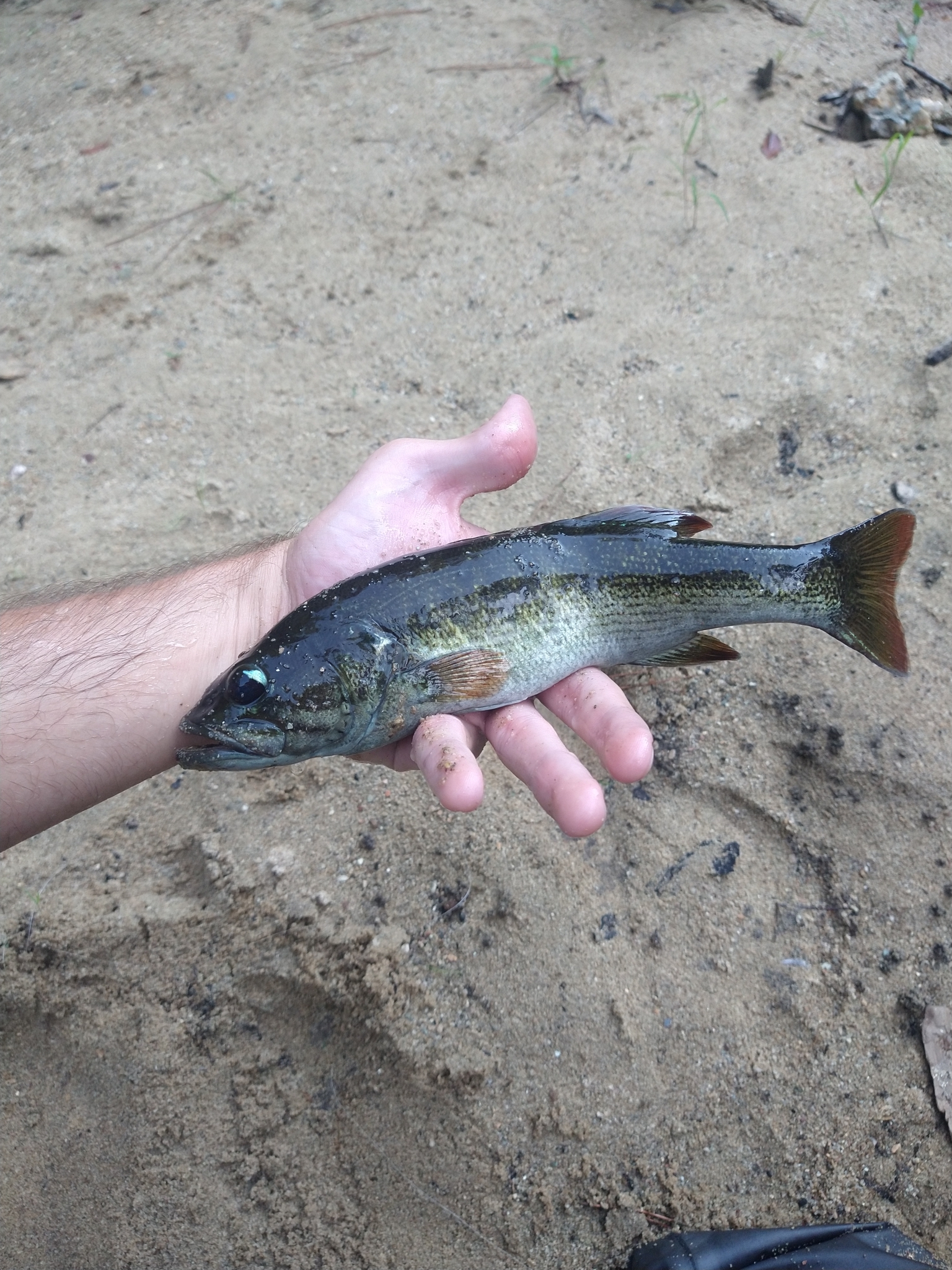

The redeye bass (Micropterus coosae) is one of the most beautiful and beloved of the black basses, a hard-fighting, stream-dwelling gem of the Southern Appalachian and Coosa River drainages, prized by anglers who love wading clear mountain creeks with an ultralight or fly rod. Named for its striking red eye and adorned with brick-red fins and turquoise flecks, the redeye is a small but ferociously aggressive fish that smashes topwater lures and flies with abandon, fights far above its size in current, and lives in some of the most gorgeous water in the South. For creek waders, fly anglers, and anyone chasing a "black bass grand slam," the redeye bass is a spectacular target. This guide covers how to find and catch them.
What Is a Redeye Bass?
The redeye bass is a member of the black bass genus (Micropterus), the same group as largemouth and smallmouth, but it's a specialist of small, clear, flowing streams. It's slender and streamlined for life in current, colored olive to bronze with dark blotches or a broken lateral band, scattered turquoise or blue-green flecks, and, most distinctively, brilliant red eyes and brick-red to orange fins, especially the dorsal, anal, and the white-edged tail. Historically "redeye bass" referred to a complex of several closely related species across different Southern river systems (Coosa, Bartram's, Chattahoochee, Cahaba, Tallapoosa, and Warrior basses), which have since been described separately, but they share the same red-eyed, red-finned, stream-loving character. Redeye bass are small: most run 6 to 12 inches, with a big one reaching 14 to 16 inches and around a pound or two, a true trophy, since redeye grow slowly in cool streams.
For anglers, the defining trait is that redeye bass are aggressive, surface-oriented stream predators. They live in clear, cool, flowing creeks and small rivers, holding behind rocks and cover in current, and they feed voraciously on insects (especially terrestrials falling into the water), small fish, crayfish, and larvae. Famously, redeye readily attack topwater lures and flies, rising to the surface to hammer bugs and small plugs, a huge part of their appeal. They're scrappy, hard-fighting for their size, and they live in beautiful, wadeable mountain and Piedmont streams. Colorful, willing, surface-loving, and native to some of the South's prettiest water, the redeye bass is a favorite of creek anglers and a cornerstone of the black-bass "slam."
Where and When to Catch Redeye Bass
Redeye bass (and their close relatives in the redeye complex) are native to the clear, flowing streams of the Southern Appalachians and the Coosa/Alabama-Georgia river systems, the mountain and Piedmont creeks and small rivers of northern Georgia, Alabama, and adjacent areas, with introduced populations elsewhere (including some western states). Look for them in clear, cool, rocky streams and small rivers, holding near current-breaking cover: behind boulders and rocks, in pools and pockets below riffles, along current seams and eddies, under undercut banks, and around laydowns. Like other stream bass, they tuck into slack water beside current and dart out to ambush food. Target the pools, runs, riffle tailouts, and any structure that breaks the flow.
The best fishing is generally late spring through early fall, with the warm months being especially productive as redeye feed aggressively on terrestrials and other prey, rising eagerly to the surface. Warm-weather topwater fishing for redeye is the classic and most exciting approach. They feed actively through the day in their cool streams, though morning and evening are often best in summer heat. Redeye spawn in spring, moving to gravel in the shallows, which can concentrate fish. Cooler months slow the action as the fish become less active in cold water. Wading a clear mountain creek on a summer day, casting topwater bugs and small lures to every pocket and pool, is the timeless and deadly way to catch redeye bass.
Topwater and Small Lures
Redeye bass are famous for their willingness to hit the surface, making topwater and small lures a thrilling and effective way to catch them.
Topwater Creek FishingThe best lures are small topwater plugs, poppers, buzzbaits, and prop baits, along with small in-line spinners, beetle spins, tiny crankbaits, small soft-plastic craws and grubs, and small jigs. Topwater is the signature redeye technique: cast a small popper or surface bug to pockets, pools, and current seams, and redeye will rise and smash it, explosive, visual, and endlessly fun. Subsurface, small spinners, crankbaits, and soft plastics worked through pools and past cover draw plenty of strikes. Because redeye live in small streams and rarely exceed a pound or two, keep lures small and use light or ultralight gear. Cast to current-breaking cover, behind rocks, into pools, along seams and undercut banks, and work your lure past the fish. Covering water and hitting every likely pocket with a topwater or small lure is one of the most enjoyable ways to catch these aggressive stream bass.
Fly Fishing for Redeye Bass
For many anglers, fly fishing is the ultimate way to catch redeye bass, and these surface-loving stream fish are a perfect fly-rod target in beautiful water.
Streamers for Redeye BassA light fly rod (3- to 6-weight) is ideal. Redeye eagerly take poppers and foam bugs, rubber-legged terrestrials (hoppers, beetles, ants), small streamers and Woolly Buggers, Clouser Minnows, and nymphs. Topwater poppers and terrestrials are the classic and most exciting choice, drawing explosive surface strikes as redeye rise to hammer the bug, sight-fishing a redeye eating a popper in clear water is a highlight of Southern fly fishing. Subsurface, swing or strip small streamers and buggers through pools, runs, and past cover, or dead-drift nymphs. Cast to the same current-breaking cover you'd target with lures, pockets, pools, seams, undercut banks, and behind rocks, and present the fly naturally. On a light fly rod, a good redeye pulls hard and uses the current. Fly fishing clear mountain creeks for willing, gorgeous redeye bass is one of freshwater fly fishing's great pleasures, and it's central to the "redeye slam" that draws fly anglers across the South.
Reading Streams and Creeks
The single biggest key to catching redeye bass is reading moving water and knowing where these fish hold in it.
Bass Fishing in Small CreeksRedeye are current-oriented ambush feeders that tuck into slack water beside faster current and use cover to break the flow. So read the water for pools and pockets (especially below riffles), current seams (the line between fast and slow water), eddies behind rocks and boulders, undercut banks, and the slower water at the head and tail of pools. Cast up-current or across and present your lure or fly so it drifts or swims naturally down to the fish, the way real food moves in a stream. Approach from downstream when wading, since redeye face into the current and you can sneak up behind them. Work upstream methodically, hitting every pocket, pool, seam, and piece of cover. Because redeye streams are often small and clear, stealth matters, keep a low profile and avoid spooking fish in the clear water. Once you learn to read a creek and recognize redeye water, you'll catch these fish consistently wherever current meets cover.
Ultralight Tackle for Creek Bass
Because redeye live in small streams and rarely top a couple of pounds, light, balanced tackle is what makes them fun and effective to catch.
Ultralight Creek FishingAn ultralight or light spinning rod with 4- to 8-pound-test line is ideal for casting small lures and working pockets and pools; it lets small offerings move naturally in current and turns every redeye into a lively scrap. For fly anglers, a 3- to 6-weight rod covers everything from poppers to streamers. Scale your lures and terminal tackle down to match the small streams and small fish, and use light line, which is less visible in the clear water redeye love. Because redeye hold near rocks and wood, a rod with enough backbone to steer a hooked fish out of cover helps land the bigger ones. Travel light, a handful of small topwater plugs, spinners, soft plastics, and flies in a pocket box lets you wade for miles, which is one of the great joys of creek fishing for redeye. Match the tackle to the small water and fish, and both your catch rate and your enjoyment climb.
Telling Redeye Bass from Smallmouth and Spotted Bass
Redeye bass can be confused with smallmouth and spotted bass, which sometimes share their range, so identification matters.
Identifying the Black BassesThe clinching features of a redeye bass are the bright red eyes and the brick-red to orange fins, especially the dorsal, anal, and the white-edged (often red-and-white) tail, no other black bass combines these so vividly. Redeye also have turquoise or blue-green flecks and a more slender, stream-adapted body, and they stay small. Compare to the smallmouth bass, which is bronze with vertical bars, a larger size, and lacks the vivid red fins; and to the spotted bass (Alabama/Coosa spotted bass overlap redeye range), which has rows of spots below the lateral line forming stripes, a tooth patch on the tongue, and lacks the redeye's red fins and small stream-bound size. The redeye's red eye, red-and-white fins, small size, and clear-stream habitat set it apart. Note that the "redeye bass" is really a complex of several closely related species across different Southern river systems, all sharing these traits. When you land a small, slender, red-eyed, red-finned bass from a clear mountain or Piedmont creek, you've caught a redeye.
Understanding Redeye Bass Behavior
Creek Fishing for Redeye BassEverything about catching redeye flows from the fact that they're aggressive, surface-oriented, current-loving stream predators. They hold near current breaks, behind rocks, in pools, along seams, under banks, and dart out to grab insects (especially terrestrials falling into the water), small fish, crayfish, and larvae, which is why they hit topwater lures and flies so readily and why matching drifting or surface food works so well. They're opportunistic and willing, rarely requiring finesse; the challenge is finding them and presenting naturally in the current, not coaxing a bite. They're spirited fighters that use the flow, giving a fun tussle on light tackle out of proportion to their size, and they live in beautiful, wadeable water.
Location and season are straightforward: find clear, cool, rocky streams with current and cover, and fish the warm months when redeye feed aggressively and rise to the surface. Redeye hold in specific spots, the pocket behind a boulder, the head of a pool, a current seam, so work the water methodically and stealthily, hitting each likely lie. Because they thrive in small waters that bigger gamefish can't, redeye offer accessible, high-quality, gorgeous fishing in creeks and small rivers across the Southern Appalachians and Piedmont. Approach quietly, cover water, present naturally (ideally on top), and these stunning stream bass will reward you.
Conservation and Handling
Redeye bass are a treasured native fish of the Southern Appalachians, and while they remain common in many of their home streams, they face real conservation concerns worth every angler's attention. Because the "redeye bass" is actually a complex of several distinct species, each often restricted to a single river system, these fish can be vulnerable to habitat loss, pollution, and, importantly, hybridization and displacement by introduced non-native bass (like Alabama spotted bass), which can genetically swamp native redeye populations. Redeye also grow slowly and don't reach large sizes, so the biggest fish are old and precious.
For these reasons, catch and release is strongly encouraged for native redeye bass, especially the larger fish, to protect these unique and sometimes-imperiled natives. Handle them gently: wet your hands, support the fish, minimize air time, and revive them fully before release, especially in warm water. Never move bass between watersheds, which spreads the non-native species that threaten redeye. Because redeye depend on clean, clear, cool flowing streams, protecting that habitat, and the genetic integrity of native populations, is the best thing anglers can do for them. Appreciating the redeye as a beautiful, distinctive native worth protecting is part of the growing conservation ethic among the anglers who love them. Always follow local regulations.
A Beautiful Native Worth the Trip
Redeye bass are more than a catch, they're a reason to explore some of the most beautiful water in the South. Chasing them means wading clear, cool mountain and Piedmont creeks, reading pockets and pools, and watching gorgeous red-eyed bass rise to smash a popper in crystal water. They're accessible, willing, and hard-fighting, and pursuing the different species of the redeye complex across their home river systems, a "redeye slam", has become a beloved adventure for anglers who prize wild fish in wild places. Whether you fish an ultralight or a fly rod, the redeye rewards the angler who seeks out small, pretty streams and fishes them with stealth and care, releasing these natives to fight another day.
Bringing It All Together
The redeye bass is a jewel of the Southern Appalachians, a gorgeous, aggressive, surface-loving stream black bass that brings clear mountain creeks to life. Find them near current-breaking cover in cool, rocky streams, present a topwater plug, small lure, or fly (especially on top) naturally in the current, and enjoy the explosive strikes and spirited fights of these red-eyed, red-finned beauties. Learn to read the water, target the pockets and seams where they hold, fish the warm months, and use light tackle suited to small streams. Handle these special natives gently and release them to protect the unique redeye complex. Whether you wade a creek with an ultralight, cast poppers on a fly rod, or chase the redeye slam, the redeye bass delivers accessible, beautiful, joyful fishing in some of the South's finest water.
For more outstanding stream and black-bass action, see our guides to the smallmouth bass, the spotted bass, and the shoal bass.
Want to explore the South's best creeks and rivers for redeye bass and the black-bass slam? Use Guidepole to map public access points, boat launches, and legal water near you, check current stream flows and local regulations before you head out, and discover wild redeye water close to home.