Fish
Fish Fire
Fire Hike
Hike Bird
Bird

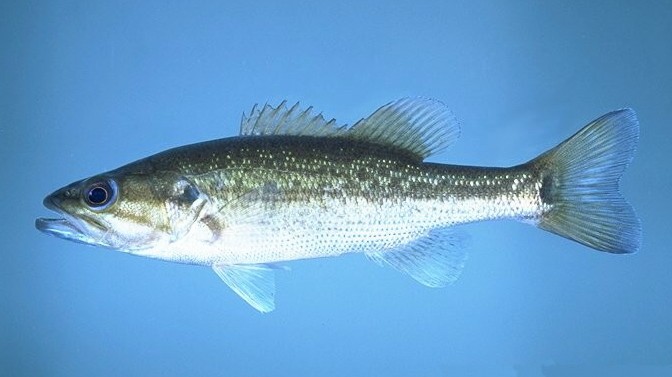

The spotted bass is the black bass that catches anglers off guard. Cast where you'd expect a largemouth and you'll get a fish that fights harder, pulls deeper, and travels in packs, a spotted bass, or "spot." Native to the clear reservoirs and rocky rivers of the South and lower Midwest and now stocked well beyond, spots are aggressive, competitive schoolers that live deeper and in clearer water than their largemouth cousins. Once you learn to find their offshore schools and show them the right finesse and reaction baits, you can catch them by the dozen. This guide covers how to identify a spot, where its schools set up, and the exact techniques, with step-by-step rigging, that trigger them.
New to bass in general? See our companion guides on how to catch largemouth bass and how to catch smallmouth bass.
The Third Black Bass
The spotted bass (Micropterus punctulatus) is often confused with the largemouth, but three features give it away: a jaw that ends under the eye (not past it, like a largemouth), rows of dark spots below the lateral line that form horizontal streaks on the belly, and a rough tooth patch on the tongue that a largemouth lacks. Its coloring is similar, green with a dark blotchy lateral band, but a spot is sleeker and more streamlined.
Most spotted bass run 1 to 3 pounds; a 4-pounder is a very good fish and a 5-pounder is a genuine trophy across most of their range. The famous exception is the Alabama spotted bass subspecies stocked in a few clear California reservoirs (Bullards Bar, New Melones), where spots have topped 11 pounds, the world record. Wherever they live, spots punch above their weight: pound for pound they fight nearly as hard as a smallmouth, with dogged deep runs that make a 2-pounder feel like much more.
How Spotted Bass Are Different
Understanding three habits is the key to catching spots consistently:
- They school. Unlike solitary largemouth, spotted bass group up in packs, especially offshore and in the cooler months. That competitiveness makes them easier to catch once you find them, where there's one, there are usually many, and a hooked fish often brings the whole school up behind it.
- They live deep and love clear water. Spots are comfortable in clear, cool, rocky reservoirs and routinely hold 20, 40, even 60 feet down, deeper than largemouth will go. They relate to hard structure far more than to weeds.
- They chase baitfish. Spotted bass are shad and alewife hunters. Match the forage, natural, translucent shad colors, and follow the bait to find the fish.
Read a spot's world as clear, deep, hard, and schooled, and you're halfway to a limit.
Finding Spotted Bass: Offshore and On the Rock
Spots relate to hard structure and depth. The best places to start:
- Long tapering points and channel swings where the bottom drops into deep water.
- Standing timber and submerged brush along creek and river channels, spots stack in the branches.
- Bluff walls and steep banks that let fish move up and down in the water column without traveling far.
- Offshore humps, ledges, and rock piles in the main lake and major creek arms.
- Marinas and deep docks with brush, which hold spots much of the year.
Electronics earn their keep here, spots are so structure- and depth-oriented that finding the bait and the schools on sonar shortcuts everything. No graph? Work points and channel edges from shallow to deep until you contact fish, then repeat that depth and structure elsewhere.
One more thing that sets spots apart: they roam. A largemouth may live its whole life around one dock, but a school of spots covers water, following bait up and down the creek arms and main lake with the season. That means the fish won't always be where you left them, but it also means that when you find an active school, the action can be fast and furious. Stay mobile, keep checking your best points and channel swings, and let your electronics and the birds working over surfacing shad tell you where the bait, and the spots, have moved.
The Techniques That Trigger Spots
Spotted bass eat both slow finesse presentations and fast reaction baits. Here are the core methods, how to rig each, and when to use them.
The Drop Shot, the ultimate spot catcher
Nothing has a bigger reputation for spotted bass than the drop shot, it hovers a small bait right in a deep school's face.
How to rig it: Tie a drop-shot hook (size 1 to 1/0) to your line 12–18 inches above the end with a Palomar knot, run the tag back through the top of the eye so the hook stands out horizontally, and tie a drop-shot weight (3/16 to 1/2 oz) to the tag end. Nose-hook a 4- to 6-inch straight-tail finesse worm in green pumpkin or watermelon.
How to fish it: Drop it straight down onto a school you've marked, or cast it to structure, let the weight hit bottom, keep a tight line, and shake it gently in place. Deadly at any depth spots hold.
How to Fish a Drop Shot for Spotted BassThe Spybait, clear-water finesse magic
When spots suspend in clear water and won't commit, a spybait, a small, weighted twin-prop bait, draws strikes nothing else can.
How to rig and fish it: Tie a spybait (a DUO Realis Spinbait 80) straight to a light fluorocarbon line. Cast it out, count it down to the depth the fish are holding, and use a slow, steady retrieve, the tiny props spin and the bait rocks with a subtle shimmer that pressured, suspended spots can't resist. Keep it slow and let the bait's built-in action do the work.
How to Fish a Spybait for BassThe Underspin and Swimbait, matching the shad
To mimic a fleeing shad in open water, an underspin (a jighead with a small blade underneath) paired with a swimbait is a spotted-bass staple.
How to rig and fish it: Rig a paddle-tail swimbait (a Keitech) on an underspin head (1/8 to 1/2 oz) so the blade flashes below the bait. Cast to points, timber, and schooling fish, count it down, and retrieve it steadily, keeping it near the bottom or at the school's depth is paramount. The flash-and-thump imitates a shad perfectly. A plain paddle-tail on a jighead or a shaky head worm covers the same water.
How to Fish an Underspin and Finesse SwimbaitThe Shaky Head, a bite when nothing else works
A shaky head, a light jighead with a finesse worm standing up off the bottom, is the confidence bait that saves tough days.
How to rig and fish it: Thread a 4- to 6-inch finesse worm onto a shaky-head jig (3/16 to 3/8 oz), Texas-style so the point is near the surface of the bait. Cast to structure, let it fall to the bottom, and shake it gently in place with slack line so the worm quivers upright. Then drag, pause, and repeat. It looks like a feeding baitfish and gets bitten everywhere spots live.
How to Rig and Fish a Shaky HeadThe Jigging Spoon, deep-water and winter dynamite
When spots are stacked deep, especially in cold water, a jigging spoon dropped straight into the school is the fastest way to load the boat.
How to rig and fish it: Tie a flutter/jigging spoon (1/2 to 1 oz) to your line with a small swivel or split ring to reduce line twist. Position over a school you've marked deep, drop the spoon to their level or the bottom, and snap the rod tip up sharply and let the spoon flutter back down on a controlled line. Nearly every strike comes on the fall, so stay in contact and set on any tick or slack.
How to Fish a Jigging Spoon for Deep BassTopwater and Jerkbaits, for schooling and clear-water fish
When spots push shad to the surface, common at dawn, dusk, and in fall, reaction baits produce fast, exciting fishing.
How to rig and fish them: Fan-cast a walking bait or plopper (a Whopper Plopper) or a small popper into surface-schooling spots and work it steadily; keep casting to the boil to pick off the pack. In cooler, clear water, a suspending jerkbait (a Megabass Vision 110) fished with a jerk-jerk-pause cadence, with long pauses, triggers spots holding on points and channel edges. Both are ideal search baits when fish are active.
How to Catch Schooling Bass on Topwater How to Fish a Jerkbait for BassSeason by Season
- Spring: Spots move up to spawn on hard bottom in clear water, a little deeper than largemouth. Fish points and channel swings with jerkbaits, shaky heads, and drop shots.
- Summer: Fish go deep and offshore, drop shot, underspin, and spoons on humps, ledges, and timber, with topwater on schooling fish early and late.
- Fall: Spots chase shad shallow and into creeks, the year's best reaction-bait window with spybaits, swimbaits, and topwater.
- Winter: Fish stack deep in the warmest stable water; slowly work a jigging spoon, drop shot, or nail-weighted finesse worm through the schools.
Using Your Electronics: The Spotted-Bass Advantage
More than almost any other freshwater fish, spotted bass reward an angler who can use sonar, because they live deep, relate to specific structure, and travel in schools you can actually see on a graph. You don't need a five-figure electronics package, but learning to read what you have pays off immediately.
- 2D sonar shows you the bottom, the depth of the fish, and, critically, the bait. Spots follow shad, so when you find balls of bait suspended over a point or channel, the spots are usually close by. Mark the depth of the bait and fish that exact zone.
- Down-scan and side-scan reveal the standing timber, brush piles, and rock that hold spots, letting you idle a point and pick apart the cover before you ever cast. Drop a waypoint on every brush pile and channel-edge school you find.
- Forward-facing sonar has changed deep-water bass fishing entirely, letting anglers watch a school react to a bait in real time, but it's a tool, not a requirement.
No graph? You can still catch spots by fishing methodically from shallow to deep along points, bluff walls, and channel edges until you contact a school, then repeating that precise depth and structure type across the lake. Spots are creatures of pattern, once you crack the depth and cover they're using that day, the same setup produces fish after fish.
Landing Spots and Keeping the School Fired Up
Because spotted bass school so tightly, how you handle a hooked fish determines whether you catch one or a dozen. When you hook up over a deep school, fight the fish away from the group if you can, and get it in quickly, a spot fights hard and dogs deep, so keep steady pressure and let the rod absorb the runs rather than horsing it. Landing fish efficiently and quietly keeps the school settled and biting. Because spots are aggressive and often deep-hooked on finesse baits, and because they're slower-growing than largemouth, practicing catch-and-release, especially on the bigger females, keeps a fishery strong. Wet your hands, support the fish horizontally, and release it promptly, and that same school will be there to catch again next trip.
Gear for Spotted Bass
Spot fishing is spinning-rod finesse with a baitcaster for the heavier reaction baits:
- Finesse spinning combo: A 7-foot medium-light or medium spinning rod with a Shimano Stradic 2500 or Daiwa Fuego reel handles drop shots, spybaits, shaky heads, and small swimbaits.
- Reaction baitcasting combo: A 7-foot medium to medium-heavy baitcaster with a quality reel throws jerkbaits, underspins, and jigging spoons.
- Line: Spool 10–15 lb braid to a 6–8 lb fluorocarbon leader on the spinning setup, the invisible leader matters in the clear water spots demand, and 10–12 lb fluorocarbon on the baitcaster.
- Baits: Finesse worms, a spybait, an underspin and paddle-tail swimbaits, shaky-head jigs, a jigging spoon, a jerkbait, and a topwater, all in natural shad, green pumpkin, and translucent colors, cover every technique above.
Putting It All Together
Spotted bass reward anglers who can find offshore schools and fish deep finesse presentations. Start by reading the water, clear, deep, hard, and schooled, and work the long tapering points, standing timber, bluff walls, and channel swings where spots set up. Lean on your electronics to find the bait and the schools, then dial in the exact depth and the retrieve until you crack the day's pattern. Once you contact an active school, the same drop shot, spybait, underspin, or jigging spoon will produce fish after fish. Stay mobile, follow the shad and the birds working over surfacing bait, and keep the school settled with quick, quiet landings, and you'll catch numbers of spots that a run-and-gun largemouth approach would never touch.