Fish
Fish Fire
Fire Hike
Hike Bird
Bird

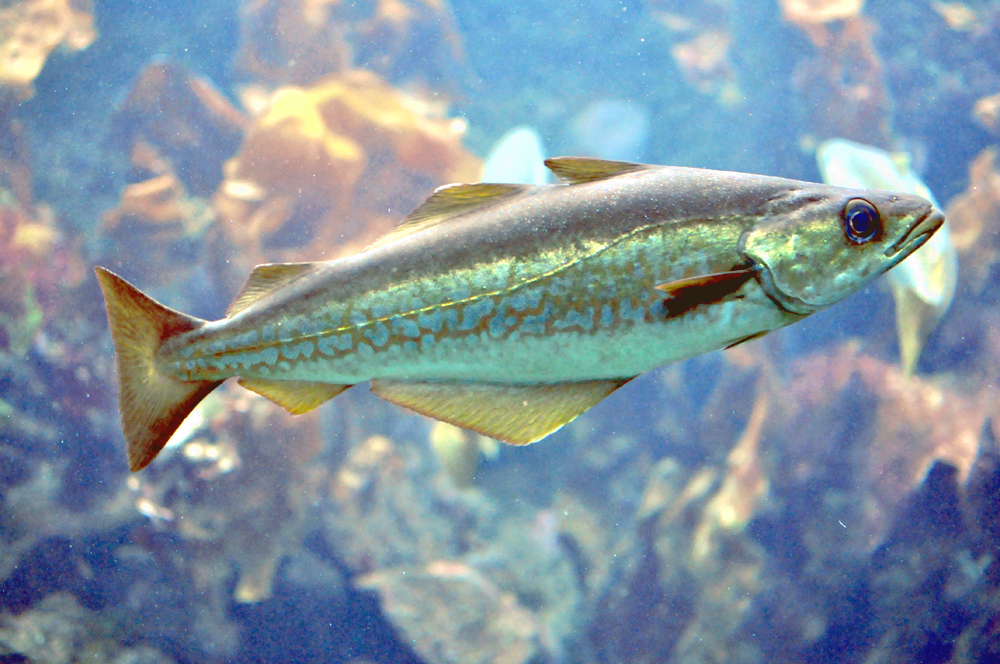

Pollock might be the most eaten fish you've never thought to target. Walleye pollock (Gadus chalcogrammus), also called Alaska pollock, is the backbone of the world's whitefish supply, the fish behind fish sticks, imitation crab, and countless fast-food fillets, and it's astonishingly abundant across the North Pacific. For the recreational angler, pollock are a fast, fun, forgiving light-tackle target: they school in huge numbers, they bite readily on jigs and small rigs, and they make a mild, flaky meal. Learn where they gather and how to work a jig, and you can have nonstop action and a cooler full of fillets.
This guide covers everything: how to identify a walleye pollock and separate it from cod, where and when to find them, the jigging and sabiki tactics that produce, the light tackle that makes them fun, and how to land and cook your catch.
What is a pollock?
Walleye pollock (Gadus chalcogrammus) is a member of the cod family, Gadidae, alongside Pacific cod, haddock, and the Atlantic pollock. It's a slender, elongated fish with a large eye (hence "walleye"), a projecting lower jaw, three dorsal fins and two anal fins like other gadids, and, unlike the true cods, either a very small chin barbel or none at all. Coloration is olive-green to brown on the back, silvery on the sides, often with mottled or speckled markings and a pale belly. Most pollock caught by anglers run modest, often 1 to 3 pounds and up to a couple of feet, though they can grow larger, with the biggest fish pushing well past 3 feet and into the teens of pounds in the richest northern waters.
Walleye pollock are semipelagic schooling fish. Rather than hugging the bottom like Pacific cod, they often suspend in midwater in vast schools, moving up and down in the water column to follow their food, krill, small crustaceans, and small fish. That schooling, midwater habit is the single most important thing to understand about catching them: find the school, get your jig or rig to their depth, and the action can be furious.
It's worth appreciating just how important this fish is. Walleye pollock is one of the largest fisheries in the world by volume, and it's the fish most likely to be in your fish sticks, your fast-food fish sandwich, and the surimi that makes imitation crab. That commercial scale reflects sheer abundance, there are staggering numbers of pollock in the North Pacific, which is good news for the angler, because where pollock live, they tend to live in great quantity. The flip side is that pollock are not a trophy fish; you fish for them for fast action, easy limits, and a good meal rather than for size or a hard fight. Set your expectations accordingly and pollock are one of the most satisfying, high-catch-rate species you can target.
All About Alaska (Walleye) PollockDon't confuse walleye pollock with Pacific cod: the pollock is slimmer, has a larger eye and projecting lower jaw, and lacks the long chin barbel of a true cod. It's also distinct from the Atlantic pollock (Pollachius virens) of the East Coast, though they share the name and similar tactics.
Telling Pollock and Cod ApartWhere and when to find pollock
Walleye pollock range across the North Pacific from California (in the south, uncommon) north through Oregon, Washington, British Columbia, and throughout Alaska and the Bering Sea, where they are one of the most abundant fish on earth. For anglers, the best action is in Alaska and the Pacific Northwest. Focus on:
- Midwater schools over deeper water, Unlike bottom-hugging cod, pollock often suspend well off the bottom. Use your sounder to find the schools, which can show as thick clouds of marks at a given depth.
- Bays, sounds, and nearshore deep water, In Alaska, pollock come within reach of shore anglers off spits, docks, and beaches like the Homer Spit, as well as from boats.
- Structure and current edges, Areas that concentrate bait, drop-offs, points, and current lines, draw and hold pollock schools.
Pollock can be caught year-round where accessible and feed actively in daylight, though low-light periods and moving water often improve the bite. In Alaska they're a common and welcome catch on summer bottomfishing and jigging trips, often mixed in with cod and rockfish. Always check local regulations and limits.
For shore anglers, the Homer Spit in Alaska is a famous example of accessible pollock fishing, but any deep-water access, a dock, a jetty, a steep beach, or a pier over deep water, near a pollock school can produce. Because pollock roam and suspend, shore success is partly a matter of being where deep water comes close to land and the schools move within casting or jigging range. From a boat, the game is simpler: run until you mark schools on the sounder, then drop on them. Pollock frequently share the water with Pacific cod and rockfish, so a productive bottomfishing spot often yields a mixed bag, with pollock providing the fast, steady action between bigger fish.
Keep an eye on the seasons and any bag limits. Walleye pollock are abundant and generally have generous or unrestricted recreational allowances in many areas, but regulations differ by state and region and can change, so confirm the current rules where you fish.
Surf Fishing for Pollock in Homer, AlaskaTechnique 1: Jigging
Jigging is the most effective and enjoyable way to catch pollock. Because they school in midwater, the key is getting your jig to the right depth and working it with an enticing action.
Drop a metal jig to the depth where you're marking fish (or to the bottom, then reel up into the school), and work it with a steady lift-and-drop cadence. Pollock frequently hit on the fall, felt as a tap or sudden slack, so stay in contact and set when you feel the take. Once you're in a school, expect fast, repeated hookups, pollock are aggressive and competitive. Match your jig weight to the depth and current so you can reach and hold the school, and don't be afraid to experiment with the depth until you dial in where the fish are holding that day. A double or triple jig setup can even produce more than one pollock at a time when a school is fired up, turning a good bite into a genuinely wide-open one that keeps the whole boat busy.
Because pollock aren't tackle-shy, jig color and finesse matter less than simply being at the right depth. Chrome, white, glow, and bright patterns all work; the fish's willingness makes this a great method for beginners and kids.
The real skill in pollock jigging is reading your sounder and adjusting depth. Pollock schools can suspend anywhere from just off the bottom to well up in the water column, and they move, so the depth that produced fish an hour ago may be empty now. Watch your electronics, count your jig down to the marked depth, and if the bites stop, work different levels until you re-contact the school. A common productive pattern is to drop to the bottom, then jig steadily upward through the water column a few feet at a time until you find the fish, then stay at that level. When you hook one, note the depth and drop right back to it, pollock rarely travel alone, and a well-marked school can produce dozens of fish in a short window.
Because they hit on the fall so often, keep your line under light tension as the jig sinks and watch for the line to hesitate or jump. Many pollock are missed simply because the angler wasn't paying attention on the drop. A slightly slower, more controlled fall gives the fish more time to eat and gives you more time to detect the take.
Technique 2: Sabiki rigs and bait
When pollock are thick, a sabiki rig, a string of small, flashy baited or tinsel-dressed hooks, is deadly and can produce multiple fish per drop. Lower the sabiki into the school, give it a gentle jigging motion, and pollock will hit the small hooks readily. This is a fun, productive way to fill a cooler quickly and to catch bait-sized fish, and it's especially effective from docks, jetties, and boats over a school.
You can also tip jigs or plain hooks with a bit of cut bait, herring, or squid to add scent, which can help when the fish are less aggressive. Because pollock feed on small prey, keep baits and hooks modest in size.
A sabiki is also a great way to catch small pollock for bait. In much of Alaska and the Pacific Northwest, small pollock make excellent live or cut bait for larger predators like halibut and lingcod, so a quick sabiki session over a school can stock your bait supply for a bigger-game day. Just be mindful of local regulations on bait species and how many you may keep. When targeting pollock for the table rather than bait, a single-hook jig or a sabiki tipped selectively lets you keep the better fish and release the smallest, which is a sensible way to fish a species this abundant.
Sabiki Jigging for Pollock and Other GadidsTackle
Pollock don't require heavy gear, which is part of their appeal:
- Rod: A light to medium spinning or conventional rod is plenty. On light tackle, even modest pollock are fun.
- Reel: A reel with enough line capacity to reach the depth you're fishing, often 50 to 300 feet depending on where the school is holding.
- Line: Braided main line for its thin diameter and depth control, finished with a light leader.
- Jigs and rigs: Small to medium metal jigs, sabiki rigs, and small bait rigs. Nothing heavy is needed unless deep water or current demands more weight to hold depth.
The main tackle consideration is reaching the school. In deep water or strong current, size up your jig or sinker enough to get down and stay vertical; in shallow, calm conditions, go light and enjoy the fight.
Because pollock are not leader-shy and don't have sharp teeth or heavy structure to break you off, you can keep your terminal tackle simple: a jig tied directly to a light leader, or a sabiki dropped straight down, is all you need. This simplicity is a big part of why pollock are such a good species for introducing newcomers to saltwater fishing, there's no complicated rigging, no finicky presentation, and a high probability of steady action. Bring a few spare jigs and sabikis in case of the occasional snag or bite-off from a passing rockfish or cod, and you're set for a productive day.
Landing, handling, and eating
Pollock fight with a spirited pull for their size, especially on light tackle, but they're not powerful bruisers, so landing is straightforward, swing smaller fish aboard or up onto the dock, or use a net for bigger ones. They school, so multiple hookups and fast limits are common once you find them.
For the table, pollock are mild, flaky, and versatile, the same fish that fills fish sticks and fish sandwiches worldwide is excellent fresh. The flesh is soft and delicate, so handling matters: bleed and ice your catch immediately, fillet promptly, and cook fresh for the best texture. Pollock is superb pan-fried, baked, in fish and chips, or in chowder, and it takes to breading and batter beautifully.
Fresh-caught pollock is a revelation to anyone who only knows the fish from the freezer aisle, properly iced and cooked within a day or two, it's sweet and clean, far better than any processed product made from it. The key is care: because the flesh is delicate and can go soft quickly, keep your fish cold from the moment they hit the deck, and don't let a big catch sit warm while you keep fishing. Fillet them the same day if you can. Pollock also freezes reasonably well when handled properly, so a fast limit can stock the freezer for future fish fries. A light breading or beer batter is the classic treatment, but a simple pan-fry with butter and lemon lets the mild, flaky flesh speak for itself.
How to Fillet a PollockBecause pollock flesh is mild and delicate, simple preparations shine; the video below shows an easy pan-fried approach.
How to Pan-Fry Pollock FilletsWhere to catch them
Alaska is pollock country, from the Gulf of Alaska to the Bering Sea, walleye pollock are extraordinarily abundant, and anglers catch them from boats and from shore off spits, docks, and beaches, often mixed with cod and rockfish. British Columbia and Washington also offer good fishing over the right water. Because pollock suspend in midwater schools that shift with the food, a local captain or a good sounder is the key to finding fast action, and once you locate a school the fishing can stay hot for as long as you can keep your jig in front of them. If you're new to the area, scouting where deep water comes close to shore, or simply running until the sounder lights up, puts you on the pollock and the rest of the North Pacific lineup.
If you're fishing the North Pacific, keep building your skills with our guides on how to catch pacific cod, how to catch rockfish, and how to catch lingcod.