Fish
Fish Fire
Fire Hike
Hike Bird
Bird

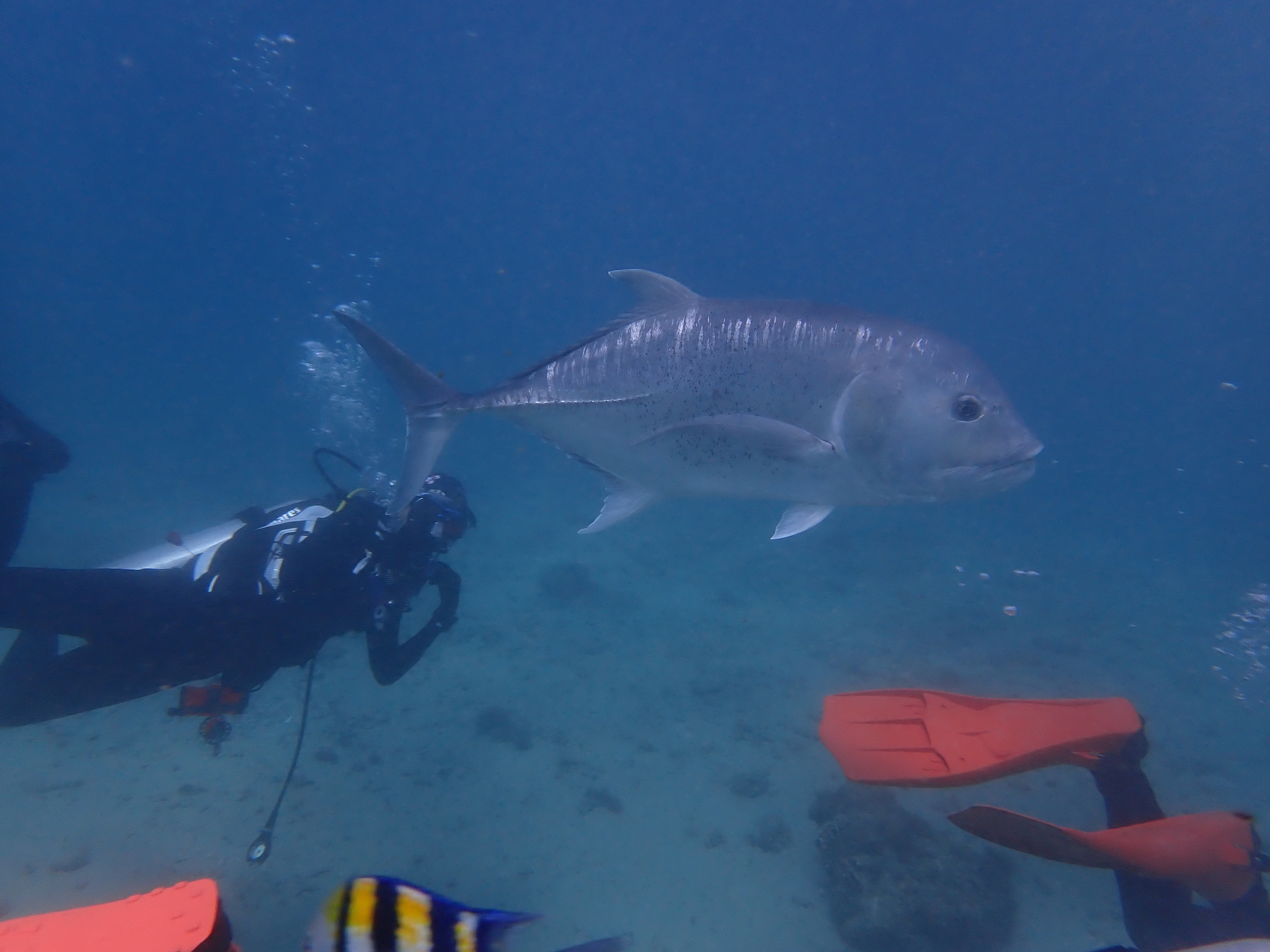

Ask anyone who grew up fishing the rocks and beaches of Hawaii what got them hooked, and the answer is almost always the same: papio. "Papio" is the Hawaiian name for a juvenile trevally, a young jack that has not yet grown into the ten-pound-plus adult that Islanders call ulua. They travel the shoreline in fast, aggressive schools, they crush a lure or a live bait without hesitation, and pound for pound they pull harder than almost anything you can reach from the sand. For generations of Island anglers, catching your first papio off the rocks is a rite of passage, and chasing them stays a lifelong obsession.
Because papio are juveniles, catching them well is really about understanding the trevally family and the shoreline habitat they hunt. Several species fall under the papio umbrella. The bluefin trevally, called omilu, is the most colorful and the most prized by shore anglers, wearing electric-blue fins and scattered blue-black spots. The giant trevally, or white ulua, is silvery and grows into the shoreline monster that ulua fishermen dream about. Golden trevally, bigeye trevally, and a handful of others show up too. This guide covers the tactics that put papio on the rocks across all of them, plus how to tell one from another and how to treat the fishery so it stays strong.
The fastest way to get good at papio is to learn one stretch of shoreline the way a local does, which rocks hold fish on which tide, where the omilu stage, how to land a fish on a slick ledge. Put in the time paying attention to those details, and the occasional lucky catch turns into a pattern you can repeat.
Where and when to find papio
Papio are edge hunters. They patrol the boundary between structure and open water, the drop-off at the outside of a reef flat, the wash along a rocky point, the channel where current funnels bait, the sandy pockets between coral heads. Anywhere small baitfish, crabs, and shrimp gather, papio are close by, slashing through the shallows to ambush them. That means the productive water is often surprisingly close to shore, within an easy cast of the rocks or the beach.
Tide is the single biggest factor in whether they are feeding. Moving water, the strong push of an incoming tide or the pull of an outgoing one over a reef, sweeps bait into predictable lanes and switches the papio on. Slack water, when the tide stops, is usually slow. Pair a good moving tide with low light at dawn or dusk and you have the classic papio window. Summer months, when oama (juvenile goatfish) and other baitfish flood the shallows, bring the most fish and the most consistent action, and matching whatever bait is present is the surest way to get bit.
Wind and water clarity matter too. A little chop and slightly stirred water give papio confidence to move shallow and feed, while dead-calm, gin-clear conditions can push them deeper and make them spooky. Learn a few spots well across different tides and you will start to see the pattern of when each one turns on.
Whipping: the classic papio hunt
Whipping is the heart of shore fishing in Hawaii, and it is how most people catch their first papio. The idea is simple: you cover water actively, casting a lure and working it back so a cruising papio gets a strike-inducing flash of movement to chase. A light to medium whipping rod of nine to eleven feet, paired with a 3000–4000 spinning reel and 20- to 30-pound braid, lets you throw a long way and still handle a fish that bolts for the reef.
The go-to lures are lead-head grubs, small metal jigs, and casting plugs. Fan your casts to cover an arc, keep the rod tip up, and retrieve with a steady sweep-and-reel that makes the lure dart. Papio hit on the move, so a hesitation or a slack line is where you lose them. Early morning and the last hour of light are prime, and moving water, the push and pull of a changing tide over a reef flat, turns the bite on.
How to set up and fish a whipping rig for papio in HawaiiWork your way down a stretch of shoreline rather than planting yourself in one spot. Papio are travelers; if a school is not in front of you, a hundred yards of walking often finds them. Watch for nervous baitfish, diving birds, and the tell-tale flash of a fish turning on your lure.
Dunking and slide bait for bigger papio and ulua
When you want a shot at the larger papio, the ones edging toward legal ulua size, dunking is the tried-and-true Island method. Instead of casting a lure, you soak a bait on the bottom or on a sliding rig and wait for a fish to find it. This is the technique that graduates from papio into ulua fishing, and it rewards patience and a well-tied rig.
A slide-bait setup lets you cast a heavy sinker first to anchor the line, then slide a hooked bait, often a live or fresh piece of oama, akule, or a whole small fish, down the line to the water. It keeps the bait lively and puts it exactly where the sinker holds, which matters when you are fishing a specific ledge or hole. Heavier gear is the rule here: a stout rod, 40- to 80-pound line, and a reel with the drag to turn a fish before it reaches the reef.
Tying and fishing a dunking rig for Hawaii shore fishingDunking is a night-and-tide game as much as a bait game. Many of the biggest fish come after dark on a strong moving tide, and a rod holder, a bell or a tightened clicker, and a comfortable spot to wait are part of the tradition. Set your drag with the reef in mind, the first run decides everything.
Bait quality separates good dunkers from lucky ones. Fresh oama or akule, caught the same day with a light rod or a sabiki, out-fishes frozen bait almost every time, and rigging it so it stays lively on the slide keeps a papio interested. Learn to tie a clean slide rig with a strong swivel, a leader that resists the reef, and a hook matched to your bait size, the knots and the terminal tackle are what hold up when a big fish turns sideways in the current. Scout your ledge in daylight so you know where the snags are before you fish it in the dark, and mark a clear path to a landing spot; hooking a good ulua-class papio is only half the battle when you are standing on wet rock at night.
Plugging and poppers for a topwater rush
Nothing in shore fishing beats watching a papio blow up on a surface plug. Plugging, casting poppers and stickbaits and working them across the top, draws explosive strikes from omilu and white ulua alike, and it is the most visual, heart-stopping way to catch them. Over shallow reef flats and along drop-offs, a plug worked with sharp rod-tip pops throws water and sound that a hunting trevally cannot ignore.
Use a rod with enough backbone to cast a heavy plug and drive the hooks home, and upgrade the split rings and trebles or swap to a strong single hook, because a good papio will test cheap hardware. Match the size of your plug to the bait around; small poppers for schooling papio, bigger stickbaits when you are hunting the larger fish. Vary your retrieve, a steady walk-the-dog, a chugging pop-pop-pause, until the fish tell you what they want.
Whipping and plugging for omilu and papio in HawaiiTopwater shines in low light and over structure that concentrates bait. When a school is fired up, a surface plug can out-fish everything else, and the strikes are unforgettable.
Whipping with grubs and soft plastics
Soft-plastic grubs on a lead head are the most consistent papio producer for a reason: they are cheap, they cast well, and they imitate the small baitfish and shrimp that papio eat all day. This is the setup that fills a first-timer's cooler and still catches fish for the veterans. A curl-tail or paddle-tail grub of three to five inches on a quarter- to one-ounce head, matched to the depth and current, covers most shoreline situations.
Color matters less than action and presence, but a few staples, white, chartreuse, motor-oil, and a dark silhouette for low light, cover the bases. Rig the grub straight so it swims true, and work it with a lift-drop-reel cadence that lets it flutter, which triggers reaction strikes as it falls. Many anglers pair a grub under a bubble float to add casting distance and keep the lure in the strike zone longer.
Whipping with grubs for papio and reef fish in HawaiiCarry a range of head weights so you can adjust to wind and current, and re-tie often, the reef and the papio's raspy mouth chew through leader fast. When the bite is tough, downsizing your grub often turns a slow morning around.
Pay attention to how the strikes come. A papio often hits on the drop, so the take can feel like a sudden tick, a heaviness, or simply your line jumping, set the hook on anything unusual rather than waiting for a rod-bending pull. Keep your line as tight as the current allows so you stay in contact with the grub through the fall. Once you are hooked up, keep steady pressure and lead the fish away from the nearest coral; a papio's whole game is to reach structure and cut you off, and a moment of slack near the rocks is all it needs. Landing them on a slick ledge is its own skill, pick your spot, time the swell, and slide the fish up on the wash rather than trying to lift it out of the water.
Identifying your papio: omilu, white ulua, and the rest
Part of the fun, and part of fishing legally, is knowing which trevally you have landed. The bluefin trevally, omilu, is unmistakable once you have seen one: a silvery-blue body dusted with small blue and black spots, and bright electric-blue fins that glow when the fish is fresh. It is the papio most shore anglers hope for, and a big omilu off the rocks is a genuine trophy.
The giant trevally, white ulua, is more silvery and plainer, with a steeper head as it grows; these are the fish that become the hundred-pound-class ulua of Island legend. Golden trevally show yellow with dark bars when young, and bigeye trevally run darker with a larger eye. Learning the differences helps you target the species you want and stay on the right side of the size rules that apply to jacks.
Identifying trevally speciesHawaii manages ulua and papio with a shoreline in mind: a legal minimum size for jacks means the smallest papio should go back to grow, and many shore anglers voluntarily release omilu to protect the fishery they love. Know the current state size and bag rules before you keep a fish, measure honestly, and when in doubt, let it swim. The papio you release today is the ulua you hook in a few years.
Cleaning and eating papio
Papio are excellent eating, which is a big part of why they matter so much to Island families. Fresh from the water, the meat is firm and clean, and a legal-sized papio makes a fine meal grilled, pan-fried, or turned into poke if the fish is bled and iced right away. As with all trevally, quality on the plate starts the moment you land the fish, bleed it, cool it fast, and keep it out of the sun.
Scale and gut the fish, then fillet it or cook it whole; the skin crisps beautifully on a hot grill. Many local cooks favor a simple preparation, shoyu, ginger, and green onion, that lets the fresh fish carry the plate, and a whole small papio steamed Chinese-style is a classic Island dinner.
Cleaning and cooking papio (bluefin trevally) in HawaiiA word on the larger fish: big trevally, especially large ulua from certain reefs, have been associated with ciguatera in some Pacific regions, so many people keep smaller papio for the table and release the biggest fish. Keep what you will eat, release what you will not, and the shoreline stays generous.
Bringing it together
Catching papio is really about learning your shoreline, the rocks that hold fish, the tide that turns the bite on, the lure or bait that matches the day. Whip a grub to find schooling fish, dunk a slide bait for a shot at the bigger ones, and throw a plug when you want the strike of a lifetime. Learn to tell your omilu from your white ulua, honor the size rules, and treat the fishery with the respect that keeps generations of Islanders coming back to the rocks.
If you want to shorten the learning curve, spend a morning alongside anyone who already fishes your stretch of coast. Watching how a seasoned shore angler reads the tide, times the swell, and picks a landing spot teaches more than a season of guessing on your own.
For more shoreline and reef targets, see our guides on how to catch giant trevally, how to catch roosterfish, and how to catch bonefish.