Fish
Fish Fire
Fire Hike
Hike Bird
Bird

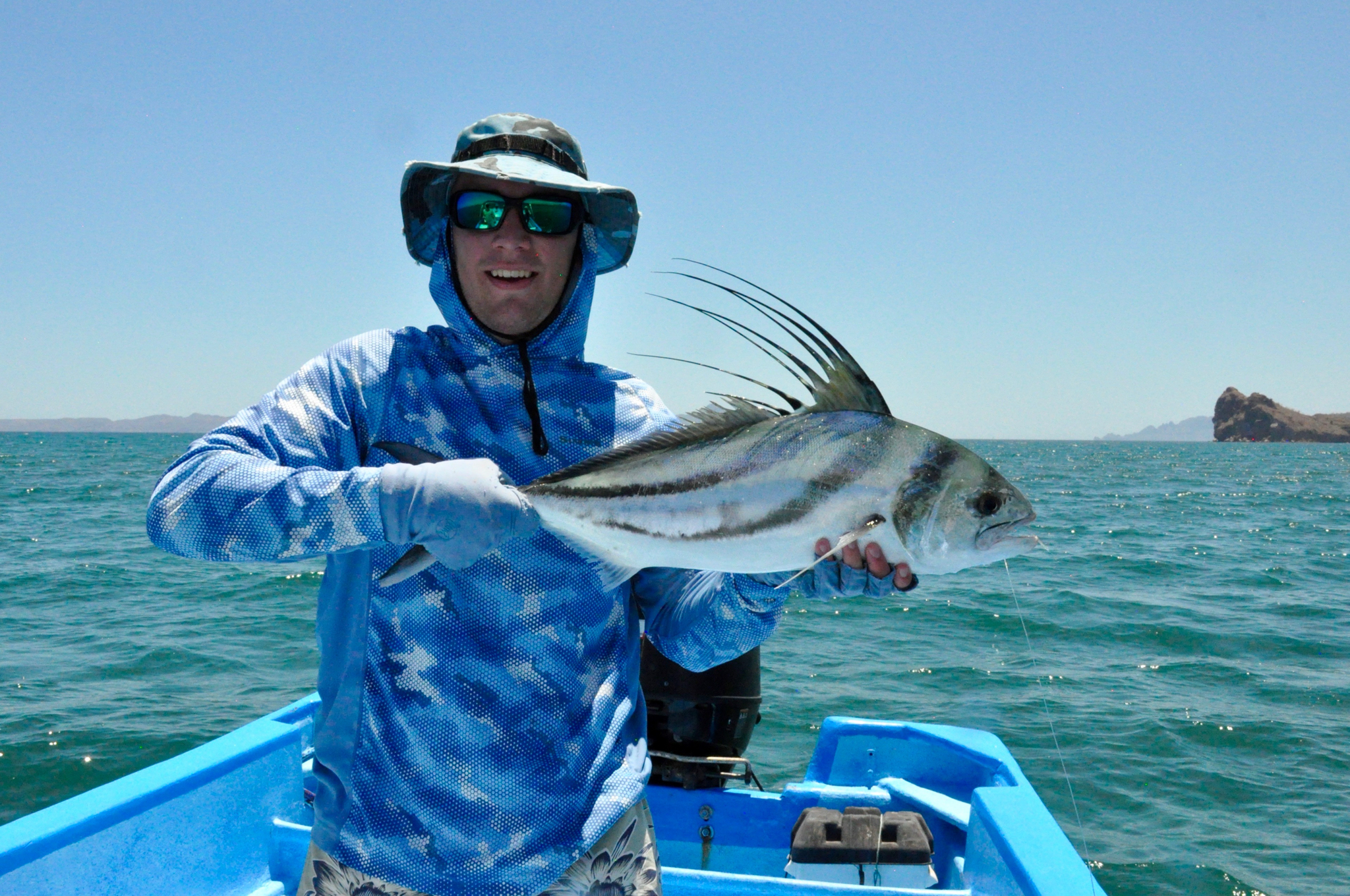

There is no fish quite like a roosterfish. That improbable seven-spined dorsal comb, flaring up like a rooster's crest as the fish charges down a bait in the surf, is one of the most electric sights in all of angling. Found only in the eastern Pacific, from the Sea of Cortez and Baja down through mainland Mexico, Costa Rica, Panama, and on to Peru, the roosterfish (Nematistius pectoralis) is a coastal speedster that patrols beaches, points, and reefs, hunting baitfish in the wash. Hook one and it goes screaming down the beach on runs that will empty a reel and leave your heart pounding. For traveling anglers, catching a big rooster is a genuine bucket-list achievement.
Roosterfish are also almost entirely a catch-and-release sport fish, they're poor eating, so anglers pursue them purely for the thrill. That makes them one of the great pure sport-fishing targets on the planet: you're chasing the fight, the visual drama of the comb, and the sheer difficulty of fooling a big one. This guide covers where to find them, the baits and lures that work, and the techniques, from the beach and from a panga, that put a rooster on the line.
Understanding the Roosterfish
The roosterfish is unmistakable and, in fact, is the only member of its family, it's not a jack, though it's related to and behaves much like the jacks, hunting fast and hard in coastal waters. Its signature feature is the dorsal fin: seven long, trailing spines that lie flat when the fish is cruising and rise into a spectacular comb when it's excited or chasing bait. The body is silvery with two bold dark stripes curving back from the head, and pushed to size these fish are big, commonly 20 to 40 pounds, with true giants topping 60, 70, or even 80 pounds.
Roosters are inshore fish. They love structure and moving water along the coast: beaches with a drop-off, rocky points, reefs, river mouths, and estuary edges where bait gets funneled. They frequently hunt in very shallow water, and one of the great thrills of roosterfishing is watching a big fish push a wake through the wash as it chases a bait right up onto the sand. They're most active in warmer months when bait is thick, and they range coast-hugging up and down their beaches following the food.
How to Catch RoosterfishLive Bait: The Go-To Method
The single most productive way to catch roosterfish is with live bait. Roosters are baitfish hunters, and a lively mullet, ladyfish, mackerel, blue runner, or other local baitfish swimming naturally is what they want. From a panga, the classic technique is slow-trolling or drifting live baits along the beaches, points, and reefs where roosters patrol, covering water until a fish crashes the bait, and when it does, the strike is violent and the run immediate. Bridle or nose-hook the bait so it swims strongly, and be ready: a rooster often follows and swipes before committing, so let it eat before you come tight.
Roosterfish on Live BaitGuides frequently use a teasing / bait-and-switch approach: pull a hookless teaser or a live bait to draw a rooster up and get it fired up, then present the hooked bait (or, for fly anglers, the fly) to the excited fish. A roosterfish in full chase mode with its comb up is far more likely to commit, and teasing them into that state is an art the best captains have mastered.
Surf Fishing from the Beach
For many anglers, the ultimate way to catch a rooster is on foot, from the beach. Roosters cruise the surf line hunting bait, and casting to them from the sand, sight-fishing to a cruising fish or a bait school, or blind-casting likely water, is as raw and exciting as inshore fishing gets. Walk the beach, watch for nervous bait, birds, or the wake and flash of a hunting rooster, and put a live bait or lure in front of it. When a big rooster eats in the wash and turns to run down the beach, you'll be sprinting after it. Cabo, the East Cape of Baja, and the beaches of Costa Rica are legendary for this fishery.
Surf Fishing the Beach for Giant RoosterfishTopwater Poppers: Explosive Strikes
If you want heart-stopping visual strikes, throw a topwater popper. Roosters will chase and demolish a popper or a stickbait worked fast across the surface, blowing up on it in a spray of white water with the comb flared. This is the most exciting way to catch them on artificials, cast to cruising fish or to structure, work the plug with a fast, erratic, chugging retrieve to imitate a fleeing baitfish, and hang on. Keep the lure moving even when a fish is following; a rooster often won't commit to a plug that stops. When they eat topwater, it's unforgettable.
Catching Roosterfish on Topwater PoppersFly Fishing for Roosterfish
Roosterfish are one of the premier, and most difficult, targets in saltwater fly fishing. Sight-casting a big fly to a cruising rooster in the surf, or teasing one up on a hookless bait and then switching in the fly, is a supreme challenge that draws fly anglers from around the world to the beaches of Baja and Central America. It demands a heavy fly rod (12-weight territory), the ability to cast fast and accurately to a moving fish, and the nerve to strip-set into a screaming take. Landing a big roosterfish on the fly from the beach is considered one of the crowning achievements in the entire sport.
Fly Fishing for Giant RoosterfishPanga Fishing: The Classic Trip
Most roosterfish are caught from a panga, the simple, seaworthy open skiff that is the workhorse of the eastern Pacific. A local captain who knows the beaches, the points, and where the bait is holding will run you along the coast, catch or net live bait, and put you on fish. The panga fishery is accessible, affordable, and incredibly effective: you cover miles of productive coastline, and the captain's knowledge of where the roosters are patrolling on a given day is worth everything. For a first roosterfish, a day on a panga with a good captain is by far the highest-percentage approach.
Roosterfish Tips, Tackle, and TacticsTackle for Roosterfish
Roosterfish are fast, powerful, and run hard, so you need tackle to match:
- Rod and reel: A stout medium-heavy to heavy inshore spinning or conventional outfit with a smooth, strong drag and plenty of line capacity, roosters make long, blistering runs, so you need line to give. Beach anglers favor long spinning rods for casting distance; panga anglers use shorter, powerful sticks.
- Line and leader: Heavy braided main line for capacity and low stretch, with a strong mono or fluorocarbon leader. Roosters aren't leader-shy the way some fish are, but the leader must handle a hard-running fish near structure and sand.
- Hooks and lures: Strong live-bait hooks (circle hooks are excellent for clean, healthy releases), big topwater poppers and stickbaits, and heavy flies for the fly crowd.
- Release gear: Since roosters are released, keep them in the water as much as possible, handle them carefully, and revive them fully before letting go.
The Fight: What to Expect
When a big roosterfish eats, be ready for one of the hardest-pulling fish of its size in the ocean. The first run is the signature: a long, screaming, unstoppable sprint, often down the beach or straight out to sea, that peels line off the reel and tests your drag and your nerve. A rooster fights with the dogged, muscular power of the jack family, using its broad body to turn sideways and bulldog against you in surges, and a fish hooked in shallow surf may run parallel to the beach for a hundred yards or more, forcing you to chase it on foot.
The key is a smooth, firm drag and steady pressure, don't try to stop that first run, let the fish burn itself out against the reel, then work it back with the rod. Near the end, roosters often make short, powerful surges when they see the boat or the beach, so keep the pressure even and be patient. Landing a genuine trophy rooster after a long, sweaty battle is an experience anglers remember for the rest of their lives.
Reading the Beach: Sight-Fishing Tactics
Much of the magic of roosterfishing is visual. On the beach and in the panga, you're often hunting fish you can see, and learning to read the water is a huge advantage. Watch for nervous bait flickering at the surface, diving birds working a bait school, and the tell-tale wake, flash, or raised comb of a hunting rooster pushing through the shallows. When you spot a cruising fish or a bait school under attack, get a bait or lure in front of it quickly and lead the fish so your offering crosses its path naturally.
Polarized sunglasses are essential, they cut the glare and let you spot fish and structure you'd otherwise miss. The best roosterfish anglers spend as much time watching the water as they do casting, because a well-placed cast to a fish you've seen beats a hundred blind casts to empty water. This is why a sunny day with good visibility is often prime: you can actually see the fish and target them.
Roosterfish Destinations
Roosterfish are a traveling angler's prize, and a handful of destinations stand out. In Baja California, the East Cape (the beaches from La Ribera to Los Barriles) and the Cabo region are world-famous for both panga and beach fishing, with a strong summer season. Mainland Mexico's Pacific coast, around Puerto Vallarta and points south, also produces well. Costa Rica and Panama offer year-round roosterfishing along their Pacific beaches and points, with the added draw of teasing big fish up for fly and topwater. Farther south, the fishery continues into Ecuador and Peru, where some of the largest roosters of all are caught in cooler, bait-rich waters. Wherever you go, hiring a knowledgeable local captain or beach guide dramatically shortens the learning curve and gets you on fish fast, they know the beaches, the tides, and where the bait and roosters are holding on any given day, which is worth far more than any single rod or lure you could bring.
Timing and Conditions
Roosterfish fishing is best in the warmer months when water temperatures climb and baitfish move onto the beaches, broadly late spring through fall across much of their range, though the exact peak varies by region (the East Cape of Baja, for instance, has a strong summer season). Beyond season, the keys are:
- Bait presence. Roosters follow the bait. Beaches, points, and river mouths loaded with mullet or other baitfish are where you'll find them.
- Moving water and structure. Points, drop-offs, reefs, and the edges of estuaries concentrate fish. Tidal movement that sweeps bait around structure fires up the bite.
- Low light and cloud cover can extend the bite, but roosters hunt the beaches through much of the day, and sight-fishing is often best when the sun is up and you can see the fish.
Common Roosterfish Mistakes
- Setting too soon on live bait. Roosters often swipe and follow before eating. Let the fish take the bait and turn before coming tight, circle hooks help enormously here.
- Stopping the lure. A rooster chasing a popper will frequently refuse it the instant it stops. Keep it moving fast and erratic all the way to the rod tip.
- Under-gunning the tackle. These fish run hard and far. Too little drag or line capacity and a big rooster spools you or breaks off.
- Fishing away from bait. No bait, no roosters. Spend your effort where the baitfish are, and cover water until you find them.
- Mishandling released fish. They're a release species, a rooster held too long out of water for photos may not survive. Keep it wet, support it, and revive it.
Put It All Together
Catching a roosterfish comes down to finding the bait along warm-water beaches, points, and reefs; presenting a lively live bait, a fast topwater, or a fly to a cruising or teased-up fish; using tackle stout enough to survive long, blistering runs; and releasing your catch healthy. Whether you wade the surf of the East Cape, throw poppers off a Costa Rican point, or slow-troll live baits from a panga, the payoff is the same: that unmistakable comb rising as a big rooster charges the bait, and a run that will make your reel scream. It's one of the great experiences in saltwater fishing.
The roosterfish shares its warm coastal world with other hard-charging predators. The bulldog jack crevalle hunt the same beaches and eat the same topwaters, and across the tropical Pacific the mighty giant trevally bring the same reef-crushing power on an even bigger scale. Learn the roosterfish and you've unlocked one of the eastern Pacific's true prizes.
Ready to chase the comb? Do your homework on the beaches and points of Baja and Central America, time your trip to the warm-season bait push when the mullet flood the wash, and be ready to move fast when a big rooster lights up behind a bait, that comb rising in the surf is the roosterfish of a lifetime, and it's worth every mile of travel to see it.