Fish
Fish Fire
Fire Hike
Hike Bird
Bird

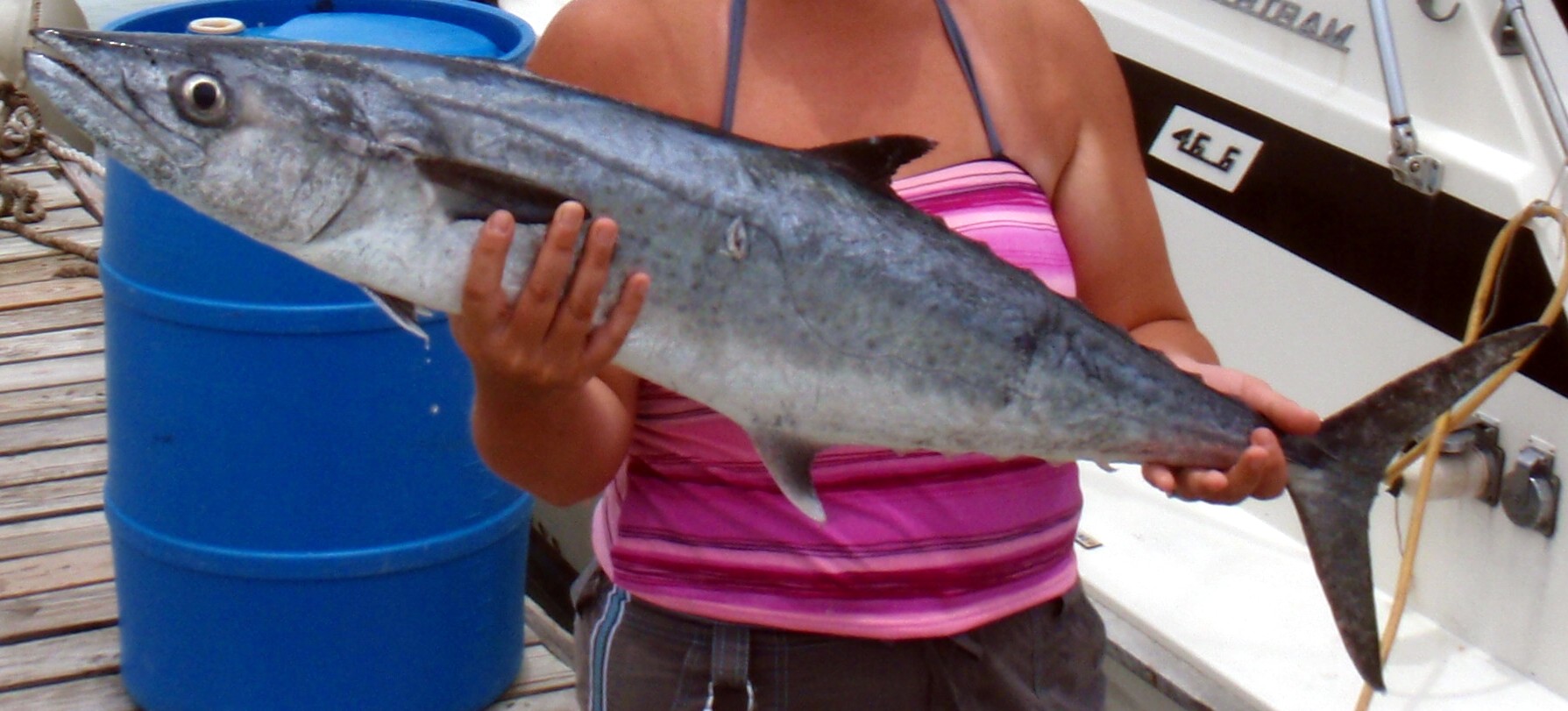

The king mackerel is a missile with fins, a big, sleek, razor-toothed member of the mackerel clan that patrols the nearshore reefs, wrecks, and bait schools, then "skyrockets" clear of the water when it inhales a live bait and peels a hundred yards of line off your reel in one blistering, drag-screaming run. "Kingfish" (or just "kings") are the marquee target of countless nearshore anglers and a fixture of Gulf and Atlantic tournament fishing, from schoolie "snakes" to giant "smokers" over 50 pounds. Catching them is a game of trolling and drifting the right baits over the right structure, and rigging with wire and a stinger hook to beat both their teeth and their maddening habit of biting a bait clean in half. This guide covers how kings behave and where to find them, and every core technique, with step-by-step instruction, to catch them.
Kings share the nearshore with their smaller cousin and other toothy pelagics, see our guides on how to catch Spanish mackerel and how to catch cobia.
The Smoker King
The king mackerel (Scomberomorus cavalla) is the largest of the Atlantic mackerels, a long, streamlined, silvery-steel torpedo with a deeply forked tail and a mouth of sharp, shearing teeth. Adults lack the bright gold spots of the Spanish mackerel; the surest ID is the lateral line, which drops sharply downward below the first dorsal fin, and the lack of a black patch on the front dorsal (which the Spanish has). Small kings are sometimes confused with big Spanish, so know the differences (they have very different regulations).
Kings come in two loose classes: the smaller "snakes" or schoolies of 5 to 15 pounds, and the big "smokers", the trophy fish that run 20 to 50-plus pounds and earn their name by "smoking" a reel on that first run. They're found along the Atlantic and Gulf coasts, nearshore to offshore, migrating with warm water and bait. Kings are decent eating, especially the smaller ones smoked, though the largest fish carry a ciguatera risk in some regions and are often released. Above all, kings are prized as a fast, powerful, spectacular sport fish, few inshore-adjacent species run like a smoker king.
The Nearshore-Offshore Predator
Two traits define king fishing. First, kings are fast, roaming pelagic predators that follow bait, menhaden (pogies), blue runners (hardtails), cigar minnows, threadfin, and ribbonfish, around reefs, wrecks, ledges, bait schools, and color/temperature changes, nearshore to well offshore. Find the bait and the structure, and you find the kings. Second, and this dictates all your rigging, kings have shearing teeth and a habit of slashing a bait in half from behind, so you must fish a wire leader and a "stinger" (trailing treble hook) to both survive the teeth and hook the short-striking fish.
Two practical takeaways. Present natural baits (live or dead) at a slow troll or drift around structure and bait, this is overwhelmingly a bait-and-troll fishery. And always rig wire with a stinger, a king will bite through mono instantly and will often hit the tail of a bait, so the stinger hook back by the tail catches those short strikers. Fish the bait and structure, and rig for the teeth and the short strike, and you're set up to catch kings.
Where and When to Find Kings
Kings relate to bait and structure across the nearshore and offshore. Target:
- Nearshore reefs, wrecks, ledges, and hard bottom, magnets for the bait kings follow.
- Bait schools (pogies, cigar minnows) and the areas around them, kings shadow the bait.
- Color changes, temperature breaks, and rips offshore, where bait and predators concentrate.
- Piers, big kings cruise past deep pier ends (the classic "pier king" fishery on live bait under a balloon).
- Nearshore in the migrations, kings push close to the beaches when bait is thick.
Timing follows the warm-water migration: kings arrive with warming water and are most abundant from spring through fall (year-round in the far south), keying on the presence of bait. Many areas have famous spring and fall king runs, and a whole tournament culture built around them. Find warm water, bait, and structure, and time the runs, and you'll find kings.
The Techniques That Catch King Mackerel
Kings are caught mostly by trolling and drifting baits over structure. Here are the core methods, how to fish each, and when to use it.
Slow-Trolling Live Bait, the tournament technique
Slow-trolling live bait on a wire stinger rig is the premier king mackerel method, especially for big smokers, a lively bait dragged slowly over structure is irresistible.
How to fish it: Hook a live blue runner, menhaden, cigar minnow, or threadfin on a wire stinger rig (a nose hook plus a trailing treble "stinger" near the tail), and slow-troll it (about 1–3 mph, just enough to keep the bait swimming) over reefs, wrecks, and bait schools, often with a downrigger or planer to fish different depths. When a king eats, it skyrockets or the drag screams, let it run against a light drag, then come tight. The lively bait and the stinger for short strikers make this the deadliest big-king technique, and the foundation of the tournament game.
Slow-Trolling Live Bait for King MackerelTrolling Dead Bait, cigar minnows and ribbonfish
When live bait is scarce, trolling rigged dead baits, brined cigar minnows and ribbonfish, is a proven, effective king technique.
How to fish it: Rig a dead cigar minnow or a ribbonfish on a wire stinger rig (often behind a small skirt or "duster" for color and to protect the bait), brine your baits ahead of time so they're tough and swim well, and troll them at a moderate speed so they swim naturally over structure and bait. A ribbonfish wobbling behind the boat is a big-king favorite. Dead-bait trolling lets you cover water and keep baits in the water when catching live bait isn't practical, and it consistently produces kings, including smokers.
Cigar Minnow Rig and Brine Tips for KingfishHigh-Speed Trolling, cover water with spoons and plugs
High-speed trolling with spoons and plugs covers a lot of water quickly to locate and catch kings, a good search technique and a way to fish without bait.
How to fish it: Troll spoons (a Drone spoon behind a planer), diving plugs, or skirted lures at a faster clip (6–10+ mph) over structure, bait, and color changes, using planers or trolling weights to get the spoons down to the fish. The fast-moving flash triggers reaction strikes from kings. High-speed trolling excels for covering big water to find scattered fish and for putting schoolie kings in the boat quickly, and it's a simpler, bait-free option. Rig with wire, as always, for the teeth.
Saltwater Trolling Lures for KingfishKite Fishing and Drifting Live Bait, present it up top
Kite fishing and drifting live baits present a struggling bait at the surface where kings crush it in a spectacular skyrocket, a favorite from anchored or drifting boats.
How to fish it: Use a fishing kite to hold live baits (blue runners, goggle-eyes) splashing at the surface away from the boat, or simply drift/float live baits (under a balloon or float) over structure and bait schools, letting them swim naturally. The commotion of a bait struggling at the surface draws explosive, airborne king strikes. Kite fishing keeps baits presented perfectly and spread out, and it's deadly for big kings (and sailfish and other pelagics). Drifting live baits over a wreck or reef is a simpler, equally effective version.
How to Rig and Drift Live Bait with a KiteThe Stinger Rig, the essential king rig
Because kings shear baits and cut line, the wire stinger rig is the single most important piece of king mackerel tackle, master it and you'll hook the short strikers.
How to fish it: Build a stinger rig from single-strand or knottable wire (No. 4–7): a main hook to hold the bait through the nose or back, and a short wire dropper to a small trailing treble "stinger" hook positioned back near the bait's tail. Because kings so often bite a bait in half from behind, the trailing treble catches those fish that would otherwise just steal the tail. The wire survives the teeth. Rig live and dead baits alike this way. Learning to tie and fish a good stinger rig is the key skill that turns king bites into landed fish.
How to Rig Stinger Hooks for KingfishReef, Wreck, and Pier Fishing, where the kings roam
Fishing over reefs and wrecks, and from the big fishing piers, targets the structure and cruising lanes kings use, and is how many anglers (including those without a big boat) catch them.
How to fish it: From a boat, anchor or drift over a productive reef or wreck and slow-troll, drift, or float live baits around it. From a pier, float a live blue runner or bait under a balloon off the end of the pier where big kings cruise (the classic "pier king" setup), or troll a bait from a pier cart. Chumming can draw fish and bait to your spot. Concentrating on the structure and the bait-holding areas puts your baits where kings hunt, and the pier king fishery in particular has a devoted following for shots at big smokers from shore.
King Mackerel Tips for BeginnersFighting a Smoker
The moment a big king eats is unforgettable, often a skyrocketing strike as the fish launches clear of the water on the bait, followed instantly by a screaming run that can strip a hundred yards or more of line in seconds. This first run is why kings are called "smokers," and mishandling it is how most big fish are lost.
The keys: fish a light, smooth drag and let the fish run, do not try to stop that first blistering run, or you'll pull the hooks or break off. Keep the rod up, let the drag and the line stretch do their work, and only begin to gain line once the run slows. Kings often make several strong runs, so be patient and keep steady pressure through each one. Clear your other lines to avoid tangles when a fish is hooked and running. And because kings are hooked on trebles and wire, handle them carefully at the boat, use a gaff (for keepers) or long pliers and a controlled grip, keeping clear of the thrashing fish, the flying trebles, and those teeth. Beat that first smoking run, and a big king is yours.
The Kingfish Tournament Game
King mackerel have inspired one of the most competitive and well-organized tournament scenes in saltwater fishing, especially along the Gulf and Southeast coasts, where fleets of dedicated "kingfish" boats chase the biggest smoker of the day for serious prize money. That tournament culture has driven the refinement of the whole live-bait, slow-troll, wire-stinger approach this guide describes, the light-drag rods, the elaborate bait-catching and live-well systems, and the finesse rigging all trace back to anglers trying to fool and land the one giant king that wins.
You don't have to fish tournaments to benefit from what they've taught: the same slow-trolled live bait on a well-tied stinger rig that wins tournaments will catch you kings on any given day. But if you catch the king bug, there's a whole competitive world to explore, from local club events to big-money open tournaments, a fun, social, and challenging way to test your smoker-king skills against the best. Either way, hooking a big king and surviving that first smoking run is a thrill that keeps anglers coming back.
Gear for King Mackerel
King gear is medium-heavy trolling and drifting tackle with a light, smooth drag for the run:
- Rod and reel: A medium-heavy 7-foot trolling/live-bait rod with a conventional reel (or a large spinning reel) holding plenty of line and a smooth drag, kings run far, so you need line capacity and a drag you can feather.
- Line: 15- to 30-lb monofilament or braid (mono's stretch is forgiving on the strike and run).
- Leader and rig (essential): Single-strand or knottable wire (No. 4–7) stinger rigs with a main hook and a trailing treble stinger, mandatory for the teeth and short strikers.
- Terminal tackle and lures: Stinger rigs, skirts/dusters, spoons (Drone) and planers for high-speed trolling, and floats/balloons and a kite for surface baits.
- Bait: Live blue runners, menhaden, cigar minnows, and threadfin; rigged dead cigar minnows and ribbonfish.
Eating Kings, Bleed, Ice, and Mind the Big Ones
King mackerel are good eating handled right, the smaller "snake" kings are excellent smoked or grilled, with rich, flavorful meat, and the golden rule (as with all mackerels) is to bleed and ice them immediately for the best quality. One important caution: large king mackerel can carry ciguatera toxin in some tropical regions, and their high position in the food chain means big fish accumulate more, so many anglers keep smaller kings for the table and release the giant smokers. Follow your area's size and bag limits and any consumption advisories, ice your catch immediately, and enjoy smaller kings smoked, a regional delicacy.
Putting It All Together
King mackerel fishing rewards knowing the structure, the bait, the migration timing, and the rigging, dial in all four and you're set up to get tight to a smoker. Find the nearshore reefs, wrecks, ledges, and bait schools; time the warm-water spring and fall runs when the kings push close; slow-troll a lively bait or a brined ribbonfish over the fish-holding structure; and tie a good wire stinger rig to beat the teeth and the short strikers. It's a fishery with a deep tournament culture and a big payoff, few nearshore species deliver a skyrocketing strike and a hundred-yard, drag-screaming run like a big king. Scout the reefs, wrecks, piers, and boat launches near you, watch the water temperature and the bait reports, and go put a smoker on the line.