Fish
Fish Fire
Fire Hike
Hike Bird
Bird

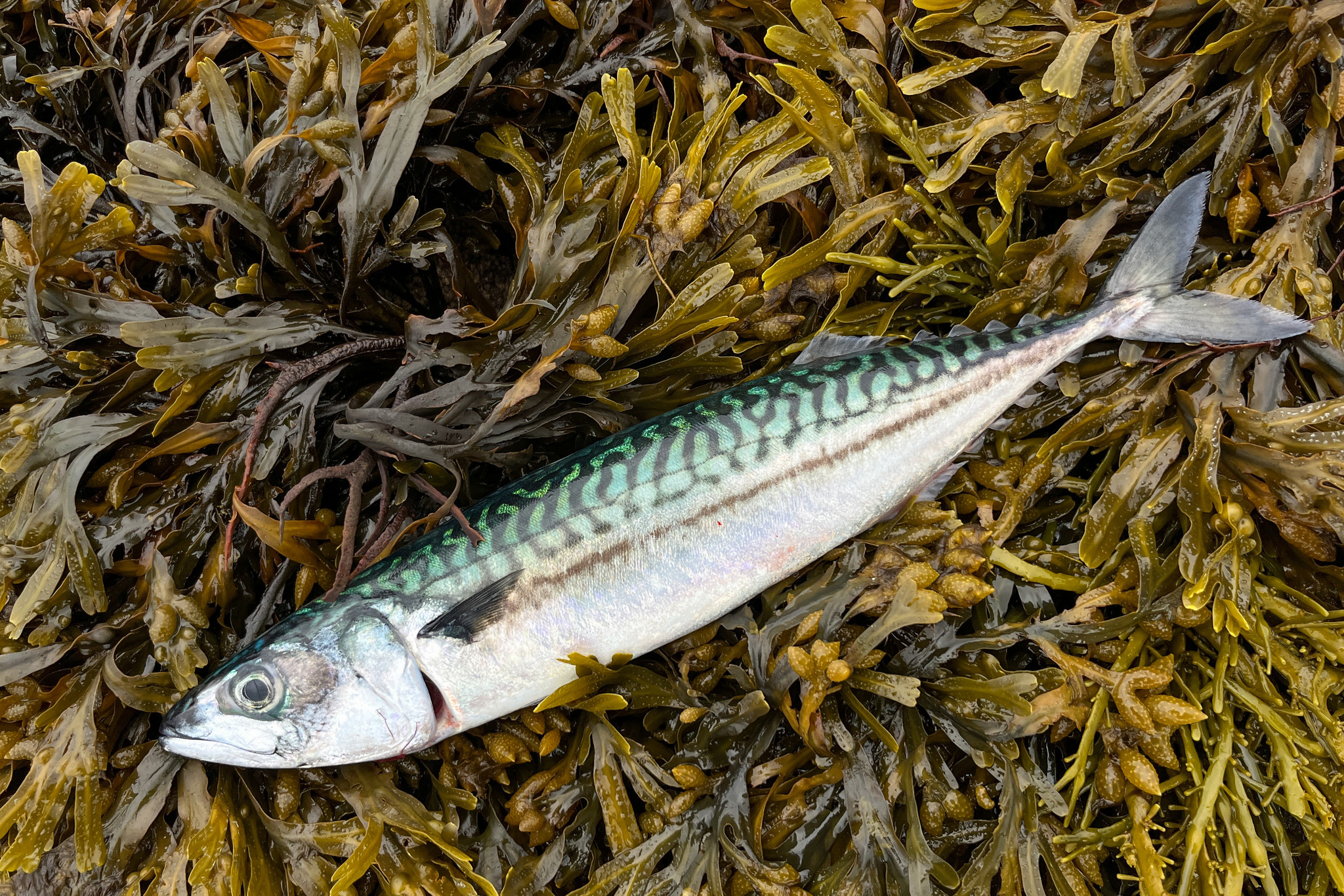

Few fish deliver as much fun for as little effort as the Atlantic mackerel. When the shoals push inshore in summer, they turn piers, jetties, and boats into a nonstop hookup zone, these fast, streamlined predators hit lures and baited hooks with abandon, fight far above their weight, and school in numbers that let a single drop produce a string of fish at once. They are the fish that hooks countless kids and beginners on saltwater angling, and at the same time they are beloved by experienced anglers as both a table fish and the finest live and cut bait you can put on a hook for bigger predators.
Atlantic mackerel (Scomber scombrus) are unmistakable: a torpedo-shaped body built for speed, a brilliant blue-green back crossed by wavy, tiger-stripe dark bars, and a bright silver belly. They have no swim bladder and must keep swimming, which is part of why they are such tireless fighters. Most run a quarter-pound to a pound, with bigger "joey"-graduated fish stretching toward two pounds. They travel in vast, fast-moving schools, hunting plankton, small fish, and fry near the surface, which is exactly why the tactics below, strings of small shiny hooks and small flashy lures, work so well.
This guide covers the whole mackerel toolkit: sabiki and feather rigs, spinning with metal lures, fishing from shore and boat, finding the shoals, and cleaning your catch. The single biggest key to all of it is timing your session to the summer inshore run and staying mobile enough to follow the schools when they push through.
Understanding mackerel: behavior and season
A little biology makes mackerel far easier to catch. They are a fast, open-water schooling fish that spends its life on the move, hunting plankton, fry, and small fish near the surface. They have no swim bladder, so they cannot hover, they must keep swimming, which is why they are such relentless fighters and why they respond so well to moving lures and jigged rigs. Their whole feeding strategy is to chase and slash at small, flashy prey in the water column, which is exactly what a sabiki, a string of feathers, or a small metal imitates.
Their movements are driven by season and water temperature. Atlantic mackerel spend the colder months offshore in deeper water and migrate inshore in huge shoals as the water warms in late spring and summer, following the plankton blooms and the bait. That summer inshore run is the fishery, for a few months, mackerel blanket the coast within reach of piers, jetties, and small boats, then move back offshore as the water cools. Knowing your local run timing is the single biggest factor in success: show up when the mackerel are in, and catching them is easy; fish the same spot out of season and you will struggle.
Because they school so densely and feed competitively, mackerel fishing is often all-or-nothing. When you are on a shoal, every drop produces; when the school moves off, it can go dead in minutes. That is why reading the water, staying mobile, and getting your rig back down fast all matter so much, the goal is to maximize your time with baits in front of an active, feeding school.
Sabiki rigs: strings of fish
The sabiki rig is the most efficient way to catch mackerel, and it is why a single drop can bring up a "Christmas tree" of fish. A sabiki is a string of small, shiny, feathered or tinsel-dressed hooks tied along a leader above a weight, commonly five or six hooks. Because mackerel school so tightly and hit anything small and flashy, you routinely hook several fish at once, which fills a bucket fast when you find a shoal.
Drop the sabiki down through the school, then jig it with a gentle up-and-down motion; the little hooks flash and dart like a cluster of fry, and mackerel slam them. Add a small weight or a metal jig at the bottom of the rig to get it down and to catch fish on the terminal lure too. When the school is near the surface, you barely need to sink the rig at all; when they are deeper, count it down to the fish.
Sabiki rigging for Atlantic mackerelHandle a loaded sabiki carefully, a string of hooks and thrashing mackerel is a tangle waiting to happen. Swing the fish over a bucket, and use a de-hooking tool or wet hands to unhook them quickly so you can get the rig back down while the school is still under you.
A few small habits keep a sabiki session running smoothly. Store your rigs on a sabiki holder or a piece of pool noodle so they do not become a knotted mess between uses, and keep a spare rigged and ready, because a good mackerel bite will eventually cost you a rig to tangles or bite-offs. Match your hook size to the fish, smaller sabikis for the little "joeys," a size larger for a run of good fish, and do not overweight the rig; just enough to reach the school keeps the hooks fluttering naturally. When the fish are packed and boiling at the surface, you can catch them with almost no weight at all, which makes for frantic, wonderful chaos on the pier or deck.
Mackerel feathers
Mackerel feathers are the traditional cousin of the sabiki, a string of hooks dressed with brightly colored feathers or hair, fished the same way. Generations of anglers have caught mackerel on feathers from boats and piers all around the North Atlantic, and they remain deadly, cheap, and easy to use. Like the sabiki, a set of feathers imitates a small shoal of fry, and mackerel hit them hard and often several at a time.
Fish feathers by lowering them through the school and jigging, or by casting them out from shore and retrieving with a sink-and-draw motion. From a boat, you can also "work" feathers by dropping to the bottom and jigging up through the water column to find the depth the fish are holding. Many anglers tie their own feathers in different colors, day-glo, silver, and white are staples, and let the fish tell them the color of the day.
Making and fishing mackerel feathersFeathers shine when you want a simple, effective rig that catches both a meal and a supply of fresh bait in one session. A few strings of feathers in the tackle box are all you need to be ready when the mackerel show up.
Fishing from piers, jetties, and shore
One of the best things about mackerel is that you do not need a boat. When the shoals move inshore in summer, they come within easy reach of anglers on piers, jetties, breakwaters, and rocky shores, and a mackerel run off a local pier is one of the great accessible fisheries. Cast a string of feathers or a metal lure out into the current, let it sink, and retrieve, when the fish are in, hookups come fast and furious.
From shore, a longer spinning rod helps you reach the fish and cast a string of feathers or a heavier metal, and a steady, slightly jerky retrieve triggers strikes. Watch for the tell-tale signs of a shoal pushing bait to the surface, swirls, splashes, and diving birds, and cast into the commotion. Early morning and evening, and a moving tide, tend to bring the shoals closest to shore.
Mackerel fishing from a pierBring a bucket and be ready to move along the structure to stay with the school, which travels fast. Pier and shore mackerel fishing is social, simple, and productive, the perfect way to introduce someone to saltwater fishing.
Spinning with metal lures
For the angler who wants a more active, sporting approach, spinning small metal lures for mackerel is a blast. A compact casting spoon or metal jig, thrown on a light spinning outfit and retrieved at speed, imitates a fleeing baitfish and draws slashing strikes from these fast predators. On light tackle, a mackerel fights hard, making runs and using its speed, and hooking them one at a time on a lure is a genuinely fun way to fish.
Cast the metal out, let it sink to the depth the fish are holding, and retrieve fairly fast with the occasional twitch; mackerel chase down a moving lure and hit it on the run. Vary your retrieve speed and depth until you connect, then repeat the pattern. Bright, shiny metals in silver, gold, and day-glo colors are the mainstays, and a small lure that matches the size of the bait the mackerel are chasing usually out-fishes a big one.
Spinning metal lures for mackerelSpinning is also a great way to cover water and find fish when the shoals are moving, since you can cast, search, and stay mobile. When you find them, the action can be as fast as any fishing there is.
Pay attention to the depth the fish are holding, because it changes through the day and the tide. Early and late, and in low light, mackerel often feed right at the surface, so a lure retrieved fast and high draws savage hits; in bright midday sun the shoals may drop deeper, and you will need to count your metal down before starting the retrieve. Let the fish set the pattern, once you find the winning combination of depth and speed, repeat it cast after cast, and re-set the count whenever the bite slows. This willingness to adjust is what separates a steady catch from an occasional fluke fish when the mackerel are being fussy.
Finding the shoals
Mackerel are a fast-moving, pelagic schooling fish, so finding the shoal is most of the challenge, once you are on them, they are easy to catch. The classic sign is birds working the surface: gulls and terns diving on bait that mackerel have pushed up signals a feeding shoal below. Surface swirls, splashes, and slicks of oily, flattened water also give them away, as does the sudden appearance of bait scattering at the surface.
From a boat, use your sounder to find the dense marks of a mackerel school in the water column, and watch for birds and surface activity to lead you to them. From shore, position yourself where current and structure concentrate bait, the end of a pier, a jetty tip, a headland, and fish the tides that bring the shoals close. Mackerel move with the bait and the season, arriving inshore as the water warms and moving through in waves.
How to find and catch mackerelWhen you find a shoal, work it efficiently, get your rig or lure back in the water fast, because the school may not stay under you long. Following the birds and the bait from spot to spot keeps you on fish through a session. It also pays to talk to other anglers and to local shops during the run: mackerel move along a coast in waves, and word of where the shoals showed up that morning can send you straight to the fish rather than searching blind.
Cleaning and eating mackerel
Fresh mackerel is one of the great eating fish, rich and full-flavored thanks to its oily flesh, and it is superb grilled, smoked, pan-fried, or made into pâté. The one rule is freshness: because mackerel are oily and their flesh is delicate, they spoil faster than lean white fish, so bleed and ice them the moment you catch them and eat or process them quickly. A mackerel handled well is a delicacy; one left in the sun is not.
Filleting is quick and easy: cut behind the head, run the knife along the backbone to the tail, and lift off two clean fillets, which are nearly boneless and skin beautifully for the grill or pan. Their rich flavor stands up to bold treatments, lemon, mustard, chili, and smoke all pair wonderfully.
How to fillet a mackerelMackerel are also the premier bait fish. Fresh mackerel, whole or in strips, live or dead, is prime bait for bluefish, striped bass, tuna, sharks, and many other predators, so a mackerel session often stocks the bait cooler as much as the dinner table. Keep what you will use, and where regulations set limits, respect them.
Bringing it together
Atlantic mackerel are the ultimate accessible saltwater fish: fast, abundant, easy to catch, delicious, and the best bait in the sea. Drop a sabiki or a string of feathers into a summer shoal and haul up fish by the string, or spin a small metal for hard-hitting sport on light tackle. Learn to read the birds and the surface to find the schools, time your trips to the summer inshore run, keep your catch cold and fresh, and enjoy one of the North Atlantic's most fun and rewarding fisheries, perfect for a first-timer and never dull for a veteran.
Ready to get in on the run? Check the tide and your local run timing, load up on sabikis, feathers, and a couple of small metals, and get down to the pier or out on the water while the shoals are close.
For more North Atlantic and pelagic targets, see our guides on how to catch bluefish, how to catch striped bass, and how to catch spanish mackerel.