Fish
Fish Fire
Fire Hike
Hike Bird
Bird

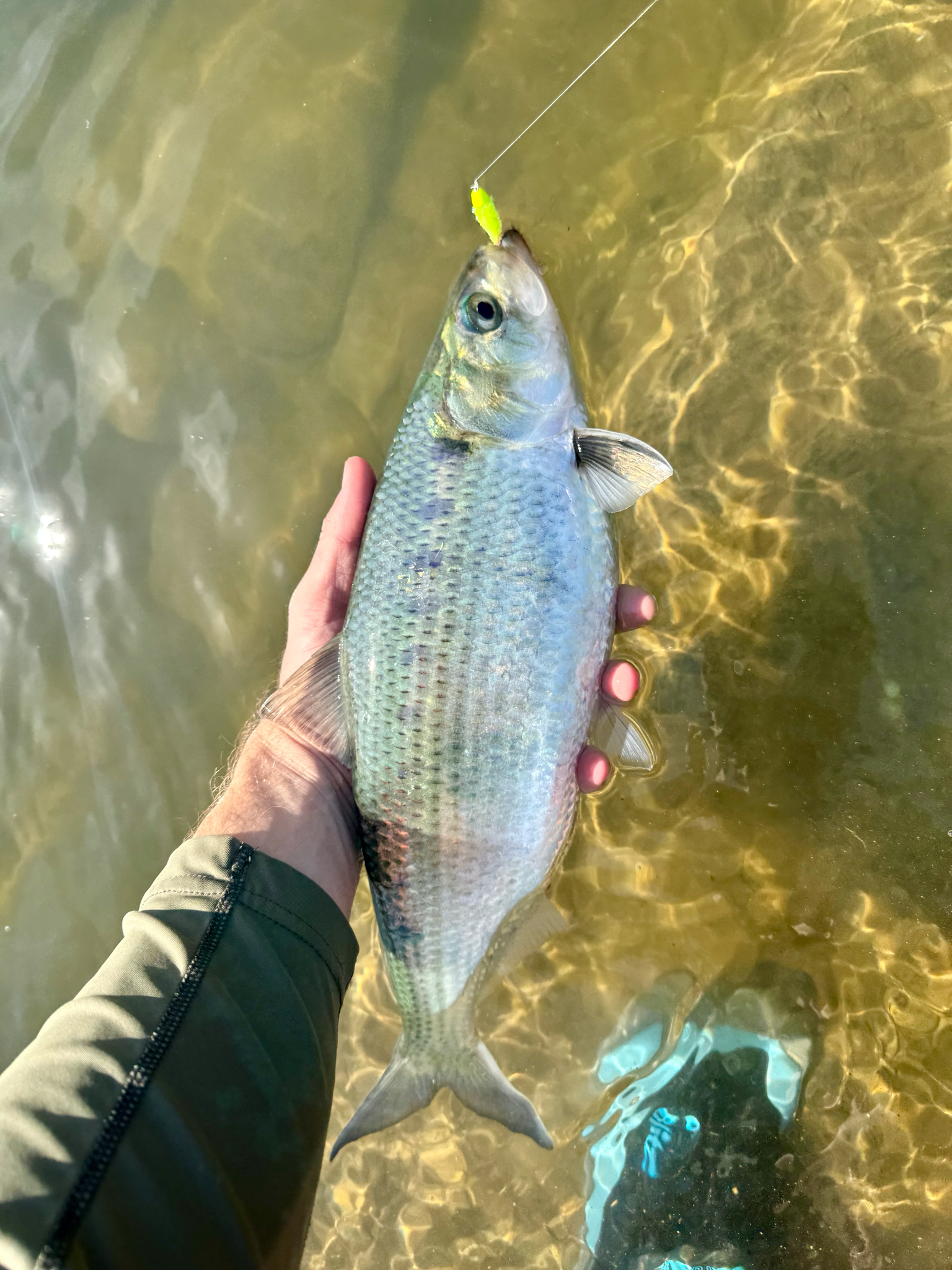

The hickory shad is the American shad's scrappier, faster little cousin, a silvery, acrobatic member of the herring family that surges up East Coast rivers each spring to spawn and puts on a wild show on light tackle. Smaller than the American shad but every bit as feisty (some say even more acrobatic), the hickory shad leaps, cartwheels, and runs hard, earning shad their "freshwater tarpon" reputation. For light-tackle and fly anglers, the spring hickory run is a beloved, action-packed tradition.
Hickory shad are abundant during the run, hit small flashy lures aggressively, and are caught on simple, inexpensive gear, a light rod and a handful of shad darts. This guide covers everything: the hickory shad's biology and its spring run, how to tell it from the American shad, the best lures (darts, spoons, and tandem rigs), fly fishing, river tactics, and where and when to intercept the run.
How to Catch Shad: Tactics and Rigs That WorkMeet the Hickory Shad
The hickory shad (Alosa mediocris) is a slender, silvery, laterally compressed member of the herring family with a bluish-green back, a deeply forked tail, and a row of faint dark spots behind the gill cover. Its defining feature, and the key to telling it from the American shad, is its prominent, protruding lower jaw, which juts out well beyond the upper jaw (giving it an underbite look), whereas the American shad's jaws are about even.
Key facts:
- Size: commonly 1 to 3 pounds; a good one pushes 3-4 pounds. Smaller than American shad, but a thrilling fight on light gear.
- Anadromous: like American shad and salmon, hickory shad live mostly in the ocean and run up freshwater rivers to spawn in spring, the entire basis of the sport fishery.
- Aggressive striker: hickories feed more on small fish and invertebrates than the plankton-straining American shad, and during the run they aggressively slash at small lures, often even more willingly than American shad.
- Range: the Atlantic coast, roughly from Florida to the Mid-Atlantic and into New England, running up coastal rivers all along the way.
- Acrobatic fighter: hickory shad are famous for leaping and cartwheeling, punching well above their weight, pure fun on ultralight tackle and fly rods.
That combination, an abundant, aggressive, jumping spring run of silver fish that hammer small lures, makes the hickory shad one of the most enjoyable light-tackle fisheries of the year.
Hickory Shad vs. American Shad
Because the two run together in many rivers, telling them apart is a useful skill.
How to ID American Shad vs. Hickory Shad- Jaw: the giveaway, the hickory shad's lower jaw sticks out noticeably beyond the upper; the American shad's jaws are roughly even.
- Size and shape: hickory shad are smaller and slimmer; American shad are larger and deeper-bodied.
- Timing: in many rivers the hickory run comes a bit earlier than the American shad run.
- Behavior: hickories are more aggressive lure-strikers (they eat more small fish), while American shad strike more from reflex.
Both are caught the same ways, darts, spoons, and flies on the swing, so many anglers happily target "shad" as a group and just note which is on the line.
Shad Darts: The Go-To Lure
The number-one hickory shad lure is the shad dart, a small, brightly painted leadhead jig with an angled head and often a bucktail or feather tail. Cheap, simple, and deadly, darts are the heart of shad fishing.
How to Tie a Shad Rig (Two Jigs on One Line)How to fish darts:
- Colors: bright and high-vis, chartreuse, pink, red/white, orange. Carry several; shad can key on a color day to day.
- Size: typically 1/32 to 1/8 oz for hickories (they're smaller than American shad), matched to current and depth.
- Presentation: cast up and across the current, let the dart sink and swing down and across near the bottom, keeping light tension to feel the tap. Hickories hold in current seams and pockets and hit as the lure swings past.
- Tandem rig: two darts, or a dart behind a small spoon, is a classic and productive setup that covers colors and depths.
Keeping the dart down in the current where the fish are running is the key.
Spoons and Tandem Rigs
Small flutter spoons are the other classic shad lure, adding flash and casting weight, and the tandem dart-and-spoon (or two-dart) rig is a staple of shad fishing, a flashy attractor and a colored dart working together to draw more strikes.
How to Catch Shad on a Tandem RigFish the tandem rig on the swing in the current, or troll/drift it slowly from a boat through migrating schools on bigger rivers. The spoon adds flash and helps the rig cast and sink; the dart adds color. Hickories, being aggressive, often smash the flashier presentations, so don't hesitate to add spoon flash to the mix.
Fly Fishing for Hickory Shad
Hickory shad are a superb fly-rod target, arguably even better than American shad for the fly angler, thanks to their aggression and acrobatics. It's classic swing fishing: a weighted, flashy fly cast across and down through the current to holding fish.
How to Fly Fish for American and Hickory ShadUse a 5-7 weight rod (a sink-tip or a weighted fly to get down), and throw small, bright, flashy patterns, shad flies, Clouser minnows, and colorful weighted streamers in chartreuse, pink, and white. Cast across and slightly up, let the fly sink and swing through the current seam, and hold on. A hickory shad on a light fly rod, leaping and running, is one of spring's great fly-fishing thrills.
Where and When: Fish the Run
Location: hickory shad are caught in the coastal rivers they run up to spawn. Productive rivers span the Atlantic coast, from Florida's St. Johns and other Southeast rivers up through the Mid-Atlantic (the Chesapeake tributaries, the James, the Potomac, and many others) and into New England. Within a river, target current seams, deeper channels and holes, and especially the tailwaters below the first dam or barrier, where the run concentrates and fish rest and stack up.
Best Hickory Shad Fishing Method During the Spring RunTiming: the fishery is seasonal, built around the spring spawning run, which shifts with latitude and water temperature: the Southeast runs earliest (late winter into early spring), the Mid-Atlantic in spring (roughly March-April), and northern rivers a bit later. In many rivers hickories arrive slightly ahead of the American shad. Warming water triggers the run, track local reports and be on the river during the peak, when the action can be nonstop.
Reading the River During the Run
Consistent hickory shad success comes down to reading moving water, because these fish are migrants resting and pushing upstream, not residents holding on structure. Hickory shad don't fight the full force of the current; they travel the path of least resistance and pause where they get a break. Concentrate your casts on current seams, the visible line where fast and slow water meet, as well as the deeper channels, runs, and holes where fish rest, the slack pockets and eddies behind rocks, pilings, and points, and, most importantly, the tailwater pools below the first dam or barrier on a river, where the run stacks up because the fish can't easily continue. These bottleneck spots concentrate large numbers of shad and are the most reliable place to intercept the run.
Depth control is the other half. Hickory shad usually hold and travel down in the current, so your dart, spoon, or fly must sink into that zone and swing through it. In faster or deeper water, add weight, a slightly heavier dart, a spoon ahead of the dart, or split shot, until you're ticking near the bottom on the swing. If other anglers around you are hooking up, match their color and depth; during a strong run, dialing in the right seam and depth can produce a fish nearly every cast, with doubles common on tandem rigs.
Bank Fishing vs. Boat and Trolling
A big part of the hickory shad's appeal is that it's an outstanding bank fishery. Because the run concentrates in accessible spots, dam tailwaters, river bends, and well-known shad holes, shore anglers do extremely well, simply casting darts and spoons across and down through the current seams with no boat required. This is why shad fishing is so family-friendly and affordable: you can walk up to a productive shad run with a light rod and a box of darts and get into fast action.
A boat does expand your options and unlock trolling. On larger rivers, anglers troll or slowly drift tandem dart-and-spoon rigs through the migrating schools, or anchor above a holding pool and cast down into it, keeping lures at a steady, productive depth. Trolling covers water efficiently and helps you locate pods of moving fish. But whether you fish from the bank or a boat, the fundamentals never change: put a small, flashy lure down in the current where the hickory shad are running.
The Shad's Comeback Story
Hickory shad, like American shad and river herring, have a long, complicated history in North America. The great spring runs of shad and herring were once staggeringly abundant and fed coastal and colonial communities up and down the Atlantic seaboard. Over the last two centuries, though, dams blocked the fish from ancestral spawning reaches, while pollution, habitat loss, and overharvest hammered the runs, and hickory shad populations declined sharply in many rivers.
The modern response has been significant restoration work: removing obsolete dams and installing fish passages (ladders and lifts) to reopen spawning habitat, improving water quality, and tightening harvest rules. Some rivers have responded with encouraging rebounds in their shad and herring runs, while others remain depressed, which is precisely why regulations are cautious and many shad fisheries are managed for catch-and-release. As a hickory shad angler, it's worth knowing that the spring run you're enjoying is a resource people have worked hard to restore, and that handling fish gently and following local rules helps keep the run healthy for the future.
Seasonal Timing in More Detail
Because the hickory shad fishery lives and dies by the run, understanding the timing is everything. The run is a wave that moves up the coast and up each river as water warms through late winter and spring. In the Southeast (Florida, Georgia, the Carolinas), hickory shad show up earliest, sometimes as early as late winter. Through the Mid-Atlantic, the Chesapeake tributaries, Virginia and Maryland rivers, the Potomac and James, the run typically peaks in March and April. Farther north, into the Delaware, Hudson, and New England rivers, the run comes later in spring. Within any given river, the hickory shad usually lead the way, arriving a bit before the larger American shad.
Water temperature is the trigger: as rivers warm into the 50s°F, the fish begin pushing upstream, and the fishing turns on. The run in a given stretch may last only a few weeks, so timing your trip to the peak is critical. Follow local fishing reports, river gauges, and shad-run trackers, and when the word goes out that "the shad are in," drop everything and go, the window is short but the action, when it's on, is some of the most fun and consistent of the entire year.
Handling and Eating Hickory Shad
Hickory shad are edible but, like all shad, notoriously bony, and they're generally considered less prized on the table than American shad (their flesh is a bit less rich). Many anglers fish for them purely for the sport and release them, though the roe is eaten by some.
- Handling: hickories are soft-mouthed and delicate; use a light touch, wet your hands, and a small net helps for clean releases.
- Eating: if you keep a legal one, the fillets can be baked, smoked, or (given the bones) ground or pickled; long, slow cooking helps with the small bones.
- Regulations: shad populations have declined in many areas, so check local rules, some fisheries have limits or are catch-and-release. Handle released fish gently and revive them in the current.
For most anglers, the hickory shad is a catch-and-release sport fish first and foremost, prized for its fight, not its fillet.
Join the Spring Run
The hickory shad delivers pure light-tackle fun: an abundant, aggressive, acrobatic spring run of silver fish that slam small darts and flies and leap like miniature tarpon, all from accessible water with inexpensive gear. When the water warms and the shad reports light up, grab some darts and a light rod, find a current seam below a dam, and get in on one of fishing's great annual traditions.
For the hickory's larger cousin and other spring-running fish, see our guides to the American shad, the anadromous striped bass, and the migratory steelhead.
Want to time the shad run and hit the right water? Keep an eye on water temperatures and river gauges, follow the local shad-run reports, and be ready to move the day the fish push in, the window is short, but few spring traditions are more rewarding.