Fish
Fish Fire
Fire Hike
Hike Bird
Bird

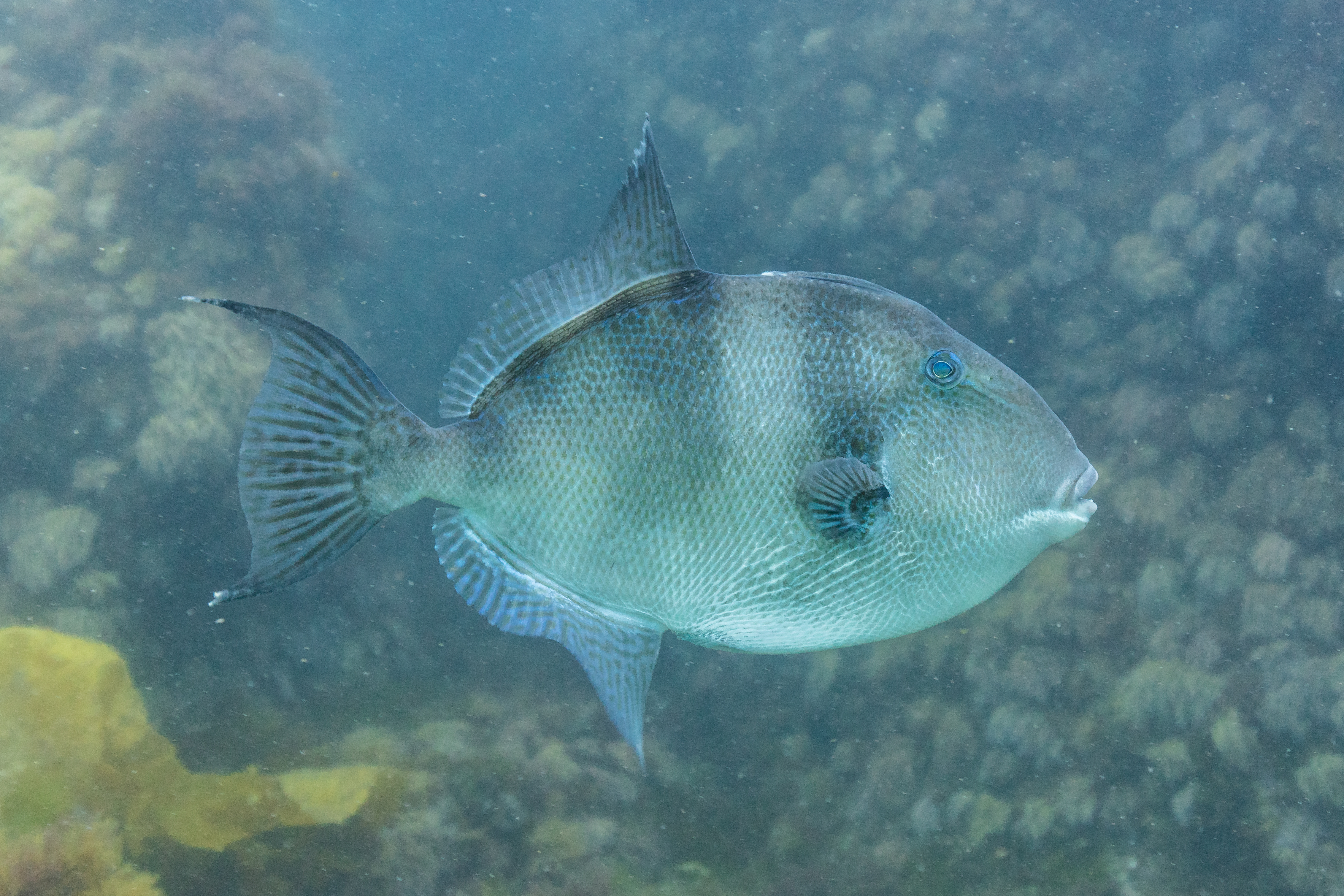

The gray triggerfish (Balistes capriscus) is one of the most maddening and most rewarding fish on any reef. With a tiny mouth, a set of powerful chisel-like teeth, and an uncanny ability to strip a hook clean without ever getting caught, it has earned a reputation as the ultimate bait-stealer. But anglers who crack the code find one of the best-eating fish in the ocean, firm, white, sweet flesh that many rank above snapper and grouper, waiting on the same reefs and hard bottom they already fish. Learning to catch triggerfish is a rite of passage for the bottom fisherman.
Gray triggerfish are found on both sides of the Atlantic, and in the southeastern United States and Gulf of Mexico they are a prized part of the reef bottom-fishing scene. Oval, leathery-skinned, and armored with a locking dorsal spine (the "trigger" that gives the family its name), they are as unusual to handle as they are to hook. This guide covers everything you need: where triggerfish live, how to identify them, the light, finesse tackle that beats their bait-stealing habits, the all-important hook-set, and how to clean and cook a fish that is worth every bit of the effort.
Understanding Gray Triggerfish Behavior
Gray triggerfish are reef and structure fish. They hold around reefs, rocky ledges, hard bottom, wrecks, artificial reefs, buoys, and even floating debris, typically from moderate depths down to a few hundred feet. Adults relate closely to structure, while juveniles are often found in open water around floating sargassum weed. They are commonly caught in the same 50-to-300-foot hard-bottom zones that hold snapper, grouper, and porgy.
How to Catch More TriggerfishWhat sets triggerfish apart is how they feed. That small mouth is packed with strong, chisel-like teeth built for crushing hard-shelled prey, crabs, shrimp, sea urchins, barnacles, mollusks, and other invertebrates they pick and crunch off the structure. They are deliberate, precise, nibbling feeders, not gulpers, and they can bite a bait off a hook with surgical care, which is exactly why they are so hard to hook. A triggerfish will often peck a bait to pieces and leave you reeling up a bare hook wondering what happened.
They are also curious and, when a school is fired up, aggressive competitors. Triggerfish frequently school around good structure, so when you find one you often find many, and a fired-up school will race each other to a bait. That competition works in your favor: the more triggerfish are on your spot and the more actively they are feeding, the more likely one commits fully enough to get hooked. Current, as always in reef fishing, helps keep them active and feeding.
Triggerfish can also be seen finning around wrecks and structure in the water column, and they will come up toward chum or a hooked fish, so they are not strictly glued to the bottom. Understanding that they are precise, hard-mouthed nibblers holding around structure is the key to everything about catching them.
It is worth knowing a bit about their life cycle, because it explains both their abundance and how they are managed. Gray triggerfish build and guard nests on sandy bottom near structure, with the parents actively defending the eggs, unusual behavior for a reef fish and one reason they can be aggressive and territorial around spawning time in the warmer months. They grow relatively slowly and can live well over a decade, which, combined with their popularity as table fare, is why regulators watch the stock carefully. For the angler, the nesting and territorial behavior means triggerfish can be especially aggressive and catchable during the spawn, when they are concentrated and defensive around their structure.
Seasonally and by depth, the fishing shifts. Triggerfish are often thickest on the moderate hard bottom and reef ledges of the shelf, and they can move around in response to water temperature. On a given trip, pay attention to which spots and depths are producing, when you find a piece of structure holding a hungry school, you can catch them steadily, and that same knowledge lets you build a run of triggerfish-rich numbers to return to.
How to Identify Gray Triggerfish
Gray triggerfish are easy to recognize once you know the family:
- Oval, compressed body. A deep, flattened, oval body unlike any snapper or grouper.
- Gray to olive-brown color. Mottled gray, brown, or olive, with the ability to change shade; often faint blue lines or spots on the upper body and fins, and a bluish or pale mouth area.
- Small mouth, strong teeth. A tiny mouth set with prominent, chisel-like teeth, obvious the moment you see one.
- The "trigger" spine. A stout first dorsal spine that locks upright and can only be released by depressing a smaller second spine behind it, the mechanism that names the family.
- Leathery skin. Tough, sandpapery skin rather than typical scales, which makes cleaning them a distinct process.
There is little a gray triggerfish can be confused with, the oval body, tiny toothy mouth, and locking dorsal spine are unmistakable. Handle them carefully: those teeth can give a nasty bite, and the locking spines are sharp.
Best Tackle for Gray Triggerfish
Beating a triggerfish is all about finesse and small hooks. This is light-tackle bottom fishing, and scaling down is the single biggest key to success.
Rod and reel: A medium or medium-light bottom rod with a sensitive tip is essential, you must feel the triggerfish's subtle peck. Pair it with a conventional or spinning reel sized to the depth.
Line: Braid, 20 to 40 pound, for its thin diameter and, above all, its sensitivity. You cannot hook what you cannot feel, and braid transmits the light triggerfish bite far better than mono.
Leader: Fluorocarbon, 20 to 40 pound. Lighter leader draws more bites in clear water, though the abrasive structure and the fish's teeth mean you should not go too light.
Hooks: Small, strong hooks are non-negotiable, this is the number-one factor. A small, sharp hook (a small circle or a small J-hook, often in the 1/0 to 2/0 range or even smaller) fits the triggerfish's tiny mouth. Big hooks simply will not hook them.
How to Tie a Triggerfish RigSinker: Enough weight to hold bottom in the current and no more, so you keep maximum feel of the bite.
The theme is unmistakable: small hooks, sensitive gear, and just enough weight. Anglers who fish triggerfish on grouper-sized hooks feed them bait all day and never hook one. Downsizing is the whole game.
The All-Important Hook-Set
Hooking a gray triggerfish is a skill unto itself. Because they nibble and pick, the classic mistake is swinging at the first taps and pulling the bait right out of their small mouths. Instead, wait. Let the triggerfish work the bait, feel the pecking turn into more solid weight, and then set with a firm, deliberate lift, or, with a small circle hook, a steady pull-up rather than a big swing.
Rigging Squid BaitsMany triggerfish veterans describe it as feeling the fish "load up" on the bait before setting. Patience is everything: give the fish a moment longer than feels natural, then come tight. Keeping your bait small helps enormously, because the fish can get the whole thing, and the hook, into its mouth rather than just nibbling the edges. Pinning the bait tight to the hook shank so little of it dangles free also cuts down on clean steals.
Once hooked, a triggerfish fights with surprising strength for its size, using its flat body to turn sideways against you and bulldog toward the structure. Keep steady pressure and lift it away from the reef. The fight is stubborn and satisfying, a fitting reward for finally outsmarting the bait-stealer.
It also pays to stay in constant contact with your bait. Slack line is the triggerfish's best friend, because it lets the fish nibble undetected and strip the hook before you ever feel it. Keep a tight line with the rod tip low and steady, and hold the rod rather than leaving it in a holder, feeling the progression from light peck to solid weight in your hands is what lets you time the set. The more you fish for triggerfish, the more that timing becomes second nature, and the maddening bait-stealer turns into a fish you can catch consistently.
Bottom Fishing and Bait
Gray triggerfish fishing is bottom fishing over the right structure with the right small baits. Squid is the classic and arguably the best bait, cut into small pieces that fit the tiny mouth and tough enough to stay on the hook through some nibbling. Small pieces of cut fish, shrimp, and cut crab also work well.
Triggerfish Bite Offshore on the ReefsDrop your bait to hard bottom, reefs, ledges, or wrecks, and keep it right in the strike zone just off the bottom. A two-hook rig with small hooks lets you present multiple baits, and a knocker or dropper rig keeps things simple. Because triggerfish school, once you catch one, keep dropping to the same spot, the rest of the school is right there, and the action can be fast when you have them fired up.
Chumming can turn a triggerfish bite on and bring the school up where you can see and target them. When they are competing near the surface behind a chum slick, sight-fishing individual triggerfish with a small bait is both effective and a lot of fun. Keep your baits fresh and small, refresh often since they strip baits so readily, and you will steadily convert those maddening pecks into fish in the box.
Boat positioning matters more than you might expect for such a small fish. Anchoring up-current of an isolated wreck or rock pile lets your baits drift naturally into the strike zone and keeps your chum flowing over the structure that holds the school. On broader areas of hard bottom, a controlled drift helps you locate the pockets where triggerfish are stacked. Either way, staying in contact with the bottom and keeping your presentation right in the fish's zone is what produces, a bait swept up and away from the structure by too little weight, or dragged out of the zone by too much drift, simply will not get the deliberate triggerfish to commit.
Finally, be patient with a school. Triggerfish can be finicky, and a spot that seems dead can suddenly turn on as the fish move up or the current changes. If you know a piece of structure holds them, give it time, keep fresh baits going down, and be ready when the school switches on. Some of the best triggerfish action comes in short, furious windows when a competitive school decides to feed.
Cleaning and Cooking Gray Triggerfish
Here is the payoff. Gray triggerfish yield firm, white, dense, sweet fillets that many anglers and chefs consider among the very best of all reef fish, comparable to, and often preferred over, snapper and grouper. The flesh is clean and versatile, excellent grilled, fried, blackened, baked, or in a chowder.
How to Clean a TriggerfishCleaning a triggerfish is different because of its tough, leathery skin, you cannot scale it like a normal fish. Most anglers make an incision through the tough hide and peel or cut the skin away to access the fillet, or fillet from behind the head down along the backbone with a sturdy, sharp knife. The fillets are modest relative to the fish's size because of the thick skin and body structure, but the quality more than makes up for the quantity. A sturdy, sharp fillet knife and a bit of practice make the job much easier, and many anglers keep a dedicated stouter knife just for cutting through triggerfish hide. Bleed and ice your catch, and you will understand why triggerfish have such a devoted following at the table.
Regulations and Conservation
Gray triggerfish are managed with size limits, bag limits, and often seasonal closures that vary by region and change over time, so always check the current regulations for your area before keeping a fish. Because they are caught from deeper water, triggerfish can suffer barotrauma; use a descending device or venting tool to release undersized or out-of-season fish so they survive. Keeping only what you will use helps sustain this popular reef fishery.
Putting It All Together
The gray triggerfish rewards finesse and patience like few reef fish. Find the hard bottom, reefs, ledges, and wrecks; scale your tackle down to small, sharp hooks and small squid baits; feel for the subtle peck and wait for the fish to load up before setting; and keep dropping to a school once you find one. Handle the toothy, spiny fish with care, and enjoy fillets that many consider the best in the ocean. Beat the bait-stealer, and you will have earned one of bottom fishing's finest meals.
Ready to put it into practice? Study your local hard-bottom and reef numbers, watch for the days when current is running to fire up the school, and start with the smallest hooks you can stand to fish. The learning curve is steep and you will feed away plenty of bait learning to time the set, but a box of triggerfish fillets is worth every wasted piece of squid along the way.
For more on chasing reef and bottom species, see our guides on how to catch red porgy, how to catch vermilion snapper, and how to catch scamp grouper.