Fish
Fish Fire
Fire Hike
Hike Bird
Bird

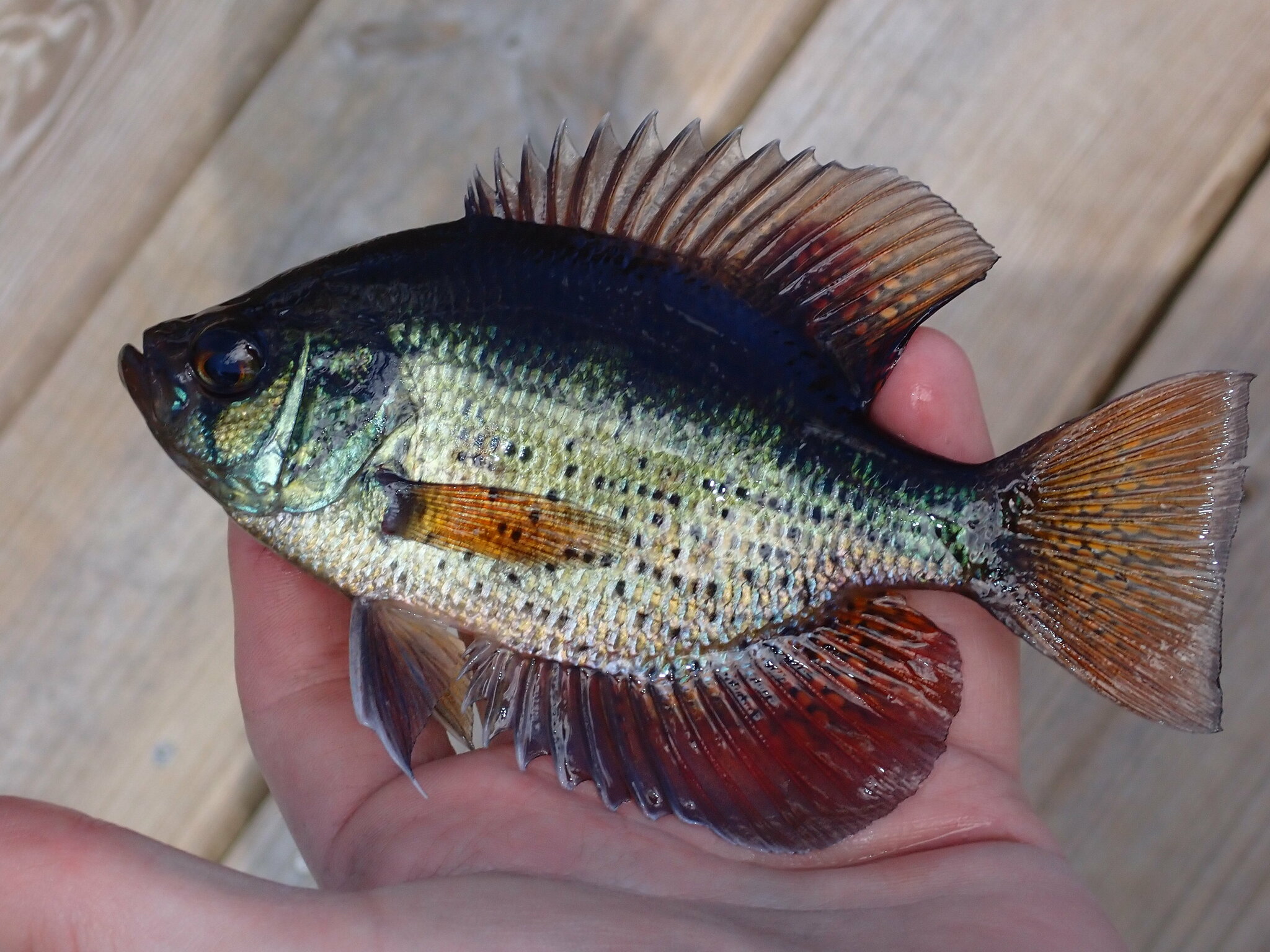

The flier (Centrarchus macropterus) is a charming, often-overlooked little panfish of the South's swamps, blackwater streams, and cypress backwaters, a round, disk-shaped, silvery sunfish speckled with rows of dark spots and finished with tall, symmetrical fins that give it a distinctive, almost coin-like profile. Small but scrappy and willing, the flier lives in the tannic, acidic, quiet waters that many other gamefish avoid, where it eagerly takes tiny baits, small jigs, and flies. For anglers who love poking around Southern swamps with a cane pole or ultralight, the flier is a fun, pretty, and readily-caught panfish that adds variety to any blackwater outing. This guide covers how to find and catch fliers.
What Is a Flier?
The flier is the sole member of its genus (Centrarchus) in the sunfish family (Centrarchidae), related to crappie, sunfish, and bass but distinct in shape. It has a very deep, round, laterally compressed, disk-like body, almost as tall as it is long, with a small mouth, a silvery to olive-green or brassy color, and rows of small dark spots forming lines along the sides. Its most distinctive feature is its fins: the dorsal and anal fins are large, tall, and nearly symmetrical (mirror images top and bottom), giving the fish a graceful, balanced, "flying" profile that likely inspired the name. Juveniles and many adults also show a dark spot (ocellus) on the rear of the dorsal fin and a dark teardrop line below the eye. Fliers are small: most run 3 to 6 inches, with a big one reaching 7 to 8 inches and rarely more than half a pound.
For anglers, the defining trait is that fliers are fish of quiet, vegetated, tannic swamp and backwater habitat. They thrive in the still, acidic, often tea-colored blackwater of Southern swamps, cypress ponds, sloughs, oxbows, ditches, and slow streams, places with lots of vegetation and cover and low competition from other fish. They feed on small invertebrates, insects, larvae, tiny crustaceans, and small fish, and they readily take small baits, jigs, and flies. Though small, they're aggressive, willing biters and scrappy fighters on light tackle. Well-suited to harsh swamp conditions that exclude many fish, abundant in the right habitat, and eager to bite, the flier is a delightful and distinctive Southern panfish for anyone who explores blackwater.
Where and When to Catch Flier
Fliers are native to the Southeastern and south-central U.S., the coastal plain and lowland waters from roughly Virginia and the Carolinas south through Florida and west along the Gulf Coast into Texas and up the Mississippi Valley. They're specialists of quiet, vegetated, tannic (blackwater) habitat: swamps, cypress ponds and sloughs, oxbows, backwaters, ditches, canals, and slow, weedy streams and rivers, especially acidic, tea-colored water with abundant vegetation. Look for them around cover and vegetation in still or slow water: submerged and emergent plants, brush, stumps, cypress knees, laydowns, and the edges of weed beds in the quiet backwaters they favor. They tolerate the low-oxygen, acidic conditions of swamps that many fish can't, so the classic flier spot is a weedy, tannic swamp or slough.
The best fishing is generally spring through fall, with the warm months and the spring spawn especially productive as fliers move shallow to nest and feed actively. In the warm Southern climate, they can be caught much of the year. They feed throughout the day, often best in the warmer hours. Because they relate to vegetation and cover in quiet water, the approach changes little with the season: find weedy, tannic backwater and fish the cover. Poling or paddling a swamp or slough and dropping small baits into openings and along vegetation is the classic and effective way to catch fliers. Cooler months slow the fishing somewhat, but in the Deep South fliers remain catchable in mild weather.
Tiny Hooks with Worms and Crickets
The most effective and classic way to catch fliers is with tiny live baits on small hooks, matched to their small mouths and small-invertebrate diet.
Bream Fishing in a Cypress SwampThe go-to baits are small worms (red worms and pieces of nightcrawler), crickets, mealworms, grass shrimp, and small grubs. Fish them on a small hook (size 8 to 12) under a small float set shallow, and drop the bait into openings in the vegetation, along weed edges, and around cover in the quiet backwater. Because fliers have small mouths, keep the bait and hook small and the presentation subtle. A tiny worm or cricket under a small bobber, dropped into a pocket in the swamp vegetation, is exactly how generations of Southern anglers have caught fliers, and it's deadly effective. Set the float shallow (fliers often feed near the surface and in the upper water column), lower or swing the bait into each likely opening, and watch for the quick, light take. In the tight cover of a swamp, precise placement into openings and along edges matters more than distance.
Small Jigs, Lures, and Flies
Fliers are aggressive for their size and will readily hit small jigs, lures, and flies, making artificials a fun way to catch them.
Pitching Jigs in a Swamp for FliersEffective artificials include tiny jigs (small curly-tail grubs, tube jigs, and marabou or hair jigs on small jigheads), tiny in-line spinners and beetle spins, small spoons, and small soft plastics, all fished on light or ultralight gear. For fly anglers, small poppers, foam bugs, sponge spiders, tiny nymphs, and small wet flies and streamers on a light fly rod work well, and fliers rising to a small bug in tannic water is a treat. Pitch or drop your jig or fly into openings in the vegetation, along weed edges, and around cover, and work it slowly through the pockets where fliers hold. Because they live in tight, weedy swamp cover, keep offerings small and be ready to fish them precisely into openings. A tiny jig tipped with a bit of worm or a small fly worked through swamp cover draws plenty of strikes from these willing, scrappy panfish.
Fly Fishing the Swamp for Fliers
Fliers are a fun and willing fly-rod target in the beautiful, tannic swamps and backwaters they inhabit.
Fly Fishing the SwampA light fly rod (2- to 4-weight) is ideal for these small fish and tight quarters. Fliers readily take small poppers and foam bugs, sponge spiders, rubber-legged terrestrials, tiny nymphs, small wet flies, and small streamers or Woolly Buggers. Topwater poppers and bugs bring fun surface strikes in the quiet backwaters, and fliers often feed in the upper water column, making them receptive to flies fished shallow. Cast or dab the fly into openings in the vegetation, along weed edges, and around cover, and work it slowly through the pockets. Because swamp fishing often means tight, brushy cover, a short, accurate presentation into openings is the key. Fly fishing a tannic Southern swamp for willing fliers, often alongside other blackwater panfish, is a peaceful, rewarding, and beautiful pursuit that showcases some of the South's most atmospheric water.
Cane Poles and Simple Tackle
The flier is a fish made for simple, traditional tackle, and a cane pole or light rod is all you need to enjoy them.
Cane Pole PanfishingBecause fliers are small and live in tight swamp cover where precise short presentations matter, a cane pole, jig pole, or telescoping bream pole is the classic and often best tool: it lets you dab and drop baits precisely into openings in the vegetation and along cover without spooking fish or tangling in brush. A simple rig, a small hook, a small float, and a split shot, with a worm or cricket, is all that's needed. Ultralight spinning gear works too, for casting tiny jigs and lures, and light line helps in clear or tannic water. Keep it simple and scaled-down: small hooks, small baits, a small float, and light line. The beauty of flier fishing is its simplicity and accessibility, a cane pole, a can of worms, and a Southern swamp is a timeless, effective, and thoroughly enjoyable combination that connects anglers to a traditional style of panfishing.
Identifying the Flier
Fliers are distinctive once you know them, though they can be confused with young crappie or other sunfish at a glance.
The Flier and Its Sunfish RelativesThe clinching features of a flier are the very deep, round, disk-like body (almost as tall as long), the large, tall, nearly symmetrical dorsal and anal fins (mirror images top and bottom) that give it a balanced, "flying" profile, and the rows of small dark spots along the silvery-to-brassy sides. Most fliers also show a dark spot (ocellus) on the rear of the dorsal fin (especially juveniles) and a dark teardrop line below the eye. This combination, round disk body, symmetrical tall fins, spot rows, and small size, is unlike any other sunfish. Fliers can superficially resemble young crappie (which are more elongate, with a larger mouth and different spotting) or other sunfish, but the symmetrical fins and coin-like shape set them apart. When you catch a small, round, silvery, spot-rowed panfish with tall matching fins from a Southern swamp or blackwater, you've got a flier.
Understanding Flier Behavior
Everything about catching fliers flows from the fact that they're small, willing panfish adapted to quiet, vegetated, tannic swamp habitat. They thrive in the still, acidic, tea-colored blackwater of swamps, sloughs, and backwaters that exclude many other fish, relating to vegetation and cover, and they feed on small invertebrates, insects, larvae, and tiny prey. This is why small baits, jigs, and flies presented into openings in the cover work so well, and why the classic flier waters are weedy, tannic swamps. They're aggressive and willing for their size, often feeding in the upper water column, so shallow presentations and even topwater work. The challenge is finding the right swamp habitat and presenting precisely into the cover, not coaxing a bite.
Location is about quiet, weedy, tannic water: fliers relate to vegetation, brush, stumps, cypress knees, and cover in still or slow backwaters, swamps, sloughs, and ditches. They often gather in good habitat, so where you catch one you'll usually catch several. Fish the warm months, target the vegetation and cover in blackwater, present small offerings into the openings, and these distinctive little panfish will reward you. Because they live in swampy waters accessible by bank, canoe, or kayak, and because they're willing and abundant in the right places, fliers offer fun, accessible, and atmospheric fishing across the Southern lowlands, a great fish for exploring blackwater with simple tackle.
Conservation and Handling
Fliers are common in suitable swamp and blackwater habitat across their Southern range and are not a conservation concern in most areas, but they depend entirely on the quiet, vegetated, tannic waters they need, so protecting that habitat is the best thing anglers can do for them. Swamps, sloughs, and blackwater backwaters are sensitive to drainage, pollution, and habitat loss, and fliers (which are adapted to these specialized conditions) can decline where their habitat is degraded. Supporting wetland and swamp conservation helps sustain flier populations and the many other species that share these unique waters.
Handle fliers gently if releasing: wet your hands, support the fish, watch the sharp dorsal and anal spines, and return them quickly, especially in warm water. Because they're small and abundant in good habitat, many anglers keep a few for the pan, which is generally sustainable where legal, but as with all panfish it's good practice to keep only what you'll eat and leave plenty behind. Fliers are usually grouped with other panfish ("bream") under generous state limits, but always check and follow local regulations. Treating both the fish and their swamp habitat with care keeps this distinctive fishery healthy for the future.
Cleaning and Eating Flier
Fliers are good eating, like other sunfish and panfish, they have sweet, white, flaky, mild flesh, and they're a fine, if small, addition to a panfish fry, traditionally enjoyed as part of the mixed "bream" catch from Southern swamps and backwaters.
Cleaning and Filleting PanfishBecause they're small, fliers are almost always scaled and cooked whole (pan-fried) rather than filleted, since there's not much meat on a small fish to fillet. Cooking them whole is simple, traditional, and delicious. The classic preparation is a cornmeal coating and a hot fry: scale and gut the fish, dredge in seasoned cornmeal or flour, and fry whole until golden and crisp; the sweet meat pulls easily off the bones. As with all fish, ice your catch promptly and cook it fresh for the best quality. A mess of fliers and other small panfish from a Southern swamp makes a fine, traditional meal. Because they're small, fliers are often caught and released or kept as part of a mixed panfish stringer; keep what you'll eat, within regulations, and enjoy these distinctive little swamp fish however you like.
Bringing It All Together
The flier is a distinctive little gem of the South's swamps and blackwater, a round, silvery, spot-rowed panfish with graceful symmetrical fins that thrives in the quiet, tannic, vegetated waters many other fish avoid. Find them around vegetation and cover in still, tea-colored swamps, sloughs, and backwaters, and present a tiny worm or cricket, a small jig, or a fly precisely into the openings and edges where they hold. Fish the warm months, keep your tackle simple and small, a cane pole and a can of worms is perfect, and enjoy the willing bites and scrappy fights of these charming blackwater fish. Whether you dab baits with a cane pole, work tiny jigs on an ultralight, or cast bugs on a fly rod, the flier delivers accessible, atmospheric, and thoroughly enjoyable panfishing in some of the South's most beautiful water.
For more outstanding panfish and swamp-fishing action, see our guides to the warmouth, the black crappie, and the bluegill.
Want to explore the South's best swamps and blackwater backwaters for fliers and other panfish? Use Guidepole to scout public access points, boat launches, and legal water near home, and find your own quiet, tea-colored blackwater to fish.