Fish
Fish Fire
Fire Hike
Hike Bird
Bird

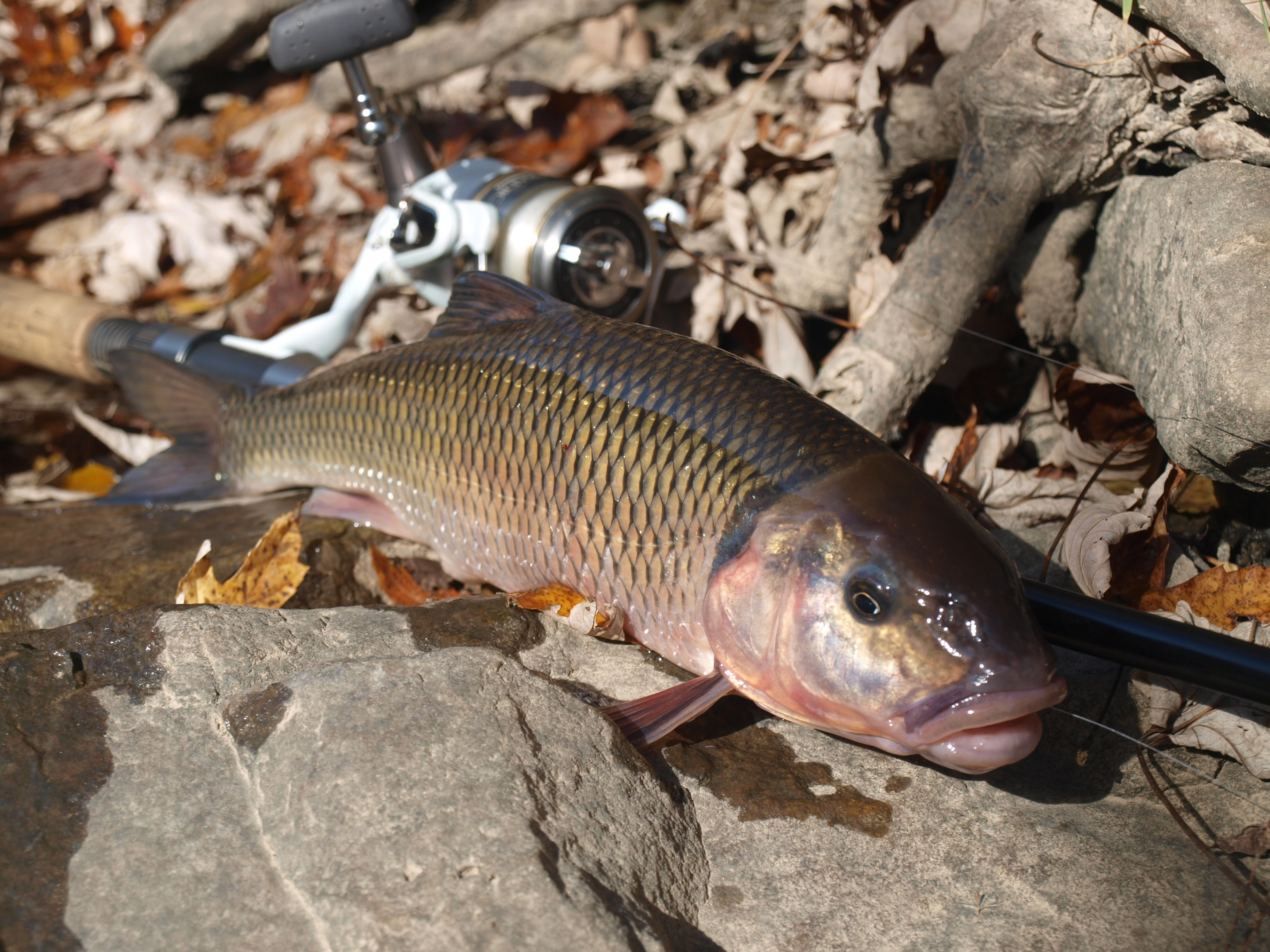

The fallfish (Semotilus corporalis) is the largest minnow native to eastern North America, a big, silvery, hard-fighting stream fish that has quietly become a cult favorite among river anglers. Reaching over a foot and occasionally close to 20 inches, the fallfish looks like an oversized chub or a small tarpon in miniature, with large silvery scales that have earned it the affectionate nickname "the poor man's tarpon." Aggressive, abundant in clear rivers and streams of the Northeast and Appalachians, and eager to smash flies, small lures, and bait, the fallfish gives a spirited fight and is a genuinely fun sport fish that trout and smallmouth anglers increasingly seek out on purpose. This guide covers how to find and catch fallfish, and how to tell them from their close cousin the creek chub.
What Is a Fallfish?
The fallfish is a member of the minnow family (Cyprinidae) and a close relative of the creek chub, but it grows much larger, the biggest native minnow in the eastern U.S. and Canada. It has a streamlined, silvery body with notably large, coarse scales (giving it that "little tarpon" look), a fairly large mouth, a small barbel near the corner of the jaw, and a dark back fading to bright silver sides. Young fish show a dark lateral stripe; breeding males develop a rosy or purplish sheen and prominent tubercles on the head. Fallfish commonly run 8 to 14 inches, with trophy fish reaching 16 to 20 inches, impressive for a minnow and big enough to pull hard.
For anglers, the key traits are that fallfish are aggressive, opportunistic predators of clear, cool streams and rivers. They eat insects, crustaceans, small fish, and drifting food, and they'll readily chase and smash flies, small lures, and bait, often out-competing trout to a fly, to the mild annoyance of trout anglers and the delight of anyone who appreciates a hard-pulling fish. They favor clear rivers, streams, and the flowing sections of lakes, holding in pools, runs, current seams, and around cover, frequently in the same water as trout and smallmouth bass. Their size, aggression, willingness to hit flies, and strong fight are exactly why the fallfish has earned its "poor man's tarpon" reputation and a growing fan base.
Where and When to Catch Fallfish
Fallfish are native to eastern North America, from the Maritimes and Quebec down through New England, the Mid-Atlantic, and the Appalachians, the clear rivers and streams of the Northeast and the mountain drainages are prime fallfish country. Look for them in clear, cool-to-moderate rivers and streams, holding in pools, runs, current seams, eddies, and around rocks and wood; the biggest fallfish claim the prime lies in larger pools and deeper runs. They often share water with trout and smallmouth, so any good trout or smallmouth river in their range likely holds fallfish too.
Fallfish are catchable year-round but are most active and aggressive in the warmer months (spring through fall), feeding heavily in the current. Spring, as the water warms and breeding males color up (they build large gravel-mound nests to spawn), is an excellent time, and summer brings steady action. They feed throughout the day, and because they're so aggressive, they're often the first fish to hit a fly or lure in a mixed fishery. In colder months they hold in deeper pools and slow down but can still be caught. Their abundance and willingness make them a reliable target whenever you can get to a clear river.
Fly Fishing for Fallfish
Fly fishing is the signature and most celebrated way to catch fallfish, they hammer flies with abandon and fight hard, making them a favorite of fly anglers who've learned to appreciate them.
Fly Fishing for Fallfish (and Trout)On a light-to-medium fly rod (a 3- to 6-weight), fallfish will crush streamers, nymphs, wet flies, and dry flies, they're aggressive and far less selective than trout, so they'll chase a stripped streamer, rise to a dry, or take a dead-drifted nymph readily. Strip small streamers and buggers through pools and runs for the most explosive strikes, or dead-drift nymphs and swing wets for steady action. Trout anglers frequently catch fallfish "by accident," but many now target them on purpose because a big fallfish on a fly rod pulls surprisingly hard and jumps and runs like a much larger fish. If you want an eager, hard-fighting fly-rod target in a beautiful river, the fallfish delivers.
Small Jigs, Spinners, and Lures
Fallfish are aggressive lure-eaters, and small jigs, spinners, and lures fished on light or ultralight spinning tackle produce fast, fun action and the biggest fish.
River Jig Fishing for Monster FallfishCast small inline spinners, jigs tipped with soft plastics, small crankbaits, tiny spoons, and small soft-plastic jerkbaits into pools, runs, and current seams, and retrieve them with enough action to trigger a chase. River jigging, hopping a small jig through the deeper pools and runs, is especially effective for trophy fallfish, which hold in the prime lies and readily smash a well-presented jig. Because fallfish are aggressive and predatory, they'll hit larger offerings than a typical minnow would, so don't be afraid to throw a substantial jig or lure when targeting big fish. Cover water, work the deeper pools thoroughly, and be ready for a hard strike and a strong, head-shaking fight.
Ultralight River Fishing
The fallfish is a perfect ultralight target, big enough to give a real battle on light gear, aggressive enough to bite readily, and abundant enough to keep the action going.
Catching Fallfish on Light TackleOn an ultralight rod with light line, a foot-long fallfish is a genuine blast, fighting hard in the current and testing your drag. Fish small lures, jigs, spinners, or bait through the pools and runs of a clear river, hopping from spot to spot and covering water to find fish. Fallfish school, so once you locate a pod in a good pool you can often catch several. This exploratory, mobile style of light-tackle river fishing, wading or walking a beautiful stream and catching scrappy fallfish from pool to pool, is a big part of the species' appeal, and it's accessible fishing that requires no boat and little specialized gear.
Bait Fishing
Fallfish take natural baits readily, making them an easy and productive target for anglers of all ages and a reliable fallback when they're not chasing lures.
Fallfish: An Underrated GamefishSmall hooks baited with worms, nightcrawlers, insects, or bits of bait, fished under a float or drifted along the bottom in a pool or run, catch fallfish consistently. Because they're aggressive and have a good-sized mouth, fallfish take bait decisively. Drift or dangle your bait into the deeper pools and current seams where fish hold, and be ready for a solid pull. Bait fishing is a great way to introduce newcomers to the species and to catch fallfish when a cold front or tough conditions have them less willing to chase. As with chub, fallfish also make good live and cut bait for larger predators where legal, though many anglers value them too much as sport to use them that way.
Telling Fallfish from Creek Chub
Fallfish are frequently confused with their close relative the creek chub, since both are large minnows with similar body shapes that often share the same waters.
Fallfish vs. Creek Chub: How to Tell Them ApartThe clearest differences: the fallfish has larger, coarser scales and a cleaner, brighter silver appearance overall, and adult fallfish lack the dark dorsal-fin spot that creek chub have (creek chub show a distinct dark spot at the base of the front of the dorsal fin, while fallfish do not). Fallfish also grow larger on average and tend to prefer clearer, cooler water. Young fish of both species show a dark lateral stripe, which fades with age. Both have a small barbel near the corner of the jaw. For most fishing purposes the distinction is academic, they're caught the same ways, but the dorsal-fin spot (present on chub, absent on fallfish) and the fallfish's larger scales are the quickest tells. If it's big, bright silver, and lacks the dorsal spot, you're likely holding a fallfish.
Understanding Fallfish Behavior
Catching fallfish consistently comes down to recognizing them as aggressive, current-oriented predators of clear rivers. They hold in pools, runs, current seams, and around cover, and they feed on insects, small fish, and anything the current delivers, striking flies, lures, and bait eagerly. The biggest fallfish claim the prime lies, the deeper pools and best current breaks, so target those spots for trophy fish. They school, so where you catch one, more are usually nearby, and they're active feeders throughout the day, especially in the warm months. A useful tip: because fallfish are so aggressive, they often reveal themselves quickly, if a river holds them, you'll usually get bites within a few casts to a good pool, so you can cover water efficiently and keep moving until you find the deeper pools that hold the larger, less-crowded trophy fish. That efficiency makes fallfish an ideal species for exploring new water and quickly learning to read a river.
Really, fallfish are one of the more forgiving and rewarding river fish to target: they're abundant, willing, and hard-fighting, and they live in beautiful, accessible water. Approach a clear river as you would for trout or smallmouth, read the pools, runs, and seams, and present a fly, lure, or bait naturally in the current, and you'll find eager fallfish. For anglers who've learned to appreciate them, the fallfish offers trout-stream scenery, smallmouth-style aggression, and a hard fight, all in a fish that most people walk right past.
A Growing Appreciation
For generations, fallfish were dismissed as a nuisance, the fish that grabbed your fly meant for a trout. But that reputation has been changing fast, and the fallfish now enjoys a devoted and growing following. Anglers have come to appreciate that a big fallfish fights as hard as many celebrated gamefish, hits flies and lures with reckless aggression, grows to impressive size for a minnow, and lives in gorgeous, accessible rivers. The "poor man's tarpon" nickname, once a bit tongue-in-cheek, is now worn with pride.
Catching a Trophy 20-Inch FallfishThis shift is part of a broader movement toward valuing native "rough fish" and non-traditional species for the sport they provide, and the fallfish is a poster child for it. Chasing a truly big fallfish, a fish pushing 18 to 20 inches, has become a legitimate pursuit, and anglers who dial in the deep pools of larger rivers where these giants live are rewarded with the biggest minnows on the continent and a fight to match. Records are chased, personal-best fallfish are celebrated, and dedicated anglers specifically target trophy fish in the deep pools of larger rivers. If you've never given the fallfish a real chance, it's worth doing, approach it as a legitimate gamefish rather than a trout-stream pest, and you may find yourself hooked on one of the most underrated fisheries in eastern North America. Handle them gently for release, since these native fish are worth keeping around, and follow local regulations.
Cleaning and Eating Fallfish
Fallfish are edible but not prized as table fare, like their chub relatives, the flesh is soft and quite bony, and it's often described as unremarkable or "cottony," so most anglers don't target them for eating. They can be fried or smoked if you wish, and in a subsistence context they're perfectly good food, but their value is overwhelmingly as sport rather than dinner.
The overwhelming majority of fallfish are released to fight another day, which suits their status as a fun, abundant, increasingly appreciated sport fish. Handle fish you release gently, wet your hands, minimize air time, and support the fish, so they swim off strong. Where legal, fallfish also serve as good live or cut bait for bass, pike, and other predators, similar to chub. But for most anglers, the fallfish is a catch-photograph-release gamefish, valued for its fight and its "poor man's tarpon" charm rather than its flavor. Whatever you do, follow local regulations and treat these native river fish with respect.
Bringing It All Together
The fallfish is a river gem hiding in plain sight, the biggest native minnow in the East, aggressive enough to smash a fly or lure, big and strong enough to earn its "poor man's tarpon" nickname, and abundant in beautiful, accessible clear rivers throughout the Northeast and Appalachians. Fish the pools, runs, and current seams as you would for trout or smallmouth: strip a streamer, hop a jig, cast a spinner, or drift a worm, and hang on for a hard-pulling fight. Target the deep pools of larger rivers for trophy fish, learn to tell them from creek chub by the missing dorsal spot and bigger scales, release them to grow, and enjoy one of the most underrated and rewarding light-tackle and fly fisheries in eastern North America.
For more scrappy river fish and close relatives, see our guides to the chub, the smallmouth bass that shares its water, and the brook trout of the same clear streams.
Want to explore the clear rivers near you for fallfish and their neighbors? Use Guidepole to map the public access points, boat launches, and current conditions on your local rivers, and give the "poor man's tarpon" the respect it deserves.