Fish
Fish Fire
Fire Hike
Hike Bird
Bird

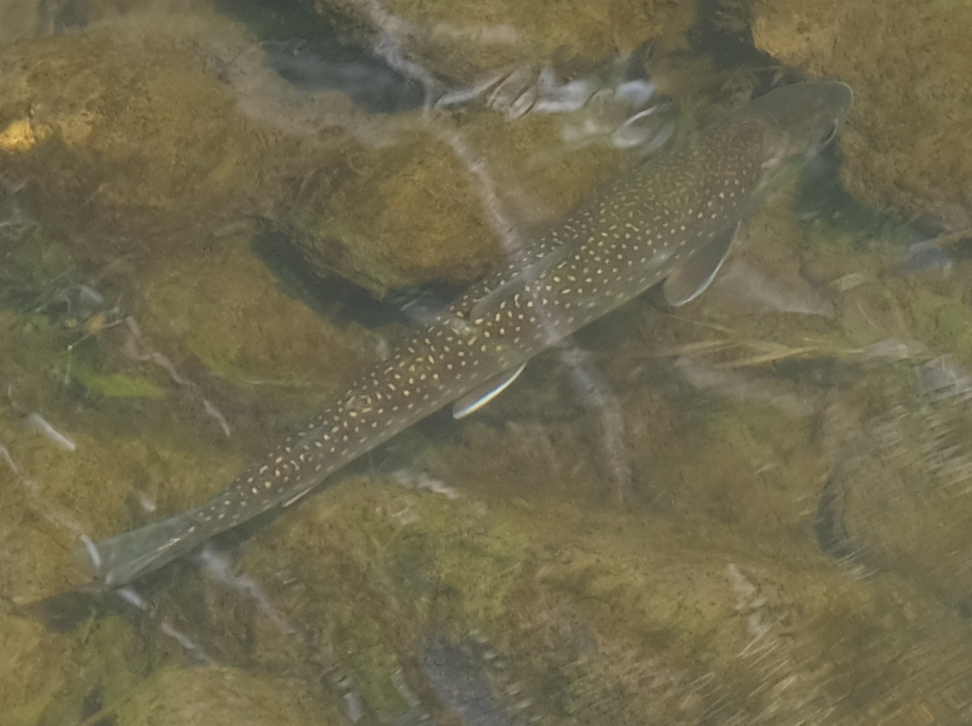

The dolly varden (Salvelinus malma) is one of the most beautiful and misunderstood fish of the Pacific Northwest and Alaska. A true char, a cousin of the arctic char, brook trout, and the nearly identical bull trout, the dolly wears olive-to-slate flanks scattered with pink, orange, and red spots, with the char family's signature white-edged lower fins. Once wrongly persecuted as a "salmon killer" and even bountied, the dolly varden is now recognized as a superb, aggressive gamefish that thrives alongside salmon, following the runs to feast on eggs and flesh. This guide covers how to find and catch dolly varden across their range, in rivers behind spawning salmon, in the salt, and everywhere their char nature makes them bite.
What Is a Dolly Varden?
Dolly varden are char, not trout, which is the key to understanding them. Like all char, they have light spots on a dark body (the reverse of trout), small scales, and cream-white leading edges on the pectoral, pelvic, and anal fins. Named after a colorfully dressed Charles Dickens character, the dolly's spots turn brilliant orange and red at spawning time, and males develop a hooked kype.
There are two main forms. Sea-run (anadromous) dolly varden live in coastal streams and migrate to the ocean and nearshore salt to feed, growing larger and turning bright silver in salt water. Resident dolly varden stay in freshwater their whole lives, often in small headwater streams, and tend to run smaller. Both forms share the same driving instinct: they are opportunistic predators that key hard on the eggs and decaying flesh of spawning salmon, which is the single most important fact for anyone who wants to catch them.
Where and When to Catch Dolly Varden
Dolly varden range across the North Pacific rim, coastal Alaska, British Columbia, and the Pacific Northwest (Washington's Puget Sound rivers and beyond), and across to eastern Asia. They live in cold, clean rivers, coastal streams, and the nearshore salt.
The peak season revolves entirely around salmon. When salmon run and spawn, generally summer into fall, depending on the river and salmon species, dolly varden pack in behind them to gorge on drifting eggs and, later, on flesh from decaying carcasses. This is by far the best and easiest time to catch numbers of dollies, and often big ones fat from the feast. Position yourself on a salmon river during the spawn and you're in business.
For sea-run dollies, spring and early summer bring fish into the salt and estuaries as they leave the rivers to feed, and Pacific Northwest beach anglers target them along the shoreline. Resident dollies in headwater streams feed on insects and small fish through the open-water season and can be caught like small stream trout. But if you want the classic dolly experience, follow the salmon.
Bead and Egg Fishing
The number-one technique for dolly varden is imitating salmon eggs, because during the salmon runs that's what dollies are eating almost exclusively. The modern standard is bead fishing: a small plastic bead in an egg color pegged a couple of inches above a bare hook, dead-drifted along the bottom behind spawning salmon.
Fly Fishing for Aggressive Dolly Varden: Alaska Bead FishingMatch the bead to the eggs in the river, fresh eggs are bright orange, while eggs that have been in the gravel a while turn pale, mottled, and "dead-egg" colored, so carry a range and switch until you find the winning shade. Drift the bead naturally along the bottom through the salmon redds and the runs and slots just downstream, using enough weight to tick bottom and an indicator (or a tight line) to detect the take. Fly anglers fish beads and egg patterns on a nymph/indicator rig; spin anglers do the same under a float or with a drift rig. Where legal, real or cured salmon eggs and egg sacs fished the same way are just as deadly.
Egg-Loop and Bait Rigs
A time-honored way to present eggs for dolly varden is the egg-loop knot, which lets you snell a cluster of cured salmon eggs or a spawn sac onto the hook so it holds naturally and releases scent.
Mastering Dolly Varden Fishing: Egg-Loop Hook TechniquesRig the egg loop on a drift setup with enough weight to bounce bottom, and drift it through the same water where dollies stack behind salmon. The combination of the right egg color, a natural drift at the fish's level, and the scent of cured eggs is hard for a hungry char to refuse. As always, check your local regulations on bait and on egg use, which vary by river and can change during salmon closures, many prime dolly rivers have specific rules to protect the salmon runs the dollies are following.
Casting Spoons and Spinners
Dolly varden are aggressive predators, and away from the egg bite, or when you simply want to cover water, they crush spoons and spinners. This is the classic way to prospect a river for dollies and to fish for sea-run fish.
Prospecting for Dolly Varden with SpoonsCast small-to-medium spoons (silver, gold, and hot-colored patterns like the classic pink and orange) and inline spinners across and downstream, and swing or retrieve them through runs, pool tails, current seams, and the water below spawning salmon. Dollies will chase down a fleeing spoon, and the strike is often savage. Vary your retrieve and depth until you find them, and don't overlook flesh-imitating flies and pink/flesh-colored soft plastics later in the run, when dollies switch from eating eggs to eating decaying salmon flesh drifting downstream.
Sea-Run Dolly Varden
Sea-run dollies are a fishery all their own, especially in coastal Alaska and the Pacific Northwest, where anglers catch bright, silvery char right off the beach and in the estuaries.
Fly Fishing for Sea-Run Dolly VardenAs sea-run dollies move between the rivers and the salt, target estuaries, river mouths, and beaches, especially around tide changes and where currents concentrate baitfish. In the salt, dollies feed heavily on small fish, sand lance, and juvenile salmon, so baitfish-imitating flies, small spoons, and spinners in bright and silver finishes shine. Fresh from the ocean, sea-run dollies are strong, chrome-bright, and beautiful, and beach fishing for them has become a beloved shoulder-season pursuit in Puget Sound and beyond. Match the local baitfish, fish the moving water, and cover ground until you find a pod.
Telling Dolly Varden from Bull Trout and Other Char
Dolly varden are famously hard to tell apart from bull trout, the two were considered a single species until relatively recently, and they overlap in parts of their range. Both are char with light spots on a dark body and no black on the fins.
The Char Species of North AmericaIn general, bull trout have a broader, flatter head ("bull" head) and are typically larger, while dolly varden have a more rounded snout and slimmer profile; the two also differ subtly in spotting and fin-ray counts that are tricky in the field. Where their ranges don't overlap, location is your best clue. Dolly varden are also distinguished from resident brook trout (which have worm-like vermiculations on the back and white-and-black edged fins) and from arctic char (a close relative, generally farther north). For most anglers the practical answer is simple: they're all char, they're caught the same ways, and where bull trout are present, know the local regulations, because bull trout are protected in much of the Lower 48 and must be released.
Understanding Dolly Behavior and Reading the Water
To catch dollies consistently, think like a char following a food supply. During the salmon runs, the fish are wherever the eggs are: hold your focus on and just downstream of active salmon redds, in the runs, slots, and pool tails where drifting eggs collect, and in the seams where current funnels food. A single spawning salmon can have a pod of dollies stacked right behind it, hoovering up every egg that escapes the gravel. Later in the run, when salmon die off, dollies drop back to eat drifting flesh, so a flesh fly or pink plastic bounced through the deeper holding water can be deadly.
Outside the salmon feast, dollies behave more like stream trout and char: they hold in pools, undercut banks, current seams, and the heads and tails of runs, feeding on insects, smaller fish, and whatever the current brings. Sea-run fish key on tide and baitfish in the estuaries and along the beach. In all cases, dollies are aggressive and willing, so covering water to find them usually matters more than finesse, once you locate a pod, especially on the egg bite, the action can be fast and steady.
Resident Stream Dollies and Light-Tackle Fun
Not every dolly varden is a salmon-following giant. In countless small, cold headwater streams across the North Pacific, resident dollies live out their lives as modest stream fish, and they offer wonderful light-tackle fishing when the salmon aren't running. These fish behave much like small stream trout: they hold in plunge pools, pocket water, undercut banks, and the heads and tails of runs, and they feed on aquatic insects, drifting terrestrials, and small fish.
For resident dollies, scale down. A light spinning rod with tiny spoons and spinners, or a 3- to 5-weight fly rod with attractor dry flies, nymphs, and small streamers, is all you need. Because these fish live in nutrient-poor coldwater streams, they're rarely picky, a well-presented fly or lure drifted naturally through good holding water usually draws a strike. This is a relaxed, exploratory kind of fishing: hike a mountain stream, read the pocket water, and pick apart the likely lies. It's also a great way to appreciate the dolly's beauty up close, since small-stream fish often show the most vivid spotting and fin colors. Handle them gently and release them, and these little wild char will be there for the next angler who wanders up the creek.
Tackle and Rigging Notes
Because dolly fishing spans egg drifts, hardware, flesh flies, and saltwater beaches, a versatile setup goes a long way. A medium spinning rod or a 6- to 8-weight fly rod covers most river situations and doubles for the salmon you'll be fishing among. Use a good drag, since a big sea-run or salmon-fattened dolly pulls hard, and abrasion-resistant leader or fluorocarbon, since you'll often be fishing in and around rocks and woody cover. Carry a bead assortment, a few egg-loop pre-tied rigs, a small box of spoons and spinners, and some flesh flies and pink plastics so you can adapt as the run progresses from fresh eggs to dead-egg colors to flesh. Sharpen or check your hooks often, a bead rig and a swung spoon both live or die on hook point, and keep your terminal tackle simple so you can re-rig fast when the bite is on.
Conservation and Ethics
The dolly varden's history is a cautionary tale worth remembering. For decades it was wrongly blamed for eating young salmon and was bountied in Alaska, with millions killed under the false belief that it harmed salmon runs, when in reality the dolly is a natural, beneficial part of the salmon ecosystem, and the eggs and flesh it eats would otherwise be lost anyway. Today it is valued as the excellent gamefish it always was.
Fish for dollies with that history in mind. Where they share water with protected bull trout, learn to respect the regulations and release any bull trout, since misidentification is easy and the two are legally very different fish. Practice good catch and release on dollies you don't intend to keep, keep them wet, minimize handling and air time, pinch barbs, and revive them fully, and follow the salmon-driven regulations on many rivers, which protect the runs that make the whole fishery possible. Handled well, dolly varden offer world-class, accessible fishing throughout the salmon country of the North Pacific.
Cleaning and Eating Dolly Varden
Dolly varden are good eating, with pink-to-orange flesh similar to a small salmon or trout and a clean, mild flavor. They are excellent pan-fried, grilled, baked, or smoked.
How to Fillet a CharFillet a dolly as you would any trout or char, and pull the row of pin bones with pliers for boneless portions. Quality on the table depends on handling: bleed and ice your keepers promptly, especially in the field, to preserve firm texture and flavor. That said, many dolly anglers release most or all of their catch, the fish are beautiful, fun, and abundant on the egg bite, and a wild dolly returned to the river is a fish another angler can enjoy. Keep a few fresh from the salt or a clean stream for the pan if you like, and let the rest go.
Bringing It All Together
Dolly varden reward the angler who follows the salmon. Find the runs and the redds, dead-drift an egg-colored bead or a cured egg cluster through the water just below the spawners, and hang on, then switch to flesh flies as the run winds down, or cast bright spoons to cover water and find aggressive fish. For sea-run dollies, work the estuaries and beaches around the tide with baitfish patterns and small hardware. Handle these once-persecuted char with the respect they deserve, mind the bull-trout regulations, and you'll have some of the most reliable, beautiful fishing in the North Pacific.
For more char and coldwater cousins of the dolly varden, see our guides to the bull trout, the arctic char, and the brook trout.
Want to time a salmon-season dolly trip or learn to read a spawning river? Watch the run timing for your target river, get on the water as the first salmon push in and the eggs start dropping, and dead-drift a bead through the spawners to get on the fish.