Fish
Fish Fire
Fire Hike
Hike Bird
Bird

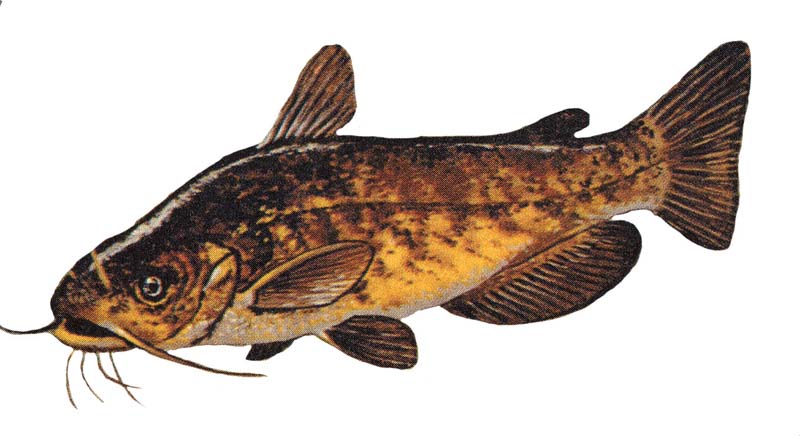

The bullhead catfish is the friendly, dependable, everyman's catfish, a small, abundant, and wildly aggressive bottom-feeder that has introduced more kids and beginners to the joy of catching fish than perhaps any species in North America. Found in ponds, lakes, rivers, and ditches across the continent, the bullhead (a group that includes the brown, black, and yellow bullhead) will eat almost anything, bites all day and all night, fights harder than its size suggests, and, this is its magic, is so willing and so widespread that a kid with a worm and a bobber can catch a bucketful on a summer evening. It's not the giant of the catfish family; a typical bullhead runs 8 to 14 inches and under a pound, with a good one pushing 2 pounds and a rare trophy topping 3. But what the bullhead lacks in size it makes up for in sheer accessibility, and it's every bit as delicious on the table as its bigger cousins.
If you want a fish that requires no fancy gear, no boat, no expertise, just a hook, some bait, and a place to sit, the bullhead is your fish. This guide covers what a bullhead is, where to find them, and the dead-simple, proven methods that fill a bucket (and a frying pan) with these scrappy, whiskered, hard-biting little catfish.
What Is a Bullhead Catfish?
Bullheads are small members of the North American catfish family (Ictaluridae), in the genus Ameiurus. The three common species, the brown bullhead (Ameiurus nebulosus), the black bullhead (Ameiurus melas), and the yellow bullhead (Ameiurus natalis), look and behave much alike, and anglers generally lump them together as "bullheads" or "mud cats." Like all catfish, they have smooth, scaleless skin, a broad, flattened head, and a distinctive set of eight whisker-like barbels around the mouth, packed with taste and smell receptors that let them find food in the murkiest, darkest water. They also carry sharp, mildly venomous spines in the dorsal and pectoral fins, handle them carefully. Compared to channel and blue catfish, bullheads have a squared or slightly rounded tail rather than a deeply forked one, which is the easiest way to tell them apart.
How to Fish for Bullhead Catfish: Tips and TechniquesBullheads are hardy to an extreme, they tolerate warm water, low oxygen, mud, and pollution that would kill most other fish, which is why they thrive in small ponds, sluggish creeks, and murky lakes everywhere. They're bottom-feeding omnivores that eat insects, worms, crayfish, small fish, plant matter, and organic muck, hunting largely by smell and taste. And they're prolific breeders, which keeps their numbers high and the fishing fast.
Where to Find Bullhead Catfish
The great news about bullheads is that they live almost everywhere, small ponds, farm dugouts, lakes, reservoirs, slow rivers, backwaters, drainage ditches, and swamps across the United States and southern Canada. If there's mucky-bottomed, slow or still water near you, there are probably bullheads in it. Focus on:
- Muddy or soft, silty bottoms, bullheads root through the muck for food, so the murkier and softer the bottom, the better.
- Slow and still water, ponds, lake shallows, backwaters, and the slack water of rivers, rather than fast current.
- Cover and structure, around weed beds, sunken wood, undercut banks, docks, culverts, and dropoffs where they hide and feed.
- Shallow flats and shorelines, bullheads move shallow to feed, especially in the evening and after dark, putting them right at the feet of bank anglers.
- Warm, fertile, even murky water, the very ponds and lakes too warm or dirty for other fish are often bullhead paradise.
Because bullheads are so tolerant and so widespread, they're one of the few gamefish you can reliably catch from the bank of a neighborhood pond or a city park lake. Look for the muddy, weedy, overlooked water that other anglers pass by.
Nightcrawlers and Worms: The Classic Bait
If there's one bait that defines bullhead fishing, it's the humble worm. A gob of nightcrawlers or garden worms on a hook is irresistible to a bullhead, and it's the bait that's introduced generations of anglers to catfishing. Nothing is simpler or more effective.
How to Catch Bullheads by the Bucket Load with WormsThread a nightcrawler or a wad of smaller worms onto a hook (a size 2 to 6 baitholder or circle hook is perfect), and fish it on the bottom where bullheads root for food. You can fish it under a bobber set to just tick the bottom, or, even better, on a simple bottom rig with a sinker (see below). Bullheads find the worm by smell, engulf it, and hook themselves, especially on a circle hook. The worm's natural scent and wriggling action make it the number-one bullhead bait, deadly on brown, black, and yellow bullheads alike. Keep a container of nightcrawlers handy and you're in business anywhere bullheads swim.
Stink Baits and Prepared Baits
Because bullheads hunt by smell in murky water, stink baits and prepared "punch" or "dip" baits are extraordinarily effective, the stinkier, the better. These commercial (or homemade) concoctions of blood, cheese, fish, and secret ingredients put out a powerful scent trail that draws bullheads from across a pond.
Catching Bullheads with Homemade Catfish BaitFish a dip or punch bait on a special ribbed "sponge" or tube worm designed to hold the sticky, smelly paste, or use a treble hook packed with dough bait, and let it sit on the bottom. The scent does all the work, bullheads follow the smell trail right to your hook. Prepared baits are mess-free (relatively!), stay on the hook well, and are absolutely deadly, especially in warm water when bullheads are feeding hard. Other smelly, natural baits work just as well: cut bait (chunks of shad, sunfish, or other fish), shrimp, hot dogs, and chicken liver are all classic bullhead offerings. When in doubt, go stinky.
Chicken Liver and Cut Bait
Speaking of stinky, chicken liver is a legendary catfish bait, and bullheads devour it. Cheap, available at any grocery store, and drenched in blood and scent, chicken liver is a go-to for bank anglers everywhere. Cut bait, chunks or strips of fish like shad, herring, or sunfish, is likewise excellent, especially for the larger bullheads.
Night Fishing for Bullhead Catfish with BaitThe trick with soft baits like chicken liver is keeping them on the hook, thread the liver carefully, use a treble hook to hold it, or wrap it in a bit of mesh or pantyhose, then fish it on the bottom. The blood and scent draw bullheads fast. Cut bait, being tougher, stays on the hook better and appeals to bigger fish. Both are best fished on a simple bottom rig in the evening and after dark, when bullheads roam the shallows to feed. Bring a rag, bullhead fishing with liver and cut bait is gloriously messy, and that's half the fun.
The Simple Bottom Rig
You don't need anything fancy to catch bullheads, a basic bottom rig is all it takes, and it's the setup most bullhead anglers use. The idea is simple: get your bait down to the bottom where the bullheads are, and keep it there.
How to Catch Bullhead Catfish on the BottomThe classic rig is a slip-sinker (Carolina) rig, slide an egg sinker onto your line, tie on a barrel swivel, then add a short leader and a hook, which lets a bullhead pick up the bait and swim off without feeling the weight. Even simpler is a fixed bottom rig with a sinker at the end and a hook on a dropper above it, or just a split shot and a hook. Cast it out, set the rod in a holder or a forked stick, and watch the rod tip or a bobber for the telltale tap-tap-pull of a biting bullhead. A circle hook is a great choice, it hooks the fish in the corner of the mouth as it swims off, reducing deep-hooking. That's the whole system: bait, sinker, hook, and patience. It could not be easier, which is exactly why the bullhead is the perfect fish for kids and first-timers.
Night Fishing and Timing
Bullheads feed around the clock, but they are especially active in low light and after dark. As the sun sets, bullheads move shallow to feed aggressively, and evening and night fishing is often the most productive, and the most pleasant, way to catch them.
Catching Bullhead Catfish from the BankOn a warm summer evening, set up on a pond or lake shore, cast a few baited bottom rigs into the shallows, prop your rods on forked sticks or holders, and wait for the action to start as darkness falls. Bring a lantern or headlamp, a comfortable chair, and some patience, and you'll often catch bullheads steadily through the evening. Their reliance on smell means they feed confidently in the dark, and the shallow, close-in bite makes night fishing for bullheads accessible to everyone. It's one of the most relaxing and rewarding kinds of fishing there is, and a wonderful way to spend a summer night with family.
Tackle and Handling
Bullhead fishing needs no special equipment: a light or medium spinning combo with 6 to 12 pound line, a handful of hooks, some sinkers, and bait is plenty. The fish are small, so light tackle makes their surprisingly stubborn fight fun. Two cautions, though. First, bullheads have sharp, mildly venomous spines in the dorsal and pectoral fins, a poke stings and can get infected, so handle them carefully, gripping the fish from behind the pectoral spines (or use a towel or gripper). Second, bullheads are notorious bait-swallowers, so a circle hook or long-nose pliers (or a hook remover) will save you a lot of trouble. Beyond that, keep it simple, that's the whole appeal of bullhead fishing.
The Perfect Fish for Kids and Beginners
If you want to hook a child on fishing for life, the bullhead is your ally. No other gamefish combines the bullhead's four magic qualities: it's everywhere (there's a bullhead pond within reach of nearly everyone), it's easy (a worm on the bottom is all it takes), it bites fast and often (kids need action, and bullheads deliver a steady stream of it), and it puts up a surprisingly stubborn tug that feels like a real fight on light tackle. A summer evening on a pond bank, a bucket, a few rods on forked sticks, and a container of nightcrawlers is the recipe for the kind of fishing memory that lasts a lifetime, and the bullhead is the reliable star of the show.
That reliability matters. So much of fishing is about patience and disappointment, but bullheads reward a beginner with near-constant bites, quick hooksets, and fish in hand. They don't require reading the water, matching the hatch, or working a lure, just bait, patience, and a willingness to get a little muddy. For teaching the fundamentals of casting, waiting, feeling a bite, setting the hook, and landing and handling a fish, no species is better. Generations of anglers caught their very first fish, a whiskered, wriggling bullhead, from a pond bank at dusk, and that first fish set the hook in them for good.
Where the Bullhead Fits
The bullhead is the small, ubiquitous member of the North American catfish family, and knowing its bigger relatives rounds out your catfishing. Its famous cousin the channel catfish is the widespread, hard-fighting mid-size catfish that shares many of the bullhead's baits and tactics on a larger scale, the mighty blue catfish is the giant of the rivers, and the flathead catfish is the big, predatory live-bait specialist. The bullhead gives you the same whiskered, bottom-feeding, scent-hunting catfishing in a small, abundant, everywhere-you-look package, the perfect place to start.
Eating Bullhead
Don't let their humble reputation fool you: bullheads are excellent eating. Their flesh is white, flaky, and mild, and, like all catfish, superb breaded and fried. They're a staple of countless fish fries across the country, and because they're so abundant and reproduce prolifically, they're a fish you can keep for the table with a clear conscience (indeed, many small ponds benefit from having some bullheads removed). Skin them (catfish have no scales), remove the head and guts, and fry the fillets or whole dressed fish in cornmeal. The one tip: bullheads from muddy water can taste, well, muddy, fish from cleaner water taste best, and soaking the fillets in salt water or milk helps. A mess of fried bullheads is one of freshwater fishing's great, humble pleasures.
Put It All Together
Catching bullhead catfish is about as simple as fishing gets: put a smelly bait on the bottom of a mucky pond or slow river and wait for the tap-tap-pull. Thread on a gob of nightcrawlers, glob on some chicken liver, or load a hook with stink bait; fish it on a simple slip-sinker or bottom rig with a circle hook; set up on a shallow shoreline in the evening or after dark; and prop your rod on a forked stick. Handle the fish carefully around those spines, keep a few for the frying pan, and enjoy the most accessible, dependable, family-friendly catfishing in North America. No boat, no expertise, no fancy gear, just a whiskered, hard-biting fish that's always ready to play.
Want to fill a bucket with bullheads? The hardest part is usually just finding the water, but bullheads are so widespread that the muddy neighborhood pond, the overlooked city-park lake, or the slow backwater of a nearby river is very likely holding a bunch of them. Scout the mucky, weedy, warm water close to home, make sure it's open to public access and fishing, confirm the local rules, and you'll rarely be far from fast, fun, whiskered action to share with your kids or your first-timer.