Fish
Fish Fire
Fire Hike
Hike Bird
Bird

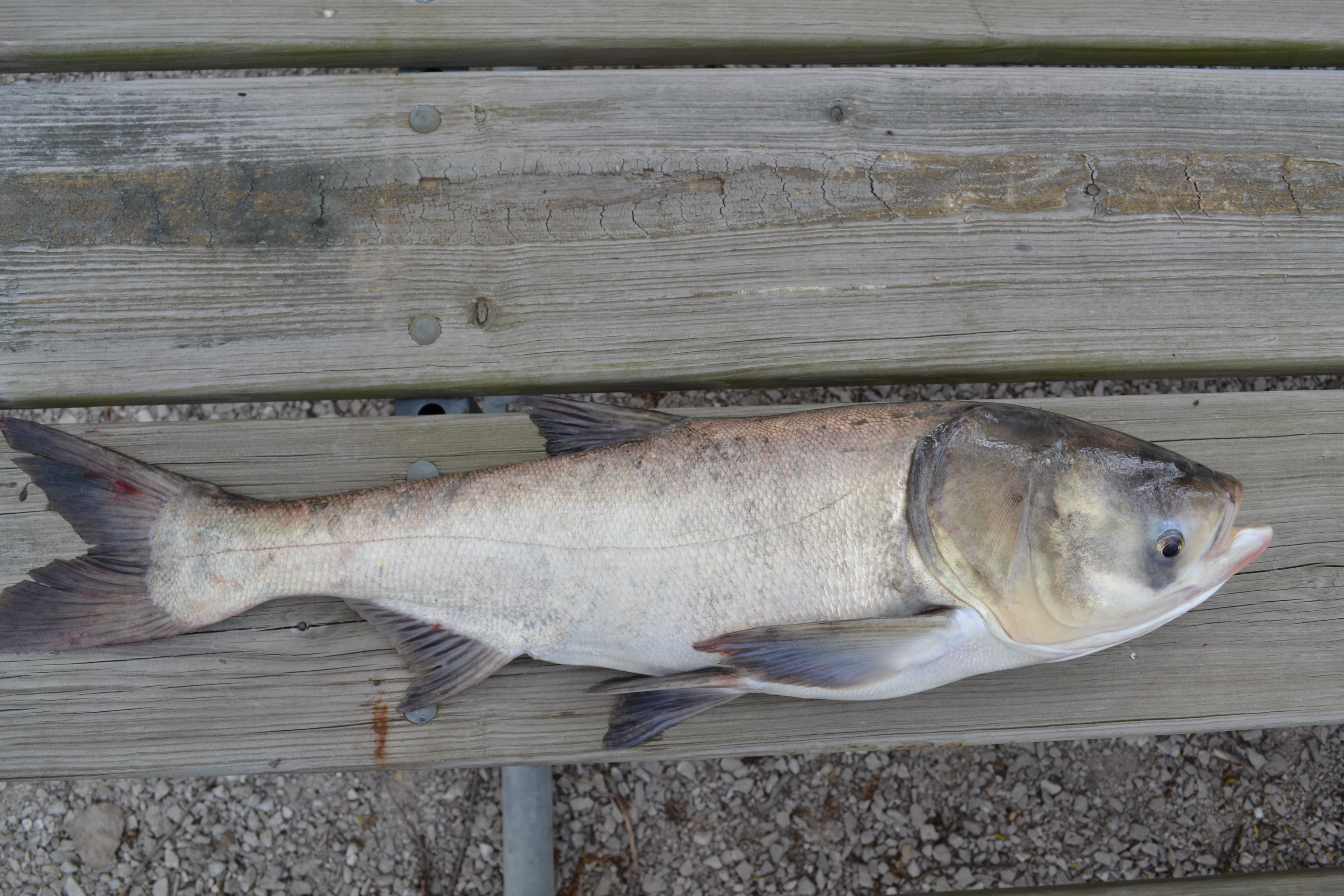

The bighead carp is one of the most challenging, and controversial, fish an angler can pursue: a giant, invasive, plankton-filtering Asian carp that can exceed 60, 80, even 100 pounds, roams the rivers and reservoirs of the Mississippi basin in enormous numbers, and yet is famously difficult to catch on a conventional hook and bait, because it eats microscopic plankton rather than anything you can easily thread on a hook. Named for its disproportionately large head (which makes up much of its body length), the bighead carp (Hypophthalmichthys nobilis) is a filter feeder, straining tiny plankton from the water through specialized gill rakers, a diet that renders worms, lures, dough, and baitfish largely useless and forces anglers to rely on specialized and unconventional methods. Combined with its enormous size and powerful fight, this makes the bighead a unique and formidable target.
Bighead carp are an ecologically damaging invasive species across much of the central United States, where they compete with native fish for the plankton at the base of the food web, and there's a strong push to catch, remove, and use them. For the adventurous angler, they offer a genuinely giant freshwater fish and a fascinating puzzle, how do you catch a fish that eats plankton? This guide covers what a bighead carp is, where to find them, and the specialized techniques, suspension paste methods, snagging, bowfishing, and even the fly, that put these huge, invasive filter feeders on the bank.
What Is a Bighead Carp?
The bighead carp is a large member of the minnow and carp family (Cyprinidae), native to eastern Asia and introduced to North America (originally to control plankton and algae in aquaculture and wastewater ponds), where it has escaped and become a widespread, damaging invader. As its name says, it has a very large head, scaleless, with no barbels, low-set eyes that sit below the midline of the body, and an upturned mouth. Its body is deep and somewhat compressed, and it's colored dark gray to brownish on the back with irregular dark blotches and mottling over a lighter, cream-colored belly (which helps distinguish it from the plainer, silvery silver carp). Bighead carp grow enormous: commonly 20 to 40 pounds, with fish over 60 pounds not unusual and giants exceeding 80 to 100 pounds recorded.
How to Catch Bighead CarpThe defining feature of the bighead, from a fishing standpoint, is its filter-feeding diet. Bighead carp feed by straining zooplankton and phytoplankton, microscopic animals and algae, from the water through fine gill rakers, swimming with their mouths open to filter huge volumes of water. This means they don't bite baits or chase lures the way other fish do, which is exactly why they're so hard to catch on hook and line, and why anglers must resort to specialized methods: creating a cloud of fine bait particles they'll filter, snagging them, or bowfishing. Understanding that a bighead eats plankton, not prey, is the key to every technique for catching one. (Bighead carp are a federally regulated invasive species in the U.S.; know and follow local rules, which often encourage their removal but restrict transport of live fish.)
Where to Find Bighead Carp
Bighead carp have spread throughout the Mississippi River basin and its major tributaries, the Missouri, Ohio, Illinois, and many other rivers, and into connected lakes and reservoirs across much of the central United States, and they continue to expand their range (with great concern about them reaching the Great Lakes). Wherever they live, they relate to plankton-rich water and current. Focus on:
- Large rivers and their backwaters, the bighead's core habitat; big, slow-to-moderate rivers with plankton blooms.
- Below dams and in spillways and tailwaters, bighead (and silver) carp concentrate in these current-rich, plankton-rich areas, a prime spot to find them.
- Reservoirs, lakes, and impoundments connected to invaded river systems, especially plankton-rich, fertile waters.
- Backwaters, sloughs, and confluences, slower, nutrient-rich water where plankton concentrates and carp gather.
- Near the surface and upper water column, bighead often feed and cruise in the upper layers where plankton is dense, and can sometimes be seen at the surface.
Because bighead carp gather where plankton is dense, look for fertile, nutrient-rich, sometimes greenish (algae-rich) water, especially in rivers and below dams. In heavily invaded systems, they can be astonishingly abundant, and spillways and tailwaters below dams are often the most reliable places to find concentrations of these big fish.
Suspension and Paste Methods
The most effective hook-and-line approach for filter-feeding bighead carp is a suspension or paste method, creating a cloud or column of fine bait particles that the carp filter-feed on, with a hook hidden in or near the cloud. This clever technique turns the bighead's plankton-filtering behavior against it, and it's the primary way dedicated anglers catch them on rod and reel.
How to Catch Asian Carp: Fishing MethodsThe classic setup uses a float or bobber suspending a small mesh bag, sponge, or ball of fine, water-dispersing bait (often a paste or "boilie" of finely ground ingredients, or a commercial "method" mix) at the depth the carp are feeding, with one or more small hooks positioned in the resulting cloud of particles. As the bait slowly dissolves, it creates a plume of fine particles that mimics a plankton concentration; the filter-feeding bighead swims through with its mouth open and inadvertently takes in the hook. Fine-tuning the bait's dispersal, the depth, and the hook placement is the art of it. It's a specialized, patient technique, very different from ordinary bait fishing, but it's the most reliable way to hook a bighead carp on rod and reel, and hooking one of these giants is a serious thrill.
Fishing Methods for Silver and Bighead CarpExperienced Asian-carp anglers refine this approach constantly, experimenting with different bait recipes, dispersal rates, float depths, and hook arrangements to match how the fish are feeding on a given day. Some fish the paste cloud shallow when carp are feeding high in the water column, others suspend it deeper; some use a single hook in the cloud, others a small cluster. Pay attention to where you see fish rolling or feeding, set your cloud at that depth, and be patient, success with filter feeders is a matter of dialing in the presentation until the fish take in your hook along with the particles.
Snagging
Because bighead carp are so hard to catch by conventional means and so abundant (and invasive), snagging, using large, weighted treble hooks to foul-hook the fish rather than getting them to bite, is a common and legal method in many places for these carp, especially where they concentrate below dams. Snagging is a very different pursuit from bait fishing, more akin to a physical, active hunt.
Snagging 101 for Silver and Bighead Asian CarpTo snag, anglers use a stout rod, heavy line, and large weighted treble hooks, casting into concentrations of carp (often visible or dense below dams and in spillways) and sweeping the rod hard to drive the hooks into a fish, then fighting it in. Where bighead carp are stacked up thick in tailwaters, snagging can be very effective and is often specifically permitted (and even encouraged) for these invasive fish. It requires heavy tackle to handle both the snagging motion and the powerful fight of a big carp. Regulations on snagging vary widely, it's legal and encouraged for invasive carp in some waters and prohibited in others, and rules about what species you can snag are strict, so always check local rules carefully before snagging. Where it's legal, it's a productive way to catch and remove these big invaders.
Bowfishing
Bowfishing is one of the most popular and effective ways to take bighead carp, particularly because they're large, often near the surface, invasive, and encouraged for removal. It's a hunting-style pursuit that suits these big, hard-to-hook fish perfectly and is a favorite method for controlling them.
Bowfishing for Bighead CarpBowfishers use a bow rigged with a reel and a barbed arrow tethered by line, stalking or drifting within range of bighead carp cruising or feeding near the surface, then shooting and retrieving the fish on the line. Because bighead carp frequently feed in the upper water column and can be spotted at or near the surface, they're excellent bowfishing targets, and many bowfishing tournaments and removal efforts specifically target invasive Asian carp. It's an exciting, active method that helps remove these damaging fish, and it's widely encouraged for that reason. As always, check local regulations, bowfishing for invasive carp is legal and encouraged in many places, but rules vary, and be prepared to handle and dispose of or use the large fish you take.
Fly Fishing
For the ultimate challenge, some anglers pursue bighead (and silver) carp on the fly, an unconventional but fascinating approach that tries to imitate the plankton or trigger a reaction from these filter feeders. It's a niche, difficult pursuit, but landing a giant filter-feeding carp on a fly rod is a remarkable accomplishment.
Bighead Carp on a Fly RodFly fishing for bighead carp typically involves either tiny flies that imitate plankton or small food particles, fished in or near a chummed cloud or a natural plankton concentration, or fishing where carp are actively surface-feeding and presenting a fly in their path. It's not the sight-and-eat game of grass carp fly fishing (bigheads don't hunt individual food items the way grass carp graze plants), so it often relies on getting a fly into a feeding fish's filtering path. Some anglers combine fly gear with a chum or paste cloud to concentrate feeding fish. It's an experimental, low-percentage, but intriguing method, a way to test your skills against a fish that isn't "supposed" to be catchable on a fly. When you do come tight to a big bighead on fly tackle, hold on for a powerful, memorable fight.
Tackle for Bighead Carp
Whatever method you use, bighead carp are big, powerful fish that demand stout tackle. For suspension or paste fishing, use a strong rod (a heavy carp or catfish rod), a reel with a good drag and plenty of line capacity, and strong line (20+ pound mono or heavy braid), with a float/controller setup and small hooks positioned in the bait cloud. For snagging, you'll want a very stout rod, heavy line (30+ pounds), and large weighted treble hooks. For bowfishing, a bowfishing setup with a reel and barbed arrows. In all cases, a large landing net (or a plan for landing a huge fish) and gloves are helpful, and because these are big, heavy fish, be prepared for the weight and power. Given their invasive status and often-restricted transport, plan ahead for how you'll handle, use, or dispose of the fish you catch, in accordance with local regulations.
Where the Bighead Fits
The bighead carp is one of the invasive Asian carps wreaking havoc in North American waters, and knowing its relatives helps. Its closest counterpart, the silver carp, is the other notorious filter-feeding Asian carp, the infamous "flying carp" that leaps from the water when startled by boat motors, caught by similar specialized methods and often found in the same waters. The grass carp is a plant-eating Asian carp (a very different diet and fishery), and the familiar common carp is the bottom-feeding carp caught on corn and dough. Among them, the bighead stands out as the giant, plankton-filtering invader, a fish that challenges every conventional idea of how to catch a fish.
Eating and Removal
Bighead carp are actually good eating, their flesh is white, firm, and mild, and bighead carp is a prized food fish across much of Asia (where filter-feeding carp are staples). Because they eat low on the food chain (plankton), they tend to accumulate fewer contaminants than predatory fish. The main drawbacks are their intramuscular ("Y") bones, which take some skill to deal with, and, in North America, the "carp" image problem. But there's a strong and growing movement to harvest and market invasive Asian carp as food (sometimes rebranded as "copi") precisely because catching, removing, and eating them helps control their damaging spread. If you catch bighead carp where keeping them is legal, using them for the table (or as garden fertilizer, or cut bait for catfish) is both practical and ecologically positive. Because they're invasive, removal is generally encouraged, but follow local rules on transporting live fish, which are often strictly regulated.
Put It All Together
Catching bighead carp means outsmarting a giant filter feeder that eats plankton, not baits: create a cloud of fine bait particles with a suspension or paste setup and hide a hook in it, snag them where they concentrate thick below dams (where legal), bowfish them near the surface, or try the fly-rod challenge in a feeding cloud. Find them in the plankton-rich water of big rivers, backwaters, and especially the tailwaters below dams, use stout tackle for their size and power, and always check the regulations for this invasive, often-restricted species. It's an unconventional pursuit for an unconventional fish, but hooking, snagging, or arrowing a 40-, 60-, or 80-pound bighead is a genuinely giant freshwater catch, and removing these invaders helps native fish. For the adventurous angler, the bighead carp is one of fresh water's great oddball challenges.
Want to tangle with a giant invasive carp? Rig up a paste-cloud suspension setup or a bowfishing outfit, learn the specialized methods, and head for the Asian-carp rivers and tailwaters where these fish stack up thick, then go put yourself on one of fresh water's biggest, strangest challenges.