Fish
Fish Fire
Fire Hike
Hike Bird
Bird

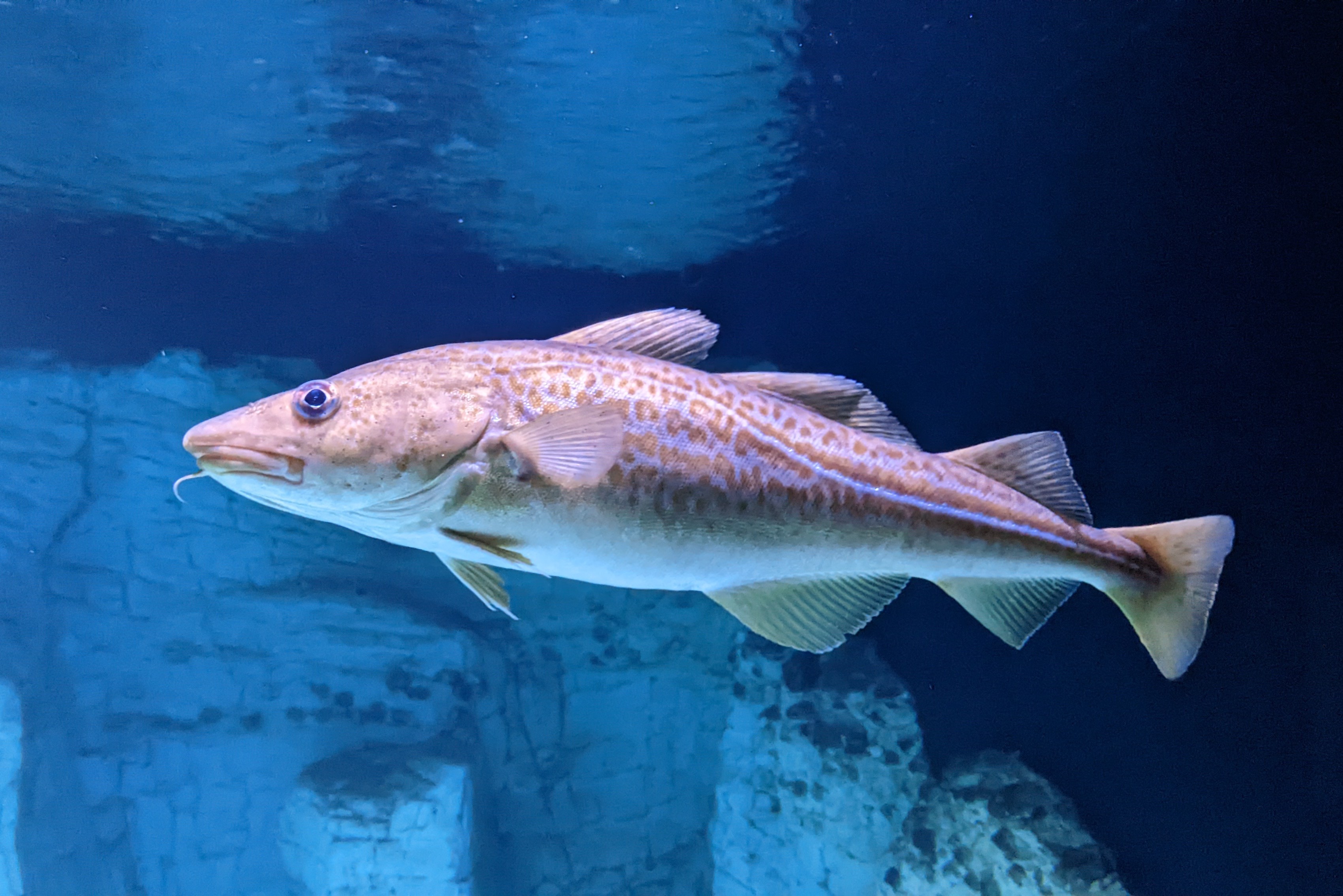

Few fish carry the weight of history that the Atlantic cod does. Whole economies were built on it; towns, capes, and fisheries take their names from it; and for centuries the cod was the workhorse of the North Atlantic. For the modern angler, cod remain one of the most rewarding fish you can target, a heavy, hard-pulling bottom fish that lives around structure, eats aggressively, and rewards you with some of the finest white fillets in the ocean. Whether you fish New England, Atlantic Canada, the British Isles, Norway, or Iceland, the tactics that catch cod share a common core.
Atlantic cod (Gadus morhua) are unmistakable once you have one on deck: a heavy, mottled olive-to-brown body, a pale curving lateral line, three separate dorsal fins, and a single whisker-like barbel under the chin that marks them as a true cod. They range from a couple of pounds up to genuine trophies of twenty, forty, and, in the best grounds, sixty pounds or more. They are ambush and forage predators that hold near the bottom over hard structure, hunting crabs, shellfish, worms, squid, and baitfish, which is exactly why the tactics below work so well.
This guide covers the whole cod toolkit: vertical jigging, bait rigs, shore fishing, teaser combos, finding fish on structure, and cleaning your catch. A quick, important note first, cod stocks vary enormously by region, and some (notably the Gulf of Maine) are severely depleted and tightly regulated or closed at times, while others (Norway, Iceland, parts of the UK) remain robust. Always check the current rules where you fish. Learning the local stock and its regulations before you go, which grounds are open, what the size and bag limits are, and how the fish move through the season, shortcuts the learning curve more than anything else.
Understanding cod: season, movement, and behavior
Cod are a cold-water fish, and temperature drives everything about where you find them. They are most active and shallowest in the cooler months, which is why so many cod fisheries peak from fall through spring; as water warms, cod generally drop into deeper, cooler water. In many regions this creates a clear seasonal rhythm, inshore and shore fishing in the cold season, deeper wreck and bank fishing when it warms, and knowing that pattern tells you where to start.
Cod are opportunistic bottom feeders with a huge appetite. Their diet spans crabs, shrimp, clams, worms, squid, sand eels, herring, and small fish, and a big cod will eat almost anything it can fit in its bucket-sized mouth. That broad diet is why both bait and lures work, and why matching the local forage, sand eels in one place, crabs or squid in another, makes such a difference. They feed heavily and grow slowly, and the biggest fish are old fish, which is part of why the fishery needs careful management.
Because cod relate so tightly to bottom structure and temperature, the best cod anglers think first about where and when before they think about tackle. Find cold, food-rich water over hard structure on a moving tide, and the fish are usually there; put a jig or a fresh bait in front of them, and they usually eat.
Vertical jigging for cod
Vertical jigging is the classic and most exciting way to catch cod. A heavy metal jig, the traditional diamond jig or a modern flutter/knife jig, dropped straight to the bottom and worked with sharp upward sweeps imitates a wounded baitfish and draws savage strikes. Jigging lets you fish precisely over structure, feel every take, and cover the bottom few feet of water column where cod hold.
Match your jig weight to the depth and current so it gets to the bottom and stays in contact, commonly six to sixteen ounces in deeper water. Drop to the bottom, then lift the rod in a smooth, powerful sweep and let the jig flutter back down on a controlled semi-slack line; most strikes come on the fall, so stay ready. A stout jigging rod, a strong conventional or spinning reel, and 30- to 65-pound braid give you the backbone to move a big cod off the bottom before it wraps you in structure.
How to jig for Atlantic codVary your cadence until the fish tell you what they want, sometimes an aggressive rip, sometimes a slow lift-and-drop near the bottom. Sharpen or upgrade your hooks; a big cod's bony mouth demands a sticky-sharp point, and cheap hooks cost you fish.
Color and profile can matter on tough days. Chrome and silver jigs shine in clear water and bright conditions, while glow, green, and darker colors can out-fish them in deep or murky water. Sand-eel-shaped jigs excel where cod are keyed on sand eels; wider diamond and knife jigs imitate herring and other fuller-bodied bait. When the bite is slow, downsizing your jig or slowing your retrieve near the bottom often turns hesitant fish into biters. And always keep contact with the bottom, cod hold in the lowest few feet, so a jig fishing ten feet up is fishing empty water.
Bait fishing for cod
Cod are enthusiastic bait feeders, and for many anglers, especially from the beach and in the classic UK and Scandinavian traditions, bait is the way to catch them. The rig is usually simple: a high-low (paternoster) rig with strong hooks above a heavy sinker, or a single pennel rig for big baits, dropped to the bottom over the right ground. Cod hunt by scent as well as sight, so a fresh, smelly bait pulls them in.
The best cod baits reflect their natural diet. Clams, especially skimmer and razor clams, are deadly. Squid, whole or in strips, is a staple and stays on the hook well. Peeler and hard crab are outstanding, particularly for shore cod. Sandworms, lugworms, and cut fish all take fish, and a "cocktail" of two baits (squid tipped with crab or worm) is a proven big-cod tactic. Keep hooks strong and sharp, and present a generous, natural-looking bait.
The best baits for cod fishingOn the bottom, let the cod take the bait and turn before you set, with circle hooks, simply lean into the weight and let the hook find the corner of the jaw. Fresh bait matters enormously; cod are far more responsive to bait that smells alive than to freezer-burned leftovers.
Bait presentation rewards a little care. Bind soft baits like worm and razor clam to the hook with fine elastic bait thread so they survive the cast and the current instead of flying off or washing away. Leave hook points well exposed so they set cleanly in that hard mouth, and refresh your bait regularly, a washed-out, scent-depleted bait catches far less than a fresh one. When you are searching for fish, a bigger, bolder bait can call cod in from a distance; when the bite is finicky, a neater, smaller offering often gets eaten when a large one is ignored.
Shore fishing for cod
You do not always need a boat. In much of the cod's range, the UK, Norway, parts of New England and Atlantic Canada, cod come within reach of shore anglers casting from beaches, rock marks, jetties, and piers, especially in the cooler months when cod move into shallower water to feed. Shore cod fishing is a beloved tradition, and a big cod off the beach at night is a genuine prize.
A surf or beachcasting rod of eleven to fourteen feet, a strong reel loaded with abrasion-resistant line and a shock leader, and a grip lead to hold bottom in the surf make up the standard kit. Cast a baited pulley or paternoster rig out to the productive ground, often the gullies, sandbars, and rough patches where food collects, and fish patiently, watching your rod tip for the tell-tale slam of a taking cod. Cold, rough, colored water after a blow is famously prime for shore cod.
Shore fishing for cod on baitDress for the conditions and fish the tides that concentrate fish and food along your mark. Local knowledge is gold here, the difference between a productive gully and dead ground can be a few yards.
Teaser and jig-combo rigs
One of the most effective cod setups pairs a jig with a teaser, a small soft-plastic or feathered hook tied above the main jig on a dropper. The jig gets down and provides the flash and weight; the teaser imitates a smaller baitfish fluttering nearby, and cod frequently hit the teaser, sometimes giving you a double. This combination out-produces a lone jig on many days and lets you show the fish two different profiles at once.
Tie the teaser twelve to thirty inches above the jig on a short, stiff dropper so it stands off the main line and does not tangle. Soft-plastic curl-tails, sand-eel imitations, and feather teasers all work; match the size to the local bait. Work the whole rig with the same lift-and-drop jigging cadence, and be ready for a fish on either the jig or the teaser.
How to make and fish cod teaser rigsThe teaser rig also shines for other bottom species you will encounter over the same ground, so it earns its place in the box. Just check local rules on the number of hooks allowed, which varies by region.
Finding cod: structure and wrecks
Cod are structure fish. They hold on and around hard bottom, boulder fields, ledges, humps, mussel beds, rockpiles, and, famously, wrecks, where bait and current concentrate their food. Finding that structure is most of the battle; once you are on it, cod are usually willing. A good sounder is essential: look for hard returns, sharp contour changes, and the fish marks holding tight to the bottom or stacked just above it.
Wrecks in particular are cod magnets, holding fish year-round and often producing the biggest specimens. Position your boat to drift or hold over the structure, accounting for wind and current so your jig or bait works right through the productive zone. Because cod live in and around snaggy ground, expect to lose some tackle, bring extra jigs and sinkers, and fish braid so you feel the structure and can react before you hang up.
Wreck fishing for big codTide and season matter: moving water turns on the feed, and cod often move onto shallower structure in the cooler months and drop deeper as water warms. Mark productive pieces of bottom on your GPS and build a rotation you can work across conditions.
Controlling your drift is a skill worth developing. On a fast drift you may blow across the productive zone in seconds, so use a drift sock, a trolling motor, or spot-lock to slow down and keep working the sweet spot. When the wind and current fight each other and the boat sits sideways to the structure, repositioning for a cleaner drift often does more for your catch than any change of jig. Keep a close eye on the sounder as you pass over the mark, and when you see the fish stack up, drop immediately, cod schools can be tightly bunched on one small piece of bottom, and a few feet either way is the difference between a hookup and a blank drop.
Cleaning and eating cod
Cod is the gold standard of white fish, flaky, mild, and versatile, the fish that defines "fish and chips" and countless chowders. Cleaning them is straightforward: a large cod yields two thick, boneless fillets that skin easily, and the firm meat handles every cooking method from frying to baking to poaching. Bleed and ice your fish promptly to keep the fillets firm and white.
Fillet along the backbone and over the ribs with a sharp knife, then run the blade between meat and skin. The cheeks and the throat ("tongue") are prized delicacies worth saving. Because cod fillets are thick and forgiving, they are one of the most beginner-friendly fish to cook, hard to ruin and delicious in almost any preparation.
How to fillet an Atlantic codAbove all, respect the regulations. Cod are a fishery under pressure in several regions, with strict size limits, bag limits, and seasonal closures designed to rebuild stocks. Know the current rules where you fish, keep only what is legal and what you will eat, and handle released fish carefully, venting or using descending devices for fish brought up from depth. The future of this historic fishery depends on it.
Bringing it together
Atlantic cod reward the angler who fishes structure with the right tools: drop a diamond jig or a jig-and-teaser combo over a wreck or rockpile, or soak a fresh clam, crab, or squid bait on a paternoster rig from boat or beach. Find the hard bottom, fish a moving tide, keep your hooks sharp, and be ready for the heavy, dogged pull that has drawn anglers to this fish for centuries. Catch them thoughtfully and within the rules, and cod will keep giving back, on the rod and on the plate.
Ready to get on the fish? Study the local grounds and structure, dial in your tactics, and confirm the current cod regulations before you head out.
For more North Atlantic bottom targets, see our guides on how to catch pollock, how to catch scup, and how to catch tautog.