Fish
Fish Fire
Fire Hike
Hike Bird
Bird

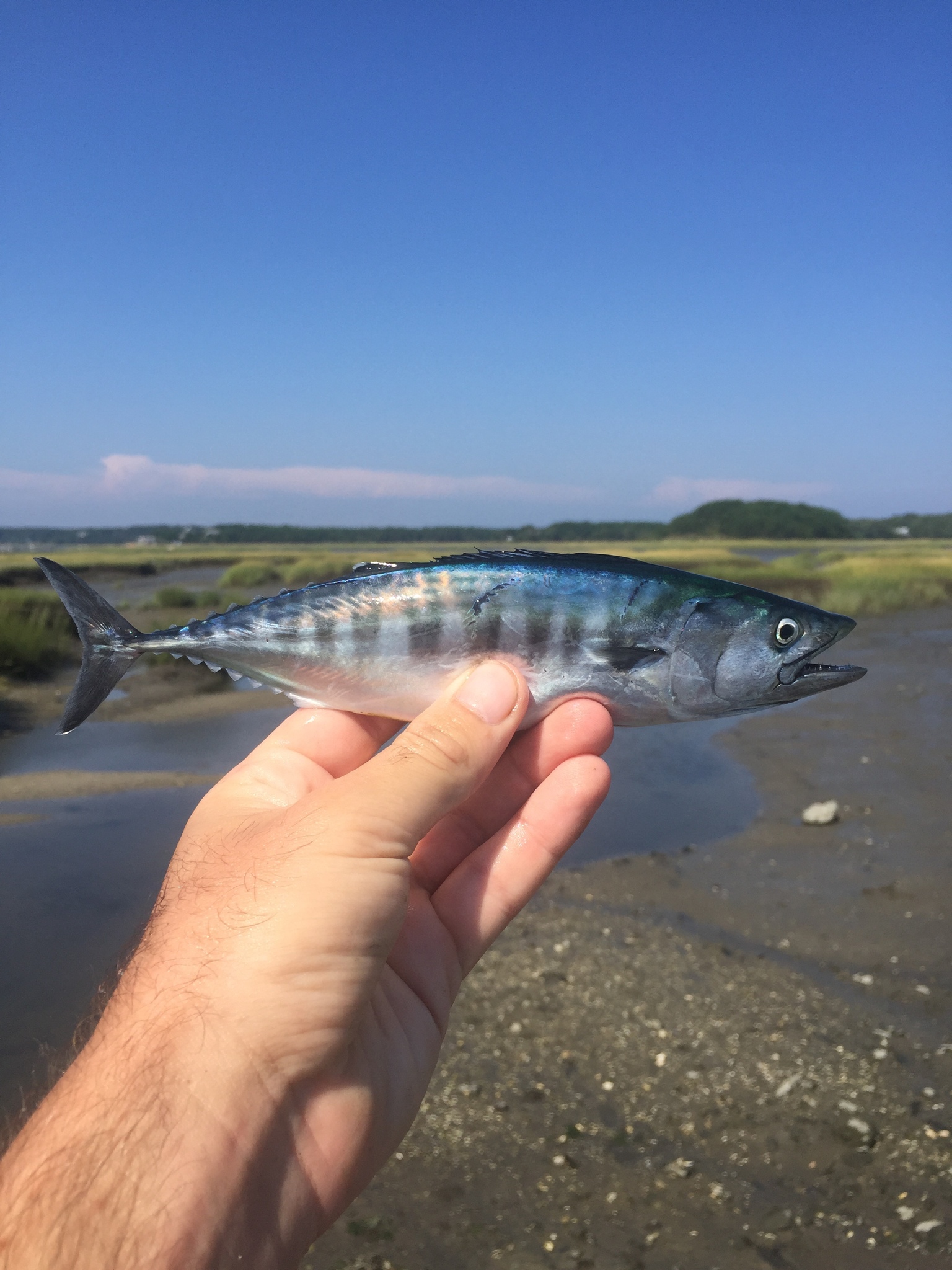

The Atlantic bonito (Sarda sarda) is one of the most rewarding small gamefish in the inshore and nearshore ocean, a fast, hard-fighting member of the tuna family that blitzes bait like its cousin the false albacore, but with one crucial difference: the bonito is genuinely excellent eating. Sleek, streamlined, and marked with distinctive slanting stripes, the "bones" show up on seasonal runs to gorge on bait, giving light-tackle and fly anglers the same screaming-run thrills as albies plus a fine meal at the end. Fast, willing, delicious, and beautiful, the Atlantic bonito is a prized target from New England to the Carolinas and beyond. This guide covers how to catch them.
What Is an Atlantic Bonito?
The Atlantic bonito is a member of the tuna and mackerel family (Scombridae) and a true bonito (genus Sarda), distinct from the false albacore (little tunny) with which it's often confused. It has a streamlined, torpedo-shaped, steel-blue-and-silver body with distinctive dark, slanting (oblique) stripes running diagonally down and forward along the upper back and sides, a row of small finlets to the forked tail, and a mouth full of small teeth. Those slanting stripes are the clinching ID feature. Atlantic bonito are fast, schooling, open-water predators. They commonly run 2 to 8 pounds, with bigger ones reaching 10 to 12-plus pounds, and like all tunas, they pull hard and run fast for their size.
For anglers, the defining traits are that Atlantic bonito are fast, schooling, bait-crushing predators that chase small baitfish (silversides, sand eels, bay anchovies, small herring, and other bait) in nearshore and inshore waters, corralling and blitzing them at the surface. When hooked, they make strong, fast, drag-pulling runs powered by their tuna physiology, not quite the blistering runs of a false albacore, but hard, fast, and thrilling on light tackle. They show up on seasonal runs (often late spring/early summer and again in fall) when they push inshore to feed. And critically, unlike the false albacore, the Atlantic bonito has lighter, milder, genuinely good flesh, making it a prized catch for the table as well as the fight. Fast, willing, hard-fighting, and delicious, the Atlantic bonito is a favorite of anglers who want both sport and a meal.
Where and When to Catch Atlantic Bonito
Atlantic bonito are found on both sides of the Atlantic; along the U.S. coast they're targeted from southern New England (a famous bonito fishery) through the mid-Atlantic to the Carolinas, and into Florida and the Gulf, with populations and timing varying by area. They're nearshore and inshore fish that follow bait, so look for them around inlets, points, rips, jetties, along beaches, over nearshore reefs and structure, and in bays, sounds, and coastal waters where bait concentrates and current sets up. They roam and chase bait, so finding them means finding the bait and the feeding, diving birds, busting fish, and showering bait are the giveaways, just as with albies.
The best fishing follows the seasonal runs. In the Northeast and mid-Atlantic, bonito often show in late summer and fall (frequently arriving a bit before the albies), while in the Carolinas a well-known spring run occurs (often April–May), and timing varies farther south. During the runs, bonito push inshore to gorge on bait, providing prime light-tackle fishing. They feed best when bait is concentrated, often in low light and on moving tides, with calmer conditions making breaking fish easier to spot and reach. As with all these fast pelagic feeders, the game revolves around finding the feeding schools during the run. Know when the bonito arrive in your area, watch for birds and busting fish, and be ready to move to the feeding.
Casting Metals and Small Lures
The classic and most exciting way to catch Atlantic bonito is casting small, fast lures to breaking fish, the same run-and-gun approach used for albies.
Catching Bonito on Small LuresThe go-to lures are small, dense metal jigs and spoons (Deadly Dicks, Kastmasters, and similar), epoxy jigs, small soft-plastic jerkbaits, and small swimbaits, offerings that cast far, match the small bait, and can be retrieved fast. When you find breaking fish, cast into or just past the feeding school and retrieve quickly; bonito chase fast-moving lures and often ignore slow presentations. Match the size of the bait the fish are keyed on, since bonito (like albies) can be finicky and selective about matching the "hatch." Because they're fast, boat-shy, and constantly moving, run-and-gun tactics, spotting a school, easing into range without running it over, casting quickly, and repositioning as the fish move, are essential. Use a spinning outfit with a smooth, strong drag and good line capacity for the fast runs. Casting metals to breaking bonito is fast, visual, and thrilling, and the reward is both a great fight and a fine meal.
Trolling for Bonito
Trolling is a highly effective way to cover water and locate bonito, especially when the fish aren't showing on the surface.
Trolling Nearshore for Bonito and MackerelEffective trolling for bonito uses small spoons (Clark spoons and similar), small feathers, tube lures, and small plugs, often pulled behind planers or trolling weights to get down to the fish, at a fairly brisk trolling speed that bonito (fast fish) will chase. Troll around the same areas bonito feed, nearshore reefs, rips, points, inlets, and along beaches and bait concentrations, to locate and catch fish, and when you find a concentration, you can stop and cast to them. Trolling small spoons is a classic and reliable way to catch bonito (and the Spanish mackerel that often share the same water), and it's especially useful for covering water and finding scattered fish or fish holding below the surface. Match your trolling speed and lure size to the bait, use planers or weight to reach the strike zone, and cover productive water until you connect.
Fly Fishing for Atlantic Bonito
Atlantic bonito are a prized and exciting fly-rod target, fast, hard-fighting, and willing, they offer the same thrill as albies on the fly, with a meal to follow.
Fly Fishing for Atlantic BonitoA fast-action saltwater fly rod (8- to 10-weight) with a reel that has a strong, smooth drag and plenty of backing is ideal, because bonito run hard and fast. The go-to flies are small baitfish imitations, epoxy/surf candy flies, Clouser Minnows, small Deceivers, and sand eel and silverside patterns that match the small bait bonito hunt. Cast to breaking fish, strip fast, and hang on for a strong, drag-pulling run. As with lures, matching the small bait and retrieving fast are the keys, and the fishing is largely a sight-casting, run-and-gun game: spot the feeding, get into range, deliver an accurate cast quickly, and strip. Bonito on the fly are a bucket-list thrill for saltwater fly anglers, combining a hard fight with the bonus of excellent table fare, a rare and welcome combination among the fast pelagic speedsters.
Finding Breaking Fish and Working the Runs
The single biggest key to catching Atlantic bonito is finding the feeding schools during the seasonal runs.
How to Catch Atlantic BonitoBonito chase and corral bait, then blitz it at the surface, so the way to find them is to watch for diving and wheeling birds, fish busting and showering bait, slicks, and nervous water. When you spot a blitz, move toward it quickly but carefully, don't run over the school and put it down, then ease into casting range and present into or ahead of the feeding. Be ready for the school to sound and pop up elsewhere, requiring you to reposition. When surface activity is scarce, trolling helps you locate fish. From shore (jetties, points, inlets), position where bait and current concentrate fish within casting range, and be ready when a blitz erupts. The bonito game is fundamentally about being on productive water during the run and finding the feeding, timing your trips to when bonito arrive in your area, watching the birds, covering water, and capitalizing quickly when you find fish. Local knowledge of the run timing is invaluable, since the windows can be short and the fishing red-hot when the bonito are in.
Telling Bonito from False Albacore
Atlantic bonito are constantly confused with the false albacore (little tunny), so knowing the difference matters, especially since one is great eating and the other isn't.
Bonito vs False AlbacoreThe clinching feature of the Atlantic bonito is the dark, slanting (oblique) stripes running diagonally along the upper body, straight, angled lines down and forward from the back. It has no dark spots on the belly. Compare that to the false albacore, which has wavy, worm-like "scribble" markings on the upper back (not straight slanting stripes) and a scattering of dark spots on the belly between the pectoral and pelvic fins. So: straight slanting stripes and no belly spots means Atlantic bonito; wavy scribbles plus belly spots means false albacore. The other huge practical difference is on the plate, the Atlantic bonito has lighter, milder, good-eating flesh, while the false albacore has dark, bloody, strong meat most anglers don't eat. Both are small, fast, hard-fighting tuna-family fish caught the same way. When you land a small tuna with straight slanting stripes and clean belly, you've got the "good one", an Atlantic bonito.
Understanding Atlantic Bonito Behavior
Everything about catching bonito flows from the fact that they're fast, schooling, bait-crushing open-water predators that show on seasonal runs. They chase and corral small baitfish, blitzing them at the surface, then run hard when hooked, so finding breaking fish and presenting fast lures or flies that match the bait is the whole game. They're boat-shy and constantly moving, so run-and-gun tactics and stealthy approaches matter, and they can be finicky, keyed on small bait and refusing anything too big or too slow. Their tuna physiology means fast, strong runs, so a good drag and adequate line are important.
Location is about bait and current during the runs: bonito follow bait to inlets, points, rips, reefs, jetties, and beaches, and the fishery peaks when they push inshore seasonally. Find the feeding (birds, busts, bait), get into range without spooking the school, and present a small, fast lure or fly, or troll to locate scattered fish. Fish the runs, match the bait, retrieve fast, and enjoy both the hard fight and, unlike with albies, an excellent meal. Think of bonito fishing as the best of both worlds among the fast pelagic speedsters: albie-style excitement with genuine table reward, all built around finding the feeding schools during the seasonal runs.
Conservation and Handling
Atlantic bonito are a popular gamefish and food fish, and while not generally considered a conservation concern in the way some overfished stocks are, they benefit from responsible angling. Because they're prized for eating, they're more often harvested than the released false albacore, so it's good practice to keep only what you'll use, release fish you don't need, and follow any local regulations (bag or size limits vary by area and can change). Their fast, hard fight and tuna physiology mean fish should be handled efficiently.
Handle bonito firmly (they're strong and slippery) and, if keeping them for the table, dispatch and bleed them immediately and ice them right away, like all tuna-family fish, bonito are far better eating when promptly bled and chilled, which keeps the flesh light and mild. If releasing bonito, minimize fight and air time, support the fish, and revive it by moving it forward in the water until it swims off strongly, since these fish must swim to breathe. Because they can be caught in numbers during a hot run, practice restraint in what you keep, and take only what you'll eat fresh. Prompt bleeding and icing of harvested fish, careful release of the rest, and following local rules keep both the fish and the fishery in good shape. Always confirm current regulations where you fish.
Cleaning and Eating Atlantic Bonito
Here's where the Atlantic bonito shines above its look-alike the false albacore: it's genuinely good eating. The flesh is firmer and darker than white-fleshed fish but lighter and milder than the false albacore, and when handled well it's a fine table fish, the "good one" of the small tunas.
Cleaning and Filleting Atlantic BonitoThe keys to great-eating bonito are bleeding the fish immediately after catching and icing it right away, then filleting it and removing the dark red bloodline for the mildest flavor. The firm flesh takes well to grilling, searing, and pan-frying, and is excellent raw as sashimi, sushi, poke, or ceviche when very fresh, many consider fresh bonito outstanding prepared these ways, and it's widely eaten around the Mediterranean and Atlantic. Marinating can also mellow and enhance the flavor. Because the meat is oily, it's best eaten fresh rather than stored long. Prepared promptly and correctly, bled, iced, bloodline removed, and cooked or served fresh, Atlantic bonito is a delicious reward, and its combination of a hard fight and fine flavor is exactly why it's so prized. Keep what you'll eat fresh, handle it well, and enjoy one of the better-eating fish among the fast inshore speedsters.
Bringing It All Together
The Atlantic bonito is a rare double treat, a fast, hard-fighting little tuna that delivers albie-style, screaming-run excitement and blitz-casting thrills, plus genuinely excellent eating at the end. Chase them on the seasonal runs by finding breaking fish (watch the birds and busts), casting small metals, epoxy jigs, or flies that match the bait and retrieving fast, or by trolling small spoons to locate scattered fish. Come with a good drag and adequate line for the hard runs. Learn to tell them from false albacore (straight slanting stripes and clean belly means the good one), handle and bleed harvested fish promptly for the best flavor, and enjoy both the sport and the meal. Fast, willing, delicious, and beautiful, the Atlantic bonito is one of the most rewarding small gamefish in the inshore ocean.
For more fast, hard-fighting saltwater gamefish, see our guides to the false albacore, the spanish mackerel, and the bluefish.
Want to time the bonito runs and get on breaking fish for both sport and the table? Learn when the fish push inshore in your area, watch the birds and busting bait, fish the low-light windows on moving tides, and be ready to move fast when a blitz erupts. Stay on productive water through the run and you'll get your shot at one of the ocean's most rewarding small tunas.